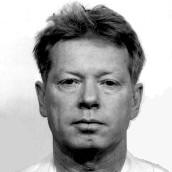
Benjamin Boyle
Murderer Ervil LeBaron
Murderer · USA · 1972
Ervil Morrell LeBaron (1925 to August 16, 1981) was the leader of a polygamous…
35 victims
Ervil LeBaron
Murderer · USA · 1972
Ervil Morrell LeBaron (1925 to August 16, 1981) was the leader of a polygamous…
35 victims
 Brian Kevin Rosenfeld
Murderer · USA · 1985
Brian Kevin Rosenfeld Brian Kevin Rosenfeld was sentenced to three concurrent l…
23 victims
Brian Kevin Rosenfeld
Murderer · USA · 1985
Brian Kevin Rosenfeld Brian Kevin Rosenfeld was sentenced to three concurrent l…
23 victims
 Marvin Gray
Murderer · USA · 1975
Marvin Gray was convicted killer who claimed responsibility for 23 slayings and…
23 victims
Marvin Gray
Murderer · USA · 1975
Marvin Gray was convicted killer who claimed responsibility for 23 slayings and…
23 victims
 Yahweh ben Yahweh
Murderer · USA · 1980
Yahweh ben Yahweh was born and legally named Hulon Mitchell Jr. (October 27, 19…
23 victims
Yahweh ben Yahweh
Murderer · USA · 1980
Yahweh ben Yahweh was born and legally named Hulon Mitchell Jr. (October 27, 19…
23 victims
 Barbara Ann Peterson
Murderer · USA · 1991
Barbara Ann Peterson was an American woman who was convicted of the murder of h…
1 victim
Barbara Ann Peterson
Murderer · USA · 1991
Barbara Ann Peterson was an American woman who was convicted of the murder of h…
1 victim
 Howard Hughes
Murderer · United Kingdom · 1995
Howard Hughes (born 1965 in Llandudno, Wales) was the youngest of four children…
1 victim
Howard Hughes
Murderer · United Kingdom · 1995
Howard Hughes (born 1965 in Llandudno, Wales) was the youngest of four children…
1 victim
 Dora Cisneros
Murderer · USA · 1993
United States of America (Plaintiff-Appellee) · Dora Garcia Cisneros (Defendant…
1 victim
Dora Cisneros
Murderer · USA · 1993
United States of America (Plaintiff-Appellee) · Dora Garcia Cisneros (Defendant…
1 victim
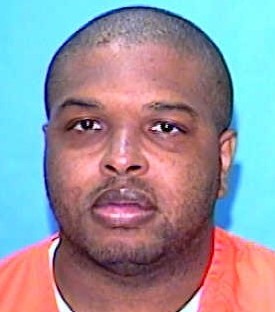 Darius Kimbrough
Murderer · USA · 1991
Defendant: Darius Mark Kimbrough DC#: 374123 Date of birth: 12/04/72 Age at the…
1 victim
Darius Kimbrough
Murderer · USA · 1991
Defendant: Darius Mark Kimbrough DC#: 374123 Date of birth: 12/04/72 Age at the…
1 victim
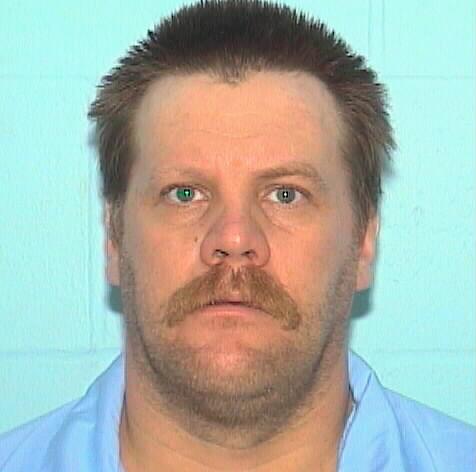 Larry Bright
Serial killer · USA · 2003
Larry Bright Larry Bright pleaded guilty to seven counts of First Degree Murder…
8 victims
Larry Bright
Serial killer · USA · 2003
Larry Bright Larry Bright pleaded guilty to seven counts of First Degree Murder…
8 victims
- Gender
- male
- Country
- USA
- Location
- California/Texas, USA
- Date of birth
- J uly 22, 1943
- Age at first offence
- 36
- Characteristics
- rape, kidnapping, drugs, alcohol
- Victim profile
- "Jane Doe" victim / Gail Lenore Smith (female, 20)
- Method of murder
- Beating / Strangulation with a necktie
- Date(s) of murder
- 1979 / 1985
- Years active
- 1979–1985
- Date of arrest
- October 17, 1985
- Status
-
Executed
Executed by lethal injection in Texas on April 21, 1997
Case details
Benjamin Herbert Boyle was convicted for the murder of Gail Lenore Smith, and he was sentenced to death.
Timeline
- October 14, 1985 — Police in Amarillo received a call from an excited trucker who had stopped along the highway north of town to answer nature's call; a woman's naked, lifeless body was found in the brush, bound in silver duct tape, with a man's tie knotted around her throat.
- November 20, 1979 — Boyle attempted to abduct a 28-year-old in Colorado Springs; she produced a knife and stabbed him several times in self-defense.
- October 17, 1985 — Boyle was arrested in East Texas, two days after the body of Gail Lenore Smith, a 20-year-old cocktail waitress in Fort Worth, was found in a brushy area off a highway near Amarillo.
- October 29, 1986 — A jury convicted Boyle for capital murder during the course of committing or attempting to commit aggravated sexual assault and for capital murder during the course of kidnaping.
- April 22, 1997 — Michael Newton reported that a truck driver was executed by injection that day for raping and strangling a woman who had hitched a ride with him.
- April 21, 1997 — Boyle was executed by lethal injection in Texas.
The offence
Gail Lenore Smith drove with her step-brother and sister-in-law to a rest stop outside Fort Worth, Texas. Smith planned to obtain a ride from a truck driver in order to visit her mother in Amarillo. She asked her relatives to write down the license number of the truck she boarded, in case anything happened. A few minutes after arriving at the rest stop, Smith's relatives observed her approach a male truck driver, converse with him, and then board his cherry-red Peterbilt tractor-trailer. The next day, a passing truck driver discovered Smith's naked body, bound with duct tape, concealed in a brushy area fourteen miles north of Amarillo.
Medical evidence showed that Smith had been orally and anally raped, beaten with a blunt instrument, and strangled to death. Boyle continued to maintain that he had dropped Smith off at a truck stop unharmed.
Boyle was indicted for capital murder during the course of committing or attempting to commit aggravated sexual assault, and capital murder during the course of kidnaping. Boyle pleaded not guilty and was tried before a jury. The evidence at trial consisted of the physical evidence linking Boyle to the murder, medical evidence indicating the sexual nature of the murder, and other evidence tending to show Boyle's obsession with sex.
The jury found Boyle guilty on all counts and, after hearing evidence relevant to punishment, returned affirmative answers to the special issues found in article 37.071 of the Texas Code of Criminal Procedure. As required by law, the trial court sentenced Boyle to death.
Investigation
After the body was found, although Smith's relatives failed to write down the truck's license number, they gave authorities a description of the driver and the truck, including the inscription "JEWETT SCOTT, Truck Line Inc., Magnum Oklahoma" written on the side of the truck. Through this information, the authorities traced the tractor-trailer to Boyle, and after conferring with Jewett Scott Truck Lines in Oklahoma, learned that Boyle's ultimate destination was Diboll, Texas.
Officers traced the firm to Mangum, Oklahoma, two days after the discovery of the body. Examination of the schedules on file revealed that Herbert Boyle had been the only driver in the area. Detectives also noted that he matched the general description of the trucker that Gail's friend had managed to provide.
By sheer coincidence, Boyle had secured a load that morning, bound for Diboll, Texas, sixty miles due north of Houston. Detectives noted that Boyle claimed he had dropped the victim, alive, in Wichita Falls, near the Texas-Oklahoma border.
A search of Boyle's belongings netted officers a roll of silver duct tape, several sheets and blankets. Fibers from the latter were dispatched to Washington, D.C., where FBI analysis described them as identical with fibers found on Gail Smith's body. Stray hairs recovered from the corpse were also matched to Boyle, and fingerprints recovered from the duct tape used to bind Gail Smith completed the array of evidence.
Detectives traced the incident to Gail's identification as Smith through a fingerprint comparison, and an autopsy discovered evidence of beating prior to death.
Arrest and search
Boyle was arrested in Diboll, and gave investigators written consent to search his truck. Officers found several of Smith's possessions inside the truck, along with hairs from Smith's head and pubic area, some of which had been forcibly removed. Blood stains in the sleeper portion of the truck were consistent with Smith's blood type.
Boyle's fingerprints were found on the strips of duct tape used to bind Smith, and fibers taken from Smith's body matched the carpet in Boyle's truck.
A friend of Gail's had seen her off when she departed from Fort Worth, remembering her first lift as a big, red semi trailer, Peterbilt; its trailer bore the legend "Ruger Freight." The trial materials also referred to the truck being described with the inscription "JEWETT SCOTT, Truck Line Inc., Magnum Oklahoma."
Boyle was arrested in East Texas on Oct. 17, 1985, two days after the body of Gail Lenore Smith was found.
Trial
Boyle was tried before a jury. The evidence at trial included physical evidence linking Boyle to the murder, medical evidence indicating the sexual nature of the murder, and other evidence tending to show Boyle's obsession with sex.
At sentencing, the trial court first admitted all the evidence that had been admitted at the guilt-innocence phase, including three letters and brief testimony concerning Boyle's preoccupation with sex. The state then put on additional testimony concerning Boyle's sexual habits and evidence concerning his sexual drawings.
The testimony concerning Boyle's sexual habits came primarily from Boyle's lover Pat Willis. She testified that she had had an affair with Boyle and that he had lied to her about his marital status in order to begin the affair. Willis further testified that Boyle wrote her sexually explicit letters referring to her genitalia as "Miss Kitty" and to his own as "Mr. Whipple." The three letters contained statements such as:
"I would unleash Mr. Whipple on you. Ha! Ha! I know you can handle him. He knows it too. At this very moment, I believe he knows I'm talking about him. He seems to be stirring. Oh, mama, do I need you."
One letter stated:
"Miss Kitty is in some real trouble now. I may not be able to tear her up, but she will know Mr. Whipple has been there."
Additional testimony at sentencing included statements by Boyle's daughter that Boyle was a "womanizer" and that he drew and kept many explicit sexual pictures. Norma Myers, a former lover, also testified that Boyle had a strong preference for oral and anal sex, that he put pressure on her to perform these acts, and that he sometimes held her down and pretended to choke her during foreplay.
An inmate formerly incarcerated with Boyle testified that Boyle associated violence with sex. The witness testified that, "If it was me, I'd slap her, throw her down on the floor and fuck her in the ass."
The state also introduced a sexually explicit picture, drawn by Boyle, of a woman using a complicated mechanical device to masturbate.
Boyle was indicted for capital murder during the course of committing or attempting to commit aggravated sexual assault and for capital murder during the course of kidnaping. The jury found Boyle guilty on all counts and, after hearing evidence relevant to punishment, returned affirmative answers to the special issues in article 37.071. The trial court sentenced Boyle to death.
Sentencing
Under Texas law, the jury returned affirmative answers to the special issues in article 37.071 of the Texas Code of Criminal Procedure, and the trial court sentenced Boyle to death.
Article 37.071(b)(2) defined future dangerousness as "whether there is a probability that the defendant would commit criminal acts of violence that would constitute a continuing threat to society."
At sentencing, the evidence presented about Boyle's sexual habits and expressions was offered as relevant to future dangerousness, and the appellate opinion held there was a sufficient nexus between the evidence and the crime committed.
Appeals
Boyle appealed the district court's denial of his petition for writ of habeas corpus. The appellate decision affirmed the district court.
Boyle argued that the trial court erred in admitting evidence of his sexual habits and drawings. Boyle argued that admission of this evidence violated his First Amendment right to not have evidence of his associations and expressions admitted against him at sentencing. The appellate court held the evidence was sufficiently related to the issues involved and allowed its admission during the capital sentencing phase.
Boyle argued that he was denied a fair trial because of the state's presentation of false and misleading testimony from a clinical pathologist, Dr. Ralph Erdmann. Boyle contended that Dr. Erdmann's gross misconduct in other cases indicated that the testimony he gave was perjured, and he argued the prosecutor knew Erdmann was unreliable and failed to notify the defense in violation of Brady v. Maryland. The appellate court held Boyle failed to overcome the presumption of correctness given to the state habeas court's factual findings that Erdmann did not testify falsely or mislead the jury, and it also rejected the contention that the prosecution withheld impeachment evidence.
Boyle also argued ineffective assistance of counsel at the punishment phase. He contended that counsel failed to present significant mitigating evidence that was either known to counsel or should have been known to counsel, including evidence of mental illness, violent family background, economic deprivation, voluntary intoxication, drug and alcohol addictions, and testimony about positive traits. The appellate court applied Strickland v. Washington and held Boyle failed to establish counsel was deficient at trial.
During the ineffective assistance analysis, the appellate opinion included testimony from trial counsel describing strategic reasons not to introduce certain evidence:
"It would have been aggravating."
"We were trying to keep as much violence as we possibly could out of the record."
"like father, like son."
"I did not think it was beneficial, particularly in 1986 to tell this jury that he was a pill popping ... truck driver."
Trial counsel also testified that:
"Well, because Mr. Boyle, while being a rather articulate artist, there were two types of art that he delved in. He had the capability of drawing a small kitten that looked so soft you would want to pick it up and pet it.... He also had the ability to draw masochistic sadistic cult type art depicting women in bondage under the throes of demonic type men. And I don't think that that was the type of art that was conducive to convincing a jury not to kill him."
Trial counsel testified regarding women who would testify as to Boyle's good nature:
"If I put in about alcohol and his womanizing and his running around on his wife and his running around on his girlfriends, that is not going to be a mitigating factor in Amarillo, Texas."
Trial counsel also testified:
"Well, every family member I talked to was a possible mitigation witness. Every girlfriend I talked to was a possible mitigation witness. But every time I talked to some of these people, the I--there were other problems associated with it."
The appellate opinion further recorded trial counsel's conclusion:
"That's why we didn't talk about his use of amphetamines while driving a truck. That's why we didn't talk about his alcoholism. That's why we didn't talk about the child abuse. That's why we damn sure didn't talk about his sex life."
The appellate court held these strategic decisions were reasonable and Boyle did not show deficient performance.
The appellate decision noted that, while the appeal was pending, Congress passed The Antiterrorism and Effective Death Penalty Act of 1996 (AEDPA), and it declined to address certain issues about the act’s applicability because it rejected Boyle's habeas petition under older standards.
A specially concurring opinion stated:
"Boyle's able habeas counsel has done a remarkable job developing "Dawson issues" in this case, and my scholarly brother has been most generous in the extensive treatment of those issues provided in the majority opinion. I am reluctant to subscribe to that treatment, however, and I therefore concur in the judgment."
Other details
Boyle's pre-existing conduct and background included an attempted abduction in Colorado Springs on November 20, 1979. Boyle pleaded guilty to an attempted kidnap charge and received five years on probation, but he failed to learn from it.
At the time of his arrest in Texas, Boyle was also being sought for rape in Canyon City, Colorado, where the victim had identified his photograph.
Boyle's extensive travels were linked to a second homicide near Truckee, California, where a "Jane Doe" victim was discovered on June 21, 1985. Her naked body was stuffed inside a cardboard box, her hands and feet bound up with bandages and several kinds of tape, and a wad of bedding had been left beside the corpse. FBI reports said fibers taken from the body matched a blanket found inside Boyle's Oklahoma residence.
The appellate materials described the investigation of Boyle's truck and the physical evidence, including:
- Strips of duct tape with Boyle's fingerprints.
- Fibers matched to carpet in Boyle's truck.
- Hairs from Smith's head and pubic area, some forcibly removed.
- Blood stains in the sleeper portion consistent with Smith's blood type.
Boyle had completed three years military service during August 1963 and thereafter moved on to Colorado, where he lived and ran an auto body shop from 1969 to February 1980. He was next employed at a Las Vegas body shop, returning to his native Oklahoma in November 1981. He had been driving long-haul trucks since then, on routes that took him all throughout the country.
Boyle's wife recalled that she had seen some bloody sheets inside the truck a short time earlier. A search of Boyle's belongings also found a roll of silver duct tape, several sheets and blankets.
Boyle was described as 53 in an accompanying report identifying the execution. Gail Smith was described as 20 years old and a cocktail waitress in Fort Worth. The appellate materials used the name Gail Lenore Smith and described her step-brother and sister-in-law, who accompanied her to the rest stop. The appellate discussion also referred to Gail Smith driving with her step-brother and sister-in-law to the rest stop outside Fort Worth, Texas, and planning to obtain a ride to visit her mother in Amarillo.
Outcome
The district court's decision denying Boyle's petition for writ of habeas corpus was affirmed, and Boyle's execution by lethal injection in Texas occurred on April 21, 1997.
Spotted an error, or have more information about this case?