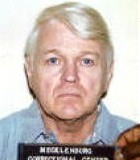
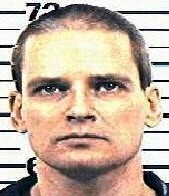
Earl Bramblett
Mass murderer Gameel Al-Batouti
Mass murderer · USA · 1999
Gameel Al-Batouti (also rendered “Gamil ElBatouty” or “El Batouty” in U.S. offi…
216 victims
Gameel Al-Batouti
Mass murderer · USA · 1999
Gameel Al-Batouti (also rendered “Gamil ElBatouty” or “El Batouty” in U.S. offi…
216 victims
 Timothy McVeigh
Mass murderer · USA · 1995
Timothy James McVeigh (April 23, 1968 – June 11, 2001) was a United States Army…
168 victims
Timothy McVeigh
Mass murderer · USA · 1995
Timothy James McVeigh (April 23, 1968 – June 11, 2001) was a United States Army…
168 victims
 Julio Gonzalez
Mass murderer · USA · 1990
Julio Gonzalez was sentenced to 174 twenty-five-year sentences (a total of 4,35…
87 victims
Julio Gonzalez
Mass murderer · USA · 1990
Julio Gonzalez was sentenced to 174 twenty-five-year sentences (a total of 4,35…
87 victims
 David Burke
Mass murderer · USA · 1987
David Augustus Burke (May 18, 1952–December 7, 1987) was an employee of USAir,…
43 victims
David Burke
Mass murderer · USA · 1987
David Augustus Burke (May 18, 1952–December 7, 1987) was an employee of USAir,…
43 victims
 George Jo Hennard
Mass murderer · USA · 1991
George Jo Hennard carried out a mass killing at a Luby’s Cafeteria in Killeen,…
23 victims
George Jo Hennard
Mass murderer · USA · 1991
George Jo Hennard carried out a mass killing at a Luby’s Cafeteria in Killeen,…
23 victims
 James Huberty
Mass murderer · USA · 1984
James Oliver Huberty was a 41-year-old unemployed security guard. He was born i…
21 victims
James Huberty
Mass murderer · USA · 1984
James Oliver Huberty was a 41-year-old unemployed security guard. He was born i…
21 victims
 Leroy Drayton
Murderer · USA · 1984
Leroy Joseph "Ricky" Drayton was executed by lethal injection in South Carolina…
1 victim
Leroy Drayton
Murderer · USA · 1984
Leroy Joseph "Ricky" Drayton was executed by lethal injection in South Carolina…
1 victim
 John Nordlund
Mass murderer · Sweden · 1900
John Filip Nordlund (also known as ”Mälarmördaren”, ”Mordlund”, ”Svarte Filip”)…
5 victims
John Nordlund
Mass murderer · Sweden · 1900
John Filip Nordlund (also known as ”Mälarmördaren”, ”Mordlund”, ”Svarte Filip”)…
5 victims
 Gregory Thompson
Murderer · USA · 1985
Gregory Thompson was diagnosed with undifferentiated schizophrenia, delusions a…
1 victim
Gregory Thompson
Murderer · USA · 1985
Gregory Thompson was diagnosed with undifferentiated schizophrenia, delusions a…
1 victim
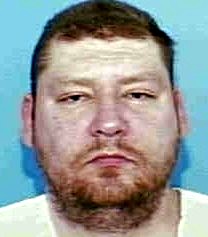 John William Byrd
Murderer · USA · 1983
John William Byrd, Jr. was executed by lethal injection for the murder of conve…
1 victim
John William Byrd
Murderer · USA · 1983
John William Byrd, Jr. was executed by lethal injection for the murder of conve…
1 victim
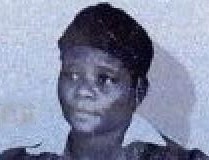 Ruby McCollum
Murderer · USA · 1952
Ruby McCollum (August 31, 1909–May 23, 1992) was the subject of a notorious mur…
1 victim
Ruby McCollum
Murderer · USA · 1952
Ruby McCollum (August 31, 1909–May 23, 1992) was the subject of a notorious mur…
1 victim
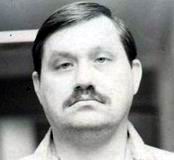 Donald Edward Beaty
Murderer · USA · 1984
Donald Edward Beaty was a maintenance man and resident maintenance manager at t…
1 victim
Donald Edward Beaty
Murderer · USA · 1984
Donald Edward Beaty was a maintenance man and resident maintenance manager at t…
1 victim
- Gender
- male
- Country
- USA
- Location
- Roanoke County, Virginia, USA
- Date of birth
- March 20, 1942
- Age at first offence
- 52
- Characteristics
- arson, rape, drug addict, abuse, sexual abuse
- Victim profile
- Blaine and Teresa Hodges and their children, Anah, 3, and Winter, 11
- Method of murder
- Shooting / Strangulation
- Date(s) of murder
- August 29, 1994
- Years active
- 1994
- Date of arrest
- J uly 30, 1996
- Status
-
Executed
Executed by electrocution in Virginia on April 9, 2003
Case details
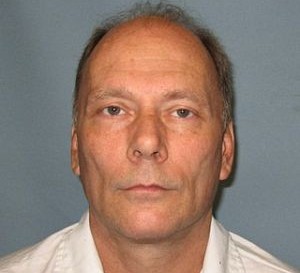
Earl Bramblett was convicted in Virginia of capital murder, murder, arson, and using a firearm during commission of murders. He was executed by electrocution in Virginia on April 9, 2003.
Background
Blaine and Teresa Hodges had attended an Amway conference in Charlottesville on the previous Friday night, leaving their children with a relative. Blaine picked up the children on Saturday. Teresa left a telephone message with a friend to arrange the children’s carpool on the first day of school. Neighbors later saw Bramblett with Teresa and the children.
Bramblett was an acquaintance of the Hodges family for years. On the morning of the fire, he arrived at his workplace at 5:08 a.m., and his hair was neatly combed, he was freshly shaven, and his clothes were clean. Evidence at trial described Bramblett’s audiotapes and writings in which he expressed a sexual interest in Winter Hodges and believed the child’s parents were trying to “set him up” or entrap him in a sexual act.
The offence
On August 29, 1994, authorities found four bodies in a burning home at 232 East Virginia Avenue in the Town of Vinton in Roanoke County.
- Teresa Lynn Fulcher Hodges was found in the downstairs living room on a couch. She had died from ligature strangulation and had been doused with gasoline; her body was still burning when discovered.
- William Blaine Hodges was found on a bed in an upstairs bedroom. He had died from a gunshot to the left temple. His body was not burned.
- Winter Ashley Hodges, age 11, died from two gunshots to the head, with the muzzle of the weapon pressed against the skin when fired; her body had not been burned.
- Anah Michelle Hodges, age 3, died from two gunshot wounds to the head; the muzzle of the weapon was within inches of the skin when fired. Her body was covered with soot and sustained mild burns.
Investigators concluded that the fire was a “set fire,” and that Blaine died “many hours before the female victims died,” probably during the afternoon of Sunday, August 28.
Investigation
Dorothy Ross McGee observed a white pickup truck operated by a white male pulling onto the street from the area of the residence, followed her briefly, and then “shot” past her while exceeding the speed limit. Robert Scott Arney noticed a large cloud of smoke and reported the fire.
Investigators found petroleum accelerants and gasoline in various areas of the home. They also found that the telephone line had been cut.
Bramblett’s audiotapes and writings were introduced at trial. On the tapes, Bramblett expressed a sexual interest in Winter Hodges and his belief that the Hodges family was trying to set him up or entrap him in a sexual act with her.
Evidence presented at trial included:
- A note on the side door reading: “Had an emergency. Back late Sunday, early Monday. Teresa.”
- Fire throughout the structure.
- A video reenactment of a truck leaving the area where McGee observed the truck.
- Firearm and forensic evidence, including bullets and cartridges recovered from the scene and found in Bramblett’s possession.
- A pubic hair found on the bed between the two children that matched Bramblett.
- Testimony from Tracy Turner, a convicted felon incarcerated with Bramblett at the Roanoke County jail.
Arrest
Bramblett was apprehended on July 30 in Spartanburg, South Carolina, waived extradition, and was brought to Virginia and held in the Roanoke County jail.
Trial
Bramblett was tried by jury during 14 days in October and November 1997.
Charges and verdicts
In the guilt and penalty phases of the trifurcated trial, 98 witnesses testified. The jury found Bramblett guilty of:
- Capital murder of Winter as part of the same transaction as the murder of Anah (Code § 18.2-31).
- The murders of Anah, Blaine, and Teresa (Code § 18.2-32).
- Arson (Code § 18.2-77).
- Three counts of using a firearm in the commission of the murders (Code § 18.2-53.1).
Testimony concerning Bramblett’s statements
Tracy Turner testified that Bramblett told him:
- “addicted to young girls”
- that Bramblett “had been caught with that girl, the young girl, and that he was caught downstairs with her and that the mother sent them upstairs--sent her upstairs and that he had choked the life out of her.”
- that Bramblett “walked around for a little bit and then he went upstairs. He said he went first to the man's room and then he went to the girls' room and he finished the business, took care of his business.”
- that Bramblett set fire to the Hodges’ home because of a “forensic science book” and its discussion of forensic evidence being destroyed by burning.
Bramblett did not testify. During the trial, his defense presented evidence that in the late 1980s, Blaine and Teresa Hodges consumed cocaine supplied by Michael Fulcher, Teresa’s half-brother. Fulcher was described as an undercover cooperative witness for the federal Drug Enforcement Administration.
Audiotapes
The prosecution played snippets from Bramblett’s oral diary and recordings, including statements that included:
“Blaine is trying to buy his ass out of jail by using his daughter as some kind of sexual enticement toward me.”
“She's trying to sexually excite me, and that's exactly what she's trying to do. She has been instructed to do that. Blaine is on some kind of espionage expedition. He's keeping espionage on me.”
“I'm going to make a little recording here and say a few things that I want to put down here for posterity. Because, I'm beginning to realize what a back-stabbing, cheap mother------ I got for a friend. He's trying to set me up.”
“Now, if you think I'm paranoid, listen to this. I'm standing in my kitchen. I know I'm silhouetted in the window from the street side. It would take a rifle to hit me from there. I don't think they would go for that shot. I think they would climb up on the roof and come around on my window and I think Blaine Hodges would be behind it and be doing it. Might do it himself.”
“Winter is a '...devious, manipulative, super-intelligent little girl who is sexually sophisticated.'”
“...and she's doing a good job of it.”
“I have to admit that it's exciting and it's interesting that a beautiful little girl is just making eyes at me all the time. ... There is just no way I can go back over to that place. And they're going to keep inviting me, because that's their program.”
Sentencing
After sentencing proceedings, the jury fixed Bramblett’s punishment at death based upon vileness and future dangerousness predicates of the capital murder sentencing statute.
On December 16, 1997, following a post-trial sentencing hearing, the court sentenced Bramblett to death for the capital murder.
The court also imposed noncapital sentences:
- For each of three first degree murder convictions: life imprisonment and a $100,000 fine.
- For the arson conviction: life imprisonment and a $100,000 fine (the court suspended the fine).
- For three firearms convictions: imprisonment for 13 years.
Appeals
Bramblett appealed, and the case proceeded through automatic review and appeal consolidation.
The Supreme Court of Virginia consolidated automatic review with Bramblett’s appeal from the capital murder conviction and certified noncapital appeals for review. The Supreme Court affirmed the judgment in Record No. 981394 and Record No. 981395.
The Supreme Court addressed issues including:
- Denial of a motion to dismiss the capital murder indictment on grounds the death penalty statute was unconstitutional.
- Procedural default of an allegation of prosecutorial misconduct raised for the first time on appeal.
- Denial of a motion to change venue.
- Finding of competency to stand trial.
- Rulings relating to suppression of audiotapes seized in Indiana and the admissibility of those tapes.
- Rulings relating to suppression of evidence obtained from the Apple Valley Motel.
- Permitting Tracy Turner to testify.
- Admission and sufficiency of evidence including the pubic hair.
- Claims regarding the penalty phase, including future dangerousness and disproportionality.
In the discussion of evidence, the Supreme Court summarized the circumstances of the murders and the evidence used to connect Bramblett to the crimes.
Outcome
Bramblett remained under a death sentence after appeals were rejected.
Execution details and final statement
Bramblett chose electrocution as his method of execution.
He was led into the execution chamber at 8:54 p.m. and strapped into an oak electric chair. His head and right leg were shaved to allow skintight attachments of two electrodes. An electrical mechanism was activated, and 1,800 volts surged through Bramblett’s body. Dr. Alvin Harris placed a stethoscope against Bramblett’s chest and announced: “This man has expired.”
Bramblett was pronounced dead at 9:09 p.m. EDT at the Greensville Correctional Center.
Bramblett gave a last statement:
“I didn't murder the Hodges family. I never murdered anybody. I'm going to go to my death with a clear conscience. I am going to go to my death having had a great life because of my two great sons, Mike and Doug.”
In another account of his last statement, he also thanked his sons with: “you blessed me. Be strong.”
Other details
Bramblett was identified in the Supreme Court opinion as Earl Conrad Bramblett. The opinion stated he was 54 years of age at indictment on July 30, 1996.
The Supreme Court described the victim deaths and timing as follows:
- “Blaine... died 'many hours before the female victims died,' probably during the afternoon of Sunday, August 28.”
- “The mother and her daughters died during the early morning hours of August 29 and before the fire.”
The Supreme Court noted Bramblett was not entitled to a change of venue based on extensive media coverage and that 68 potential jurors were questioned, with only seven excused due to fixed opinions.
The Supreme Court noted:
- Bramblett’s mental health examinations found him competent to stand trial.
- The competency issue involved Dr. Evan S. Nelson, Dr. Joseph I. Leizer, and Dr. Leigh D. Hagan.
- The trial court ruled there was “no evidence . . . to find a basis for unlawful search or seizure” regarding the Indiana packages.
Prosecutors and the court proceedings referenced the discovery of an Arminius handgun with the barrel removed in Blaine Hodges’ bedroom and other firearm-related testimony.
Bramblett’s execution was carried out on April 9, 2003.
Spotted an error, or have more information about this case?