
Jan Michael Brawner
Mass murderer Gameel Al-Batouti
Mass murderer · USA · 1999
Gameel Al-Batouti (also rendered “Gamil ElBatouty” or “El Batouty” in U.S. offi…
216 victims
Gameel Al-Batouti
Mass murderer · USA · 1999
Gameel Al-Batouti (also rendered “Gamil ElBatouty” or “El Batouty” in U.S. offi…
216 victims
 Timothy McVeigh
Mass murderer · USA · 1995
Timothy James McVeigh (April 23, 1968 – June 11, 2001) was a United States Army…
168 victims
Timothy McVeigh
Mass murderer · USA · 1995
Timothy James McVeigh (April 23, 1968 – June 11, 2001) was a United States Army…
168 victims
 Seung-Hui Cho
Mass murderer · USA · 2007
Seung-Hui Cho was a mass murderer who shot and killed 32 people and wounded man…
32 victims
Seung-Hui Cho
Mass murderer · USA · 2007
Seung-Hui Cho was a mass murderer who shot and killed 32 people and wounded man…
32 victims
 George Jo Hennard
Mass murderer · USA · 1991
George Jo Hennard carried out a mass killing at a Luby’s Cafeteria in Killeen,…
23 victims
George Jo Hennard
Mass murderer · USA · 1991
George Jo Hennard carried out a mass killing at a Luby’s Cafeteria in Killeen,…
23 victims
 Eric Harris
Mass murderer · USA · 1999
Eric Harris committed suicide by gunshot to the roof of the mouth on April 20,…
13 victims
Eric Harris
Mass murderer · USA · 1999
Eric Harris committed suicide by gunshot to the roof of the mouth on April 20,…
13 victims
 Jiverly Wong
Mass murderer · USA · 2009
December 8, 1967 — Jiverly Antares Wong was born. · late 1980s — Wong first cam…
13 victims
Jiverly Wong
Mass murderer · USA · 2009
December 8, 1967 — Jiverly Antares Wong was born. · late 1980s — Wong first cam…
13 victims
 Jeffrey David Matthews
Murderer · USA · 1994
Jeffrey David Matthews was executed by lethal injection in Oklahoma on January…
1 victim
Jeffrey David Matthews
Murderer · USA · 1994
Jeffrey David Matthews was executed by lethal injection in Oklahoma on January…
1 victim
 Tyler Edmonds
Miscarriage of justice · USA · 2003
Tyler Edmonds was a 19-year-old man from Mississippi who was tried and convicte…
0 victims
Tyler Edmonds
Miscarriage of justice · USA · 2003
Tyler Edmonds was a 19-year-old man from Mississippi who was tried and convicte…
0 victims
 Julia Andrews
Murderer · USA · 2012
Julia Andrews was sentenced to 44 years in prison on August 8, 2013. A jury of…
1 victim
Julia Andrews
Murderer · USA · 2012
Julia Andrews was sentenced to 44 years in prison on August 8, 2013. A jury of…
1 victim
 Martha Freeman
Murderer · USA · 2005
Martha Freeman was convicted, together with Rafael DeJesus Rocha-Perez, of firs…
1 victim
Martha Freeman
Murderer · USA · 2005
Martha Freeman was convicted, together with Rafael DeJesus Rocha-Perez, of firs…
1 victim
 Peter Odighizuwa
Murderer · USA · 2002
Peter Odighizuwa was a 43-year-old Nigerian former student at the Appalachian S…
3 victims
Peter Odighizuwa
Murderer · USA · 2002
Peter Odighizuwa was a 43-year-old Nigerian former student at the Appalachian S…
3 victims
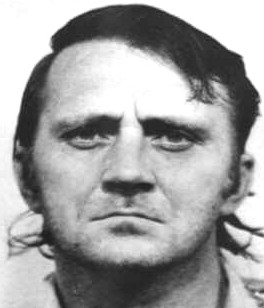 William Vandiver
Murderer · USA · 1983
William E. Vandiver was a White male. His date of birth was 08-26-1948. His exe…
1 victim
William Vandiver
Murderer · USA · 1983
William E. Vandiver was a White male. His date of birth was 08-26-1948. His exe…
1 victim
- Gender
- male
- Country
- USA
- Location
- Tate County, Mississippi, USA
- Date of birth
- June 10, 1977
- Age at first offence
- 24
- Characteristics
- parricide, robbery
- Victim profile
- Barbara Craft, 23 (his ex-wife) / Paige Brawner, 3 (his daughter) / Jane and Carl Craft, both 47 (ex-in laws)
- Method of murder
- Shooting ( .22 rifle)
- Date(s) of murder
- April 25, 2001
- Years active
- 2001
- Date of arrest
- Same day
- Status
-
Executed
Executed by lethal injection in Mississippi on June 12, 2012
Case record: Jan Michael Brawner
Background
In December 1997, Jan Michael Brawner married Barbara Craft. In March 1998, their daughter, Paige, was born. Brawner and Barbara divorced in March 2001, and Barbara was awarded custody of Paige. At that time, they lived with Barbara’s parents, Carl and Jane Craft, at their home in Tate County.
At the time of the murders, Brawner lived with his girlfriend, June Fillyaw, in Southaven.
During trial, Brawner testified that he believed financial difficulties were building and that Barbara told him she did not want him around Paige. He also testified that pressure on him was building because “nothing was going right.”
Brawner was raised by his stepfather in Southaven, Mississippi. He finished the ninth grade, failed an attempt to obtain a GED, and worked mostly as a forklift operator in warehouses. He also lived with the Crafts off and on during his marriage to Barbara.
The offence
Brawner was convicted on four counts of capital murder. The murders involved his three-year-old daughter, Paige; his ex-wife, Barbara Craft; and Barbara’s parents, Carl Craft and Jane Craft. The killings occurred at the Crafts’ home in Tate County.
Brawner stole approximately $300 from Carl’s wallet, stole Jane’s wedding ring from her finger, and stole food stamps out of Barbara’s purse. He took Windex from the kitchen and attempted to wipe away fingerprints he may have left.
Afterward, Brawner returned to his apartment in Southaven, gave the stolen wedding ring to his girlfriend, asked her to marry him, and told her that he bought the ring at a pawn shop.
Brawner’s daughter witnessed the murders.
Investigation
While detained after the murders, Brawner admitted the shootings in a statement made to the Chief Deputy of the Tate County Sheriff’s Department. Brawner completed a jail inmate request form asking to “speak with [chief deputy] Brad Lance whenever possible.” Lance provided Miranda warnings, and Brawner then gave a taped statement detailing the events of April 24-25, 2001.
Brawner’s motion to suppress this statement was denied by the trial court and was not an issue on appeal.
Arrest
David Craft, Barbara Brawner’s brother, found the bodies the following morning, suspected Brawner, and told police where Brawner lived. When Brawner was arrested, police searched the U-haul and June’s car and found the .22 rifle and latex gloves.
June testified that Brawner gave her the ring.
Trial
Indictment and charges
Brawner was indicted on four counts of capital murder.
- Count one was for the willful murder of his three-year-old daughter, Candice Paige Brawner, while engaged in felonious abuse and/or battery of the child.
- Counts two, three, and four were willful murders while engaged in robbery of: his ex-mother-in-law, Martha Jane Craft; his ex-wife, Barbara Faye Brawner; and his ex-father-in-law, Carl Albert Craft.
Jury verdict and sentencing
Brawner was tried before a jury in the Circuit Court of Tate County, Mississippi, and was found guilty on all four counts of capital murder. In a separate sentencing hearing, the jury returned the death penalty on all four counts. Brawner’s Motion for Judgment Notwithstanding the Verdict or in the Alternative, for a New Trial was denied, and he appealed.
Brawner was 24 years old at the time of the murders.
Defence and mental state
Brawner raised an insanity defense at trial. He testified that he knew at the time of the shootings that the shootings were wrong. The trial judge found him competent to stand trial and mentally responsible for the acts based on information furnished by the Mississippi State Hospital, which certified him as competent and mentally responsible. A court-appointed psychiatrist chosen by defense counsel reported that Brawner was neither insane nor incompetent to stand trial.
Brawner’s account of the events at trial (as described in the appellate findings)
On the day before the murders, Brawner left his apartment in Southaven at 3:00 a.m. and headed toward the Craft house, about an hour away. He testified that he thought he might be able to borrow money from Carl Craft, although in a prior statement he said he had planned to rob Carl.
He parked a U-haul truck some distance from the house and walked the rest of the way. From approximately 4:00 a.m. until 7:00 a.m., he sat on the front steps. During that time, he took a 7 mm Ruger rifle out of Carl’s truck and emptied the bullets, saying: “he didn't want to get shot.” When he heard Carl coming out, he hid behind Carl’s truck. A dog started barking, Carl looked around for the cause, and when Carl went back inside, Brawner ran away, thinking Carl might be getting a gun.
He drove back to his apartment.
The following day, April 25, 2001, Brawner drove to the Craft house around noon, knocked on the door, and no one was home. He purchased rubber gloves earlier that day, and using the gloves he “took the slats out of the back door,” entered the house, and took a .22 rifle. He left the same way he came in, putting the slats back into the door.
He went to Carl’s workplace and asked if he could go out to the house to wait for Barbara and Paige so that he could see his daughter; Carl agreed.
Brawner waited until Barbara and Paige pulled into the drive. Jane asked whether Brawner had been at their house the previous day; Brawner lied, saying “no.” Barbara informed him there was a restraining order against him and he was not supposed to be there. He said he had a book to give Paige, retrieved the book, and at some point Jane again asked if he had been at the house the previous day. He became agitated and went to the truck, brought back the rifle taken earlier that day, and told Barbara she was not going to take Paige away from him.
At that moment, Brawner saw Jane walking toward the bedroom and shot her with the rifle. He said he then shot Barbara as she was coming toward him. He then went to where Jane had fallen and “put her out of her misery.”
Brawner recalled Paige looking up and holding up her left arm, which was sprayed with blood, and saying: “Daddy you hurt me.”
He took Paige to her bedroom, told her to watch TV, paced, and after he determined Paige would be able to identify him, and in his words “he was just bent on killing,” he shot his daughter twice, killing her.
Brawner waited in the house until Carl came home from work. When Carl walked through the door, Brawner shot and killed him.
Admissions and testimonies
Brawner admitted the shootings in a statement made to Chief Deputy Brad Lance. At trial, Brawner testified on his own behalf and gave essentially the same account of the events.
Photographic evidence and slide projector use
Brawner filed a Motion in Limine to Exclude or in the Alternative to Limit Introduction of Photographic Evidence, and also filed a similar motion regarding photographic evidence via a slide projector. He argued that there was no dispute as to what or who the photos depicted, where the photos were taken, or the manner of death, and that admitting them or enlarging them using a slide projector would be irrelevant and inflammatory.
The trial court granted the motion to limit photographic evidence but required the State to seek the court’s ruling on the photographs to be introduced; the trial court later allowed each of the State’s photographs to be admitted. The trial court denied the motion to restrict the use of a slide projector, stating that use of a projector is a modern practice used in the courtroom for at least a quarter of a century to display evidence, and that attempting to limit the size of displayed images had previously produced blurry and useless photos.
In the appellate record, the photographs depicted the bodies of Carl Craft (exhibit 3), Jane Craft (exhibit 12), and Paige Brawner (exhibit 15), showing the bodies as found by police. The court described that there was one picture of each victim submitted.
Severance
Brawner filed a motion to sever count one, arguing he did not kill Paige while in the commission of felonious abuse and/or battery of a child and that the other counts were based on robbery while count one was not. He also asserted that failure to sever count one violated his rights to due process and a fair trial.
The trial court held a full hearing. The appellate court described that the killings occurred within a few hours and were part of a common scheme to rob Carl Craft and eliminate any witnesses. It stated the murders were interwoven and evidence of each murder would be admissible to prove the other murders because they occurred at the same place and closely in time.
Peremptory challenges and gender discrimination
Brawner asserted gender-based objections under Batson v. Kentucky and J.E.B. v. Alabama ex rel. T.B. concerning peremptory challenges of female jurors.
The appellate court described that the jury selection involved nine women and three men, and that during the initial selection of 12 jurors, the State struck three females and one male, tendering seven females and five males. Because seven of the 12 tendered jurors were female, the trial judge declined to find a prima facie showing of gender bias. The judge allowed the State to state race-neutral or gender-neutral purposes for each strike and later found any bias too weak to find a pattern of gender discrimination.
The appellate decision addressed the use of outside information as a basis for striking jurors, including strikes based on outside information provided by law enforcement officials who thought potential jurors might be biased against the death penalty. It stated it felt compelled to address the practice when outside information was not revealed or available for questioning, while concluding that the specific reasons were not pretextual in that case.
Motion ore tenus to abolish peremptory challenges
Brawner raised a motion ore tenus during jury selection asking the trial court to abolish the use of peremptory challenges in criminal cases. The trial court denied the motion.
Sentencing
The jury returned the death penalty on all four counts.
In the sentencing phase, Brawner declined to have anyone testify for mitigating testimony at sentencing, which could have been used to spare his life. During sentencing proceedings, Brawner testified: “As far as life, I don’t feel that I deserve life to live,” and the appellate proceedings referenced that he did not wish to have mitigating evidence presented.
Requests about life or life without parole and death
During later habeas proceedings, the record included colloquies in which Brawner stated he did not wish to seek “life” or “life without parole” and wanted the death penalty. At trial, he answered questions indicating he wanted to be declared mentally insane or to seek the death penalty, but not life without parole or life. The record also included that he stated he did not deserve to live life.
During later habeas proceedings, Brawner’s wishes were described as consistent throughout pre-trial, trial, direct appeal, and state habeas proceedings, including requests to forgo further appeals.
Appeals
Direct appeal
On direct appeal, the Mississippi Supreme Court affirmed Brawner’s convictions and sentences. It described and rejected multiple assignments of error including:
- Denial of a motion to sever count one
- Overruling objections to peremptory challenges
- Denial of motions regarding photographic evidence and slide projector use
- Denial of a motion to quash the capital murder component of count one
- Granting instruction C-16
- Whether the death sentences were excessive or disproportionate
The appellate court held that Brawner could be convicted of capital murder for murder of a child while engaged in the underlying felony of child abuse. It also held that the sentence of death was not excessive or disproportionate to penalties in similar cases. The court affirmed and stated: “COUNTS I THROUGH IV: CONVICTIONS OF CAPITAL MURDER AND SENTENCES OF DEATH ... AFFIRMED.”
The decision included procedural and evidentiary analysis concerning the underlying felony of felonious abuse and/or battery of a child and cited Mississippi statutory provisions including Miss. Code Ann. § 97-3-19(2)(f) and § 97-5-39(2).
Post-conviction relief (PCR)
Brawner filed a petition for post-conviction relief alleging eight assignment of errors including ineffective assistance for failing to:
- Request a change of venue
- Prepare a full transcription of the trial
- Present mitigating evidence and other claims relating to aggravating factors and sentence validity.
The Mississippi Supreme Court denied the petition for post-conviction relief.
Federal habeas and certificate of appealability
After post-conviction relief was denied at the state level, Brawner sought federal habeas relief and then a certificate of appealability (COA). The court of appeals denied the motion for a COA.
It described that Brawner sought review of:
- ineffective assistance claims related to investigating mitigating evidence, and
- discriminatory striking of a pregnant juror
The court denied the COA and described that it refused to grant a COA on both issues.
Outcome
On June 12, 2012, Mississippi executed Jan Michael Brawner by lethal injection. He was pronounced dead at 6:18 p.m. CDT after receiving a chemical injection at the Mississippi State Penitentiary at Parchman.
In his final statement, Brawner said he wished to apologize to the victims’ family, adding he could not change what he had done, and: “Maybe this will bring you a little peace. Thank you,” as he lay strapped to a gurney.
The execution followed described legal attempts to obtain a stay, including denials by the Mississippi Supreme Court and the United States Supreme Court.
Aftermath
After the execution, Jane Craft’s sister, Kathy Jaco Sigler, issued a statement saying her family would never understand why the killings happened and referred to Christian scripture:
“Man has a choice of good and evil. Michael chose evil while my family chose good. God's peace prevails over this evil because we know in our hearts that my sister and her family dwell in heaven with the Lord,”
The statement followed protest and prayer outside Parchman by Sister Maureen Delaney of Tutwiler, who said:
“I guess some people still think that's the way to do things. Is that if you kill somebody then you execute them too. It's, I think, pretty much an Old Testament mentality of an eye for an eye and a tooth for a tooth. That's not the message of the Gospel to me.”
Corrections Commissioner Chris Epps said before the execution that Brawner never denied the crimes and showed remorse, and that Brawner said he deserved to be executed. Epps said he told Brawner:
“The last conversation I had with the death row inmate Brawner was that, I asked him was he ready to go, and he said he was prepared. And he said he deserved to be executed for what he did.”
Epps also said Brawner was not on drugs or alcohol when he killed, but snapped under the stress of a divorce and restraining order.
District Attorney John Champion said after the execution that it would bring peace to the Craft family and referred to David Craft and his family:
“I've been thinking about this for a while, and I've thought more about David (Craft) and his family, and just hoping it would do them some good to get this behind them.”
David Craft is described as the only family member who came to witness the execution. Following the execution, a statement from the family was read by Dilloworth Ricks, Victims Services Director, repeating:
Brawner requested that his body be released to Mississippi Mortuary Service, in Pearl.
Spotted an error, or have more information about this case?