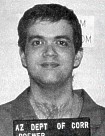
John George Brewer
Murderer Brian Kevin Rosenfeld
Murderer · USA · 1985
Brian Kevin Rosenfeld Brian Kevin Rosenfeld was sentenced to three concurrent l…
23 victims
Brian Kevin Rosenfeld
Murderer · USA · 1985
Brian Kevin Rosenfeld Brian Kevin Rosenfeld was sentenced to three concurrent l…
23 victims
 Yahweh ben Yahweh
Murderer · USA · 1980
Yahweh ben Yahweh was born and legally named Hulon Mitchell Jr. (October 27, 19…
23 victims
Yahweh ben Yahweh
Murderer · USA · 1980
Yahweh ben Yahweh was born and legally named Hulon Mitchell Jr. (October 27, 19…
23 victims
 Russell Ellwood
Murderer · USA · 1991
Russell Ellwood was a former taxi driver. Authorities suspected him of killing…
20 victims
Russell Ellwood
Murderer · USA · 1991
Russell Ellwood was a former taxi driver. Authorities suspected him of killing…
20 victims
 Nathan Ybanez
Homicide · USA · 1998
Nathan Ybanez was a 16-year-old defendant convicted of first-degree murder in h…
1 victim
Nathan Ybanez
Homicide · USA · 1998
Nathan Ybanez was a 16-year-old defendant convicted of first-degree murder in h…
1 victim
 Eugenia Falleni
Murderer · Australia · 1917
Eugenia Falleni Eugenia Falleni was convicted of murder and sentenced to death.…
1 victim
Eugenia Falleni
Murderer · Australia · 1917
Eugenia Falleni Eugenia Falleni was convicted of murder and sentenced to death.…
1 victim
 Carl Coppolino
Murderer · USA · 1965
Carl Anthony Coppolino was a retired physician and an anesthesiologist. · July…
1 victim
Carl Coppolino
Murderer · USA · 1965
Carl Anthony Coppolino was a retired physician and an anesthesiologist. · July…
1 victim
 Steve Alan Boggs
Murderer · USA · 2002
Steve Alan Boggs and Christopher Hargrave formed a white supremacist organizati…
3 victims
Steve Alan Boggs
Murderer · USA · 2002
Steve Alan Boggs and Christopher Hargrave formed a white supremacist organizati…
3 victims
- Gender
- male
- Country
- USA
- Location
- Coconino County, Arizona, USA
- Date of birth
- November 8, 1965
- Age at first offence
- 21
- Characteristics
- necrophilia, rape
- Victim profile
- Rita Brier ( his pregnant girlfriend )
- Method of murder
- Strangulation with a necktie
- Date(s) of murder
- November 11, 1986
- Years active
- 1986
- Date of arrest
- Same day (surrenders)
- Status
-
Executed
Executed by lethal injection in Arizona on March 3, 1993
Case overview
John George Brewer lived in a Flagstaff apartment with his girlfriend, Rita Brier. In the early morning hours of November 11, 1987, Brewer argued about Brewer's excessive dependence on Brier. Later that day, Brier told Brewer that she was going to leave him to help him learn to live on his own. Brewer locked the bedroom door and began to beat and strangle Brier. During a lengthy struggle, Brewer bit Brier, tried to gouge her eyes out, and choked her with his hands. Brewer killed Brier by strangling her with a tie. Brier was 22 weeks pregnant at the time.
After resting from his exertions, Brewer took a shower. He then had sexual intercourse with Brier's corpse. Brewer walked to a nearby bowling alley, called the police, and turned himself in. Brewer pled guilty to first-degree murder.
John George Brewer was the first Arizona inmate executed by lethal injection. Brewer repeatedly declared that he deserved the death penalty and never pleaded for his life, criticizing “'civil libertarians' who seek to forward their own agenda on the back of my case.”
Timeline
- November 11, 1987 — Brewer argued with Rita Brier about his excessive dependence; Brier said she was going to leave him; Brewer locked the bedroom door, beat and strangled her; after resting, Brewer showered and had sexual intercourse with her corpse; Brewer walked to a nearby bowling alley, called the police, and turned himself in.
- July 18, 1988 — Brewer expressed his desire to plead guilty to the charge.
- August 26, 1988 — Brewer was sentenced to death.
- November 19, 1987 — Brewer was indicted for the murder of Rita Brier.
- November 6, 1992 — The clerk of the Arizona Supreme Court filed an automatic notice of post-conviction relief.
- November 23, 1992 — The trial court held a hearing on Brewer's motion to dismiss post-conviction relief and found Brewer competent to file the motion.
- March 3, 1993 — Brewer was executed by lethal injection in Arizona.
- March 2, 1993 — Federal appellate proceedings were documented in the decision involving Elsie Brewer and John Brewer.
Background
Brewer and Rita Brier were living in a Flagstaff apartment. Brewer’s girlfriend, Rita Brier, was 22 weeks pregnant when she was killed.
Elsie Brewer filed a petition in the district court as next friend of John Brewer. Elsie Brewer sought a stay of execution and habeas corpus relief.
The offence
Brewer argued with Brier about Brewer's excessive dependence. After Brier told Brewer she was going to leave him to help him learn to live on his own, Brewer locked the bedroom door and began to beat and strangle Brier. During a struggle in which Brewer bit Brier, tried to gouge her eyes out, and choked her with his hands, Brewer killed Brier by strangling her with a tie. The victim was 22 weeks pregnant at the time.
After resting, Brewer took a shower and had sexual intercourse with Brier's corpse.
Investigation, confession, and arrest
Trial
The sentencing process included findings by the sentencing court regarding aggravating factors and the sufficiency of mitigation evidence.
Competency and plea acceptance
At a hearing, the trial court determined that Brewer understood his rights and the consequences of his plea and that he was competent to ignore the advice of his attorney and plead guilty. The court had before it reports from Dr. Gerstenberger and Dr. Bayless stating Brewer was competent to enter a plea. After questioning Brewer and hearing from trial attorney, the court concluded:
“On the basis of the record I find that the defendant knowingly, intelligently and voluntarily enters into a plea of guilty to the charge of First Degree Premeditated Murder. That there is a factual basis for it. I find that upon review of the psychological reports, the demeanor of the defendant, his responses to the court's inquiries, his full understanding of consequences of the sentencing options available to the court, and there being only two, Mr. Brewer. Further in light of his education he has versed himself fairly in legal procedures and he does understand the complexities of this case. Based upon all of the foregoing I hereby accept the plea of guilty.”
The court, over Brewer’s objections, ordered Brewer’s trial counsel to present mitigation evidence at the sentencing hearing.
Sentencing
At the sentencing hearing, the state presented evidence that the victim suffered great pain. Brewer’s attorney called the jail pastor to testify that Brewer originally expressed bewilderment and remorse for his actions. Brewer’s attorney also called Dr. Bayless to testify in mitigation. Dr. Bayless testified that Brewer was legally competent and had an IQ of 132. He stated Brewer showed no signs of hallucinations or delusions. He also testified that Brewer had a dependency on his mother and a phobia of being alone, and that when Rita Brier told Brewer she was going to leave him, Brewer’s willingness to look at reasonable solutions and to depend on himself became impaired, and he lashed out in anger and killed her. Dr. Bayless testified that Brewer was oriented to reality and had the capacity to appreciate the difference between right and wrong. Brewer addressed the court at length and said that he killed Rita Brier and that he believed execution was the only proper punishment for the premeditated murder of which he was guilty.
The sentencing court found aggravating factors that included that the murder was committed in an especially heinous, cruel and depraved manner and that Brewer’s capacity to appreciate the wrongfulness of his conduct was not impaired. The sentencing court found that the evidence and argument in mitigation were insufficient to outweigh the aggravating circumstances and imposed a sentence of death.
Appeals
Arizona Supreme Court and opinion
Brewer’s direct appeal was documented in State v. Brewer, 170 Ariz. 486, 826 P.2d 783 (1992). Brewer v. Lewis was reported in 989 F.2d 1021 (9th Cir. 1993) and 997 F.2d 550 (9th Cir. 1993).
The procedural posture described included a conviction in Superior Court (Coconino) of first-degree murder and sentence of death, followed by an automatic, direct appeal to the Arizona Supreme Court.
Aggravating circumstances on appeal
The aggravating circumstance “(F) (3) (Grave Risk of Death to Others)” was reversed. The trial court had found this aggravating circumstance based on grave risk of death to the fetus. The Court found it did not exist because the defendant acted with intent to kill the fetus.
The aggravating circumstance “(F)(6) (Heinous, Cruel or Depraved)” was upheld.
Cruel
Cruelty was upheld. Mental anguish was found. The Court defined cruelty as:
“Cruelty is defined as the infliction of pain and suffering in a wanton, insensitive, or vindictive manner.”
170 Ariz. at 501. The Court found the victim was told she was going to be killed and a forty-five minute struggle ensued in which the victim was conscious. Consciousness was demonstrated by the victim’s resistance. The Court found the victim experienced “anguish and terror” during the struggle, knowing that defendant planned to kill her. 170 Ariz. at 501.
Physical pain was found. The Court described the attack as involving that the victim resisted in every possible way, and that defendant beat, strangled, pounded on, and threw the victim. The Court found defendant bashed her head against a wall, attempted to break the victim’s arms by smashing them against a dresser, tried to gouge out her eyes causing severe eye damage, bit the victim multiple times, bruised most of her body, and prevented her attempted escape. The Court found that defendant choked the victim three times until he believed she was dead. It concluded:
“The victim’s ordeal, moreover, was sufficiently prolonged and painful to warrant a finding of cruelty.”
170 Ariz. at 501-502. The medical examiner testified the injuries would have inflicted enormous pain, particularly the eye injury.
Known or reason to know that the victim would suffer
This was found. The Court stated:
“We believe the defendant was fully aware that his attack would inflict great physical and emotional pain.”
170 Ariz. at 501.
The Court held defendant had time to consider his actions, the cruelty being inflicted, and the victim’s pain, but continued the attack unabated.
Heinous or depraved / gratuitous violence / senselessness / helplessness
Heinous or depraved was upheld. Gratuitous violence was found, and the Court held defendant’s admission of necrophilia—specifically engaging in sexual intercourse with the victim’s corpse—constituted gratuitous violence.
Senselessness was found. The victim was defendant’s girlfriend and expectant mother of defendant’s child. The Court found no reason for the killing except that the victim had threatened to leave defendant.
Helplessness was found. The victim was more than five months pregnant and not a significant threat to defendant. The Court found that initially she was able to resist but increasingly became impaired as the struggle progressed, and that toward the end she was entirely helpless, particularly during the multiple strangulations which rendered her unconscious.
Mitigating circumstances on appeal
The Court found mitigating circumstances existed but were insufficiently substantial to call for leniency. The mitigating circumstances included:
- Impairment [personality disorder]
- Difficult childhood/family history
- Lack of criminal history
The Court found defendant failed to prove by a preponderance of the evidence the existence of additional mitigating circumstances, including:
- Duress [personality disorder does not prove duress]
- Age [22 years old at time of crime]
- Remorse
Judgment on direct appeal
Conviction for first-degree murder based on a guilty plea and sentence of death were affirmed.
Federal proceedings involving next friend and stay of execution
A case involving Elsie Brewer as petitioner and Samuel Lewis, Director of the Arizona Department of Corrections, and others as respondents was documented in Brewer v. Lewis, 989 F.2d 1021 (9th Cir. 1993). The proceedings included an appeal involving denial of a petition for habeas corpus and motion for stay of execution filed on behalf of John Brewer scheduled to be executed on March 3, 1993.
District court determinations
The district court held that Elsie Brewer failed to sustain her burden regarding standing and therefore the court lacked jurisdiction to act on the motion for stay of execution and the petition for writ of habeas corpus on behalf of a person in state custody. The motion and petition were denied.
Issues and holdings on appeal (majority)
The appellate panel first considered whether the case qualified for an automatic stay under Ninth Circuit Rule 22-3(c). The panel held that Elsie Brewer did not qualify as the “petitioner” for purposes of the rule prior to establishing standing. The panel stated that until Elsie Brewer demonstrated standing, she may not obtain an automatic stay of the execution of Brewer over his strong objections.
The panel concluded Elsie Brewer failed to establish standing. The panel described that the standard required meaningful evidence that the defendant was suffering from a mental disease, disorder, or defect that substantially affected his capacity to make an intelligent decision. The panel concluded the evidence presented did not outweigh substantial evidence in the record demonstrating competence.
The panel also stated that state court determinations of competence were entitled to a presumption of correctness because they were fairly supported by the record. The panel stated that in addition to earlier findings, within the last two and one-half months, four psychological experts had personally examined and tested Brewer and found him competent.
The panel affirmed the judgment of the district court and dismissed Ms. Brewer’s appeal for lack of jurisdiction, and it denied the application for certificate of probable cause and the motion for stay of execution.
Dissenting opinion
Circuit Judge William A. Norris dissented. The dissent stated that Rule 22-3 required an automatic stay on a first federal habeas petition filed in a death case and that by the plain language of the rule the request should not be denied.
The dissent addressed Brewer’s death-row context and asserted that the state competency finding at the November 23, 1992 hearing was not entitled to a presumption of correctness because it was not full, fair, or adequate. The dissent described that the state court had before it an affidavit from Dr. Rollins stating Brewer was not competent, and that the court rejected it without medical testimony on Brewer’s current mental status.
The dissent described additional evidence submitted by Ms. Brewer, including two letters written by Brewer discussing a planet called “Terracia,” ruled over by the God “Dantain,” and statements about “Fro,” who is described as Dantain’s child and living on Terracia and also living on earth. The dissent also described an affidavit by Dr. Michael Bayless in which he had a change of heart about his earlier testimony at a 1988 state court hearing.
The dissent quoted Brewer’s first letter written early 1989 in part:
“I am the one who killed Fro, the savior of Terracia.”
The dissent quoted that “Fro was to ‘become a man elf when we got to Terracia. However, I knew her ... only as a woman.’” It also quoted that:
“It is hard to explain what I understand Dantain's teachings to be, and my reaction to them.”
“Dantain told me I would be executed in 1-7 years”
“I keep finding myself praying to Christ to forgive me worshipping other Gods.”
The dissent quoted the end of the letter:
“May the Blessings of Dantain, Our Lord God, and Fro, His Holy Son--our savior be upon thee.”
The dissent quoted the second letter written in early 1992:
“I killed Fro because she was going to follow Dantain's command for me to live separate of (not from) her, and I didn't want to.”
The dissent described an affidavit by Brian McKee, a friend of Brewer from high school, and summarized the affidavit as stating Brewer believed Dantain is the God of Terracia and that when he dies he would go to Terracia where Rita is waiting, and that Brewer claimed Dantain would speak through each other.
The dissent also addressed discovery and the timing of the district court hearing, asserting Dr. Bayless was unable to give a definitive medical opinion on the ultimate issue of Brewer’s competence because he did not have an opportunity to examine Brewer, and that counsel was handicapped in cross-examining state mental health experts.
The dissent’s conclusion stated that even without the automatic stay rule, it would issue a temporary stay on several grounds, and the dissent described the argument about not rushing to judgment.
At the end, the dissent included an “ORDER” section stating:
“The petitioner's request for a certificate of probable cause and stay of execution is GRANTED.”
Aftermath and execution details
Brewer’s last meal was recorded as:
- 3 Grilled Pork Chops with gravy
- 1/4 lb. Bacon
- 6 Fried breaded Shrimp
- Beef Rice-a-Roni
- 2-3 slices French Bread with butter
- Applesauce
- 2 cans Canada Dry Ginger Ale with ice
- 1 slice Coconut Cream Pie
- 1 pint orange juice
- 1 can Chicken Noodle Soup with Crackers
- 1 can Pear halves with syrup
- Maxwell House Coffee with cream and sugar
Brewer’s conviction for first-degree murder based on a guilty plea and sentence of death were affirmed, and Brewer was executed by lethal injection in Arizona on March 3, 1993. Brewer was the first Arizona inmate executed by lethal injection.
Other details
Presiding Judge and prosecutorial details were recorded as:
- Presiding Judge: H. Jeffrey Coker
- Prosecutor: Fred Newton
Plea was recorded as July 18, 1988, and sentencing was recorded as August 26, 1988. The execution was recorded as March 3, 1993.
The aggravating circumstances included:
- Especially heinous/cruel/depraved
- Grave risk of death to other (the fetus)
Mitigating circumstances included:
- None sufficient to call for leniency
A procedural statement recorded:
- “The defendant was convicted in Superior Court (Coconino) of first-degree murder and was sentenced to death. This is the defendant's automatic, direct appeal to the Arizona Supreme Court.”
PUBLISHED OPINIONS listed included:
- State v. Brewer, 170 Ariz. 486, 826 P.2d 783 (1992)
- Brewer v. Lewis, 989 F.2d 1021 (9th Cir. 1993)
- Brewer v. Lewis, 997 F.2d 550 (9th Cir. 1993)

Spotted an error, or have more information about this case?