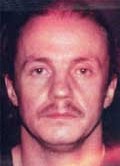
Sebastian Bridges
Murderer Russell Ellwood
Murderer · USA · 1991
Russell Ellwood was a former taxi driver. Authorities suspected him of killing…
20 victims
Russell Ellwood
Murderer · USA · 1991
Russell Ellwood was a former taxi driver. Authorities suspected him of killing…
20 victims
 Robert Martines Perez
Murderer · USA · 1994
Name: Robert Martines Perez · Other name used in proceedings: Robert Martinez P…
15 victims
Robert Martines Perez
Murderer · USA · 1994
Name: Robert Martines Perez · Other name used in proceedings: Robert Martinez P…
15 victims
 Billy Frank Vickers
Murderer · USA · 1993
Billy Frank Vickers Vickers was executed by lethal injection in Texas on Januar…
14 victims
Billy Frank Vickers
Murderer · USA · 1993
Billy Frank Vickers Vickers was executed by lethal injection in Texas on Januar…
14 victims
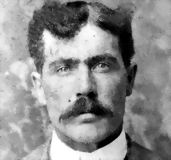 Wallace Wilkerson
Murderer · USA · 1877
Wallace Wilkerson (c. 1834 – May 16, 1879) was an American stockman. He was bor…
1 victim
Wallace Wilkerson
Murderer · USA · 1877
Wallace Wilkerson (c. 1834 – May 16, 1879) was an American stockman. He was bor…
1 victim
 Kelsey Patterson
Homicide · USA · 1992
Kelsey Patterson was executed by lethal injection in Texas on May 18, 2004, aft…
2 victims
Kelsey Patterson
Homicide · USA · 1992
Kelsey Patterson was executed by lethal injection in Texas on May 18, 2004, aft…
2 victims
 Mariano Juarez Rosales
Murderer · USA · 1985
Mariano Juarez Rosales was sentenced to death on December 27, 1985. · 1984 — Ma…
2 victims
Mariano Juarez Rosales
Murderer · USA · 1985
Mariano Juarez Rosales was sentenced to death on December 27, 1985. · 1984 — Ma…
2 victims
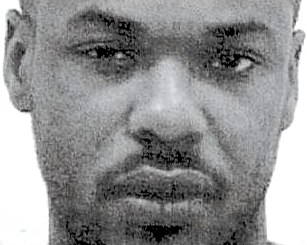 Kevin Cardwell
Murderer · USA · 1991
Kevin DeWayne Cardwell was executed by lethal injection in Virginia on December…
1 victim
Kevin Cardwell
Murderer · USA · 1991
Kevin DeWayne Cardwell was executed by lethal injection in Virginia on December…
1 victim
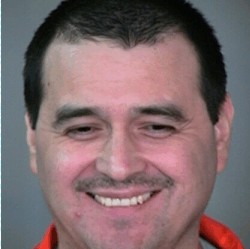 Toribio Rodriguez
Murderer · USA · 1988
Toribio Rodriguez attacked Dawn Dearing in her Tucson apartment. On August 25,…
1 victim
Toribio Rodriguez
Murderer · USA · 1988
Toribio Rodriguez attacked Dawn Dearing in her Tucson apartment. On August 25,…
1 victim
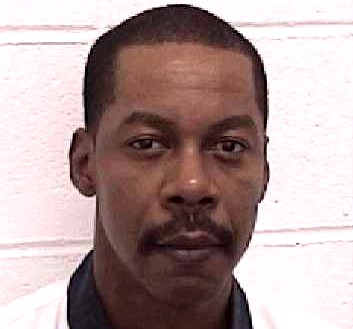 Willie James Wilson
Murderer · USA · 1981
Willie James Wilson Jr. was convicted in Pierce County of armed robbery and two…
2 victims
Willie James Wilson
Murderer · USA · 1981
Willie James Wilson Jr. was convicted in Pierce County of armed robbery and two…
2 victims
- Gender
- male
- Country
- USA
- Location
- Clark County, Nevada, USA
- Date of birth
- September 12, 1963
- Age at first offence
- 34
- Characteristics
- revenge
- Victim profile
- Hunter Blatchford, 27 (his ex-wife's lover)
- Method of murder
- Shooting
- Date(s) of murder
- October 26, 1997
- Years active
- 1997
- Date of arrest
- Same day
- Status
-
Executed
Executed by lethal injection in Nevada on April 21, 2001
Case overview
Sebastian Stephanus Bridges was convicted of first degree murder and kidnapping in connection with the October 26, 1997 killing of Hunter Blatchford and was sentenced to death. He represented himself at trial after the district court found him competent to proceed and capable of representing himself. The Supreme Court of Nevada affirmed his conviction and sentence of death.
Timeline
- October 21, 1997 — Bridges confronted Laurie at the residence she shared with Blatchford; Bridges had a gun and suggested that Laurie kill him after they discussed his claim that he could not kill himself.
- October 21, 1997 — Bridges gave Laurie a key to a car ignition and told her she could never get away from him; Bridges told Laurie he had been secretly watching her and Blatchford for the last three weeks.
- October 26, 1997 (approximately 5:00 p.m.) — Laurie, Hunter Blatchford, and Bridges met at Bridges' apartment to discuss why Laurie had left and Bridges' offer about a new truck and Laurie returning for two months; Bridges offered Laurie $50,000 in cash and stated he was leaving next day while he had Laurie's belongings stored.
- October 26, 1997 (approximately 5:00 p.m.) — The trio traveled to a remote location with trailers; Bridges directed them to a trailer with his name on it, returned to the car for the key, pulled out a gun, engaged child safety locks, and shot Blatchford in the abdominal region.
- October 26, 1997 — Bridges beat Blatchford over the head with the gun, struck Laurie three times with the gun, handcuffed Blatchford and Laurie, cuffed Laurie’s legs, covered Blatchford’s body with garbage bags, drove toward California, exited the freeway at Nipton Road, dug a grave, covered Blatchford with dirt and rocks, removed Blatchford’s clothes, removed Laurie’s handcuffs, and left the gravesite.
- October 26, 1997 (approximately 9:48 p.m.) — Nevada Highway Patrol trooper Kenneth M. Twiddy observed Bridges’ car parked at the shoulder of the road, investigated, searched Bridges, observed blood and dirt, and Laurie emerged and yelled that Bridges had murdered her friend.
- October 26, 1997 — Bridges waived his Miranda rights and spoke with police; he eventually admitted to shooting Blatchford and claimed it was an accident, and he admitted he had buried the body in the desert.
- July 24, 1998 — The district court entered the judgment of conviction.
- August 23, 2000 — Bridges v. State 116 Nev. Adv. Op. No. 84 was decided; the Supreme Court of Nevada affirmed Bridges' conviction and sentence of death.
- April 21, 2001 — Bridges was executed by lethal injection in Nevada.
Background
Laurie Bridges testified that she and Bridges lived together in California prior to May of 1997, when Laurie decided to leave Bridges and go to Las Vegas. She did not tell Bridges that she was leaving or where she was going. Laurie became involved in a serious relationship with Hunter Blatchford in Las Vegas.
Laurie avoided contact with Bridges out of fear; Bridges threatened that if he ever found out that she was with another man, he would kill both Laurie and the other man. Laurie stated that Bridges eventually tracked her down. She and Hunter Blatchford met as co-workers in 1996 while Laurie and Bridges were living in Las Vegas.
Bridges was from South Africa. He changed his name from Carl Coetzer. The trial record included a letter written by Bridges to Laurie.
The offence
Confrontation and coercion prior to the killing
On October 21, 1997, Bridges confronted Laurie at the residence she shared with Blatchford. Bridges had a gun and told Laurie that he had tried to kill himself but could not do it. During an emotional discussion, Bridges gave the gun to Laurie and suggested that she kill him; Laurie refused. Bridges asked Laurie to drive him to the apartment where he was staying, and Laurie agreed.
At his apartment, Bridges pleaded with Laurie to give him another chance, asked if they could at least be friends, and gave Laurie his phone number. Bridges then asked Laurie to drive him back to his car near her residence. In Laurie's truck, Bridges handed her a key that fit the ignition and told her:
"[J]ust remember wherever you go, whatever you do for the rest of your life I'll know where you are and what you're doing, and you can never get away from me."
Laurie stated that Bridges told her he had been secretly watching her and Blatchford for the last three weeks and that he knew their schedules. Later that day, Laurie told Blatchford of her encounter with Bridges. Using the phone number that Bridges had given to Laurie, Blatchford called Bridges and spoke with him on at least two occasions. Blatchford and Bridges agreed to meet together with Laurie at Bridges' apartment.
October 26, 1997 meeting and driving to the remote location
Laurie described the purpose of the October 26 meeting as:
"to bring closure to the whole thing . . . so that everybody would know where they stood and what was what and end it."
At approximately 5:00 p.m. on October 26, the trio met at Bridges' apartment. They discussed why Laurie had left. They discussed Bridges' offer to buy Blatchford a new truck if Blatchford allowed Laurie to return and live with Bridges for two months. Blatchford refused. Bridges offered Laurie $50,000 in cash that he claimed was her share of a business he had liquidated. Bridges informed the couple that he was leaving the next day and that he had some of Laurie's belongings and other household items in storage.
Laurie and Blatchford agreed to go with Bridges in his car to the supposed storage site. Bridges drove to a remote location where several trailers were sitting. Laurie stated that it was getting dark and that the trio got out of the car and Bridges directed Blatchford and Laurie to one of the trailers that Bridges claimed had his name on it. Bridges indicated he would give them the key to the trailer, which he had left at his car, so all three returned to the car.
After Blatchford and Laurie got into the car, Bridges reached down near the driver's seat and pulled out a gun. The child safety locks in the car were engaged, so Laurie and Blatchford could not get out of the car. Bridges “turned very angry” and said:
"now we're really gonna talk, now we're really gonna talk,"
and pointed the gun at Blatchford. Blatchford responded:
"[Y]ou're gonna kill me now, aren't you? I trusted you. I trusted you, man, we were gonna talk."
Shooting and beatings
Bridges fired one shot at Blatchford, hitting him in the abdominal region. Bridges told Laurie that it was her fault that a man had to die because of what she had done. Blatchford groaned and fell unconscious shortly after the shooting.
Bridges began beating Blatchford over the head with the gun. Laurie put her hand up to stop Bridges from hitting Blatchford, and Bridges struck her three times with the gun: once on each side of the head and once on the hand.
Bridges handcuffed Blatchford and Laurie, and he placed cuffs on Laurie's legs. Bridges used garbage bags to cover Blatchford's body and told Laurie he did not want police to see the body.
Burying the body in the desert and removal of restraints and clothing
Bridges drove with Laurie toward California. Bridges exited the freeway at Nipton Road and stopped the car. He removed Laurie's leg-cuffs. Using a shovel taken from the trunk of his car, Bridges dug a grave for Blatchford. Before placing the body in the grave, Bridges removed the handcuffs and garbage bags from the body. Bridges decided to remove Blatchford's clothes to expedite the decomposition process. Bridges covered Blatchford's body with dirt and rocks.
Before leaving the site, Bridges removed Laurie's handcuffs. Bridges and Laurie left the gravesite and drove back toward Las Vegas. Bridges told Laurie she must never tell anyone what had happened and that if she told, she would be implicated. Laurie responded she would not tell and asked Bridges to let her go. Bridges indicated he did not trust her and that he would take her to his apartment to stay with him.
At one point Bridges asked Laurie whether it would make her happy if he shot himself or turned himself in. During the drive Bridges began “fiddling” with the gun. Bridges indicated the gun was jammed, and Laurie warned that it might discharge if he tried to fix it while driving. Bridges pulled the car off the road and tried to fix the gun.
When a policeman pulled up and approached, Bridges gave the gun to Laurie telling her to place it between her legs.
Police stop and discovery of the killing
Nevada Highway Patrol trooper Kenneth M. Twiddy testified. At approximately 9:48 p.m., Twiddy observed Bridges' car parked at the shoulder of the road. Twiddy stopped and approached to see if Bridges needed assistance. Bridges told Twiddy that he had stopped so that a woman passenger could go to the bathroom.
During the conversation, Twiddy pointed his flashlight inside the car and observed Laurie shaking and appearing frightened. Twiddy observed what appeared to be blood on the passenger seat, console, door, and driver's seat, and he observed ammunition on the floor of the car. Twiddy called for back-up and ordered Bridges to step out of the car and approach Twiddy's police car. After Bridges exited the car, and while Twiddy was speaking with him, Laurie emerged from the driver's side and came toward Twiddy. Laurie yelled that Bridges had murdered her friend. Twiddy searched Bridges for weapons and found a pair of handcuffs in Bridges' back pocket. Twiddy noticed blood on Bridges' pants and shirt, and dirt on his hands, arms, and nails, and on his shoes.
Investigation and evidence
Admissions to police
Bridges waived his rights pursuant to Miranda and spoke with police about what had happened. Bridges eventually admitted to shooting Blatchford but claimed it was an accident. Bridges told police he had wanted to take his wife and Blatchford to California so they could see a priest.
Bridges stated that at gunpoint he ordered Blatchford to place handcuffs on his wrists. Bridges told police that the gun accidentally discharged. Bridges admitted he had buried the body in the desert.
Items found in the car
A search of the passenger compartment of Bridges' car resulted in the discovery of several items, including:
- a Colt .45 pistol and a holster;
- .45 magazines and cartridges;
- a pin used for assembling/disassembling the gun;
- a bag containing two rolls of duct tape and a box of 42-gallon plastic trash bags (and some of the ammunition noted above);
- a bank bag containing $50,000 in cash;
- two sets of handcuffs and a set of leg-cuffs; and
- a plastic bag containing latex gloves, white nylon ropes, black nylon cords, a black shirt, a black stocking cap, a pair of black gloves, and a box of envelopes.
A search of the trunk yielded additional items, including:
- a stun gun;
- a shovel; and
- a black plastic bag containing bloodstained clothing and a wallet belonging to Blatchford.
Police obtained a positive match for Bridges' fingerprints on the pistol, one of the magazines, the leg-cuffs, the lid of the trunk, and the rear driver's side door.
Autopsy findings
Blatchford's body was exhumed. An autopsy revealed that Blatchford sustained a single, close-range, non-contact gunshot that went through his left forearm and abdominal area, perforating the small intestine and cutting the internal iliac artery. The autopsy findings indicated internal hemorrhaging, causing his death at the earliest five minutes and probably ten to fifteen minutes after he was shot.
Arrest
Bridges was stopped by trooper Kenneth M. Twiddy at approximately 9:48 p.m. at the shoulder of the road. Bridges was ordered out of the car and later searched for weapons. After Laurie emerged and yelled that Bridges had murdered her friend, Twiddy searched Bridges and found a pair of handcuffs in his back pocket, with blood on his clothing and dirt on his hands, arms, nails, and shoes.
Trial
Bridges was charged by the State with the October 26, 1997 murder of Hunter Blatchford and with related offenses, and the State sought the death penalty for the murder. The Supreme Court of Nevada stated that Bridges represented himself at trial pursuant to his own request after the district court found him competent to proceed and capable of representing himself.
Bridges was convicted of:
- first degree kidnapping (of Blatchford) with the use of a deadly weapon;
- second degree kidnapping (of Bridges’ wife, Laurie) with the use of a deadly weapon;
- battery (of Laurie) with the use of a deadly weapon; and
- murder with the use of a deadly weapon.
After the penalty hearing, the jury sentenced Bridges to death for the murder. The jury found one aggravating circumstance: that the murder was committed during a kidnapping or attempted kidnapping with the use of a deadly weapon.
The district court sentenced Bridges to terms of imprisonment for the other offenses. The district court entered the judgment of conviction on July 24, 1998.
Bridges did not testify at trial or call any witnesses. However, he argued that the shooting was accidental.
Evidence from Laurie and her redirect/recross
Laurie testified about events leading up to the murder of Hunter Blatchford. Bridges later appealed, claiming the district court erroneously restricted his recross-examination of Laurie. The Supreme Court addressed that Bridges elicited testimony during a limited recross-examination establishing that Laurie met him while he was a prison inmate and while Laurie was a peace officer/nurse at the prison, that Laurie became involved in a physical relationship with Bridges, and that it was against the law for such a relationship.
The court also described a letter Laurie had written to Bridges and indicated the trial transcript likely contained an error in that Laurie referred to “prison” rather than “person.” The State conceded at oral argument that the transcript likely contains an error in that Laurie did refer to “prison” during questioning.
Letter quotation and argument about nationality
Bridges challenged a prejudicial reference to nationality in a letter written by him to Laurie prior to trial. The Supreme Court described the following reference:
"what two people share in a marriage should be sacred, something most Americans don't know anything about "
Bridges conceded he did not make a timely objection to this reference. The district court repeatedly told Bridges he was entitled to the redaction of potentially prejudicial references in the letter, but Bridges refused, indicating that he wanted the jury to see the whole letter. The Supreme Court concluded Bridges failed to demonstrate plain or constitutional error, and that the letter was relevant to motive as evidence of jealousy and possessiveness.
Closing remarks and statements by Bridges
During closing argument in the penalty phase, Bridges spoke:
"If what [the prosecutors say] is true, there's only one equation, and I donït think I have to even tell you what that is. I know I didn't murder Hunter Blatchford. You've made a determination; it took you twenty-five minutes to determine my innocence versus my guilt. If you could make that determination in twenty-five minutes based on lies, then it shouldn't even take your twenty-five minutes to come to a conclusion. There's only one answer to the equation, and that is to execute me. Thank you."
In rebuttal, prosecutor Gary L. Guymon remarked that Bridges had on several occasions invited the jury to take his life.
In another closing-related description, Bridges begged the jury in closing arguments to look at photographs of the body and find the shooting was an accident caused by a sharp movement and pressure on the gun, and he cried each time he mentioned his wife, hardest when he spoke of her being pistol-whipped. Bridges also told the panel:
"This is malicious prosecution,"
and also told the jury:
"If you find with any reasons, with an intent, I killed this man, you should kill me."
Sentencing
The jury sentenced Bridges to death for the murder after finding one aggravating circumstance: that the murder was committed during a kidnapping or attempted kidnapping with the use of a deadly weapon.
The Supreme Court described mandatory review under NRS 177.055(2), requiring review of (b) whether evidence supports the finding of an aggravating circumstance; (c) whether the sentence of death was imposed under passion, prejudice, or any arbitrary factor; and (d) whether the death sentence was excessive considering both the crime and the defendant.
Appeals
Bridges appealed his conviction and sentence. The Supreme Court of Nevada issued Bridges v. State 116 Nev. Adv. Op. No. 84 (August 23, 2000) and affirmed Bridges' conviction and sentence of death.
Appellate issues at the guilt phase
Bridges raised three instances of alleged error during the guilt phase that were not properly preserved for appeal, so the Supreme Court considered only plain or constitutional error. The Supreme Court rejected each claim:
- the allegedly prejudicial reference to nationality in a letter;
- jury instructions allegedly blurring elements of first degree murder, including challenges to jury instruction 19 regarding premeditation and deliberation;
- alleged State comments on Bridges’ failure to testify.
For the failure-to-testify issue, the Supreme Court included a portion of a dispute in closing argument and quoted the exchange:
THE DEFENDANT: . . . . A lot of people would say I was trying to avoid an altercation, and he came across with his arm, he swung out and that’s when --
MR. WALL: Judge, I'm going to object. This is testimony. If he would like to be sworn, he had the opportunity to do that.
The court sustained the prosecutor's objection to the extent that Bridges’ argument was not based on the evidence.
The Supreme Court concluded the prosecutor's comments were not patently prejudicial, noting prior discussion allowed Bridges to explain why he did not testify and concluding Bridges failed to show prejudicial error requiring relief.
Evidence sufficiency
Bridges claimed insufficient evidence supported his conviction for first degree kidnapping with the use of a deadly weapon and the jury’s finding of the kidnapping aggravating circumstance. The Supreme Court concluded ample evidence showed Bridges committed first degree kidnapping and the kidnapping aggravating circumstance, relying on Laurie’s testimony about luring Blatchford to a remote location for the purpose of killing him and physical evidence in Bridges' car. The Supreme Court stated kidnapping does not require force or restraint and may be shown by willfully inveigling, enticement, decoying, abducting, or carrying away by any means whatsoever.
Penalty phase instructions and aggravating circumstance
Bridges challenged jury instruction No. 11 at the penalty phase, which instructed the jury about an aggravating circumstance. Bridges argued the instruction omitted the requirement of first degree kidnapping required by NRS 200.033(4). The Supreme Court concluded Bridges was not entitled to relief despite the erroneous instruction, emphasizing no doubt that the jury’s finding applied because the jury had previously found Bridges guilty of first degree kidnapping of Blatchford and Blatchford was killed in the course of that kidnapping.
The Supreme Court also described a reweighing analysis and stated none of the specific statutory mitigating circumstances applied under NRS 200.035. The Supreme Court concluded there was no mitigating circumstance sufficient to outweigh the single valid aggravating circumstance.
The Supreme Court further addressed Bridges’ claim that prosecutor Guymon improperly used “aggravating” and “aggravation” terms in rebuttal closing argument during the penalty phase. The Supreme Court strongly criticized that characterization but held the error was harmless under the unique circumstances of the case, citing the jury instructions and special verdict form reflecting only one aggravating circumstance and that there was little mitigation.
Personality disorder and self-representation
Bridges argued the jury’s penalty determination was tainted because the jury did not hear evidence that he had narcissistic personality disorder. The Supreme Court discussed three experts who found evidence of a narcissistic personality but also found Bridges competent. The Supreme Court rejected Bridges’ claim that his decision not to present mitigating evidence was akin to ineffective assistance because Bridges represented himself and could not complain about his own representation as ineffective counsel. The Supreme Court reaffirmed the principle that a defendant could choose to present mitigating evidence, not present it, or even seek the death penalty.
Excessiveness of the death penalty
Bridges argued the death penalty was excessive given the crime and defendant. The Supreme Court disagreed, describing that Laurie left him months before Bridges tracked her down, confronted her, and eventually killed her lover; describing Bridges’ calculated fashion, beatings after the shooting, callousness, prior criminal history including property crimes, and placement of blame on other individuals including Laurie.
Outcome
The Supreme Court of Nevada affirmed Bridges’ conviction and sentence of death.
Aftermath
On April 21, 2001, Bridges was executed by lethal injection in Nevada.
Bridges was taken to the execution chamber at 8:50 p.m. and was strapped to a table. He was pronounced dead at 9:18 p.m., minutes after a combination of 3 drugs, 2 of them lethal, flowed into his body through a needle in his arm.
Bridges was escorted into the execution chamber wearing a suit and tie instead of new prison blue jeans and denim shirt, after receiving an unusual last request from Department of Prisons Director Jackie Crawford. Crawford honored Bridges’ request to have his minister present. Crawford said it was the first execution under her direction.
Bridges made last-minute statements denying culpability. Reported statements included:
"I killed nobody, I didn't kill anybody,"
and, through the witness window, Bridges said:
"This is murder."
The execution communications included Crawford’s quoted account of Bridges’ last words:
"You have no justification to kill me. It's just wrong. It's just wrong."
Bridges spent his last hours visiting with his minister and Assistant Federal Public Defender Michael Pescetta, who sought to persuade Bridges to appeal his case. Pescetta said Bridges died protesting his innocence and the unfairness of the process while Bridges refused to stop the execution.
Walt Blatchford, the victim’s father, traveled from Tennessee to watch Bridges die. Blatchford said the execution was a step toward closure, and described Bridges as stoic and prepared to go out gracefully. Blatchford also said he was impressed when Bridges went in and looked at him through the witness window, and Blatchford described being upset by last-minute efforts to stop the execution.
A protest vigil occurred outside the prison gates, including Nancy Hart of Amnesty International and the Nevada Coalition Against the Death Penalty. Hart called the execution a violation of Bridges’ fundamental human rights and stated:
"No other industrialized Western nation uses the death penalty,"
"It's barbaric and it should be abolished."
During capital punishment legislative consideration, a bill and moratorium provisions were described, including an April 10 amendment by the Senate Judiciary Committee and Sen. Mark James urging lawmakers to approve the moratorium while a special commission studied alleged inequities. Gov. Kenny Guinn said he would evaluate whether to let the Bridges execution proceed but later indicated he would not intervene to halt Bridges’ execution. The Supreme Court also described the mandatory review system under NRS 177.055(2).
Spotted an error, or have more information about this case?