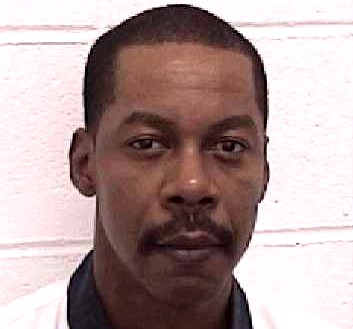
Willie James Wilson
Murderer Ervil LeBaron
Murderer · USA · 1972
Ervil Morrell LeBaron (1925 to August 16, 1981) was the leader of a polygamous…
35 victims
Ervil LeBaron
Murderer · USA · 1972
Ervil Morrell LeBaron (1925 to August 16, 1981) was the leader of a polygamous…
35 victims
 Brian Kevin Rosenfeld
Murderer · USA · 1985
Brian Kevin Rosenfeld Brian Kevin Rosenfeld was sentenced to three concurrent l…
23 victims
Brian Kevin Rosenfeld
Murderer · USA · 1985
Brian Kevin Rosenfeld Brian Kevin Rosenfeld was sentenced to three concurrent l…
23 victims
 Marvin Gray
Murderer · USA · 1975
Marvin Gray was convicted killer who claimed responsibility for 23 slayings and…
23 victims
Marvin Gray
Murderer · USA · 1975
Marvin Gray was convicted killer who claimed responsibility for 23 slayings and…
23 victims
 Yahweh ben Yahweh
Murderer · USA · 1980
Yahweh ben Yahweh was born and legally named Hulon Mitchell Jr. (October 27, 19…
23 victims
Yahweh ben Yahweh
Murderer · USA · 1980
Yahweh ben Yahweh was born and legally named Hulon Mitchell Jr. (October 27, 19…
23 victims
 Russell Ellwood
Murderer · USA · 1991
Russell Ellwood was a former taxi driver. Authorities suspected him of killing…
20 victims
Russell Ellwood
Murderer · USA · 1991
Russell Ellwood was a former taxi driver. Authorities suspected him of killing…
20 victims
 David Lauren Crespi
Murderer · USA · 2006
David Lauren Crespi was a 45-year-old bank executive. He worked as a senior vic…
2 victims
David Lauren Crespi
Murderer · USA · 2006
David Lauren Crespi was a 45-year-old bank executive. He worked as a senior vic…
2 victims
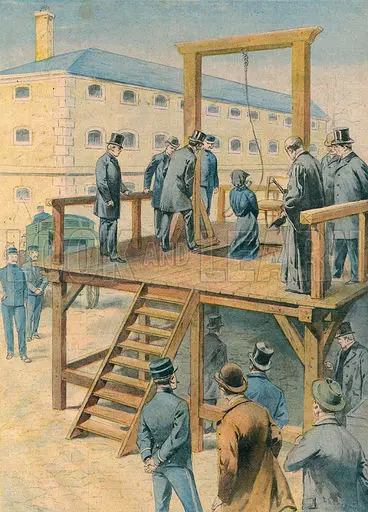 Mary Mabel Rogers
Murderer · USA · 1902
Mary Mabel Rogers (1883 – December 8, 1905) was the last woman legally executed…
1 victim
Mary Mabel Rogers
Murderer · USA · 1902
Mary Mabel Rogers (1883 – December 8, 1905) was the last woman legally executed…
1 victim
 Jesse Clarence Pratt
Murderer · USA · 1986
Jesse Clarence Pratt was sentenced to death on February 22, 1988. His convictio…
1 victim
Jesse Clarence Pratt
Murderer · USA · 1986
Jesse Clarence Pratt was sentenced to death on February 22, 1988. His convictio…
1 victim
 Jennifer San Marco
Mass murderer · USA · 2006
Jennifer San Marco (December 6, 1961 – January 30, 2006) was a former US Postal…
7 victims
Jennifer San Marco
Mass murderer · USA · 2006
Jennifer San Marco (December 6, 1961 – January 30, 2006) was a former US Postal…
7 victims
 Marion Hedgepeth
Murderer · USA · 1870
Name: Marion Hedgepeth · Also known as: “Handsome Bandit,” “Debonair Bandit,” “…
2 victims
Marion Hedgepeth
Murderer · USA · 1870
Name: Marion Hedgepeth · Also known as: “Handsome Bandit,” “Debonair Bandit,” “…
2 victims
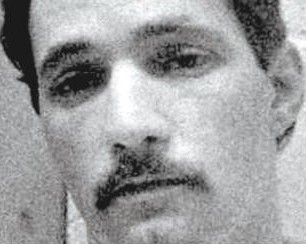 Joseph Savino
Murderer · USA · 1988
Joseph Savino was sentenced to death and was executed by lethal injection in Vi…
1 victim
Joseph Savino
Murderer · USA · 1988
Joseph Savino was sentenced to death and was executed by lethal injection in Vi…
1 victim
- Gender
- male
- Country
- USA
- Location
- Pierce County, Georgia, USA
- Date of birth
- 1956
- Age at first offence
- 25
- Characteristics
- armed robbery
- Victim profile
- Alfred Boatwright, 64, and Morris Highsmith, 58
- Method of murder
- Shooting
- Date(s) of murder
- June 22, 1981
- Years active
- 1981
- Date of arrest
- —
- Status
-
Sentenced to death
Sentenced to death on February 15, 1982
Case identification
Willie James Wilson Jr. was convicted in Pierce County of armed robbery and two counts of murder. He was sentenced to death for each of the murders and to life imprisonment for the armed robbery. His trial was conducted under the Georgia Unified Appeal Procedure.
Timeline
- June 22, 1981 — Alfred Boatright and Morris Highsmith were shot to death at approximately 4:00 p.m. while they were working at Boatright's handy stop near Bristol, Georgia; ninety dollars was taken from the store.
- June 30, 1981 — Willie James Wilson was arrested in Hinesville.
- July 2, 1981 — M. C. Pritchard was appointed to represent him.
- January 20, 1982 — Two witnesses subpoenaed by the defense were not served and were not present to testify.
- January 25, 1982 — The case was called for trial; Willie James Wilson moved for a continuance on the ground that the two subpoenaed witnesses had not been served.
- February 15, 1982 — Willie James Wilson was sentenced to death for the murders.
- March 1, 1983 — The appeal was decided.
- March 1991 — Willie James Wilson's case was sent back to the trial court on the issue of mental retardation.
The offence
Alfred Boatright, 64, and Morris Highsmith, 58, were shot at approximately 4:00 p.m. on June 22, 1981 while they were working at Boatright's handy stop near Bristol, Georgia.
Ninety dollars was taken from the store.
Willie James Wilson admitted that he shot Boatright and Highsmith and took $90 from the store. He contended that the shootings resulted from a misunderstanding and that the theft of the cash was an afterthought.
Investigation
Willie James Wilson had been a soldier stationed at Fort Stewart near Hinesville, and he was AWOL from Fort Stewart at the time of the alleged offense.
Boatright lived long enough to call for help. When law enforcement officers arrived, Boatright was still alive, sitting in a black chair behind the counter with the telephone in his lap. Blood was observed on the floor between that chair and a brown chair in the rear of the store near the beer cooler. The brown chair also had blood on it. Highsmith was lying face down on the floor in the rear of the store with an overturned folding chair lying across his legs. No weapons were found in the store.
Highsmith died from a gunshot wound which entered his left shoulder and penetrated his spinal canal. In the opinion of Dr. Byron Dawson, who conducted the autopsy, this wound caused instant paralysis of all muscles below the level of the wound and immediate loss of control of heartbeat and breathing. Boatright suffered a gunshot wound in his right side which caused internal hemorrhaging and, within an hour, his death.
Arrest
Willie James Wilson was arrested later in Hinesville.
In a statement given after his arrest, and in his testimony at trial, he admitted that he shot Boatright and Highsmith and took $90 from the store.
Defence position and disputed issues at trial
Willie James Wilson testified that his wandering took him to Bristol. He bought a pack of cigarettes at Boatright's and left, but stopped because he noticed his car was running hot and discovered he was nearly out of gas. He returned to Boatright's and instructed Morris Highsmith to fill it up. He then testified that the two entered the store.
Willie James Wilson testified that when he told Boatright he did not have enough money to pay for the gas, he and Boatright “started exchanging profanity words.” He testified that he pulled his pistol out intending to pawn it for the gas. He stated that before he could fully explain the situation, he saw Highsmith bending down behind the counter, got scared, and shot both Highsmith and Boatright. After the “accident” happened, he took the cash he saw on the counter near the cash register and fled.
The state disputed much of Willie James Wilson’s account. It pointed out that had the two victims been standing behind the counter in the positions described by Willie James Wilson, Boatright would have been to his left and Highsmith to his right, making it unlikely that Willie James Wilson could have shot Boatright in his right side and Highsmith in his left side. The state also pointed out there was a television set on the counter which would have been between Willie James Wilson and Highsmith. The state also theorized that given the instant paralysis Highsmith’s wound caused, Highsmith’s body should have been discovered behind the counter rather than in the middle of the floor in the rear of the store with a folding chair lying across his legs.
The state theorized that when Willie James Wilson entered the store, he walked to the beer cooler and opened the door, and then, while Highsmith sat in the wooden folding chair and Boatright sat in the brown upholstered chair with their backs to the beer cooler, he shot both of them, ran to the cash register, took the cash, and fled. The state theorized that Highsmith, upon being shot, immediately fell to the floor with his chair falling across his legs, and that Boatright walked to the telephone behind the counter leaving a trail of blood from the brown chair to the telephone.
Witness evidence regarding events leading to the robbery
Darris Miller testified that in Hoboken Willie James Wilson suggested they “hit” a place, and Miller dissuaded him, telling him the Hoboken police were too bad. Miller testified that they went from Hoboken to Waycross, gassed up, and drove west from Waycross still looking for a place to rob. Miller testified that Willie James Wilson pulled a pistol from under the car seat and Miller put two shells in it. Miller further testified that Willie James Wilson “said if he was to ever hit a place, he don’t leave no witnesses . . .” and that the plan involved not leaving witnesses.
Willie James Wilson testified in his own behalf and denied that he and Miller had talked about robbing anyone.
Charge and convictions
The trial court charged malice murder and Willie James Wilson was convicted of armed robbery and two counts of murder.
Willie James Wilson was sentenced to death for each of the murders and to life imprisonment for the armed robbery.
Trial proceedings and rulings on motions
Willie James Wilson filed a motion for funds to employ a private psychiatrist to examine him. At the hearing on the motion, he testified that nothing had occurred in his past that had required a mental evaluation, that he had not filed a plea of insanity, and that he did not consider himself to be insane. No evidence was presented to contradict his testimony, and he did not attempt to raise a defence of insanity at trial. The trial court denied his request for an independent evaluation, but offered an examination by state psychiatrists; this offer was refused. The trial court’s denial of the request for an independent psychiatric examination was upheld.
Willie James Wilson was arrested June 30, 1981, indicted the next day, and on July 2 M. C. He filed a motion for additional legal assistance and funds to hire an investigator. On August 24, 1981, the trial court appointed John Thigpen to assist Mr. Pritchard, but denied Willie James Wilson’s request for an investigator. The trial began in the latter part of January 1982, and the court found no abuse of discretion in failing to provide additional funds for an investigator.
In three separate motions, Willie James Wilson sought funds for a community opinion survey for a change of venue, to investigate and compute discrepancies between the population of Pierce County and its grand and traverse jury pools for jury challenges, and to conduct a statewide survey to determine whether the death penalty was arbitrarily enforced in Georgia. These motions were denied, and the denial was upheld.
Willie James Wilson contended that the court erred in overruling his grand and traverse jury challenges. The trial court properly overruled his jury challenges because the percentages established failed to show substantial underrepresentation. The jury commission at the time of the hearing was composed of four white males, one black male, and one white female, all of whom were over 40; the contention that the jury commission was unrepresentative of the population of Pierce County provided no basis for reversal.
Willie James Wilson contended that his challenges to eleven prospective jurors should have been granted. Two prospective jurors were challenged because they were reserve police officers: Charles Foreman, who was a member of the inactive reserves and might be called for extra help, and Larry Walker, an auxiliary policeman who stated he had never done criminal investigation on behalf of the Blackshear police department and only helped with ball games. Nine prospective jurors were challenged because they knew one or more of the victims or their families. Juror Ann C. Wall had worked in the local ASCS office for years and came into contact with Alfred Boatright. She testified she might favor his side a “little bit” based on her friendship but thought she could be fair and impartial, would consider only the evidence presented, and had no opinion regarding Willie James Wilson’s guilt or innocence. The remaining challenged jurors knew one or the other of the victims only casually and expressed no bias or prejudice against Willie James Wilson and no opinion as to guilt or innocence.
Willie James Wilson contended the trial court erred in denying his motion for change of venue; the court found no error. Of 64 jurors examined, only 4 were excused for bias or prejudice resulting from pre-trial publicity. None of the jurors put on him expressed any opinion as to guilt or innocence, and the low number excused corroborated absence of prejudicial publicity requiring a change of venue.
Willie James Wilson contended that because his character was placed in issue during jury voir dire, the entire jury panel should have been dismissed and a new venire obtained. When the court asked the fourth juror the statutory question—“Have you any bias or prejudice resting on your mind either for or against the accused?”—the juror responded that he did because he was a retired military man and he had read that Willie James Wilson had been AWOL at the time of the alleged offense. The juror was excused, and the court refused to disqualify the rest of the jurors; it instructed them to disregard unresponsive answers and asked each juror if they had heard the remark and whether it had affected impartiality. Only one juror indicated bias concerning the answer; this juror was excused. The court found no error in refusing to disqualify the entire panel given remedial action and the responses of the jurors, and especially given that Willie James Wilson admitted on direct examination that he was absent without leave from Fort Stewart when he killed Boatright and Highsmith.
On January 25, 1982, Willie James Wilson moved for a continuance because two witnesses subpoenaed by the defense on January 20 had not been served and were not present. The sheriff testified he searched for but could not locate these witnesses. Willie James Wilson’s attorneys admitted they had not talked to either witness. They contended one witness would testify the shooting was not planned but resulted from an argument, and the other would testify it saw the first witness run out of the door when the shooting started. No witnesses were offered to substantiate the information, and the court found Willie James Wilson failed to demonstrate that a continuance would enable locating the witnesses or that the missing testimony would have been material. The trial court did not abuse its discretion by refusing to grant a continuance.
Sentencing and aggravating circumstances
During sentence review, the jury recommended the sentence of death for each of the murders. The supporting aggravating circumstances were summarized as follows:
- The murder of Alfred Boatright was committed while Willie James Wilson was engaged in the commission of two other capital felonies, the murder of Morris Highsmith and the armed robbery of Alfred Boatright.
- The murder of Morris Highsmith was committed while Willie James Wilson was engaged in the commission of two other capital felonies, the murder of Alfred Boatright and the armed robbery of Alfred Boatright.
The appellate court discussed the doctrine of “mutually supporting aggravating circumstances,” stating that it precluded simultaneous use of the murder of Boatright to support the death penalty for Highsmith and use of the murder of Highsmith to support the death penalty for Boatright. As a result, it set aside the statutory aggravating circumstance that the murder of Highsmith occurred during the murder of Boatright. The appellate court stated that since at least one statutory aggravating circumstance remained to support each sentence of death, elimination of one circumstance did not require reversal of either sentence. It found the remaining statutory aggravating circumstances were supported by the evidence.
The appellate court held the trial court did not err when it allowed the state to introduce evidence of Willie James Wilson’s prior record of convictions during the sentencing phase.
The appellate court held the sentences of death were not imposed under the influence of passion, prejudice, or other arbitrary factor.
Willie James Wilson argued the trial court erred in refusing to allow him to present to the jury, during the sentencing phase, evidence of penalties imposed in allegedly similar cases in the Waycross Judicial Circuit. The appellate court found no error and held that it was for the court, not the jury, to determine whether a sentence of death was excessive or disproportionate to the penalty imposed in similar cases.
The appellate court stated that in the similar cases listed in the appendix, juries found the death penalty appropriate where an adult was found to have been the actual perpetrator of or active participant in double murders upon victims unrelated to the defendant, and that features frequently found in such cases included burglaries, armed robberies, or kidnappings. It concluded that Willie James Wilson, an adult, was found guilty of being the actual perpetrator of the murder of two unarmed, elderly men during the armed robbery of a convenience store, and that the sentences of death were neither excessive nor disproportionate to the penalty imposed in similar cases, considering both the crime and the defendant.
Appeals
Willie James Wilson’s appeal was decided on March 1, 1983. The appellate court affirmed his convictions and sentences.
The appellate court set aside one of the statutory aggravating circumstances (the circumstance that the murder of Highsmith occurred during the murder of Boatright) but stated that at least one statutory aggravating circumstance remained to support each death sentence.
In March 1991, Willie James Wilson’s case was sent back to the trial court on the issue of mental retardation.
Outcome
The appellate court affirmed after review. The elimination of one statutory aggravating circumstance did not require reversal of either death sentence.
Aftermath
The case was sent back to the trial court in March 1991 on the issue of mental retardation.
Other details
Willie James Wilson had been AWOL from Fort Stewart. In the middle of June 1981, he left the base without permission to “clear up my head. . . [and] . . . get myself together.”
Willie James Wilson and Darris Miller drove to Hoboken where Willie James Wilson filled out two employment applications. Miller testified that in Hoboken Willie James Wilson suggested they “hit” a place, but Miller dissuaded him with the statement that the Hoboken police were too bad.
Willie James Wilson’s trial used the Georgia Unified Appeal Procedure, and the appellate decision cited: WILSON v. THE STATE, 38880; (250 Ga. 630) (300 SE2d 640) (1983).
The prosecution included C. Deen Strickland, District Attorney; Michael J. Bowers, Attorney General; and Mary Beth Westmoreland, Assistant Attorney General. For Willie James Wilson, M. C. Pritchard and John B. Thigpen, Sr. represented him.
Quoted statements
Willie James Wilson told officers he shot Boatright and Highsmith and took $90 from the store, and he testified at trial that when he told Boatright he “didn’t have enough money to pay for the gas, he and Boatright ‘started exchanging profanity words.’”
Miller testified Willie James Wilson “said if he was to ever hit a place, he don’t leave no witnesses . . .”
The court asked the fourth juror the statutory question: “Have you any bias or prejudice resting on your mind either for or against the accused?”
The court asked jurors to disregard unresponsive answers by fellow prospective jurors.
Spotted an error, or have more information about this case?