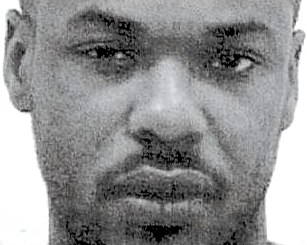
Kevin Cardwell
Murderer Brian Kevin Rosenfeld
Murderer · USA · 1985
Brian Kevin Rosenfeld Brian Kevin Rosenfeld was sentenced to three concurrent l…
23 victims
Brian Kevin Rosenfeld
Murderer · USA · 1985
Brian Kevin Rosenfeld Brian Kevin Rosenfeld was sentenced to three concurrent l…
23 victims
 Russell Ellwood
Murderer · USA · 1991
Russell Ellwood was a former taxi driver. Authorities suspected him of killing…
20 victims
Russell Ellwood
Murderer · USA · 1991
Russell Ellwood was a former taxi driver. Authorities suspected him of killing…
20 victims
 Robert Martines Perez
Murderer · USA · 1994
Name: Robert Martines Perez · Other name used in proceedings: Robert Martinez P…
15 victims
Robert Martines Perez
Murderer · USA · 1994
Name: Robert Martines Perez · Other name used in proceedings: Robert Martinez P…
15 victims
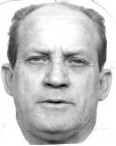 Billy Frank Vickers
Murderer · USA · 1993
Billy Frank Vickers Vickers was executed by lethal injection in Texas on Januar…
14 victims
Billy Frank Vickers
Murderer · USA · 1993
Billy Frank Vickers Vickers was executed by lethal injection in Texas on Januar…
14 victims
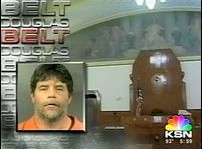 Douglas Belt
Murderer · USA · 2002
Name: Douglas Belt Douglas Belt was sentenced to death in 2004. The appeal resu…
1 victim
Douglas Belt
Murderer · USA · 2002
Name: Douglas Belt Douglas Belt was sentenced to death in 2004. The appeal resu…
1 victim
 Troisville Sykes
Homicide · USA · 1883
Troisville Sykes. Kate Townsend was Troisville Sykes’s mistress. She owned a ho…
1 victim
Troisville Sykes
Homicide · USA · 1883
Troisville Sykes. Kate Townsend was Troisville Sykes’s mistress. She owned a ho…
1 victim
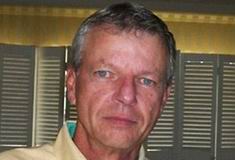 John Houser
Murderer · USA · 2015
John Russell “Rusty” Houser was born on November 22, 1955, and died on July 23,…
2 victims
John Houser
Murderer · USA · 2015
John Russell “Rusty” Houser was born on November 22, 1955, and died on July 23,…
2 victims
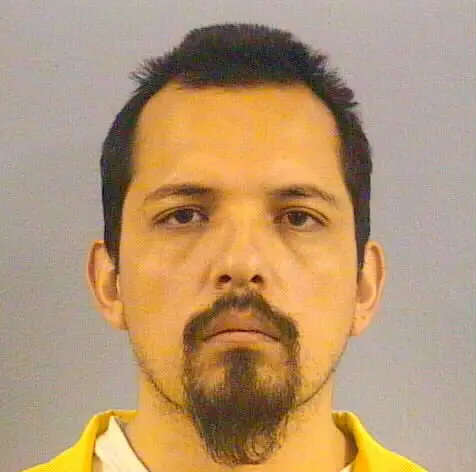 Juan Luna
Mass murderer · USA · 1993
Juan Luna was convicted of killing seven people in the Brown’s Chicken massacre…
7 victims
Juan Luna
Mass murderer · USA · 1993
Juan Luna was convicted of killing seven people in the Brown’s Chicken massacre…
7 victims
 Austin Sigg
Homicide · USA · 2012
Austin Sigg was charged in connection with the kidnapping and killing of Jessic…
1 victim
Austin Sigg
Homicide · USA · 2012
Austin Sigg was charged in connection with the kidnapping and killing of Jessic…
1 victim
- Gender
- male
- Country
- USA
- Location
- Henrico County, Virginia, USA
- Date of birth
- 1969
- Age at first offence
- 22
- Characteristics
- abduction, robbery, drugs, attempted rape
- Victim profile
- Anthony Brown, 15 (drug courier)
- Method of murder
- Shooting
- Date(s) of murder
- November 20, 1991
- Years active
- 1991
- Date of arrest
- —
- Status
-
Executed
Executed by lethal injection in Virginia on December 3, 1998
Case overview
Kevin DeWayne Cardwell was executed by lethal injection in Virginia on December 3, 1998. He was 29 years old at the time of execution.
Timeline
- November 20, 1991 — Tina Poindexter alerted Cardwell to Brown's impending arrival in Richmond, Virginia.
- May 10, 1993 — Cardwell was indicted in the Circuit Court for Henrico County, Virginia, on three counts of capital murder.
- May 20, 1993 — The court appointed Robert Geary to represent Cardwell.
- August 3, 1993 — The trial court granted Cardwell's motion to appoint Dr. Randy Thomas, a mental health expert selected by the defense.
- August 23, 1993 — The court granted Cardwell's motion for a continuance? (Denial described on August 24; continuance motion described on August 23) — Cardwell moved for a second continuance explaining Dr. Thomas was unavailable.
- August 24, 1993 — The trial court summarily denied Cardwell's motion; trial commenced as scheduled on September 7.
- September 7, 1993 — Trial commenced.
- September 9, 1993 — The capital sentencing phase began; the jury recommended a sentence of death on the basis of vileness.
- November 10, 1993 — The trial judge inquired whether defense counsel had any additional evidence to submit in connection with sentencing.
- May 1, 1995 — The United States Supreme Court denied certiorari.
- July 7, 1995 — The state trial court appointed counsel to represent Cardwell in state postconviction proceedings.
- August 1995 — Cardwell filed an “Incomplete Original Petition” and filed several motions for appointment of experts.
- December 15, 1995 — The Supreme Court of Virginia granted Cardwell thirty days to amend the August 1995 petition and denied his motions for appointment of experts.
- January 23, 1996 — Cardwell filed an amended petition.
- May 3, 1996 — The Supreme Court of Virginia denied Cardwell's amended petition in its entirety.
- February 24, 1997 — The district court granted Cardwell's motion to appoint Dr. Robert Hart and Dr. Leigh Hagan to evaluate Cardwell's mental condition.
- March 17, 1997 — Cardwell filed Drs. Hart's and Hagan's reports with his habeas corpus petition and requested an evidentiary hearing.
- October 7, 1997 — The district court granted a certificate of appealability with respect to (1) ineffective assistance of counsel and (2) the request for an evidentiary hearing.
- August 11, 1998 — The United States Court of Appeals for the Fourth Circuit affirmed the denial of an evidentiary hearing and of the writ of habeas corpus.
- December 3, 1998 — Cardwell was executed by lethal injection in Virginia; he was pronounced dead at 9:05 p.m.
The offence
Victim and murder
Anthony Brown was abducted and killed by Cardwell. Brown was described as a teen-age drug courier and was 15-year-old at the time of the incident mentioned.
Cardwell and three friends intercepted Brown and Poindexter at a bus station in Richmond, Virginia. They stole Brown's duffel bag and went to Cardwell's apartment. A search of the duffel bag failed to yield any drugs. Poindexter called Cardwell to advise him that the drugs were strapped to the inside of Brown's leg. At Cardwell's suggestion, Poindexter agreed to tell Brown that she had friends who could help retrieve his stolen belongings and bring him to Cardwell's apartment.
Cardwell announced to his friends that he planned to rob Brown again and then either to knock him unconscious or kill him. Two of the confederates departed, leaving Cardwell and Richard Claiborne to implement the scheme.
Shortly after Poindexter and Brown arrived, Cardwell pointed a gun at Brown and demanded the drugs. Claiborne pulled down Brown's pants and took the drugs from Brown's inner thigh. Brown was forced at gunpoint to lie face down on the floor in the backseat of Poindexter's car. Brown repeatedly begged that his life be spared, to which Cardwell responded: “shut up.”
After driving to the back of a shopping center, Cardwell demanded Claiborne's .380 caliber automatic pistol and marched Brown into the woods. Claiborne followed at a distance of approximately ten feet. Brown pleaded for his life, and Cardwell answered: “shut up.” Claiborne heard a “gargling noise” which he recognized “from the movies” as the sound of Cardwell cutting Brown's throat. Cardwell then said: “I'm going to shoot him and he's going to die.” Claiborne said “No” and turned to walk back to the car. Two gunshots were fired, and Cardwell returned to Poindexter's car.
The trio drove to Cardwell's apartment. Cardwell threw Claiborne's pistol and a six-inch steak knife into a dumpster. Brown's decomposed body was discovered in the woods approximately two months later. An autopsy revealed that Brown sustained knife injuries to the wrist and neck, and two gunshot wounds to the back of the head.
Interception, robbery, abduction, and firearms use
Cardwell’s convictions included two counts of capital murder and all other counts as charged, including capital murder, abduction, robbery, and three counts of using a firearm in the commission of a felony.
Cardwell was convicted in 1993 of the murder, robbery and abduction of Anthony Brown of Hempstead, N.Y., in Henrico County. Cardwell and several friends learned Brown was arriving at a Richmond bus station with drugs, met him, and took his luggage. When they discovered no drugs in the bags, a friend of Cardwell lured Brown to Cardwell's apartment, where cocaine was found taped to Brown's leg. The men then took Brown into woods, where Cardwell killed him.
Investigation and participants
Tina Poindexter alerted Cardwell to Brown's impending arrival and informed Cardwell that Brown would be carrying drugs and that she intended to meet Brown upon his arrival at the bus station. Poindexter later called Cardwell to advise him that the drugs were strapped to the inside of Brown's leg. Poindexter agreed to tell Brown she had friends who could help retrieve his stolen belongings and bring him to Cardwell's apartment.
Richard Claiborne participated in the scheme. Claiborne heard Brown plead for his life and heard Cardwell answer “shut up.” Claiborne also heard the “gargling noise” which he recognized “from the movies” as the sound of Cardwell cutting Brown's throat. Claiborne heard Cardwell say: “I'm going to shoot him and he's going to die.” Claiborne heard two gunshots fired and described returning events.
Arrest
No arrest details were provided in the supplied material.
Trial
Charges and indictment
On May 10, 1993, Cardwell was indicted in the Circuit Court for Henrico County, Virginia, on three counts of capital murder. He was further charged with abduction, robbery, and three counts of using a firearm in the commission of a felony.
Counsel appointments and continuances
The court appointed Robert Geary to represent Cardwell on May 20, 1993. Trial was scheduled to commence on July 19, 1993. The trial court subsequently appointed John McGarvey to act as co-counsel for the defense.
On June 24, 1993, the court granted a defense motion for a continuance and rescheduled the trial to commence on September 7, 1993. The court cautioned the parties to bring any matters that would occasion additional delay promptly to the court's attention and implied it would be unreceptive to further requests for continuance.
On August 3, 1993, the trial court granted Cardwell’s motion to appoint Dr. Randy Thomas, a mental health expert selected by the defense, to assist in the development of evidence for possible use in the penalty phase. Defense counsel telephoned Dr. Thomas and discovered that he was on vacation and would not return until August 25. After his return, Dr. Thomas advised Cardwell's attorneys he would need approximately one and a half months to complete his evaluation.
On August 23, 1993, Cardwell’s counsel moved for a second continuance explaining Dr. Thomas had been unavailable and that additional time was required to obtain an evaluation. The trial court summarily denied the motion on August 24, and trial commenced as scheduled on September 7.
Conviction
After a two-day trial, a jury convicted Cardwell of two counts of capital murder, 1, and all other counts as charged.
Sentencing phase and jury recommendation
When the capital sentencing phase began on September 9, 1993, Cardwell’s request for a continuance was renewed. Counsel proffered a preliminary report in which Dr. Thomas opined that further investigation was warranted regarding Cardwell's family history, the possibility of severe abuse of drugs and alcohol, and the possibility that Cardwell had suffered brain dysfunction or a learning disability as a consequence of a childhood head injury.
The court received Dr. Thomas’s preliminary evaluation into the record but refused to grant a continuance of the sentencing proceedings. The Commonwealth sought the death penalty on the ground that Cardwell's conduct in murdering Brown had been “outrageously or wantonly vile,” or, in the alternative, because there was a probability that Cardwell was likely to commit criminal acts of violence in the future. See Va. Code § 19.2-264.2.
Cardwell called only his grandmother, Donzell Cardwell, to provide evidence in mitigation. On September 9, 1993, the jury unanimously recommended a sentence of death on the basis of vileness. The trial court reviewed the recommendation pursuant to Va. Code § 19.2-264.5, which provided:
When the punishment of any person has been fixed at death, the court shall, before imposing sentence, direct a probation officer of the court to thoroughly investigate the history ofthe defendant and any and all other relevant facts, to the end that the court may be fully advised as to whether the sentence of death is appropriate and just. . . . After consideration of the report, and upon good cause shown, the court may set aside the sentence of death and impose a sentence of imprisonment for life.
Final review and decision to not submit further mental health evaluation
At a hearing on November 10, 1993, the trial judge inquired whether defense counsel had any additional evidence to submit in connection with sentencing. Counsel declined. McGarvey later explained he elected for strategic reasons not to complete and submit an evaluation of Cardwell’s mental health to the trial court during its final review of Cardwell’s death sentence. In an affidavit submitted to the Virginia Supreme Court during state habeas proceedings, McGarvey stated:
I made a strategic decision not to continue with the evaluation by Dr. Thomas. Based on my experience, I did not believe that the trial judge would have overturned the jury's sentencing decision on Dr. Thomas' findings. Had I continued with the evaluations, and submitted the information to the court at final sentencing, I ran the real risk that the trial court would have found that the information would not have made a difference, thereby undercutting my claim when I took the issue up on appeal.
The trial court imposed a sentence of death in accordance with the recommendation of the jury.
Appeals
Direct appeal and certiorari
On direct appeal, the Virginia Supreme Court affirmed Cardwell’s convictions and sentences. Cardwell v. Commonwealth, 250 S.E.2d 146 (Va. 1994). The United States Supreme Court denied certiorari on May 1, 1995. Cardwell v. Virginia, 514 U.S. 1097 (1995).
State postconviction
On July 7, 1995, the state trial court appointed counsel to represent Cardwell in state postconviction proceedings. Cardwell filed an “Incomplete Original Petition” in August 1995, and filed several motions for the appointment of experts.
On December 15, 1995, the Supreme Court of Virginia granted Cardwell thirty days to amend the August 1995 petition, but denied his motions for the appointment of experts. Cardwell filed an amended petition on January 23, 1996. Included among the claims for relief was an argument that he had been denied effective assistance of counsel due to his trial counsel’s failure to develop and present evidence concerning Cardwell’s mental health.
The Supreme Court of Virginia denied Cardwell’s amended petition in its entirety on May 3, 1996. The court concluded that one claim had been procedurally defaulted and tersely stated:
finding no merit in other complaints raised by petitioner, the Court is of the opinion that the writ of habeas corpus should not issue as prayed for.
No evidentiary hearing was provided.
Federal habeas and COA
Cardwell again sought assistance of experts in preparing his federal habeas petition. On February 24, 1997, the district court granted Cardwell’s motion to appoint Dr. Robert Hart, a neuropsychiatrist, and Dr. Leigh Hagan, a clinical psychologist, to evaluate Cardwell’s mental condition.
Cardwell filed Drs. Hart’s and Hagan’s reports with his habeas corpus petition on March 17, 1997, and requested an evidentiary hearing. The Commonwealth opposed an evidentiary hearing and moved to dismiss. The district court permitted expansion of the record to include the expert reports of Drs. Hart and Hagan, but denied Cardwell an evidentiary hearing. Cardwell v. Netherland, 971 F. Supp. 997, 1012 (E.D. Va. 1997). The district court concluded after a careful review that Cardwell failed to establish entitlement to federal habeas relief and granted the Commonwealth’s motion to dismiss. Id. at 1022.
Cardwell appealed and simultaneously filed an application for a certificate of appealability (“COA”) with the district court. On October 7, 1997, the district court granted the COA with respect to:
- Cardwell’s claim of ineffective assistance of counsel, and
- Cardwell’s request for an evidentiary hearing on his ineffective assistance claim.
Fourth Circuit decision
The United States Court of Appeals for the Fourth Circuit case was titled:
KEVIN DEWAYNE CARDWELL, Petitioner-Appellant, v. FRED W. GREENE, Warden, Mecklenburg Correctional Center, Respondent-Appellee.
No. 97-20. Appeal from the United States District Court for the Eastern District of Virginia, at Alexandria. T. S. Ellis, III, District Judge. (CA-96-1516-AM)
Argued: April 8, 1998. Decided: August 11, 1998. Before WIDENER, MURNAGHAN, and MICHAEL, Circuit Judges.
The counsel listed were Dennis William Dohnal, BRENNER, DOHNAL,EVANS & YOFFY, Richmond, Virginia, for Appellant, and Robert Quentin Harris, Assistant Attorney General, OFFICE OF THE ATTORNEY GENERAL, Richmond, Virginia, for Appellee. On brief, Mark L. Earley, Attorney General of Virginia, OFFICE OF THE ATTORNEY GENERAL, Richmond, Virginia.
The appellate court affirmed the district court’s denial of an evidentiary hearing and affirmed the denial of the writ of habeas corpus. “The judgment is accordingly AFFIRMED.” Judge Murnaghan wrote the opinion, with Judge Widener and Judge Michael joining. The opinion described that Cardwell appealed the district court’s dismissal of his petition for a writ of habeas corpus and presented three questions, including ineffective assistance of counsel, entitlement to an evidentiary hearing, and whether the Virginia Supreme Court’s summary disposition constituted an adjudication on the merits.
Outcome
Execution and final statement
Cardwell was executed in Virginia on December 3, 1998 by lethal injection at the Greensville Correctional Center. He was pronounced dead at 9:05 p.m.
When asked if he had a final statement, Cardwell said:
“Personally, yeah. Why was all them sick people looking at me through that glass?”
The statement referred to witnesses who attend executions.
Supreme Court rejection and timing
Earlier Thursday, the U.S. Supreme Court voted 7-2 to reject Cardwell’s appeal. Justices Ruth Bader Ginsburg and John Paul Stevens were in the minority. The appeal was described as the last hope for Cardwell.
Cardwell did not request clemency from Gov. Jim Gilmore.
Attorney statements and visit
Cardwell’s attorney, Dennis W. Dohnal, said Cardwell wanted “to depart with a sense of dignity.” Dohnal also stated before the execution:
Mr. Cardwell instructed me not to pursue a clemency request, frankly believing that it would not succeed and that, as he put it, (he) wanted to depart with a sense of dignity,
A visit before the execution included Cardwell’s grandmother, his attorney, and prison clergy, as described with Department of Corrections spokesman Larry Traylor.
Other details
Murder victim details
Anthony Brown was from Hempstead, N.Y. His duffel bag was stolen, and cocaine was found taped to his leg.
Decomposition and forensic findings
The autopsy revealed knife injuries to the wrist and neck and two gunshot wounds to the back of the head.
Prison location and execution setting
The execution took place at the Greensville Correctional Center. The setting for witnesses was described in Cardwell’s final statement.
Vigil and death penalty context (non-outcome narrative)
Activists held a candlelight vigil outside the prison in Jarratt, described as about 55 miles south of the state capital Richmond, to protest the quickening pace of U.S. executions. Thirty-eight of the 50 states had the death penalty on the books. With Cardwell’s execution, 491 death row inmates had been put to death since 1976 when the U.S. Supreme Court reinstated capital punishment. The material also stated that with five more executions set in Texas and four scheduled in South Carolina that month, the United States likely would surpass the benchmark 500th execution by year’s end. Cardwell became the 13th person executed in Virginia that year and the 59th since capital punishment resumed in the state. Virginia was described as trailing only Texas in the number of executions carried out in modern times.
People named
- Kevin DeWayne Cardwell — convicted defendant; executed
- Anthony Brown — victim; abducted and killed
- Tina Poindexter — participant who alerted Cardwell and later coordinated the approach
- Richard Claiborne — participant; followed at a distance; heard events
- Donzell Cardwell — Cardwell’s grandmother; testified in mitigation
- Robert Geary — appointed defense counsel
- John McGarvey — co-counsel for the defense
- Dr. Randy Thomas — mental health expert selected by the defense
- Dr. Robert Hart — neuropsychiatrist appointed for evaluation
- Dr. Leigh Hagan — clinical psychologist appointed for evaluation
- Judge Murnaghan — authored the opinion
- Judge Widener — joined the opinion
- Judge Michael — joined the opinion
- T. S. Ellis, III — district judge
- Dennis William Dohnal — defense counsel
- Larry Traylor — Department of Corrections spokesman
- Gov. Jim Gilmore — clemency referenced
- Ruth Bader Ginsburg — U.S. Supreme Court justice in minority
- John Paul Stevens — U.S.
- Fred W. Greene — warden named in the appellate caption
- Robert Quentin Harris — Assistant Attorney General for Appellee
- Mark L. Earley — Attorney General of Virginia listed on brief
Spotted an error, or have more information about this case?