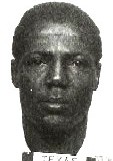
Charlie Brooks
Murderer Ervil LeBaron
Murderer · USA · 1972
Ervil Morrell LeBaron (1925 to August 16, 1981) was the leader of a polygamous…
35 victims
Ervil LeBaron
Murderer · USA · 1972
Ervil Morrell LeBaron (1925 to August 16, 1981) was the leader of a polygamous…
35 victims
 Brian Kevin Rosenfeld
Murderer · USA · 1985
Brian Kevin Rosenfeld Brian Kevin Rosenfeld was sentenced to three concurrent l…
23 victims
Brian Kevin Rosenfeld
Murderer · USA · 1985
Brian Kevin Rosenfeld Brian Kevin Rosenfeld was sentenced to three concurrent l…
23 victims
 Marvin Gray
Murderer · USA · 1975
Marvin Gray was convicted killer who claimed responsibility for 23 slayings and…
23 victims
Marvin Gray
Murderer · USA · 1975
Marvin Gray was convicted killer who claimed responsibility for 23 slayings and…
23 victims
 Yahweh ben Yahweh
Murderer · USA · 1980
Yahweh ben Yahweh was born and legally named Hulon Mitchell Jr. (October 27, 19…
23 victims
Yahweh ben Yahweh
Murderer · USA · 1980
Yahweh ben Yahweh was born and legally named Hulon Mitchell Jr. (October 27, 19…
23 victims
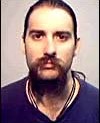 Grant Charboneau
Murderer · USA · 1992
Grant Steven Charboneau was a Portlander who lived with his mother but hung aro…
3 victims
Grant Charboneau
Murderer · USA · 1992
Grant Steven Charboneau was a Portlander who lived with his mother but hung aro…
3 victims
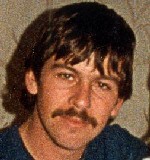 Maddison Hall
Murderer · Australia · 1987
Maddison Hall was born Noel Crompton in 1964. He was an Australian HIV-positive…
1 victim
Maddison Hall
Murderer · Australia · 1987
Maddison Hall was born Noel Crompton in 1964. He was an Australian HIV-positive…
1 victim
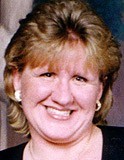 Dena Schlosser
Homicide · USA · 2004
Dena Schlosser (born 1969) lived in Plano, Texas. She was the mother of Margare…
1 victim
Dena Schlosser
Homicide · USA · 2004
Dena Schlosser (born 1969) lived in Plano, Texas. She was the mother of Margare…
1 victim
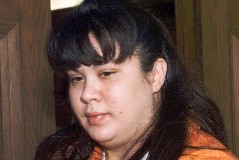 Christina Riggs
Murderer · USA · 1997
Christina Riggs was executed in Arkansas by lethal injection. Riggs was convict…
2 victims
Christina Riggs
Murderer · USA · 1997
Christina Riggs was executed in Arkansas by lethal injection. Riggs was convict…
2 victims
 Garland Milam
Murderer · USA · 2005
Garland Milam was a drifter who lived in the woods behind a strip mall. He was…
3 victims
Garland Milam
Murderer · USA · 2005
Garland Milam was a drifter who lived in the woods behind a strip mall. He was…
3 victims
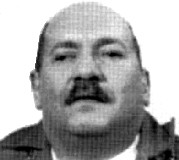 Reynaldo Rondon
Murderer · USA · 1984
Reynaldo Rondon was sentenced to death on May 10, 1985. On 08-02-00 a plea agre…
1 victim
Reynaldo Rondon
Murderer · USA · 1984
Reynaldo Rondon was sentenced to death on May 10, 1985. On 08-02-00 a plea agre…
1 victim
- Gender
- male
- Country
- USA
- Location
- Tarrant County, Texas, USA
- Date of birth
- September 1, 1942
- Age at first offence
- 34
- Characteristics
- kidnapping, abduction
- Victim profile
- David Gregory , 26 ( mechanic )
- Method of murder
- Shooting
- Date(s) of murder
- December 14, 1976
- Years active
- 1976
- Date of arrest
- Same day
- Status
-
Executed
Executed by lethal injection in Texas on December 7, 1982
Case identification
Charlie Brooks
Timeline
- April 1, 1942 — Charles Brooks Jr. was born.
- September 27, 1962 — Brooks was convicted in the State of Louisiana of an offense described as “simple burglary” in DeSoto Parish, Louisiana, and was sentenced to three years.
- 1963 — Brooks was paroled.
- 1965 — Brooks’s parole was revoked.
- 1968 — Brooks pled guilty in the United States District Court for the Northern District of Texas to three counts of illegal possession of firearms.
- December 14, 1976 — Brooks went to a car yard saying he wanted to test drive a car; the mechanic David Gregory accompanied him in the car; after picking up Woody Loudres, the mechanic was put in the trunk of the car; they drove to a motel where the mechanic was bound, gagged, and shot once in the head.
- September 3, 1977 — Charlie Brooks Jr., then 34 years of age, was convicted of the murder of David Gregory.
- 1979 — Brooks v. State, 599 S.W.2d 312 (Tex.Cr.App.1979) affirmed his conviction and sentence.
- December 1, 1981 — Brooks’s state petitions for habeas corpus were denied by the trial court and affirmed by the Court of Criminal Appeals.
- October 16, 1981 — Brooks was sentenced to be executed on December 7, 1981.
- November 9, 1982 — The United States District Court issued a certificate of probable cause to appeal.
- October 28, 1982 — The United States District Court denied Brooks’s federal habeas corpus petition.
- December 6, 1982 — A Fifth Circuit decision concluded there was no substantial question presented and the application for a stay was denied.
- December 6, 1982 — The Supreme Court’s disposition referenced a denial of a petition for certiorari and treated papers filed since then as a second petition for rehearing of the denial of certiorari.
- December 7, 1982 — Brooks was executed by lethal injection in Texas; he was pronounced dead at 12:16 a.m.
- December 11, 1982 — Charles W. Colson’s Washington Post column was published, describing “That Execution Wasn't Painless.”
Background
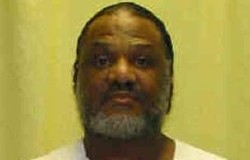
Charles Brooks Jr. (April 1, 1942 – December 7, 1982) was a convicted murderer who was the first person executed by lethal injection in the United States. It was the first execution in Texas since 1964. Brooks was raised in a well-off Fort Worth family and attended I.M. Terrell High School, where he played football.
Brooks had been to prison before, serving time at the United States Penitentiary, Leavenworth for illegal possession of firearms.
Brooks had converted to Islam while in prison. At execution he prayed to Allah.
The offence
The record reflected that on the morning of December 14, 1976, Marlene Smith, an admitted prostitute, thief, and heroin addict, traded sexual services for the use of a car from a used car dealer. She then picked up Woody Loudres and the appellant at a liquor store on Rosedale Avenue.
Smith testified that she and Loudres lived together in Room 15 of the New Lincoln Motel in Tarrant County. The record revealed Smith had been acquainted with the appellant for two weeks and that appellant had on occasion stayed with them at the motel. Smith, Loudres and the appellant drove back to the motel, where Smith and Loudres took heroin. The three then drove to the home of appellant's mother, where they drank. The trio then left, heading for the south side of Fort Worth so that Smith could go shoplifting.
As they were driving on East Lancaster Street, the car vapor-locked and they pushed it into a service station. They were unable to get the car started and, according to Smith, the appellant left the other two and walked to a nearby used car lot to “get a car to test drive” so that the three would have transportation to the south side.
An employee of the used car lot talked to the appellant when he walked onto the lot and asked to test drive a car. Appellant was wearing a tan topcoat at the time. Company policy required that customers who walked onto the lot and asked to test drive a car had to be accompanied by an employee. David Gregory, the deceased, was told to accompany the appellant around the block. The record reflected that Gregory was a paint and body repair man who sometimes assisted as a mechanic and also answered wrecker calls.
The deceased and the appellant drove to a location where Smith and Loudres were waiting in the vapor-locked car. Loudres got into the car with Gregory and the appellant. They drove off with Gregory, leaving Smith with the broken-down car.
A car identified as the one taken on a test drive from the used car lot was driven into the New Lincoln Motel at about 6:00 p.m. The appellant and Loudres were in the car at the time. The appellant released a man from the trunk of the car and took him at gunpoint into Room 17 of the motel. Loudres came to the office of the motel and told the manager's wife, Emma Speers, that they had a man tied up and “we are going to have to kill him.” The appellant also came to the window of the motel office, pointed a large revolver at Speers' head, and told her, “You're ignorant. If you say anything, I'll blow you and your daughter's brains out.” The appellant then walked away from the motel, returned a few minutes later, and walked toward Room 17. Shots were heard soon thereafter.
During this time a woman who was delivering cleaning to the motel talked to Speers. When she left the motel she noted the license number on the car in which the appellant and Loudres had arrived. After leaving the premises she notified the police. After hearing the shots, Speers also notified the police and her husband, the manager of the motel.
Loudres and the appellant were seen leaving the motel by the back entrance. Fort Worth police officers arrived at 6:24 p.m. They were advised that shots had been fired. The officers began checking the rooms for signs of foul play. They began their checking at Room 13. Room 15 was unlocked and empty. Rooms 16 and 17 were locked. When Room 17 was unlocked by the manager, Gregory's body was found bound and gagged with adhesive tape and shot in the head.
Phil Watson testified that at about 11:00 p.m. that night he met Loudres and the appellant at the Flamingo Club in south Fort Worth. Loudres asked Watson to drive them back to the New Lincoln Motel. When they arrived, the manager told Loudres to leave. When they were passed by two police cars, appellant stated that “there had been a killing.” Watson, Loudres and the appellant were arrested later at Watson's home.
The pertinent portion of the indictment charged that Brooks: “did then and there intentionally and knowingly cause the death of an individual, David Gregory, by shooting him with a firearm, and the said Charlie Brooks, Jr. did then and there intentionally cause the death of the said David Gregory in the course of committing the offense of kidnapping, by then and there intentionally and knowingly abducting David Gregory; ...”
Investigation
State’s Exhibit No. 16 and State’s Exhibit No. 23 were recovered after police returned to Room 15. State’s Exhibit No. 16 consisted of two spools of a Curity adhesive tape dispenser. State’s Exhibit No. 23 consisted of three hypodermic syringes. State’s Exhibit No. 16 was admitted without objection and State’s Exhibit No. 23 was admitted over objection that it constituted evidence of an extraneous offense.
Appellant contended that the trial court erred in admitting into evidence certain items seized by the police as a result of an illegal search of Room 15 of the New Lincoln Motel.
Arrest
and began checking rooms for signs of foul play. After Phil Watson testified that at about 11:00 p.m. he met Loudres and the appellant at the Flamingo Club and then drove them back to the motel, Watson, Loudres, and the appellant were arrested later at Watson's home.
Trial
At trial the State presented evidence that Brooks went to a used car lot and asked to test-drive a car. He was permitted to drive the car accompanied by Gregory, an employee. Brooks picked up a friend, Woody Loudres, and drove to the motel where Loudres lived. Brooks and Loudres took Gregory into a motel room. A single shot was fired, killing Gregory.
The jury returned a verdict of guilty.
In the penalty phase, the judge instructed the jury, pursuant to Tex.Code Crim.Proc.Ann., Art. 37.071(b)(1) and (2), to give “yes” or “no” answers to the following questions: (1) “Do you find from the evidence beyond a reasonable doubt that the conduct of the defendant that caused the death of the deceased was committed deliberately and with the reasonable expectation that the death of the deceased or another would result?” (2) “Do you find from the evidence beyond a reasonable doubt that there is a probability the defendant would commit criminal acts of violence that would constitute a continuing threat to society?”
The judge told the jurors that affirmative answers to both questions would result in a death sentence. Over Brooks' objection, the judge also instructed the jurors that they could not consider or discuss the effect of their answers.
The jury answered “yes” to both questions, and the court accordingly imposed the mandatory sentence of death.
At his trial Brooks was represented by two court-appointed counsel, William E. Burdoch and Glen E. Eakman, Esq.
At his trial he was represented by two court-appointed counsel, William E. Burdoch and Glen E. Eakman, Esq. During his appeal he was represented by Glen E. Eakman and Allen K. Butcher.
Brooks was represented by Danny B. Burns, Esq., then filed two petitions for habeas corpus in state court.
A motion for a new trial was denied.
Almost five years after Brooks was convicted, Woody Lourdes made a plea bargain with the State, pleaded guilty to non-capital murder, and was sentenced to forty years in prison. Lourdes had been indicted for and convicted of the same offense, and Lourdes’s conviction had been reversed on appeal. Lourdes had received a 40 year sentence.
Sentencing
Brooks’s conviction and sentence were affirmed on direct appeal in Brooks v. State, 599 S.W.2d 312 (Tex.Cr.App.1979).
The jury found that the conduct of Brooks that caused the death of the deceased was committed deliberately and with the reasonable expectation that the death of the deceased would result. The jury also found there was a probability that Brooks who had previously been convicted of felonies four times would commit criminal acts of violence that would constitute a continuing threat to society. Accordingly, as required by Texas law, the court imposed a sentence of death.
After the state trial court ordered Brooks’s execution on December 7, 1982, Brooks was scheduled to be executed on December 7, 1981, per an earlier sentencing event dated October 16, 1981.
Appeals
Brooks v. State, 599 S.W.2d 312 (Tex.Cr.App.1979) was cited as a direct appeal.
After two motions for rehearing had been denied, Brooks applied to the Supreme Court for review, and this was denied. Brooks v. Texas, 453 U.S. 913, 101 S.Ct. 3146, 69 L.Ed.2d 996, rehearing denied, 453 U.S. 950, 102 S.Ct. 25, 69 L.Ed.2d 1036.
Brooks filed a motion for a new hearing in the federal district court, but it was denied. The federal district court issued a certificate of probable cause.
Brooks applied for a stay of execution in the Fifth Circuit on November 15, 1982. The Fifth Circuit denied the stay because there was no substantial question concerning the correctness of the district court's judgment. On December 2, a motion for reconsideration of the order denying a stay was filed by eight new counsel, which presented additional constitutional arguments.
In the opinion, the panel addressed the new issues: (1) A sentencing proportionality contention involving Woody Lourdes’s forty-year sentence after Lourdes pleaded guilty to non-capital murder; the panel concluded the constitution did not require retrospective review of a sentence imposed four years earlier. (2) An allegation that trial counsel was incompetent at the sentencing stage for failing to call mitigation witnesses; the panel discussed affidavits dated November 30, 1982 and addressed the lack of effect on whether there was a probability Brooks would commit criminal acts of violence in the future; the panel also referred to defense counsel and Brooks stating they did not wish to testify or offer witnesses, including the following exchange:
MR. EAKMAN (defense counsel): Your Honor, can we put in the record that the Defendant does not want to testify at his hearing and that decision was made by him?
THE COURT: Yes, you may.
MR. EAKMAN: After advising with us and also, (sic) he does not want to offer any witnesses in his behalf. This decision also was made by him after advising with us.
THE COURT: Mr. Brooks, you have heard the recitation of counsel, Mr. Eakman. Are those matters true and correct, that you have consulted with your attorneys and decided that you do not wish to testify at this point and you do not wish to call witnesses in your behalf at this time?
MR. BROOKS: Yes.
(3) A claim regarding the jury being required to take the oath required by Texas law that “the mandatory penalty of death or imprisonment for life will not affect your deliberations on any issue of fact.” The panel concluded no juror objected and none was excluded. (4) A contention regarding the state judge's exclusion of juror Barbolla under Witherspoon v. Illinois; the panel discussed that Ms. Barbolla stated she could not render a verdict that a person who does not actually pull the trigger is guilty and could not follow Texas law that makes a person who participates in a crime leading to murder intending the death of the victim guilty of that offense even though he was not the direct cause of death. (5) A claim for heightened scrutiny based on prosecutorial conduct condemned by one Texas judge on the Court of Criminal Appeals but not mentioned as error by other members; the panel stated there was no claim the conduct amounted to a denial of due process or violated Brooks’ constitutional rights and that each claim received careful scrutiny.
The panel noted that no claim had been made that evidence did not support Brooks’s conviction or the jury verdict that his crime and criminal potential warranted the capital sentence.
The Supreme Court disposition referenced that Justice WHITE was provided the matter on December 2, 1982 on an application for a stay of execution, referred to the Court. The Court denied applicant’s petition for writ of certiorari on June 29, 1981, and denied rehearing on September 23, 1981, and treated subsequent papers as a second petition for rehearing of the denial of certiorari and denied it.
The Supreme Court also treated the papers filed since December 2, 1982 as a petition for certiorari or, alternatively, as a petition for certiorari before judgment, and denied it.
Justices BRENNAN, MARSHALL, and STEVENS dissented. They would have granted petitioner’s application for a stay of execution. Their dissent stated that where a certificate of probable cause to appeal from the denial of habeas relief had been issued, a court of appeals must consider and decide the merits of that appeal and that the prisoner could not be executed prior to such consideration and decision. The dissent also asserted that the Court of Appeals did not proceed to a disposition of the appeal in a manner that afforded petitioner an opportunity to make his argument on the underlying issues in full.
Outcome
Brooks was executed by lethal injection in Texas on December 7, 1982. He was pronounced dead at 12:16 a.m. The drugs were injected at 12:09 a.m.
Before the execution, after ordering, Brooks made a last statement. He had converted to Islam while in prison and as such said a prayer to Allah. His final statement to the media was:
I, at this very moment, have absolutely no fear of what may happen to this body. My fear is for Allah, God only, who has at this moment the only power to determine if I should live or die...As a devout Muslim, I am taught and believe that this material life is only for the express purpose of preparing oneself for the real life that is to come...Since becoming Muslim, I have tried to live as Allah wanted me to live.
Spoken: Yes, I do. I love you.
Asdadu an la ilah illa Allah, Asdadu an la ilah illa Allah, Asdadu anna Muhammadan Rasul Allah, Asdadu anna Muhammadan Rasul Allah. I bear witness that there is no God but Allah. I bear witness that Muhammad is the messenger of Allah. Inna li-Allah wa-inna ilayhi rajiun. Verily unto Allah do we belong, Verily unto him do we return. Be strong.
Brooks had a last meal consisting of a T-bone steak, french fries, catsup, Worcestershire sauce, biscuits, peach cobbler and ice tea. He was rolled into the death chamber at the Huntsville Unit in Huntsville, Texas.
A photo of Brooks’s deceased remains strapped to the gurney after the execution was published in Time the following week in an accompanying article mentioning that the first ever judicial execution by lethal injection had occurred.
Aftermath
Brooks’s execution occurred in December 1982, despite serious doubts about his personal involvement in the murder of which he was convicted. The prosecutor pleaded that Brooks’s death sentence be commuted because no one knew whether his codefendant actually committed the murder, according to the Washington Post item by Charles W. Colson titled “That Execution Wasn’t Painless,” published December 11, 1982.
Other details
Prior convictions and sentences
Brooks was previously convicted in the State of Louisiana on September 27, 1962 and was sentenced to three years for the offense of “simple burglary” in DeSoto Parish, Louisiana. He was paroled in 1963 and his parole was revoked in 1965.
Brooks also pled guilty in the United States District Court for the Northern District of Texas in 1968 to three counts of illegal possession of firearms.
Brooks was convicted in Walker County, Texas of Theft over $50 and Burglary. A total of four prior felony convictions were introduced during the penalty phase.
Jury and procedural content in appellate materials
The federal appellate record described that Brooks was convicted on December 3, 1977 when he was 34 years of age; the jury found deliberate conduct with reasonable expectation of death and a probability of future violence that would constitute a continuing threat to society. The court imposed the death sentence as required by Texas law, and his motion for a new trial was denied.
State petitions for habeas corpus were denied by the trial court and affirmed by the Court of Criminal Appeals on December 1, 1981.
Brooks filed an application for habeas corpus in federal court on December 2, 1981. Numerous pleadings and briefs were filed and several time extensions were granted. Four hearings were held. On October 28, 1982, the district court issued a 26-page opinion discussing in detail each of Brooks’s contentions and dismissed the petition after finding each contention lacked merit.
The state trial judge ordered Brooks’s execution on December 7, 1982.
Brooks filed a motion for a new hearing in federal district court, which was denied. The district court issued a certificate of probable cause. Without such a certificate, Brooks would have been unable to appeal.
On November 15, 1982, Brooks filed an application in the Fifth Circuit for a stay of execution. Oral argument was held on November 26, 1982, and the stay was denied.
The Texas Civil Liberties Union appeared as amicus curiae and its counsel was allowed oral argument.
Amicus, counsel, and panels mentioned
The Fifth Circuit panel consisted of RUBIN, JOHNSON and WILLIAMS, Circuit Judges. The per curiam opinion stated an application for stay was denied.
The Supreme Court matter referenced that Justice WHITE referred the matter to the Court and that the opinion of the United States Court of Appeals for the Fifth Circuit dated December 6, 1982 was before the Court.
Brooks’s defense at trial involved William E. Burdoch and Glen E. Eakman, Esq.; his appeal representation included Glen E. Eakman and Allen K. Butcher; his habeas petitions filing involved representation by Danny B. Burns, Esq.
Last meal and execution facility
Brooks’s last meal included a T-bone steak, french fries, catsup, Worcestershire sauce, biscuits, peach cobbler and ice tea.
Spotted an error, or have more information about this case?