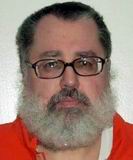
Cal Coburn Brown
Murderer Brian Kevin Rosenfeld
Murderer · USA · 1985
Brian Kevin Rosenfeld Brian Kevin Rosenfeld was sentenced to three concurrent l…
23 victims
Brian Kevin Rosenfeld
Murderer · USA · 1985
Brian Kevin Rosenfeld Brian Kevin Rosenfeld was sentenced to three concurrent l…
23 victims
 Russell Ellwood
Murderer · USA · 1991
Russell Ellwood was a former taxi driver. Authorities suspected him of killing…
20 victims
Russell Ellwood
Murderer · USA · 1991
Russell Ellwood was a former taxi driver. Authorities suspected him of killing…
20 victims
 Robert Martines Perez
Murderer · USA · 1994
Name: Robert Martines Perez · Other name used in proceedings: Robert Martinez P…
15 victims
Robert Martines Perez
Murderer · USA · 1994
Name: Robert Martines Perez · Other name used in proceedings: Robert Martinez P…
15 victims
 Billy Frank Vickers
Murderer · USA · 1993
Billy Frank Vickers Vickers was executed by lethal injection in Texas on Januar…
14 victims
Billy Frank Vickers
Murderer · USA · 1993
Billy Frank Vickers Vickers was executed by lethal injection in Texas on Januar…
14 victims
 Luka Magnotta
Murderer · Canada · 2012
Luka Rocco Magnotta was born as Eric Clinton Kirk Newman in July 24, 1982 in Sc…
1 victim
Luka Magnotta
Murderer · Canada · 2012
Luka Rocco Magnotta was born as Eric Clinton Kirk Newman in July 24, 1982 in Sc…
1 victim
 Isaac Wood
Murderer · USA · 1855
Isaac L. Wood was a Livingston Republican mentioned in July 1858 execution cove…
2 victims
Isaac Wood
Murderer · USA · 1855
Isaac L. Wood was a Livingston Republican mentioned in July 1858 execution cove…
2 victims
 Frances Kidder
Murderer · United Kingdom · 1867
Frances Kidder (c. 1843 – 2 April 1868) was executed by hanging in front of Mai…
1 victim
Frances Kidder
Murderer · United Kingdom · 1867
Frances Kidder (c. 1843 – 2 April 1868) was executed by hanging in front of Mai…
1 victim
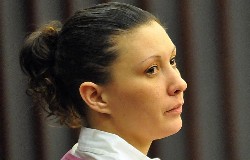 Renee King
Murderer · USA · 2010
Renee King was sentenced in Macomb Circuit Court for the 2010 murder of her ste…
1 victim
Renee King
Murderer · USA · 2010
Renee King was sentenced in Macomb Circuit Court for the 2010 murder of her ste…
1 victim
 Lois Jurgens
Murderer · USA · 1965
Lois Jurgens (born 1925) was an American convicted murderer in Minnesota. She w…
1 victim
Lois Jurgens
Murderer · USA · 1965
Lois Jurgens (born 1925) was an American convicted murderer in Minnesota. She w…
1 victim
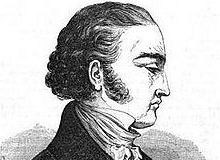 Dr. Edme-Samuel Castaing
Murderer · 1822
Edme-Samuel Castaing (1796–1823) was a French physician who was thought to have…
2 victims
Dr. Edme-Samuel Castaing
Murderer · 1822
Edme-Samuel Castaing (1796–1823) was a French physician who was thought to have…
2 victims
- Gender
- male
- Country
- USA
- Location
- King County, Washington, USA
- Date of birth
- May 16, 1958
- Age at first offence
- 33
- Characteristics
- carjacking, rape, torture
- Victim profile
- Holly Washa (female, 21)
- Method of murder
- St abbing with knife
- Date(s) of murder
- May 24, 1991
- Years active
- 1991
- Date of arrest
- 3 days after
- Status
-
Executed
Executed by lethal injection in Washington on September 10, 2010
Case details
Cal Coburn Brown (born April 16, 1958) was convicted and sentenced to death in Washington for the May 1991 rape and murder of Holly Washa, 21.
Brown was also involved in a separate attack in Palm Springs, California, in which he handcuffed Susan, slit her throat, and attempted to kill her; Susan survived and was able to call the police after Brown left the room.
Timeline
- April 16, 1958 — Cal Coburn Brown was born.
- May 23, 1991 — Cal Coburn Brown kidnapped Holly Washa, 21, in Burien near Seattle-Tacoma International Airport; he tortured and repeatedly raped her before killing her by slashing her throat.
- May 27, 1991 — Brown was arrested in California after he attacked a woman in Palm Springs; he surprised detectives by confessing to Washa’s slaying during questioning.
- June 11, 1991 — Brown was charged with aggravated murder in King County Superior Court.
- Dec. 10, 1993 — A jury found Brown guilty of murder.
- Jan. 28, 1994 — Brown was sentenced to death.
- June 29, 1997 — The state Supreme Court affirmed Brown’s conviction and death sentence.
- Dec. 8, 2005 — The 9th Circuit Court of Appeals reversed the conviction and death sentence because of an alleged error in jury selection.
- June 1, 2007 — The U.S. Supreme Court reversed the appellate court’s decision, finding that Brown had waived any challenge to jury selection by not objecting when a juror was excused for cause.
- June 27, 2008 — The 9th Circuit Court of Appeals affirmed the conviction and death sentence after the case was returned from U.S. Supreme Court.
- Jan. 21, 2009 — The U.S. Supreme Court denied the petition for writ of certiorari.
- March 9, 2009 — The mandate issued, and execution was scheduled for March 13, 2009.
- March 9, 2009 — The Washington Supreme Court denied Brown’s original action against state officers (Supreme Court No. 82742-7).
- March 11, 2009 — Thurston County Superior Court Judge Chris Wickham denied Cal Coburn Brown’s motion to stay his execution.
- March 12, 2009 — The Clemency and Pardons Board heard Brown’s request for clemency at 1 p.m. and voted 2-2 to stay the execution.
- March 12, 2009 — Shortly after 4 p.m., the State Supreme Court ruled 5-4 to grant Brown a stay of execution.
- March 12, 2009 — The state Supreme Court issued a stay based on a last-minute appeal filed by Brown’s attorneys challenging lethal injection.
- March 12, 2009 — Governor Chris Gregoire issued a statement declining to commute Brown’s sentence from death to life in prison without possibility of parole.
- July 10, 2009 — Thurston County Superior Court issued its decision in Stenson, et al. v. Vail, et al. ruling that Washington’s lethal injection protocol was constitutional both under the United States Constitution and Washington’s Constitution.
- July 14, 2009 — The AGO filed in the Washington Supreme Court a motion to vacate the stay entered for Cal Brown; the motion was denied on Sept. 10, 2009.
- July 29, 2010 — The Washington State Supreme Court dismissed various challenges to Washington’s method of carrying out lethal injection and lifted the stay for Brown.
- August 19, 2010 — The State of Washington filed a motion requesting the court deny the motion for a stay.
- August 31, 2010 — The Honorable Judge John C. Coughenour issued an order denying Brown’s motion for a stay.
- Sept. 2, 2010 — Brown filed an emergency motion for a stay of execution in the 9th Circuit Court of Appeals.
- Sept. 3, 2010 — Brown filed a third motion in King County Superior Court seeking a stay of execution based on his allegation that he was incompetent and could not be executed as a result.
- Sept. 4, 2010 — The Ninth Circuit Court of Appeals issued a 2-1 decision, denying Brown’s motion for a stay of his pending Sept. 10 execution.
- Sept. 7, 2010 — Brown filed a petition for certiorari and an application for a stay of execution in the US Supreme Court.
- Sept. 8, 2010 — Brown filed a motion for reconsideration of the Sept. 7 King County Superior Court ruling denying his motion for a stay; King County Superior Court then denied his motion for reconsideration.
- Sept. 9, 2010 — The U.S. Supreme Court denied Brown’s motion asking the court to hear his appeal challenging Washington’s lethal injection protocols.
- Sept. 10, 2010 — Brown was put to death by lethal injection; his time of death was 12:56 a.m.
Background
Brown had a history of violence against women, including a 1977 conviction in California for assaulting a woman with a knife at a shopping center. He also served 7 1/2 years—the minimum sentence—for assaulting another woman in Oregon in 1984.
Brown was on parole when he carjacked Holly Washa in May 1991.
The offence
Kidnapping, carjacking, and killing of Holly Washa (Washington)
While on parole for a violent sex crime, Brown carjacked Holly Washa, 21, in the parking lot of a hotel in a Seattle-area location and demanded at knifepoint that she “drive or die.”
He later forced Holly into the passenger seat, tied her hands behind her back, and drove her to his motel nearby. In his motel room, Brown forced Holly to remove her clothing, tied her to the bed, and raped and tortured her repeatedly for the course of several hours.
Brown then put Holly in the trunk of her car, slit her throat, stabbed her repeatedly, and left her to bleed to death in a parking lot. Several days later, Holly’s body was found in the trunk of her car.
Brown forced Holly to remove her clothing, then tied her to the bed, raped and tortured her repeatedly; the record also described that the attack included tying her to the bed and later placing her in the trunk of her car. Brown also made Holly call in sick at her job at TCI Cablevision, gagged her, and sexually assaulted her with foreign objects, including a bottle. He whipped her and shocked her with an electrical cord before killing her.
Assault of Susan (California)
After stabbing Holly, Brown flew to Palm Springs, California, to rendezvous with his next victim in another hotel room. Brown handcuffed Susan with her arms behind her back and slit her throat. Susan survived and called the police when Brown left the room.
Brown forced Susan to write a check for $4000; after leaving the room to get more bandages, Susan was able to summon the police by calling the front desk.
Investigation and arrest
Brown confessed during questioning in California to killing Holly Washa in Washington. He led authorities to Washa’s battered body, which was inside the trunk of a car.
After the Palm Springs incident, Brown was arrested in the hotel parking lot. Palm Springs police described that Brown quickly gave audio-taped confessions to both:
- the rape and attempted murder of Susan in California, and
- the rape and murder of Holly Washa in Washington.
Trial
Brown was tried in Washington. A jury convicted Brown of aggravated first-degree murder and sentenced him to death.
Sentencing
Death sentence
On January 28, 1994, the trial court imposed a sentence of death.
At a special sentencing proceeding, Brown’s attorneys presented evidence of mitigating circumstances. The jury asked whether it was “convinced beyond a reasonable doubt that there are not sufficient mitigating circumstances to merit leniency.” The jury unanimously concluded, beyond a reasonable doubt, that there were not sufficient mitigating circumstances to merit leniency. Under the laws of Washington, the jury’s finding required a death sentence.
Appeals
- Supreme Court of Washington state v. brown (1997) — the state Supreme Court affirmed Brown’s conviction and death sentence.
- Brown v. Lambert (2005) — the record included the case citation “brown v. lambert (2005)” and stated that in 2005 the 9th Circuit reversed Brown’s death sentence because of an alleged error in jury selection.
- U.S. Supreme Court: Uttecht v. Brown (2007) — the U.S. Supreme Court reversed and found Brown had waived any challenge to jury selection by not objecting when a juror was excused for cause.
- Brown v. Uttecht (2008) — the 9th Circuit Court of Appeals affirmed the conviction and death sentence after the case was returned from the U.S. Supreme Court.
Clemency and last legal efforts
A petition was filed requesting commutation of Brown’s death sentence to imprisonment for life without the possibility of parole. A hearing before the Clemency and Pardons Board was held on March 12, 2009; the Board voted 2-2 on a motion to recommend that the Governor deny Brown’s petition.
The Washington Supreme Court stayed the execution, and after the stay was lifted and the execution scheduled, Governor Gregoire reviewed the petition and related materials, including a supplemental letter sent by Brown’s attorneys on September 1, 2010, and judicial records.
Brown also sought stays and relief related to lethal injection protocol and his mental competency, including claims that his mental illness (bipolar disorder) was improperly downplayed during sentencing and that he would be incompetent to be executed absent medication.
Execution and outcome
Brown was executed by lethal injection on September 10, 2010 in Washington. His time of death was 12:56 a.m.
A four-member team injected a lethal one-drug cocktail using sodium thiopental while Brown was strapped to a gurney in the execution chamber of the Washington State Penitentiary. Brown’s chest heaved three times and his lips shuddered after the drug was administered, and there was no movement. Prison officials pronounced him dead at 12:56 a.m.
Last words and statement
Brown made a statement in the death chamber. He did not apologize to Washa’s family but said he understood their enmity for him. He said he forgave that hatred, held no emnity toward them, and hoped the execution would give them closure. He also said the prison staff had been most professional and that he had no complaints about his treatment there in 17 years.
Brown protested sentencing disparities, saying criminals who had killed many more people, such as Green River killer Gary Ridgway, were serving life sentences while he was put to death. Brown said:
“I only killed one victim. I cannot really see that there is true justice. Hopefully, sometime in the future that gets straightened out.”
Brown’s final words were:
“Thank you, God bless you, God bless my family.”
Other details
Victim details and witnesses
Holly Washa was 21. Her father, brother, and two sisters witnessed the execution, along with King County prosecutor Dan Satterberg.
A family member, Becky Washa, reported feelings described after the execution and said:
“It’s been so long that we have had to deal with all of this; now that it’s over, I don’t have to think about him anymore,”
The Walla Walla County Coroner’s Office was scheduled to perform an autopsy on Brown.
Kim Bowen, a friend of Holly Washa, stated:
“She had the biggest blue eyes,”
and described Holly Washa as “She just had this great strength about her, coming straight off a farm. I mean, straight off a farm, in Ogallala, Nebraska.”
Personal and medical issues raised in court
Brown argued that his mental illness (bipolar disorder) was improperly downplayed during sentencing. According to court records, he suffered from bipolar disorder.
Brown argued that lethal injection administration would violate the state and federal Constitutions due to claims including that the lethal injection team was unqualified and that he was denied discovery regarding the qualifications and experience of the team members.
Brown also argued in a motion that absent his medication, he would be incompetent to be executed.
Governor Chris Gregoire statement on commutation petition
Governor Chris Gregoire issued a statement declining to commute Brown’s death sentence to life imprisonment without the possibility of parole on Sept. 8, 2010. The statement included:
“As governor, I have a constitutional duty to faithfully execute the laws of the state of Washington. I also have the solemn power to commute a death sentence to life imprisonment. The people of the State have entrusted the governor with this clemency power to use in extraordinary circumstances that call for leniency. The people did not inten this power to substitute personal views for the laws of the State.”
“Cal Brown has petitioned for commutation of his death sentence to life imprisonment. I have carefully reviewed the facts of Cal Brown’s crimes, the documents and te the Clemency and Pardons Board, documents submitted to my office, and the judicial record.”
“After this careful review, and after contemplating the grave importance of this matter, I have determined I will not intervene. I find no ba the jury in accordance with the laws of our state.”
“I know of no extenuating circumstances and no flaws in the judicial process that justify changing the jury’s decisions or the sentence of to consider his diagnosis of a mental disorder.”
“The post-conviction review by the courts has been thorough. Since Cal Brown’s conviction, the U. S. Supreme Court, the Ninth Circuit Court of Appeals and the Washington State Supreme Court have reviewed his case and have found no basis to reverse his conviction or to change the death sentence imposed by the jury.”
“The torture, rape and murder of Holly Washa were horrible acts of brutality. My sympathies and prayers are with Holly Washa’s family, who has suffered immeasurably from Cal Brown’s actions. No one can do anything to take away or lessen their pain. As a mother, my heart goes out to them for their tragic loss. I pray for Holly Washa. I will also pray for Cal Brown.”
Prior conviction and parole details in relation to the case
In 1984, Brown was sentenced as a dangerous offender for attempted assault on a 24-year-old woman in Corvallis, Oregon. The woman had been introduced to Brown by her babysitter. The incident described included Brown appearing at the woman’s home wearing a hat and carrying a backpack, persuading her to let him rest what he claimed was a sprained leg, and attacking her with a 43-inch leather thong.
Police found a large knife and a roll of two-inch wide duct tape in Brown’s backpack. The woman’s two sons were home during the attack. Brown was arrested by a police officer who happened to be nearby.
Brown served the minimum seven-and-a-half-year sentence for the Oregon attempted assault conviction and was released on parole from the Oregon State Penitentiary on March 25, 1991, after receiving a favorable psychiatric evaluation. A parole officer specialized in the supervision of sex offenders. The parole officer received a letter from the district attorney who had prosecuted the dangerous offender case; the letter stated that unless Brown had undergone a remarkable transformation in prison, he would remain a potential mutilator and killer of women.
During the first two months of parole, Brown enrolled as a student at Oregon State University and met with his parole officer. Later the parole officer could not get in touch with Brown and on May 23, 1991 requested that an arrest warrant be filed on Brown.
Execution method litigation context
A decision in Stenson, et al. v. Vail, et al. held that Washington’s lethal injection protocol was constitutional under both the United States Constitution and Washington’s Constitution and described the protocol as “designed to administer the death penalty in a way that is humane for both the inmate and the observers. It is an attempt to provide some dignity to this most grave event.”
In July 2010, the Washington Supreme Court lifted the stay because the change in execution policy made the initial argument moot, after the state was using just one lethal injection drug, sodium thiopental. The court determined the Legislature delegated authority to the Department of Corrections to enact and implement an execution protocol and declared inmates’ constitutional challenge to the three-drug protocol moot. Brown, Stenson, and Gentry argued in the trial court that the current one-drug protocol would not inflict pain and would be constitutional.
Amounts and description of confession details
Susan’s check was for $4000 that Brown forced her to write.
Spotted an error, or have more information about this case?