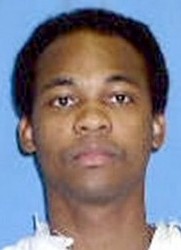
Mauriceo Brown
Murderer Russell Ellwood
Murderer · USA · 1991
Russell Ellwood was a former taxi driver. Authorities suspected him of killing…
20 victims
Russell Ellwood
Murderer · USA · 1991
Russell Ellwood was a former taxi driver. Authorities suspected him of killing…
20 victims
 Robert Martines Perez
Murderer · USA · 1994
Name: Robert Martines Perez · Other name used in proceedings: Robert Martinez P…
15 victims
Robert Martines Perez
Murderer · USA · 1994
Name: Robert Martines Perez · Other name used in proceedings: Robert Martinez P…
15 victims
 Billy Frank Vickers
Murderer · USA · 1993
Billy Frank Vickers Vickers was executed by lethal injection in Texas on Januar…
14 victims
Billy Frank Vickers
Murderer · USA · 1993
Billy Frank Vickers Vickers was executed by lethal injection in Texas on Januar…
14 victims
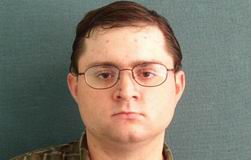 Andrew Lackey
Murderer · USA · 2005
Andrew Lackey · October 31, 2005 — Athens Police Department received and record…
1 victim
Andrew Lackey
Murderer · USA · 2005
Andrew Lackey · October 31, 2005 — Athens Police Department received and record…
1 victim
 Tracy Meikle
Murderer · United Kingdom · 2013
Tracy Meikle was sentenced to life in prison (minimum 15 years) on January 29,…
1 victim
Tracy Meikle
Murderer · United Kingdom · 2013
Tracy Meikle was sentenced to life in prison (minimum 15 years) on January 29,…
1 victim
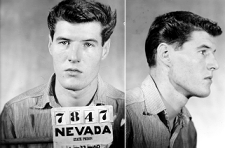 Thayne Archibald
Murderer · USA · 1959
Thayne Archibald was executed at the Nevada State Prison on August 23, 1961. He…
1 victim
Thayne Archibald
Murderer · USA · 1959
Thayne Archibald was executed at the Nevada State Prison on August 23, 1961. He…
1 victim
- Gender
- male
- Country
- USA
- Location
- Bexar County, Texas, USA
- Date of birth
- J uly 3, 1975
- Age at first offence
- 21
- Characteristics
- robbery, member of the "texas seven
- Victim profile
- Michael T. Lahood Jr., 25
- Method of murder
- Shooting
- Date(s) of murder
- August 15, 1996
- Years active
- 1996
- Date of arrest
- Next day
- Status
-
Executed
Executed by lethal injection in Texas on July 9, 2006
Case identifiers
- Name: Mauriceo Brown
Background
Mauriceo Brown was convicted in Texas state court of capital murder and sentenced to death. He was scheduled for execution in Texas.
The offence
On the night of August 14, 1996, Kenneth Foster, Mauriceo Brown, DeWayne Dillard, and Julius Steen embarked on a series of armed robberies around San Antonio, Texas. Brown announced that he had a gun and asked whether the others wanted to rob people: “I have the strap, do you all want to jack?” The group continued into the early hours of the next day, August 15.
The next day, Brown and his accomplices followed a car to the residence of Patrick LaHood, looking to carjack the vehicle. Julius Steen testified that they were cruising and smoking marijuana while looking for persons to rob. The group committed armed robberies and divided stolen property equally.
At the LaHood residence, Brown exited the vehicle and approached Michael LaHood, Jr. A woman who was with LaHood heard Brown demand LaHood’s wallet, money and keys. She saw Brown point a gun at LaHood’s face for about two minutes before firing. She also testified that LaHood died from a gunshot wound to the head. Patrick LaHood gave police a description of the assailants.
After the shooting, Foster was pulled over for speeding and driving erratically less than an hour later. Police arrested the men shortly thereafter. Brown’s accomplices gave written statements to police identifying Brown as the person who fatally shot LaHood. Brown admitted in a statement to police and at trial that he fired the fatal shot. In his trial testimony, Brown said he approached LaHood to obtain Mary Patrick’s telephone number, and that he raised his gun after hearing what sounded to him like the click of an automatic weapon; he also testified that the gun discharged in LaHood’s face. Brown denied intent to kill and testified that LaHood was getting ready to pull a gun and shoot him. Another weapon was not found near LaHood’s body.
Investigation and arrest
Shortly after the shooting, police arrested the men. At the time of arrest, Foster, Steen, and Dillard identified Brown as the shooter. The handgun used was found in the vehicle Foster was driving and in which Brown, Dillard, and Steen were riding. Police found a .44 caliber pistol in the vehicle, and a deformed bullet from LaHood’s autopsy was determined to have been fired from the same weapon.
Brown’s accomplices gave written statements to police identifying Brown as the shooter. Brown admitted in his statement to police that he fired the fatal shot.
Trial
Guilt-innocence phase
A jury convicted Brown and Foster of capital murder. Brown and Foster were tried together. Julius Steen testified during Foster’s guilt-innocence phase and at Brown’s trial. Steen’s testimony included that Foster drove, that Steen and Foster spotted potential victims, and that Brown brandished the gun during robberies before the LaHood confrontation. Steen testified that Brown demanded LaHood’s wallet and that he heard a shot shortly thereafter.
Prosecution witness Mary Patrick testified about being followed and about the confrontation at LaHood’s residence. Patrick testified that she saw a man approach with a scarf across his face holding a gun and demanding LaHood’s keys. Patrick testified that she tripped and fell, looked back, and saw the gunman point the gun at LaHood’s face for about two minutes. Patrick then heard a loud shot, saw LaHood fall, and ran to the door.
Patrick initially identified DeWayne Dillard as the shooter but said she did so because she was very distraught at that time. At trial, Patrick testified that she believed Brown was the shooter based on her recollection of his eyes. On cross-examination, Patrick admitted she had quite a bit to drink, and that she had only seen the shooter’s eyes and head above the scarf and below his baseball cap when she identified the shooter at the gas station.
Brown testified in his defense. He testified that he approached LaHood to obtain Mary Patrick’s telephone number, and that he never asked for LaHood’s wallet and never intended to rob or shoot LaHood. Brown also testified that LaHood directed him to get off LaHood’s property and that he thought he saw the handle of a handgun in LaHood’s waistband.
Punishment phase
At the punishment phase of trial, the prosecution presented evidence of Brown’s affiliation with a violent gang with a reputation for violence and for dealing drugs and using weapons to commit crimes. Evidence was presented that Brown sold a pipe-bomb to an undercover officer on a high school campus. Evidence was also presented about a violent burglary of a vehicle only days before the fatal shooting of LaHood, and that Brown had a citation for damage connected to that burglary, but was not arrested.
Evidence showed Brown participated in an armed robbery and car-jacking of a tourist in downtown San Antonio a day or two before the LaHood murder, in which petitioner and Dillard robbed the owner of a Mercedes of his vehicle and cell phone at gun point in the parking lot of a downtown San Antonio hotel. The victim testified and corroborated Steen’s account. Police later found the cell phone in the trunk of the vehicle.
The prosecution also presented evidence at the punishment phase about Foster’s involvement in a near-fatal shooting of two individuals and evidence regarding Foster’s drug dealing and arrest for possession of crack cocaine.
Brown presented expert testimony from a psychiatrist who testified that Brown requires treatment for depression, that Brown’s degree of narcissism is within the normal range, that the best indicator of future violence is a person’s past behavior, and that the tendency toward aggressiveness tends to reduce as people age.
Brown presented testimony from his mother that he had been kidnapped, isolated, mal-nourished, and abused by his father from age two to six. She testified that he displayed signs of hyperactivity in school, began having trouble with the law at age fourteen, but had never been a violent person, and had become more religious since his arrest for capital murder.
Other witnesses, including Brown’s grandmother, uncle, neighbor, pastor, and the mother of Brown’s child, testified that Brown had never been violent, had been active in his church youth group, and had newly dedicated his life to God.
At the punishment phase, Brown testified that he was not a violent person and that the shooting of LaHood had been accidental. He testified that he felt bad for the LaHood family and said he considered taking his own life but found peace through reading the Bible and prayer. He also testified that he had never demanded anything from LaHood, had never made or sold a pipe bomb, and had no criminal responsibility for the firearm possession charge to which he had pleaded guilty, nor for the burglary of a vehicle charge. He testified that while he associated with members of the '74 Hoover Crips, he was never actually a member of that gang.
On May 6, 1997, the jury returned its verdict at the punishment phase and found that there was a probability that Brown would commit criminal acts of violence constituting a continuing threat to society and that, considering all of the evidence and including Brown’s character, background, and personal moral culpability, there were insufficient mitigating circumstances to warrant life imprisonment. The state trial court imposed a sentence of death.
Sentencing
- In May 1997, Brown was convicted of capital murder and sentenced to death.
- Brown’s execution was carried out by lethal injection in Texas.
Appeals
Brown appealed his conviction and sentence. The Texas Court of Criminal Appeals affirmed the judgment in February 1999. Brown’s conviction became final on May 18, 1999, when the time for filing a petition for writ of certiorari in the U.S. Supreme Court expired.
An evidentiary hearing was held by the trial court upon Brown’s application for state habeas relief. The Texas Court of Criminal Appeals denied relief on March 7, 2001, based upon the trial court’s findings of fact and conclusions of law.
Brown’s federal petition for writ of habeas corpus and a certificate of appealability (COA) were denied on December 3, 2004. The 5th U.S. Circuit Court of Appeals denied Brown’s request for COA on July 29, 2005, and the U.S. Supreme Court denied his request for certiorari review on February 27, 2006.
Outcome
Mauriceo Brown was executed by lethal injection in Texas.
At execution, Brown apologized to the family of Michael LaHood Jr. Brown told the victim’s brothers who watched nearby through a window: “sorry you lost a brother, a loved one and friend.” Brown told his mother and two siblings who witnessed the execution: “Keep your heads up and know that I will be in a better place.” Brown made an additional apology to the victim’s relatives and friends: “I apologize that you lost a loved one this way. God bless you all. OK, Warden.”
Brown’s mother, Cynthia Luckey, wailed and collapsed after the drugs took effect. Brown was pronounced dead at 6:47 p.m. The execution was delayed briefly while the U.S. Supreme Court considered appeals.
Aftermath
Statements made after execution included that Brown had confessed to shooting Michael LaHood, Jr. but later attempted to recant and maintained innocence during various appeals. One prosecutor and another prosecutor denied credibility of Brown’s recantation claims.
Other details
- Brown was described as having affiliation with the Hoover ’74 Crips gang and being a gang member convicted in connection with the shooting death of Michael LaHood.
- Evidence at the punishment phase included testimony and records about pipe-bomb sale to an undercover officer at a high school campus.
- Evidence included criminal conduct about burglary of a vehicle and prior robbery incidents using a rental car.
- At his final meal, Brown ordered enchiladas heavy with cheese and onions, fried chicken and a boneless T-bone steak with A1 Steak Sauce.
- Brown’s appellate lawyer was David Sergi, who sought DNA testing on clothing and sought stays and further review by appellate courts. Brown’s interviewer described Brown’s last days in death row cell, praying and receiving visitors, and discussed a request related to DNA testing and appeals pending at the Supreme Court.
- Brown had a son named Octavian and spoke about the relationship with his son in interviews conducted while he was on death row.
Spotted an error, or have more information about this case?