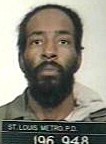
Vernon Brown
Serial killer
5known / alleged victims (3 - 5 +)
Similar offenders
 Carl Eugene Watts
Serial killer · USA · 1974
Carl Eugene Watts (born November 7, 1953; died September 21, 2007), also known…
100 victims
Carl Eugene Watts
Serial killer · USA · 1974
Carl Eugene Watts (born November 7, 1953; died September 21, 2007), also known…
100 victims
 Rodney Alcala
Serial killer · USA · 1977
Rodney James Alcala (born August 23, 1943) was also known as Rodrigo Jacques Al…
100 victims
Rodney Alcala
Serial killer · USA · 1977
Rodney James Alcala (born August 23, 1943) was also known as Rodrigo Jacques Al…
100 victims
 Donald Harvey
Serial killer · USA · 1970
Donald Harvey was known as an American serial killer and a self-professed “Ange…
87 victims
Donald Harvey
Serial killer · USA · 1970
Donald Harvey was known as an American serial killer and a self-professed “Ange…
87 victims
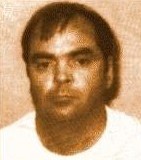 Donald Leroy Evans
Serial killer · USA · 1975
Donald Leroy Evans (born July 5, 1957) was an American serial killer who murder…
60 victims
Donald Leroy Evans
Serial killer · USA · 1975
Donald Leroy Evans (born July 5, 1957) was an American serial killer who murder…
60 victims
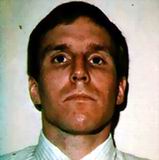 Michael Swango
Serial killer · USA · 1981
Michael Swango (Joseph Michael Swango) was a physician and American serial kill…
60 victims
Michael Swango
Serial killer · USA · 1981
Michael Swango (Joseph Michael Swango) was a physician and American serial kill…
60 victims
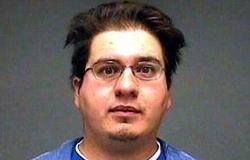 Efren Saldivar
Serial killer · USA · 1989
Efren Saldivar (born 30 September 1969) was an American serial killer who murde…
50 victims
Efren Saldivar
Serial killer · USA · 1989
Efren Saldivar (born 30 September 1969) was an American serial killer who murde…
50 victims
Random profiles
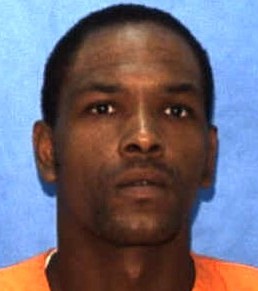 Richard Henyard
Murderer · USA · 1993
Richard Henyard was convicted by a jury in the Circuit Court, Lake County, Flor…
2 victims
Richard Henyard
Murderer · USA · 1993
Richard Henyard was convicted by a jury in the Circuit Court, Lake County, Flor…
2 victims
 Gerald Albert Gallego
Murderer · USA · 1954
Gerald Albert Gallego was a cop-hating father of Gerald Armand Gallego. He murd…
2 victims
Gerald Albert Gallego
Murderer · USA · 1954
Gerald Albert Gallego was a cop-hating father of Gerald Armand Gallego. He murd…
2 victims
 William Robinson
Homicide · USA · 1985
William Robinson was a Texas death row inmate. He was 49 years old when he comm…
2 victims
William Robinson
Homicide · USA · 1985
William Robinson was a Texas death row inmate. He was 49 years old when he comm…
2 victims
 Itzcoatl Ocampo
Serial killer · USA · 2011
Itzcoatl Ocampo was a former Marine accused in Orange County of brutally murder…
6 victims
Itzcoatl Ocampo
Serial killer · USA · 2011
Itzcoatl Ocampo was a former Marine accused in Orange County of brutally murder…
6 victims
 Michael Onufrejczyc
Murderer · United Kingdom · 1953
Michael Onufrejczyc was a Pole known locally as “Whiskers”. He was a highly dec…
1 victim
Michael Onufrejczyc
Murderer · United Kingdom · 1953
Michael Onufrejczyc was a Pole known locally as “Whiskers”. He was a highly dec…
1 victim
 Sante Kimes
Murderer · USA · 1996
Sante Kimes (born July 24, 1934), American felon convicted of two murders, alon…
3 victims
Sante Kimes
Murderer · USA · 1996
Sante Kimes (born July 24, 1934), American felon convicted of two murders, alon…
3 victims
Case Facts
- Gender
- male
- Country
- USA
- Location
- Indiana/Missouri, USA
- Date of birth
- October 1, 1953
- Age at first offence
- 27
- Characteristics
- rape, drug addict
- Victim profile
- Girls and young women
- Method of murder
- Strangulation
- Date(s) of murder
- 1980 - 1986
- Years active
- 1980–1986
- Date of arrest
- October 27, 1986
- Status
-
Executed
Executed by lethal injection in Missouri on May 17, 2005
Case Summary
Parties
- Vernon Brown
Timeline
- October 24, 1986 — Nine-year-old Janet Perkins left Cole School in north St. Louis around 3:00 p.m. and walked toward her home three and a half blocks away; Vernon Brown, using the name Thomas Turner, picked up his stepsons from Cole School and returned to their home on Enright Avenue in time to see Janet walking past, called to her and ultimately enticed her to enter the house.
- October 25, 1986 — Janet Perkins disappeared.
- October 26, 1986 — Janet Perkins’s body was discovered in two trash bags near a dumpster in an alley behind Brown’s house.
- October 27, 1986 — Vernon Brown was arrested.
- November 18, 1986 — A St. Louis City grand jury indicted Brown on two counts of first degree murder for the deaths of Janet Perkins and Synetta Ford.
- December 2, 1988 — The trial court entered its judgment of conviction and sentence of death for the Janet Perkins murder.
- October 17, 1988 — The trial began.
- May 26, 1987 — The state endorsed Brown’s stepsons as witnesses in the penalty phase on Janet Perkins’s murder.
- October 14, 1987 — The state informed Brown that it intended to use sodomies as evidence of an aggravating circumstance at the penalty phase of the trial.
- October 10, 1987 — The state informed Brown that it intended to use the sodomies as evidence of an aggravating circumstance at the penalty phase of the trial.
- October 14, 1988 — The state provided Brown with statements of various witnesses from Indianapolis, Indiana, surrounding Brown’s guilty plea to charges of assault and battery with intent to gratify sexual desire in Indiana in 1973; Brown filed a motion for sanctions to prevent the state from using the Indiana evidence or, in the alternative, for a continuance, and the trial court overruled both motions on October 18, 1988.
- October 18, 1988 — The trial court overruled Brown’s motions regarding the Indiana evidence.
- September 12, 1997 — This Court issued a per curiam remanding the case to the trial court for a gender-Batson hearing.
- November 23, 1998 — The hearing court held a gender-Batson hearing.
- March 7, 1985 — Synetta Ford called her friend Vickie Noland; Brown arrived at the Grand Cafe on Washington and told a chef that he was sick and did not want to work.
- March 8, 1985 — Alesia Brown was picked up from the hospital by Earl Bedford; when they arrived at her apartment, they found Synetta Ford’s body on the floor with a cord around her neck and a knife in her throat; Brown asked Alesia Brown what happened.
- March 28, 1985 — Brown packed his clothes and left town, telling his wife to tell police he had been abducted by three men, dressed in black and carrying guns, in a red Pinto down the street.
- April 1, 1985 — Brown’s wife told police the abduction story.
- April 2, 1985 — Brown’s wife told police that the abduction story was not true and that she wanted to be a secret witness because she was afraid of Brown.
- April 24, 1985 — Brown was arrested pursuant to a warrant, taken to the police station, and was given his Miranda rights.
- April 27, 1987 — Indianapolis police questioned Brown in April 1987 in connection with other matters.
- October 29, 1986 — Brown confessed to the murder of Ford.
- April 1987 — Indianapolis prosecutors charged Brown with the murder of nine-year-old Kimberly Campbell in 1980; prosecutors also charged him with molesting an 11-year-old boy and three girls aged 9, 7 and 2.
- May 17, 2005 — Vernon Brown was executed; he was pronounced dead at 2:35 a.m.
- May 18, 2005 — Shortly after midnight, the state of Missouri scheduled another execution date narrative; the Reuters account reported Brown was executed at 2:35 a.m. EDT (0635 GMT).
Background
- Vernon Brown was a drifter who resided in twenty-three states during his last decade of freedom.
- Brown settled in Indianapolis by 1980.
- Brown served time for molesting a 12-year-old girl and had been convicted of sexually assaulting a 12-year-old girl in the 1970s, serving four years in prison.
- Brown worked as a maintenance man in an apartment building.
- Brown lived in an apartment at 3435 Washington in the City of St. Louis; he worked in that apartment complex as a maintenance worker and also worked next door at the Grand Cafe on Washington as a dishwasher.
- Brown and his wife moved to 4028 Enright after February 13, 1985.
- Brown lived in St. Louis under the phony name Thomas Turner.
- Brown used PCP and claimed that PCP-induced blackouts affected him.
The offence
Murder of Janet Perkins (age 9)
- On October 24, 1986, nine-year-old Janet Perkins left Cole School in north St. Louis around 3:00 p.m. and walked toward her home three and a half blocks away.
- Janet Perkins generally took the same route each day, west on Enright Avenue.
- Vernon Brown, using the name Thomas Turner, returned to the home on Enright Avenue and saw Janet walking past.
- Brown called to Janet and ultimately enticed her into the house.
- Brown’s stepsons saw Janet enter the house.
- A neighbor’s relative saw Brown on the front porch and Janet walking up the steps to the house.
- Brown ordered the stepsons to their bedroom and locked the door from the outside.
- Brown took Janet to the basement and bound her feet and one hand with a wire coat hanger, forcing her into a crouched position that permitted her head to reach the height of Brown’s genitalia.
- Brown strangled Janet to death with a rope.
- The next day, enforcement authorities found Janet’s body in two trash bags near a dumpster in an alley behind Brown’s house.
- Further investigation raised suspicion; when suspicion turned to probable cause, police arrested Brown on October 27, 1986.
- Police confronted Brown with evidence including testimony of a neighbor who had seen Janet enter Brown’s house.
- Brown was asked to tell police where to find Janet’s missing shoe, raincoat and school papers.
- Brown led police to a different dumpster, where police found a bag containing Janet’s missing property.
- Brown made a videotaped statement implicating himself as Janet’s killer.
- Brown told police he strangled Janet while under the influence of PCP and suffered blackouts.
Murder of Synetta Ford (age 19)
- In March 1985, Synetta Ford, 19, was stabbed and strangled in her St. Louis apartment.
- Synetta Ford’s body was found in her basement apartment in a building where Brown worked as a maintenance man.
- Evidence described included a knife sticking out of her throat and the electrical cord from a curling iron “tightly knotted around the neck.”
- The door to the apartment had been forced open.
- Brown first strangled Ford, taking time to knot the electrical cord around her neck, and then as she was dying he stabbed her in the chest and neck.
- The stab wound to Ford’s neck severed her carotid artery.
- The autopsy revealed Ford was stabbed twice: once in the chest and once in the neck.
- The autopsy indicated Ford died from strangulation.
- Brown tried to convince police Ford had accidentally stabbed herself before and after he strangled her with the cord.
- Brown was interviewed by police multiple times: on March 9, March 22, and March 26.
- Brown left town on March 28, 1985.
- Brown told his wife that he was tired of the questioning and instructed her to tell police he had been abducted by three men dressed in black and carrying guns in a red Pinto down the street.
- Brown’s wife initially told police this story (April 1, 1985).
- Brown’s wife later told police the story was not true and she wanted to be a secret witness because she was afraid of Brown (April 2, 1985).
- Brown’s wife told police Brown told her he had killed Ford and told them how Brown killed Ford.
- Brown was arrested on April 24, 1985 pursuant to a warrant, taken to the police station, and was given Miranda rights.
- Police told Brown they did not believe the abduction story because his wife had told them the truth.
- Brown confessed to the murder of Ford about fifteen months later, on October 29, 1986.
- Brown described leaving home for work, going to a location at 3534 Washington, going to the basement, seeing Ford standing in the doorway, and Ford asking what he was doing there.
- Brown said he replied, “I’m getting a pair of gloves.”
- Brown said Ford attacked him with a butcher knife, they tussled, and he tried to leave.
- Brown described grabbing an electric curling iron, wrapping its cord around Ford’s neck several times, and tying a knot in the cord.
- Brown described struggling until Ford stabbed herself in the throat with the knife, and Brown leaving.
- Brown said he realized he had left his keys inside Ford’s apartment, kicked in the door, got his keys, and left.
- Brown was convicted of Ford’s murder and sentenced to death in the Ford murder case.
Investigation
Janet Perkins
- Officers found Janet’s body in two trash bags near a dumpster in an alley behind Brown’s house.
- Police arrested Brown on October 27, 1986.
- Police asked Brown to tell them where to find Janet’s missing shoe, raincoat and school papers.
- In a subsequent statement, Brown also admitted killing Synetta Ford, a woman murdered on March 7, 1985.
Synetta Ford
- Alesia Brown checked into a hospital for about ten days because she was pregnant and discussed possible work on an apartment rug and vent with Brown.
- After Alesia returned, the front door had been shattered from the frame; they found Ford’s body on the floor with a cord around her neck and a knife in her throat.
- Brown provided information to police about an encounter with a Cuban man he claimed Ford was arguing with.
- Brown told his wife that he killed Ford and wrapped a cord around her neck, and described stabbing her after a scuffle.
- Brown’s wife changed her account on April 2, 1985, stating that Brown told her he killed Ford and how he killed Ford.
- Brown was arrested on April 24, 1985 and was given Miranda rights.
- Soon after Ford’s death, Brown was interviewed by police at the crime scene.
Arrest
Janet Perkins
- Brown was arrested on October 27, 1986 for Janet Perkins’s murder.
Synetta Ford
- Brown was arrested on April 24, 1985 pursuant to a warrant.
Trial
Charges and convictions (Perkins murder)
- A jury convicted Vernon Brown of first degree murder in violation of Section 565.020, RSMo 1994 and recommended that he be put to death.
- The trial court agreed and entered a sentence of death.
- After an evidentiary hearing, the motion court overruled Brown’s Rule 29.15 motion.
- The Missouri Supreme Court affirmed.
- The record described that the trial began October 17, 1988, nearly two years after Janet’s murder.
- Brown’s counsel moved to suppress the two videotaped statements and to sever the trials on the two murders.
- The trial court sustained the motion to sever but overruled the motion to suppress.
- The jury convicted Brown of Janet Perkins’ murder.
- In the penalty phase, the jury found four statutory aggravating circumstances and four nonstatutory aggravating circumstances.
- The jury recommended that Brown be put to death and the trial court concurred.
Witnesses and sentencing evidence
- At the time of the trial, Brown’s stepsons were ages eleven, nine, and seven: Tommy Johnson, Christopher Moore and Jason Moore.
- The state furnished Brown a copy of a police report showing allegations that Brown had sodomized his stepsons.
- On October 10, 1987, the state informed Brown that it intended to use the sodomies as evidence of an aggravating circumstance at the penalty phase.
- On October 14, 1987, Brown filed a motion for a continuance, claiming he suffered a medical condition that would make it difficult for him to sit through trial and that he had only recently been provided the police report.
- The trial court denied the continuance.
- On October 18, 1988, the trial court overruled motions related to Indiana evidence.
- Dr. James Monteleone testified for the state during the penalty phase about the sodomy of Brown’s stepsons in 1987.
- The Missouri Supreme Court described cross-examination in which Brown’s counsel attempted to ask about a 1984 physical examination of the boys conducted at the request of their mother.
- The trial court sustained the state’s relevance objection; the Missouri Supreme Court held the trial court did not err in sustaining the objection.
- The Missouri Supreme Court held the imposition of the death penalty was not excessive or disproportionate.
Appeals and post-conviction issues (Perkins murder)
- Brown initially contended that the trial court erred in finding his stepsons competent to testify against him and permitting the prosecutor to use leading questions in examining the boys.
- Brown argued evidence was sufficient to support element of deliberation.
- Brown sought a continuance on ground that counsel needed time to prepare for evidence that the state failed to timely disclose.
- The Missouri Supreme Court affirmed and addressed multiple points including:
- denial of continuance sought based on medical condition and disclosure of police report,
- admissibility of sodomy evidence as aggravating circumstance evidence,
- denial of the point related to Indiana felony evidence as a serious assaultive criminal conviction.
Sentencing
Perkins murder
- Brown received a death sentence for the 1986 killing of Janet Perkins, 9.
- The trial court entered its judgment of conviction and sentence of death on December 2, 1988.
Ford murder
- Brown received a death sentence for the March 7, 1985 murder of Synetta Ford, 19.
Prior Indiana conviction
- Brown received a sentence of up to five years as a result of his Indiana felony conviction for assault and battery with intent to gratify sexual desire in 1973 involving a 12-year-old female.
Appeals
Missouri Supreme Court (Perkins murder)
- In State v. Brown, 902 S.W.2d 278 (Mo. banc 1995), the Supreme Court addressed Brown’s post-conviction claims and affirmed.
- In State v. Brown, 958 S.W.2d 553 (Mo. 1997), the Supreme Court affirmed the judgments, holding inter alia that the imposition of death penalty was not excessive or disproportionate.
- In State v. Brown, 998 S.W.2d 531 (Mo. 1999), the Supreme Court addressed a Batson claim involving peremptory strikes and remanded for a gender-Batson hearing; subsequently, on consolidated appeal, it held the state’s reasons for striking venirepersons were sufficiently race and gender-neutral and affirmed denial of post-conviction relief.
Federal habeas (Ford murder)
- Brown v. Luebbers, 344 F.3d 770 (8th Cir. 2003) (Habeas—Ford Murder): the Eighth Circuit affirmed in part and reversed and remanded in part.
- Brown v. Luebbers, 371 F.3d 458 (8th Cir. 2004) (Habeas—Ford Murder): the Eighth Circuit affirmed the denial of relief on all grounds related to a letter exclusion during the penalty phase.
U.S. Supreme Court stays and final decision context
- A temporary stay was issued at 11:56 p.m. while the U.S. Supreme Court considered motions for stays of execution.
- The U.S. Supreme Court voted 5-4 to allow the execution to continue.
Outcome
- Vernon Brown was executed by lethal injection in Missouri on May 17, 2005.
- Brown was strapped into the gurney at 11:30 p.m. Tuesday night.
- Missouri Department of Corrections spokesman John Fougere stated Brown was pronounced dead at 2:35 a.m.
- The Reuters account reported Brown was executed on Wednesday, pronounced dead at 2:35 a.m. EDT (0635 GMT), and received a lethal dose of chemicals.
- The execution was delayed more than two hours beyond its scheduled time due to an unsuccessful appeal to the U.S. Supreme Court.
Aftermath
- Missouri Gov. Matt Blunt commented after Brown was pronounced dead: “Tonight the process of our judicial system has been carried out. The courts and the Missouri Department of Corrections have met their responsibilities under law. I reviewed applications for clemency and the history of legal proceeding. I found nothing to merit setting aside the result of previous judicial proceedings.”
- Brown’s last words were: “You'll see me again. To all my friends, don't think of me as being gone, but there with you. And to Jazz, who has my heart and love. Peace, love. Vernon Brown.”
- John Fougere was uncertain who “Jazz” was.
- Brown had a last meal of shrimp, french fries, salad and cake.
- A Missouri Department of Corrections spokesman stated Brown declined a sedative at 7 p.m. but agreed to sedation at about 1 a.m.
- Brown fell asleep for a “good amount of time” before the procedure was begun.
- Brown was awakened shortly after the Supreme Court lifted the stay about 2:10 a.m.
- Dianne Perkins, Janet Perkins’s aunt, said: “He lived for years, but she only saw nine.”
- Susie Perkins, Janet’s grandmother, said she and other family members would not attend, and stated: “I’m a little ill to make it, but I will be glad when it happens. When it’s over with,” and “It’s taken a long time. It’s finally here, so I’m glad.”
Other details
- Brown was referred to as a “destroyer of children.”
- Assistant Circuit Attorney Robert Garrison said at the time: “I can’t think of a more appropriate case for the death penalty than this man.”
- The Columbia Missourian described lawyers and death penalty opponents fighting to halt the execution and described that barring a court ruling or clemency from Gov. Matt Blunt, Brown was scheduled to die by injection at 12:01 a.m. Wednesday.
- The Kansas City Star reported that death-penalty opponents objected to Brown’s three hours strapped to a gurney before his execution, while the Missouri Department of Corrections defended its treatment of Brown, stating he never complained of discomfort and actually slept part of the time after taking a sedative he earlier declined.
- Margaret Phillips, of the Eastern Missouri Coalition to Abolish Death Penalty, said: “He was sentenced to death, not torture.”
- Margaret Phillips also said: “Everything about it is unsettling. The fact that lethal injection might be painful, with or without the delay, is cause for immense distress. There was no good outcome.”
- Diann Rust-Tierney, executive director of the National Coalition to Abolish the Death Penalty, said: “What you saw this morning was part of a process that just doesn't work,” and “There's no nice way of doing it, and there are problems inherent with it. Brown's execution is part of a continuum of disturbing things that take place.”
- Missouri Gov. Matt Blunt denied clemency for Vernon Brown and said: “We cannot begin to understand the pain her family has endured, and I cannot imagine how they have suffered at the loss of their little girl.”
- A lawyer for Brown, John Simon, said: he was still seeking a re-hearing in federal court and that requests for a stay were still pending before the U.S. Supreme Court.
- Ann Ford said she wanted to witness Brown’s execution to make sure he paid for killing her daughter and stated: “I can’t say it’s like closure, because there will be no closure while I live,” before the execution.
- Ann Ford stated: “I think he's getting his just rewards.”
Spotted an error, or have more information about this case?