
Robert Gleason
Murderer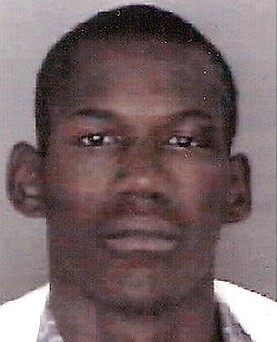 Joshua Wayne Andrews
Murderer · USA · 2000
Joshua Wayne Andrews was a serial killer accused of killing several people in V…
5 victims
Joshua Wayne Andrews
Murderer · USA · 2000
Joshua Wayne Andrews was a serial killer accused of killing several people in V…
5 victims
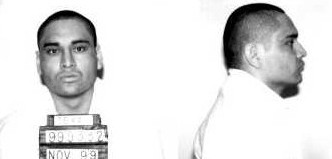 Juan Carlos Alvarez
Murderer · USA · 1998
Juan Carlos Alvarez, born on March 9, 1977, in San Luis, Mexico, was a Hispanic…
5 victims
Juan Carlos Alvarez
Murderer · USA · 1998
Juan Carlos Alvarez, born on March 9, 1977, in San Luis, Mexico, was a Hispanic…
5 victims
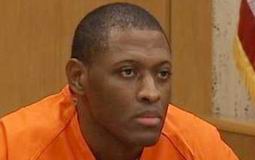 Leon Davis Jr.
Murderer · USA · 2007
Leon Davis Jr. was sentenced to death on April 29, 2011, for the execution-styl…
5 victims
Leon Davis Jr.
Murderer · USA · 2007
Leon Davis Jr. was sentenced to death on April 29, 2011, for the execution-styl…
5 victims
 Raymond Lee Oyler
Murderer · USA · 2006
Raymond Lee Oyler was convicted for starting the 2006 Esperanza fire in Riversi…
5 victims
Raymond Lee Oyler
Murderer · USA · 2006
Raymond Lee Oyler was convicted for starting the 2006 Esperanza fire in Riversi…
5 victims
 Terry Lee Hankins
Murderer · USA · 2000
Terry Lee Hankins was convicted by a jury of capital murder and was sentenced t…
5 victims
Terry Lee Hankins
Murderer · USA · 2000
Terry Lee Hankins was convicted by a jury of capital murder and was sentenced t…
5 victims
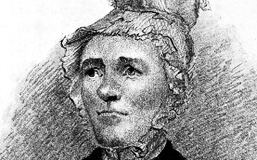 Elizabeth Ross
Murderer · United Kingdom · 1831
Elizabeth Ross, described as a common law wife of Edward Cook (sometimes “Mrs C…
1 victim
Elizabeth Ross
Murderer · United Kingdom · 1831
Elizabeth Ross, described as a common law wife of Edward Cook (sometimes “Mrs C…
1 victim
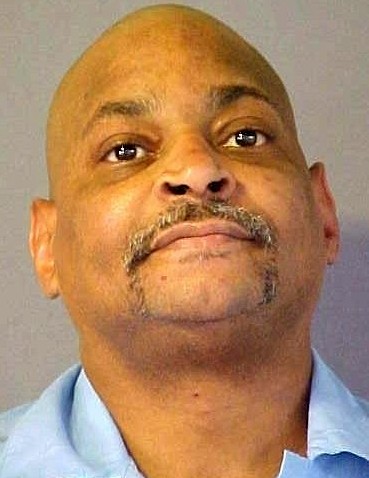 Eric Allen Patton
Murderer · USA · 1994
Eric Allen Patton — defendant; convicted killer; former handyman · Charlene Kau…
1 victim
Eric Allen Patton
Murderer · USA · 1994
Eric Allen Patton — defendant; convicted killer; former handyman · Charlene Kau…
1 victim
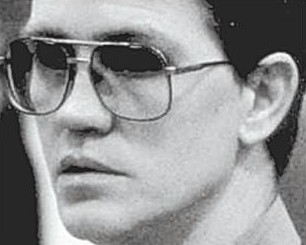 Kenneth Manuel Stewart
Murderer · USA · 1991
Kenneth Manuel Stewart Jr. was sentenced to death and was executed by electrocu…
2 victims
Kenneth Manuel Stewart
Murderer · USA · 1991
Kenneth Manuel Stewart Jr. was sentenced to death and was executed by electrocu…
2 victims
 Leroy Fears
Murderer · USA · 1994
Leroy Fears was 43 years old when Gov. Edward G. Rendell signed a warrant for h…
1 victim
Leroy Fears
Murderer · USA · 1994
Leroy Fears was 43 years old when Gov. Edward G. Rendell signed a warrant for h…
1 victim
- Gender
- male
- Country
- USA
- Location
- Virginia, USA
- Date of birth
- April 10, 1970
- Age at first offence
- 37
- Characteristics
- torture
- Victim profile
- Michel Kent Jamerson / Harvey Watson Jr., 63 / Aaron Alexander Cooper, 26
- Method of murder
- Shooting / Strangulation
- Date(s) of murder
- 2007 / 2009 / 2010
- Years active
- 2007–2010
- Date of arrest
- —
- Status
-
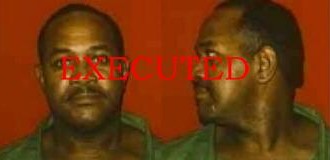
Executed
Sentenced to death on September 6, 2011; executed by electrocution in Virginia on January 16, 2013
Case summary
Robert Charles Gleason was serving life imprisonment for the 2007 fatal shooting of Michael Kent Jamerson in Amherst County, Virginia. He later killed two fellow inmates while serving life, and he vowed to keep killing unless he was put to death.
Background
Gleason was serving life imprisonment for the 2007 fatal shooting of Michael Kent Jamerson in Amherst County. The killing was described as being carried out to cover up his involvement in a drug gang. Gleason was alleged to have believed that Jamerson was going to cooperate with the government against the ring.
A turkey hunter found Jamerson’s body in a wooded area off of Virginia 130 in western Amherst County, Virginia. Jamerson was shot four times, twice to the head and twice to the body. The murder weapon was found on the banks of the James River by a college student who was fishing there.
The first offence: killing of Harvey Watson Jr.
Harvey Watson Jr., 63, was murdered at Wallens Ridge State Prison on May 8, 2009. Gleason, his cellmate, was charged with “willful, deliberate, and premeditated killing of any person by a prisoner confined in a state or local correctional facility,” a capital offense under Code § 18.2–31(3).
On December 21, 2010, following an evaluation to confirm competency, Gleason pled guilty to the murder of Watson in the Circuit Court of Wise County. Gleason confessed under oath that he planned the murder to occur on the two-year anniversary of a previous homicide he had committed.
Gleason admitted binding Watson with torn bed sheets, beating him, taunting him about his impending death, shoving a urine sponge in his face and a sock in his mouth, and finally strangling him with fabric from the sheet. According to Gleason, he concealed Watson’s body in his cell for fifteen hours, making excuses for Watson’s failure to emerge. Gleason stated that once rigor mortis had passed, he planned to dispose of the body in the garbage that was circulated to pick up food trays, but he was unsuccessful before Watson was discovered by prison personnel.
Throughout the circuit court proceedings, Gleason consistently repeated that he had no remorse. He told the court that, because premeditated murder of an inmate and more than one murder within a three-year period was punishable by the death penalty in Virginia, he “already had a few other inmates lined up, just in case I didn't get the death penalty, that I was gonna take out.”
After Watson’s death, Gleason was moved to solitary confinement in Virginia’s “supermax” Red Onion Prison.
Watson was described as having a history of mental illness, suffering from “mild” mental impairment, and being frequently cited for disruptive and combative behavior. He was serving a 100-year sentence for killing a man and wounding two others with a 10-gauge shotgun in 1983 when he shot into his neighbor’s house in Lynchburg with a 10-gauge shotgun.
Watson was sent to Wallens Ridge on April 23, 2009, a day after he set fire to his cell at Sussex II State Prison. Gleason and Watson became cellmates on May 1, 2009, in an 8-by-10-foot cell.
Gleason described Watson spending almost every minute of every day with him, singing verses from “Dixie,” hollering expletives, and masturbating. Gleason described that in the chow hall and in the recreation yard, Watson would get other inmates to give him cigarettes for drinking his urine and clabbered milk.
Gleason stated that his requests to separate Watson from him were met with mockery and indifference by correctional officers and prison counselors, and Gleason stated that he knew what he would do once officials refused to put Watson in protective custody. He stated: “That day I knew I was going to kill him. Wallens Ridge forced my hand.”
One account described that on the night of the killing after bed checks and lights out, Gleason tied Watson’s hands and arms to his torso using fragments of bed sheets and fashioned a gag using a pair of socks. Gleason removed the gag and lit a cigarette for Watson, telling him to enjoy it as it would be his last. Watson spit on Gleason’s face when the smoke was removed. Gleason then beat Watson and strangled him to death. Gleason covered the corpse with a bed sheet to make it look like Watson was sleeping.
Another account described that Gleason hog-tied, beat, and strangled Watson, and remained with Watson’s body for more than 15 hours before the crime was discovered.
Authorities keep the identities and number of witnesses confidential.
The second offence: killing of Aaron Cooper
Aaron Alexander Cooper was killed at Red Onion State Prison in 2010. Cooper was described as being 26 years old.
Cooper was serving a 34-year sentence for robbery. He was described as being killed in a recreation yard setting while cages were separated by wire fencing.
Gleason was charged in the capital murder of Cooper under Code § 18.2–31(8) for “[t]he willful, deliberate, and premeditated killing of more than one person within a three-year period.”
Gleason pled guilty to the murder of Cooper on April 22, 2011. Gleason informed the court that he had deliberately targeted Cooper as a point to the prosecutor and as a favor to another inmate who was to be released soon, so that the inmate would owe Gleason and Gleason would then have someone outside the prison to do his bidding.
The manner of killing was described as follows: Gleason asked Cooper to try on a “religious necklace” that Gleason was making. Gleason proceeded to strangle Cooper through the wire fence, repeatedly choking Cooper “‘til he turned purple,” waiting “until his color came back, then [going] back again” until Cooper finally expired. Gleason described himself laughing at the reaction of other inmates and watching and mocking the prison staff attempting to revive Cooper.
Another account described Cooper being strangled and then being allowed to catch his breath before he finally died. Prosecutors said Gleason mocked prison staff as they tried to revive Cooper.
Sentencing
After accepting both guilty pleas, the court conducted a multi-day joint sentencing proceeding, considering evidence and argument by counsel and Gleason. The court reviewed a pre-sentence report, and Gleason waived a post-sentence report. Gleason was sentenced to death in both cases.
On September 6, 2011, after considering the evidence and argument presented by counsel and Gleason, the Circuit Court sentenced Gleason to death for both murders, finding aggravating factors of vileness and future dangerousness in both cases beyond a reasonable doubt, and concluding these factors were not outweighed by mitigating facts.
A record of federal habeas proceedings described that Gleason chose the electric chair over lethal injection.
Gleason waived appeals as of right.
Competency and waiver of appeal
Gleason filed a document expressing his desire to “waive[ ] all right of appeal in all of these cases and specifically and emphatically request[ing] that no one, attorney or otherwise, file any appeal[s] on his behalf in any of these cases.”
A psychologist, Leigh D. Hagan, Ph.D., was appointed to evaluate Gleason’s capacity to waive his right to appeal his death sentences and was appointed to determine whether Gleason possessed the capacity to waive his right to appeal his death sentences. On September 19, 2011, the Circuit Court conducted a hearing on the matter, questioned Gleason, and received testimony and a written report from Dr. Hagan. The Circuit Court granted Gleason’s motion to waive his right to appeal and found that Gleason was competent to decide whether or not to exercise his right to appeal, possessed adequate intelligence to make the decision, was not suffering from a mental illness that would render him unable to make an informed decision, had the capacity to make reasoned choices, and made his decision knowingly, voluntarily, and intelligently. The Circuit Court entered an amended final sentencing order on September 19, 2011.
Trial proceedings
The Circuit Court conducted proceedings without a jury.
The Circuit Court permitted Gleason to change his plea in the Watson case from not guilty to guilty and back again to guilty. The Circuit Court granted each of Gleason’s requests for a continuance, appointed each expert he requested, and granted all accommodations within its power to grant.
The Circuit Court stated that “the only things that I am allowed to consider and the only things that I have considered throughout this case, regardless of what testimony has been offered or regardless of what opinions have been given, are the statutory factors that a fact-finder in Virginia [may] appropriate[ly] consider”: whether the Commonwealth proved vileness or future dangerousness in either case beyond a reasonable doubt, and whether mitigating facts outweighed these proofs.
Appeals
Gleason v. Commonwealth, 726 S.E.2d 351 (Va. 2012) (Direct Appeal):
- The Supreme Court of Virginia affirmed both death sentences after requiring statutory review because Gleason waived appeal as of right.
- The court considered whether the sentences were imposed “under the influence of passion, prejudice or any other arbitrary factor” and whether they were “excessive or disproportionate to the penalty imposed in similar cases, considering both the crime and the defendant” under Code § 17.1–313(C).
- The court determined it found no evidence of passion, prejudice, or arbitrariness and determined the sentences were neither excessive nor disproportionate.
The Supreme Court of Virginia’s opinion included a statement that Gleason’s death sentences were “not imposed under the influence of passion, prejudice, or any other arbitrary factor and are not excessive or disproportionate.”
Gleason v. Pearson, Slip Copy, 2013 WL 139478 (W.D.Va. 2013) (Habeas): A federal habeas motion to determine competency and to stay execution was denied. The court addressed motions for appointment of counsel, discovery, and evidentiary hearing regarding Gleason’s competence to waive post-conviction review, and denied them.
A federal judge described that Gleason had plainly and clearly expressed a desire to forgo challenges to his death sentences and rejected legal assistance to spare his life, stating in court: “I don't want an attorney. I want to let the January 16th [execution] day go as is.”
The federal court concluded there was no adequate basis for the exercise of federal power and denied the pending motions.
Outcome
Gleason was scheduled to be executed on January 16, 2013.
The execution occurred in Virginia by electrocution.
Gleason was pronounced dead at 9:08 p.m. at Greensville Correctional Center in Jarratt.
A family member of at least one victim witnessed the execution from a private viewing area, and authorities said identities and number of such witnesses were confidential.
Aftermath and final statement
During the execution, a physician put a stethoscope to Gleason’s chest just below a tattooed skull and failed to detect a heartbeat.
Gleason made a last statement including: “Put me on the highway going to Jackson and call my Irish buddies. ... God bless.” and included the phrase “Pog mo thoin,” translated as “Kiss my ass.”
Authorities described that Gleason had one visitor who was a spiritual adviser.
Other details
Gleason was described as a native of Lowell, Mass., near Boston, and as an accomplished tattoo artist in Colonial Heights. A witness, Patrick Hoffman, said: “I knew him as Bobby, a lot of people called him Bobby,” and further said: “The Bobby Gleason I knew - he was a genuine nice guy, all-around good person,” and “He was never, ever aggressive that I ever saw ... and he was a great artist.” Hoffman said he had heard in 2007 that Gleason had gotten involved in a shooting and said: “It was mind-blowing. No one could believe it.”
A psychiatric evaluation found that Gleason had a history of substance abuse, depression, and other problems, and concluded he was not suicidal and was competent to stand trial.
Gleason’s status on death row included that death row inmates in Virginia had an option to choose lethal injection or the electric chair since 1995.
The electric chair procedure was described as including cycles at approximately 1,800 volts at 7½ amps for 30 seconds, followed by 60 seconds at 250 volts at 1½ amps, then a second 90-second cycle, and after five minutes a physician failed to detect a heartbeat.
Gleason had been placed on “hunger strike protocol” in June of 2012 after missing several consecutive meals.
Records referenced included Gleason’s July 1998 admission to John Umstead Hospital in Butner, North Carolina following an overdose.
Spotted an error, or have more information about this case?