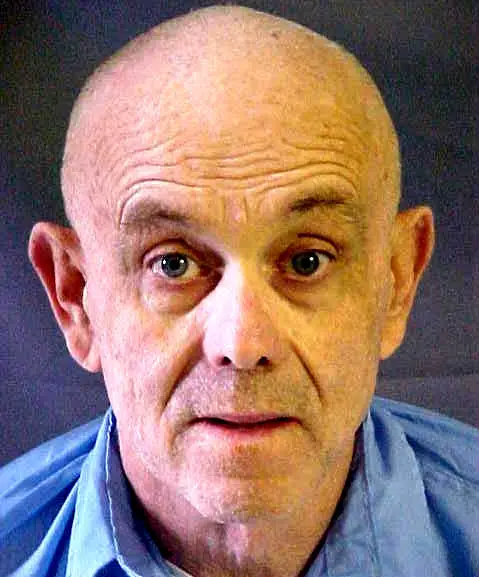
Robert Leroy Bryan
Murderer Brian Kevin Rosenfeld
Murderer · USA · 1985
Brian Kevin Rosenfeld Brian Kevin Rosenfeld was sentenced to three concurrent l…
23 victims
Brian Kevin Rosenfeld
Murderer · USA · 1985
Brian Kevin Rosenfeld Brian Kevin Rosenfeld was sentenced to three concurrent l…
23 victims
 Russell Ellwood
Murderer · USA · 1991
Russell Ellwood was a former taxi driver. Authorities suspected him of killing…
20 victims
Russell Ellwood
Murderer · USA · 1991
Russell Ellwood was a former taxi driver. Authorities suspected him of killing…
20 victims
 Robert Martines Perez
Murderer · USA · 1994
Name: Robert Martines Perez · Other name used in proceedings: Robert Martinez P…
15 victims
Robert Martines Perez
Murderer · USA · 1994
Name: Robert Martines Perez · Other name used in proceedings: Robert Martinez P…
15 victims
 Billy Frank Vickers
Murderer · USA · 1993
Billy Frank Vickers Vickers was executed by lethal injection in Texas on Januar…
14 victims
Billy Frank Vickers
Murderer · USA · 1993
Billy Frank Vickers Vickers was executed by lethal injection in Texas on Januar…
14 victims
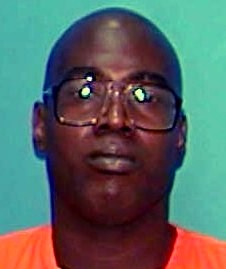 Billy Kearse
Murderer · USA · 1991
Billy Leon Kearse (DOB: 10/26/72) was tried in the Nineteenth Judicial Circuit,…
1 victim
Billy Kearse
Murderer · USA · 1991
Billy Leon Kearse (DOB: 10/26/72) was tried in the Nineteenth Judicial Circuit,…
1 victim
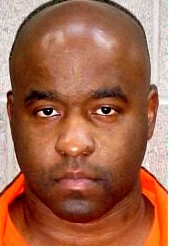 Aryon Williams
Murderer · USA · 1990
Aryon Williams was convicted in Superior Court (Pinal) of first-degree murder,…
1 victim
Aryon Williams
Murderer · USA · 1990
Aryon Williams was convicted in Superior Court (Pinal) of first-degree murder,…
1 victim
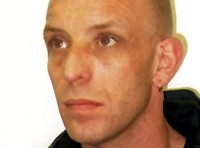 Mark Hobson
Spree killer · United Kingdom · 2004
Mark Hobson was a British spree killer who killed his girlfriend and her twin s…
4 victims
Mark Hobson
Spree killer · United Kingdom · 2004
Mark Hobson was a British spree killer who killed his girlfriend and her twin s…
4 victims
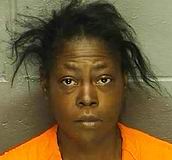 Antoinette Pelzer
Murderer · USA · 2012
Antoinette Pelzer was homeless and had been diagnosed with schizophrenia. Her f…
2 victims
Antoinette Pelzer
Murderer · USA · 2012
Antoinette Pelzer was homeless and had been diagnosed with schizophrenia. Her f…
2 victims
- Gender
- male
- Country
- USA
- Location
- Beckham County, Oklahoma, USA
- Date of birth
- December 8, 1940
- Age at first offence
- 53
- Characteristics
- mentally ill, convicted rapist, robbery
- Victim profile
- Mildred Inabell Bryan, 69 (his aunt)
- Method of murder
- Shooting (.22 caliber rifle)
- Date(s) of murder
- September 11, 1993
- Years active
- 1993
- Date of arrest
- 6 days after
- Status
-
Executed
Executed by lethal injection in Oklahoma on June 8, 2004
Overview
Robert Leroy Bryan was executed by lethal injection in Oklahoma on June 8, 2004.
Timeline
- Sept. 10, 1993 — Mildred Inabell Bryan disappeared.
- Sept. 11, 1993 — Around 2:30 p.m. on Saturday, Bryan bought a distinctive lavender chrysanthemum plant at the Elk City Homeland grocery store.
- Sept. 16, 1993 — Inabel's body was found lying next to a combine in a stand of trees approximately a quarter mile from the Bryan house; OSBI and FBI agents searched a section of land adjoining the Bryan family farm.
- Sept. 16, 1993 — Inabell Bryan was found near a combine on the property of Robert Bryan’s parents near Elk City.
- Sept. 17, 1993 — The house and field were searched again.
- March 1989 — Bryan was sent to Eastern State Hospital for treatment after being found incompetent to stand trial on a solicitation of murder charge.
- 1990 — Bryan was determined competent after treatment with Navane.
- Dec. 30, 1993 — A jury trial on Bryan’s competency was held.
- 1995 — Bryan was convicted of killing his aunt in 1993; a Beckham County jury convicted Bryan, 63, of fatally shooting Mildred Inabell Bryan in September 1993; the jury recommended death and Bryan was sentenced to death.
- 1995 (implied by 1997 citation) — Bryan was convicted in the District Court, Beckham County, Charles L. Goodwin, J., of first-degree malice aforethought murder and sentenced to death.
- May 20 (year not stated) — The Oklahoma Pardon and Parole Board rejected Bryan’s clemency bid.
- May 9 (year not stated) — Inabell Bryan’s son, Charles Bryan, wrote to the parole board.
- May 10 (year not stated) — Daley wrote a letter to the Pardon and Parole Board.
- 2003 — Bryan v. Mullin, 335 F.3d 1207 (10th Cir. Okla. 2003) (Habeas).
- June 8, 2004 — U.S. District Court and the 10th U.S. Circuit Court of Appeals earlier in the day denied Bryan’s legal complaint filed on grounds that he wasn’t competent to be executed.
- June 8, 2004 — The Supreme Court denied a stay request; the U.S. Supreme Court delayed the execution for an hour as it considered Bryan’s claim and the Supreme Court later in the day turned down the request for a stay of execution.
- June 8, 2004 — The execution was delayed until the U.S. Supreme Court could rule on Bryan’s attorney’s petition and application for a stay; the nation’s high court denied the requests at 6:46 p.m. CDT.
- June 8, 2004 — Robert Leroy Bryan was pronounced dead at 7:24 p.m. Tuesday after receiving a lethal mixture of drugs.
- June 9, 2004 — McAlester News-Democrat article dated Wednesday June 9, 2004 describing the execution.
The offence
Bryan was convicted of killing his aunt, Mildred Inabell Bryan. Mildred Bryan disappeared Sept. 10, 1993, and was found Sept. 16, 1993, near a combine on the property of Robert Bryan’s parents near Elk City. Witnesses testified that shortly before the murder, Leroy Bryan wrote agreements and promissory notes and filled out checks to withdraw money from Inabell Bryan’s checking account. She signed some of the checks, and he forged her signature at least once on a promissory note for $1,800.
In the months and days around the disappearance and murder:
- Bryan and his family agreed that they seldom spoke to Inabel, had not seen her since July 17, 1993, and did not have business dealings with her.
- According to the last entry in her diary, on September 11 Inabel woke at her house near Sweetwater in Roger Mills County, did chores, visited with friends, fixed and ate her lunch, studied her Sunday School lesson, picked up the mail, and took a nap.
- Inabell Bryan’s daughter, Linda Daley, became alarmed when she could not reach Inabel by telephone on either September 12 or 13.
- At the children’s request Inabel’s neighbor, Don Walker, went to her house twice in the late evening of September 13, where he found that two throw rugs were disturbed, the living room curtains were open, the bed was unmade and Inabel was not there.
- The next morning Walker returned and found Inabel’s suitcase and a small overnight case containing medicines.
- Inabell Bryan’s open diary was found near her reading chair, along with her open Bible and church attendance card filled out for Sunday, September 12.
- Daley noticed a fresh lavender chrysanthemum plant with no card on a table near the front door.
Bryan rented a car and used a rifle tied to the murder:
- Around September 6, 1993, Bryan arranged to rent a Lincoln Town Car and requested a car with a large trunk.
- Bryan rented the car on September 8.
- When Bryan returned the Lincoln on September 13, it had a .22 bullet near the driver's seat and grass and weeds stuck in the undercarriage; a bystander also helped Bryan change a tire on the Lincoln on September 11 and saw a .22 rifle in the trunk.
- The body discovery included a pillowcase stained over her head with duct tape loosely wrapped around her neck; a towel lay across one leg; she had been shot once in the forehead.
Evidence described in relation to the scene and Bryan’s property:
- Subsequent searches revealed more duct tape, what appeared to be a tape-and-cloth gag, a Homeland floral receipt dated September 11, and a large mushroom with a tire track imprint.
- A single set of vehicle tracks at the scene matched the tread pattern of the right rear tire on Bryan’s rental car.
- Fibers lining the trunk were described as similar to those on Inabel’s clothes and tape found on or near her body.
- A towel lay across one leg at the crime scene.
- Police found additional evidence in Bryan’s bedroom tying Bryan to the murder, including a roll of duct tape of the same type as pieces found near Inabel’s body and on the pillowcase over her head; edges of the tape were described as matching edges of one of the pieces of tape near Inabel’s body.
- Authorities found ammunition in Bryan’s bedroom consistent with the type of ammunition used to kill Inabel and consistent with a bullet in the rental car.
- A metallurgy study indicated that the bullets—the one that killed Inabel, the one in the rental car, and the ones in the Bryan home—were manufactured at the same time and could have come from the same box.
Investigation
After Inabell Bryan disappeared, her children, neighbors, and law enforcement officials began the first of several searches of the area. OSBI and FBI agents searched a section of land adjoining the Bryan family farm on September 16. After the body was found, the family consented to a search of their house and outbuildings.
During the September 17 search of the house, police found:
- A .22 rifle with several boxes of shells and several expended shells.
- A pair of Bryan’s overalls with a spent .22 shell casing in the pocket.
- A roll of duct tape matching tape found at the crime scene.
- Several blank checks.
- Checks bearing Inabel’s signature made out to Bryan on her account.
- Many handwritten documents detailing business agreements between Inabel and Bryan in which Inabel agreed to pay Bryan or assign him property.
Arrest
The record did not state the arrest details in the provided material.
Trial
Bryan was tried by a jury and convicted of Murder in the First Degree in violation of 21 O.S.1991, § 701.7(A) in the District Court of Beckham County, Case No. CF-93-61. The jury found:
- Bryan was previously convicted of a felony involving the use or threat of violence; and
- Bryan probably would commit criminal acts of violence that would constitute a continuing threat to society.
In accordance with the jury’s recommendation, the Honorable Charles L. Goodwin sentenced Bryan to death.
Bryan pursued multiple appeals, including a direct appeal and postconviction proceedings.
Direct appeal (Bryan v. State, 935 P.2d 338 (Okl.Cr. 1997) (Direct Appeal))
The Court of Criminal Appeals, Chapel, P.J., held that:
- Defendant’s due process rights were not violated by competency proceedings.
- Letters defendant wrote to jail and court officials while incarcerated before trial were not admissible, but error in admitting such letters was harmless.
- Defendant was not in custody so as to trigger Miranda protections when police officers questioned him concerning his aunt's disappearance and murder.
- Defendant’s consent to search of his home was voluntary.
- Affidavit established probable cause to search defendant's home for his aunt's promissory notes, checks, and business records.
- Venue was proper.
- Trial judge was not required to recuse himself.
- Evidence concerning defendant's previous conviction for solicitation of murder was admissible to show plan, scheme, or design.
- Prosecutor improperly commented on defendant's failure to testify, but such error was harmless.
- Hair analyst's testimony that hair found in defendant's rental car was consistent with victim's hair was admissible.
- Witness' testimony that, approximately a year before the murder, defendant attempted to hire him to dig three feet by six feet by four feet holes on some farm property was irrelevant to support continuing threat aggravating circumstance, but error in admitting such testimony was harmless.
- Lawyer's testimony that, four years before the murder, after he had successfully represented client in civil suit against defendant, defendant walked up and down sidewalk in front of his office every day for two or three months was irrelevant to support continuing threat aggravating circumstance, but error in admitting such testimony was harmless.
- Evidence of tampering by unknown persons on farm land, three and five years before the murder, was not relevant to any issue during sentencing phase, but error in admitting such evidence was harmless.
- Defense counsel was not ineffective for failing to introduce evidence of mental illness; and
- Evidence in aggravation was sufficient to support death sentence.
The judgment and sentence were AFFIRMED. Lumpkin, J., concurred in result.
Postconviction appeal (Bryan v. State, 948 P.2d 1230 (Okl.Cr.App. 1997) (Postconviction))
Bryan’s application for postconviction relief was denied. The Court of Criminal Appeals held that:
- Relief claims based on ineffective assistance were procedurally barred.
- Defendant was not entitled to evidentiary hearing.
Lumpkin, J., filed opinion concurring in result, and Lane, J., concurred in result.
Sentencing
Bryan was sentenced to death by Judge Charles L. Goodwin following the jury’s findings of aggravating circumstances:
- previously convicted of a felony involving the use or threat of violence, and
- probability of committing criminal acts of violence constituting a continuing threat to society.
Appeals
Bryan v. Mullin, 335 F.3d 1207 (10th Cir. Okla. 2003) (Habeas):
- Following state conviction for first-degree murder and sentence of death, petition for federal habeas relief was brought.
- The U.S. District Court for the Western District of Oklahoma, David L. Russell, J., denied petition.
- On appeal, the Court of Appeals, 276 F.3d 1163, affirmed.
- On rehearing en banc, the Court of Appeals held that:
- District court properly granted petitioner an evidentiary hearing on his ineffective assistance of counsel claim.
- Trial counsel lacked the medical evidence necessary to present a viable insanity defense under Oklahoma law.
- Counsel’s failure to present, at guilt stage of trial, evidence of petitioner’s mental illness in support of either an insanity defense or second-degree murder instruction was not deficient performance as required to establish an ineffective assistance of counsel claim.
- Counsel’s strategic decision not to present, at penalty stage of trial, evidence of petitioner’s mental illness, was reasonable when viewed from counsel’s perspective at the time of the trial, and therefore was not deficient performance as required to establish an ineffective assistance of counsel claim.
The disposition was: Vacated in part and affirmed in part. Henry, Circuit Judge, filed opinion concurring in part and dissenting in part, joined by Seymour, Ebel, and Lucero, Circuit Judges.
Federal court competency-related proceedings leading to execution
Bryan argued he was incompetent to be executed; an argument turned down earlier in the day by a federal district judge and the U.S. 10th Circuit Court of Appeals. The U.S. Supreme Court delayed the execution initially scheduled for 6 p.m. for an hour as it considered Bryan’s claim and denied a stay request. The U.S. Supreme Court denied the request at 6:46 p.m. CDT. The U.S. District Court in Oklahoma City and the 10th U.S.
The Oklahoma Pardon and Parole Board rejected Bryan’s clemency bid on May 20.
Outcome
Bryan was executed. He was pronounced dead at 7:24 p.m. Tuesday, less than 45 minutes after the U.S. Supreme Court turned down a request for a stay of execution. His execution was carried out by lethal injection. Three minutes after Bryan’s abdomen rose one time and he gave a loud snort, he was pronounced dead.
Aftermath
Wilma Wykoff wiped tears from her eyes and walked by the four windows above five rows of cinder blocks separating witnesses from the execution chamber of Oklahoma State Penitentiary. Wykoff was joined by her husband and four others. Linda Daley described the murder of her mother and said her mother had been found Sept. 16, 1993, in a field near Robert Bryan’s home with a pillowcase over her head and that she was shot between the eyes.
Robert Bryan was described as the fifth Oklahoma inmate executed this year.
Last meal
For his last meal, Bryan requested 10 pieces of fried chicken, barbecue beans, cole slaw, potatoes and gravy, two biscuits and two liters of Dr. Pepper.
Last words
As Bryan lay on the gurney, his head was facing OSP Warden Mike Mullin. Much of his last statement was unintelligible, although witnesses clearly heard him say: “I have been on death row for some time. I've made peace with my maker. " “I'll be leaving here shortly. " “I hope I'll see you on the other side. Until then, so long.”
Other details
People and relationships
- Mildred Inabell Bryan was Bryan’s aunt.
- Linda Daley was Mildred Bryan’s daughter.
- Wilma Wykoff was Bryan’s sister and witnessed the execution.
- Jan Warren, the deputy district attorney, prosecuted Bryan at trial.
- Bob Nance was Bryan’s sister’s husband and an attorney who sat in the execution setting.
- Charles Bryan was Mildred Bryan’s son and wrote to the parole board on May 9.
- Don Walker was Mildred Bryan’s neighbor who looked for her on September 13.
- Jerry Massie was the Oklahoma Department of Corrections spokesman.
- Mike Mullin was OSP Warden.
- David L. Russell was the U.S. District Judge referenced as denying Bryan’s competency-related argument.
- Chapel, P.J., and Lumpkin, J., and Lane, J., were judges referenced in the appellate decisions.
- Honorable Charles L. Goodwin was the trial judge who sentenced Bryan.
- Judges Murphy, Henry, Seymour, Ebel, and Lucero were named in the habeas discussion.
Bryan’s age and medical conditions
- Bryan was 63 at the time of execution.
- Bryan’s medical problems included adult-onset diabetes and he was described as a diabetic.
- The record also described Bryan as having a history of organic brain disease, possibly related to severe case of diabetes mellitus, dating back to his mid-twenties.
- Bryan’s brain showed significant signs of atrophy (in the earlier hospitalization described).
- Bryan’s competency hearing discussion described fluctuating blood sugar levels affecting his ability to assist his attorney.
Competency and mental health proceedings described in the habeas background
- In 1989, when Bryan was forty-nine-years-old, he was charged with solicitation of murder relating to a scheme to kidnap and kill a local banker and dump the body at the same location.
- He was initially found incompetent to stand trial and sent to Eastern State Hospital in March 1989 for treatment.
- Bryan was diagnosed as suffering from an organic delusional disorder and was considered severely psychotic at the time of admission.
- Doctors treated Bryan’s diabetes and medicated him with Navane, an antipsychotic drug, until he was determined competent in 1990.
- After the 1993 murder charge, family hired Raymond Munkres to represent Bryan.
- At arraignment, Munkres made an oral motion for a competency determination; a jury trial on competency was held on December 30, 1993.
- Because Munkres did not present any medical testimony at that hearing, the jury concluded Bryan failed to demonstrate incompetence.
- A retrospective competency hearing was later conducted in 1996 using the proper preponderance-of-the-evidence standard; Bryan was found competent.
- On January 3, 1994, Bryan filed a letter with the trial court dismissing his attorney of record due to “philosophical differences in how this case should proceed in my best and most aggressive defense to the charges leveled against me.”
- The trial court allowed Munkres to withdraw and appointed the Oklahoma Indigent Defense System (“OIDS”) to represent Bryan; Wesley Gibson replaced Munkres.
- Gibson requested a second competency hearing based on Dr. J.R. Smith’s opinion that Bryan’s “delusional system and circumstantiality of thought (as well as the fluctuating blood sugar levels) affect his ability to assist his attorney in his own defense. He produces volumes of information that are irrelevant and often erroneous (but believed by the patient).”
- The trial court denied the application for a new competency hearing, concluding there was no doubt Bryan was then competent.
- Gibson was replaced after a slight stroke in May 1994 by Steven Hess, also of OIDS.
- Hess hired Dr. Philip Murphy, a clinical psychologist, whose evaluation concluded: “Mr. Bryan suffers from a serious mental disorder which places into serious question his competence to stand trial, as well as his legal culpability in the crimes for which he is charged.”
- Based on the opinions expressed by Dr. Smith and Dr. Murphy and unsuccessful attempts to challenge competency, Hess intended to use an insanity defense, filing a notice of intent and a witness list.
- Bryan and his parents disapproved and replaced Hess with privately retained counsel; Hess was replaced by Jack Freeman.
- Freeman did not ultimately present mental health evidence during either the guilt or penalty phase of Bryan’s trial, though Freeman arranged for Dr. Murphy to be available if helpful during guilt phase.
Quotes included in the record
- Jan Warren said during Bryan’s clemency hearing: “Have you heard the term sociopath? Mr. Bryan is the closest thing to a sociopath I've ever seen.”
- Linda Daley said: “I didn't understand most of what he said,” she said to no one in particular as she walked by the four windows above five rows of cinder blocks that separated witnesses from the execution chamber of Oklahoma State Penitentiary.
- Linda Daley said: “I had trouble thinking of him as a person because of what he put my mother through.”
- Linda Daley said: “The family always wondered what she was put through: if she was tortured, if she was fed or if she was just left out in the field,” Daley said.
- Linda Daley said: “We think she was taken to a field and held hostage for the entire time before she was murdered.”
- Linda Daley said: “There will never really be true closure because of the premeditation and brutality.”
- Linda Daley said: “It was obvious that he didn't think he was the one responsible for the crime.”
- Wilma Wyckoff said: “I didn't understand most of what he said,” she said to no one in particular as she walked by the four windows above five rows of cinder blocks that separated witnesses from the execution chamber of Oklahoma State Penitentiary.
- Wilma Wyckoff said: “I've gotten to the point where I'm (thinking), 'God, your will be done,'”
- Wilma Wyckoff said: “Maybe this (execution) would be a blessing. I was just hoping I could get my name cleared,” Wyckoff said after spending about three hours with her brother Monday afternoon.
- Wilma Wyckoff said: “He said, 'Maybe this (execution) would be a blessing. I was just hoping I could get my name cleared,'”
- Charles Bryan wrote to the parole board: “We had not visited or had anything to do with Leroy's family for well over 30 years, even though we only lived 25 miles away,”
- Charles Bryan wrote to the parole board: “This makes me feel guilty to this very day about anything I might have said without thought.”
- Daley wrote in a letter to the Pardon and Parole Board on May 10: “Leroy Bryan 'tried to force her to sign over everything she and Daddy had worked so hard for,'”
- Daley said: “I feel like a chapter in my family's life can go on now,” Daley said.
- Daley said: “We can think more about our mother than the monster.”
- Daley said: “It will be nice to know we don't have to look to any more procedures in the legal system.”
- Daley said: “It was obvious that he didn't think he was the one responsible for the crime.”
Prior offense described in appellate background
Authorities searched the property where Inabel’s body was found because, several years earlier, Bryan had solicited an undercover police officer to kidnap and kill a local banker and dump the body at the same location. This solicitation scheme included plans to force the banker to sign a number of fraudulent promissory notes and personal checks.
Venue and evidence disputes resolved on appeal
The direct appeal reported findings on multiple issues including competency proceedings, admissibility of letters written while incarcerated before trial (with harmless error), Miranda custody status during questioning about Inabel’s disappearance and murder, consent to search and probable cause for search, venue, recusal, admissibility of prior solicitation of murder evidence, prosecutorial comment on failure to testify (harmless error), and multiple evidentiary rulings related to hair analysis, irrelevant testimony, and evidence of tampering. The appellate court held that defense counsel was not ineffective for failing to introduce evidence of mental illness and that evidence in aggravation supported the death sentence.
Spotted an error, or have more information about this case?