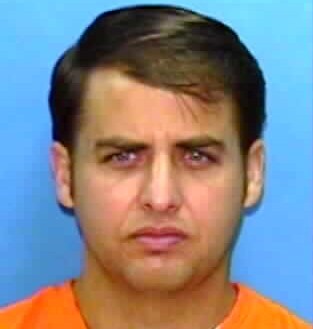
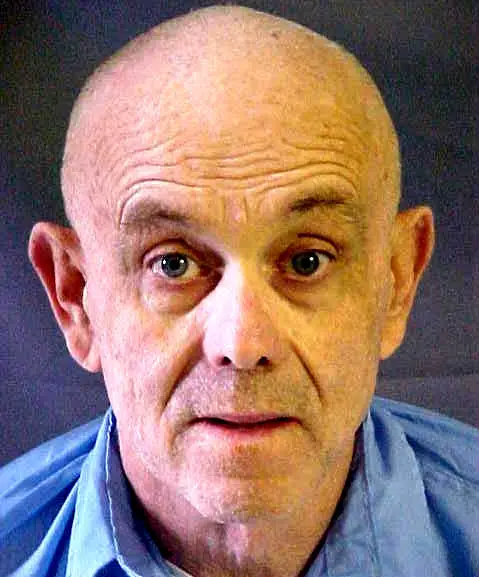
Anthony Braden Bryan
Murderer Brian Kevin Rosenfeld
Murderer · USA · 1985
Brian Kevin Rosenfeld Brian Kevin Rosenfeld was sentenced to three concurrent l…
23 victims
Brian Kevin Rosenfeld
Murderer · USA · 1985
Brian Kevin Rosenfeld Brian Kevin Rosenfeld was sentenced to three concurrent l…
23 victims
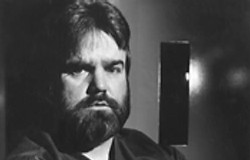 Marvin Gray
Murderer · USA · 1975
Marvin Gray was convicted killer who claimed responsibility for 23 slayings and…
23 victims
Marvin Gray
Murderer · USA · 1975
Marvin Gray was convicted killer who claimed responsibility for 23 slayings and…
23 victims
 Yahweh ben Yahweh
Murderer · USA · 1980
Yahweh ben Yahweh was born and legally named Hulon Mitchell Jr. (October 27, 19…
23 victims
Yahweh ben Yahweh
Murderer · USA · 1980
Yahweh ben Yahweh was born and legally named Hulon Mitchell Jr. (October 27, 19…
23 victims
 Russell Ellwood
Murderer · USA · 1991
Russell Ellwood was a former taxi driver. Authorities suspected him of killing…
20 victims
Russell Ellwood
Murderer · USA · 1991
Russell Ellwood was a former taxi driver. Authorities suspected him of killing…
20 victims
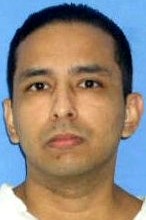 John Joe Amador
Murderer · USA · 1994
John Joe Amador was executed in Texas by lethal injection on August 29, 2007. ·…
1 victim
John Joe Amador
Murderer · USA · 1994
John Joe Amador was executed in Texas by lethal injection on August 29, 2007. ·…
1 victim
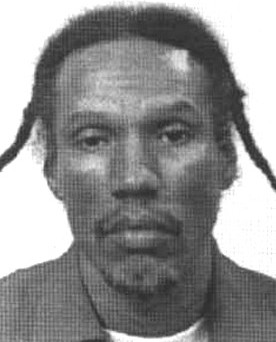 Gregory Resnover
Murderer · USA · 1980
Gregory Resnover was convicted of conspiracy to commit murder and murder in Ind…
1 victim
Gregory Resnover
Murderer · USA · 1980
Gregory Resnover was convicted of conspiracy to commit murder and murder in Ind…
1 victim
 Aset Magomadova
Murderer · Canada · 2007
Aset Magomadova was convicted of manslaughter for strangling her daughter, Amin…
1 victim
Aset Magomadova
Murderer · Canada · 2007
Aset Magomadova was convicted of manslaughter for strangling her daughter, Amin…
1 victim
 Clifton McCree
Mass murderer · USA · 1996
Clifton McCree was a black man who had worked for the city as part of a beach c…
5 victims
Clifton McCree
Mass murderer · USA · 1996
Clifton McCree was a black man who had worked for the city as part of a beach c…
5 victims
 Michael Earl Sexton
Murderer · USA · 1990
Michael Earl Sexton was executed by lethal injection in North Carolina on Novem…
1 victim
Michael Earl Sexton
Murderer · USA · 1990
Michael Earl Sexton was executed by lethal injection in North Carolina on Novem…
1 victim
- Gender
- male
- Country
- USA
- Location
- Santa Rosa County, Florida, USA
- Date of birth
- March 1, 1959
- Age at first offence
- 24
- Characteristics
- robbery, abduction, kidnapping, alcohol, drug addict
- Victim profile
- George Wilson (60-year old night watchman)
- Method of murder
- Shooting ( sawed-off shotgun)
- Date(s) of murder
- August 12, 1983
- Years active
- 1983
- Date of arrest
- August 1983
- Status
-
Executed
Executed by lethal injection in Florida on February 24, 2000
Parties and case identifiers
Anthony Braden Bryan was the petitioner and appellant in multiple proceedings, including Florida Supreme Court and United States Supreme Court matters, and he was the petitioner-appellant in a federal appeal before the United States Court of Appeals, Eleventh Circuit.
Timeline
- May 27, 1983 — Anthony Braden Bryan robbed a bank in Grand Bay, Alabama with a sawed-off shotgun.
- June 1983 — Bryan met Sharon Cooper in Jacksonville, Florida and the two hitchhiked to Mississippi.
- August 12, 1983 — Bryan and Sharon Cooper met George Wilson in Pascagoula, Mississippi; Bryan robbed Wilson at gunpoint and tied him up; later that day Wilson was marched at gunpoint with his hands tied to a spot beside a creek and was shot in the face.
- Late August 1983 — Bryan was arrested in Madison County, Florida for driving a stolen car.
- July 1984 — Bryan escaped from the Santa Rosa County jail.
- October 1985 — Bryan was re-arrested in Colorado.
- May 16, 1986 — Judge Wells sentenced Bryan to death.
- August 29, 1991 — The circuit court conducted an evidentiary hearing on Bryan’s penalty-phase ineffective assistance of counsel claim.
- June 16, 1994 — The Florida Supreme Court denied Bryan’s requests for post-conviction relief.
- July 19, 1996 — The federal district court denied Bryan’s habeas corpus petition.
- October 10, 1996 — The federal district court granted Bryan’s application for certificate of probable cause.
- May 11, 1998 — The United States Court of Appeals, Eleventh Circuit affirmed the denial of relief.
- February 22, 1999 — A death warrant docket entry appeared in connection with Docket #SC00-335.
- October 26, 1999 — An opinion docket entry appeared in connection with Docket #96802 and Docket #96821.
- September 23, 1999 — Governor Jeb Bush signed death warrants in the cases of Terry Melvin Sims and Anthony B. Bryan; execution week beginning Monday, October 25, 1999 and ending Monday, November 1, 1999 was designated, with Florida State Prison Warden James Crosby setting Bryan’s execution for Wednesday, October 27, 1999 at 7:00 a.m.
- February 22, 2000 — Docket #SC00-335 included an application for stay of execution.
- February 24, 2000 — Bryan was executed by lethal injection in Florida.
Background
Anthony Braden Bryan robbed a bank in Grand Bay, Alabama with a sawed-off shotgun on May 27, 1983 and remained at large for the next three months as a fugitive from the law.
In June 1983, Bryan met Sharon Cooper in Jacksonville, Florida, and the two hitchhiked to Mississippi. After obtaining a truck in Mississippi, they drove back to Florida, stopping en route to retrieve the sawed-off shotgun used in the bank robbery. In Florida, Bryan obtained a cabin cruiser to travel back to Mississippi. The boat motor became damaged, and Bryan and Cooper stopped in Pascagoula, Mississippi to make repairs.
The offence
Bank robbery
On May 27, 1983, Anthony Braden Bryan robbed a bank in Grand Bay, Alabama with a sawed-off shotgun.
Robbery, kidnapping, and murder of George Wilson
On August 12, 1983, Bryan and Sharon Cooper met George Wilson in Pascagoula, Mississippi. George Wilson worked part-time as a night watchman for a seafood wholesaler. Bryan borrowed tools from Wilson in an unsuccessful attempt to repair the boat motor. Needing transportation and money, Bryan robbed Wilson at gunpoint and tied him up for the night. Bryan took Wilson’s keys and robbed the seafood wholesaler where Wilson worked.
Bryan and Cooper then drove Wilson to Santa Rosa County where they stayed in a motel. Leaving the motel, Bryan drove Wilson to a secluded spot in the woods. Bryan marched Wilson, with his hands tied, at gunpoint to a spot beside a creek. George Wilson pleaded with Bryan that he not be crippled. Bryan knocked Wilson over the head with the shotgun. As Wilson fell into the creek, Bryan shot him in the face with the sawed-off shotgun.
After the killing, Bryan pushed Wilson’s car into a nearby river and resumed traveling with Cooper until their arrest in Madison County, Florida in late August 1983.
Investigation
After her release, Cooper went to offices of the FBI to report that Bryan had robbed, kidnapped, and murdered George Wilson.
Arrest, escape, and recapture
In August 1983, Bryan and Cooper were arrested in Madison County, Florida for driving a stolen car.
Bryan escaped from the Santa Rosa County jail in July 1984. He was re-arrested in Colorado in October 1985.
Trial
At trial for the murder of George Wilson, Cooper was the state’s chief witness. A jury convicted Bryan of first-degree murder, robbery with a firearm, kidnapping with a firearm, and felony murder.
Bryan also had been indicted for premeditated first degree murder, kidnapping, and armed robbery of George Wilson.
Sentencing
The jury returned an advisory sentence of death. On May 16, 1986, Judge Wells accepted the jury’s recommendation, finding numerous aggravating factors and two mitigating factors, and sentenced Bryan to death.
At sentencing, Bryan called seven witnesses to testify on his behalf, including his mother, grandmother, ex-wife, a co-worker, and people who knew Bryan while he was a fugitive between July 1984 and October 1985. Bryan also introduced written reports prepared by four separate mental health experts as well as the deposition of a psychiatrist.
The trial judge found two mitigating circumstances: (1) the defendant had a good employment history as a shrimp boat captain, and (2) Bryan led a law-abiding and peaceful life while he lived in Arizona after his escape from the Santa Rosa County jail.
The sentencing order stated: “Although the Court has heard testimony about an accident several years prior to this murder and that the defendant's aberrant behavior started about that time, there has been no medical testimony to support the claim.”
In the court’s sentencing order, the trial judge found the existence of only two nonstatutory mitigating factors: Bryan’s law-abiding life after his escape from the Santa Rosa County jail and his good work record prior to his fall from the mast of a shrimp boat.
Mental health experts and penalty-phase issue
Bryan’s appellate attorneys asserted that Bryan’s trial attorney was an alcoholic who failed to represent Bryan properly.
During the penalty phase, Bryan’s attorney intended to present testimony of mental health experts, but the attorney did not call Dr. Barbara Medzerian, Dr. Ellen Gentner, or Dr. James D. Larson to testify. Instead, the attorney submitted only the medical reports of four experts, primarily addressing competency and sanity and not mitigation.
- Dr. Medzerian appeared at the courthouse on the day of the penalty phase and waited outside the courtroom but was not called because Bryan’s attorney did not realize she was there.
- Dr. Gentner claimed she was not contacted by Bryan’s attorney and was out of town the day of the penalty proceeding.
- Dr. Larson appeared at the courthouse on the morning of the penalty phase, but Bryan’s attorney decided not to call him after Dr. Larson warned Bryan’s attorney that his testimony may not be beneficial to Bryan’s case. Bryan’s attorney stated at the post-conviction evidentiary hearing that he decided not to call Dr. Larson to testify and that Larson “indicated that he would hurt us if he testified.”
Bryan also asserted that his attorney failed to effectively prepare the testimony of the mental health experts. The court found that Bryan’s attorney did not obtain records related to Bryan’s history despite experts having requested the information, and that he did not meet with experts before their testimony to familiarize them with mitigating circumstances.
Appeals
Direct appeal and certiorari
The Florida Supreme Court denied Bryan’s direct appeal. The United States Supreme Court denied Bryan’s petition for certiorari.
Bryan v. State was reported as 533 So.2d 744 (Fla. 1988), and the United States Supreme Court certiorari denial was reported at 490 U.S. 1028, 109 S.Ct. 1765, 104 L.Ed.2d 200 (1989).
Post-conviction relief
Bryan filed a motion for postconviction relief pursuant to Florida Rule of Criminal Procedure 3.850 in state circuit court and a petition for writ of habeas corpus in the Florida Supreme Court.
After an evidentiary hearing on August 29, 1991, the circuit court denied all relief. The Florida Supreme Court affirmed the denial of post-conviction relief and denied state habeas corpus relief in Bryan v. Dugger, 641 So.2d 61 (Fla. 1994). Bryan’s requests for post-conviction relief were denied on June 16, 1994.
Federal habeas corpus and certificate of probable cause
Bryan filed a petition in federal court on October 19, 1994 pursuant to 28 U.S.C. § 2254. The district court denied the petition on July 19, 1996 and granted Bryan’s October 10, 1996 application for a certificate of probable cause.
Eleventh Circuit opinion (habeas appeal)
United States Court of Appeals, Eleventh Circuit. No. 96-3329. Anthony Braden Bryan, Petitioner-Appellant, v. Harry K. Singletary, Jr., Secretary Florida Department of Corrections, Respondent-Appellee. May 11, 1998.
The court affirmed the district court’s denial of Bryan’s petition for writ of habeas corpus.
Ineffective assistance claim
Bryan asserted he was denied effective assistance of counsel at the capital penalty phase because counsel failed to call any mental health experts to testify.
The Eleventh Circuit addressed the ineffective assistance of counsel claim under the Strickland v. Washington framework, stating:
“The defendant must show that there is a reasonable probability that, but for counsel's unprofessional errors, the result of the proceeding would have been different. A reasonable probability is a probability sufficient to undermine confidence in the outcome.” and: “The question is whether there is a reasonable probability that, absent the errors, the sentencer-including an appellate court ... would have concluded that the balance of aggravating and mitigating circumstances did not warrant death.”
The court concluded Bryan could not satisfy the prejudice prong and affirmed the denial of relief.
Aggravating circumstances found by the Florida Supreme Court
The Eleventh Circuit summarized six aggravating circumstances that the Florida Supreme Court found:
- Bryan had a prior conviction for a crime of violence, Fla. Stat. § 921.141(5)(b);
- the capital felony was committed while Bryan was engaged in the commission of another felony, Fla. Stat. § 921.141(5)(d) (robbery, kidnapping);
- the murder was committed in order to avoid arrest, Fla. Stat. § 921.141(5)(e);
- the capital felony was committed for pecuniary gain, Fla. Stat. § 921.141(5)(f);
- the capital murder was especially heinous, atrocious, or cruel, Fla. Stat. § 921.141(5)(h); and
- the capital felony was a homicide that was committed in a cold, calculated, and premeditated manner without any pretense of moral or legal justification, Fla. Stat. § 921.141(5)(I).
Outcome
Bryan was executed by lethal injection in Florida on February 24, 2000.
Aftermath
Governor death warrant statements and execution scheduling
Governor Jeb Bush signed death warrants in the cases of Terry Melvin Sims and Anthony B. Bryan on September 23, 1999. The governor determined there was no basis for altering the court-imposed sentence in these cases. The executions of Sims and Bryan were designated for the week beginning Monday, October 25, 1999, and ending Monday, November 1, 1999. Florida State Prison Warden James Crosby set the execution for Terry Melvin Sims on Tuesday, October 26, 1999 at 7:00 a.m., and set the execution for Anthony B. Bryan on Wednesday, October 27, 1999 at 7:00 a.m.
A later report included that the Florida Catholic Conference asked Bush to halt Bryan’s execution and included the following statement:
“Executions coarsen us. We daily condemn the violence around us but executions must be seen for what they are, legitimized killing by the state,”
The report also included Bush’s statement:
“It's been an accepted means of execution,”
Final statement and execution details
Family members including Bryan’s 16-year-old son Bradley, his aunt Levonne Dykes, and his sister Cynthia Tucker kept vigil outside the prison.
Shortly before the lethal injection began, Bryan gave a final statement:
“I confess Jesus Christ is the Son of God, and I have put my faith in Him. I believe in the resurrection,”
“I would like to thank those who stood by me the 13 years I was on death row. ... No matter what you do in life, God can make a difference. He has made a difference in mine. You can always be redeemed. I thank you.”
At 7:00 a.m., the execution process began, and Bryan was pronounced dead at 7:11 a.m.
After the doctor pronounced Bryan dead, a drape was pulled over the room’s window, obscuring witnesses’ view. Two correctional officers, Crosby and an assistant warden, were described as being inside the room with Bryan, and Corrections Secretary Michael Moore and Deputy Secretary Michael Wolfe were described as watching from behind a concealed partition.
They were joined by about 50 anti-death penalty protesters, who performed a memorial service that they said Bryan wrote and sang hymns, lit candles, and quoted from the Bible. Bradley Bryan was quoted saying:
“If we look to God it will all work out,”
Last meal and spiritual adviser
Late Wednesday, Bryan finished most of his last meal, which was described as dolphin fish with teriyaki sauce, brown rice with onions, chef salad with thousand island dressing, asparagus, apple pie with vanilla ice cream, Coca-Cola and whole milk.
The report stated that Bryan ordered his last meal and that his spiritual adviser, Gainesville Rev. Glenn Dickson, stayed with Bryan until 5 a.m. Thursday, talking about Bryan’s family and the scriptures. The report described Bryan and Dickson washing each other’s feet and included Dickson’s statement:
“Why was Tony killed? Because our governor is deeply afraid of being labeled soft on crime,”
“He's planning to kill many more. His administration will be the bloodiest in the history of our state.”
Funeral and family statements
The report stated that within hours of the execution, Bryan’s mother Joan Johns and other family members made plans for Bryan’s funeral and burial in Salt Springs near her home. Johns was quoted saying:
“He had a lot of this all planned out,”
“Instead of worrying about himself, he was worried about being able to see us again. In heaven.”
Bryan’s sister, Debby Manansala of Chiefland, was quoted saying:
“We went in to that last visit to support him, and it wound up that we drew our strength from him,”
“I just hope that what has happened to him is not in vain. I hope that someone -- some politician somewhere -- learns from this and will stand up and say 'no more' to the death penalty.”
Cynthia Henry was quoted saying:
“The staff here at FSP have been the best people in the world about this,”
“They have been so good to our family in this trying time.”
Manansala was also quoted saying:
“Last night some of them cried a little with us when our last visit was over,”
“Manansala said.”
Spotted an error, or have more information about this case?