
Taffy Hotene
Murderer William Dwane Bell
Murderer · New Zealand · 2001
William Dwane Bell (born 1978) was a convicted murderer in New Zealand. Bell wa…
3 victims
William Dwane Bell
Murderer · New Zealand · 2001
William Dwane Bell (born 1978) was a convicted murderer in New Zealand. Bell wa…
3 victims
 Bruce Howse
Murderer · New Zealand · 2001
Bruce Howse was the partner of Charlene Aplin and the stepfather of Saliel Apli…
2 victims
Bruce Howse
Murderer · New Zealand · 2001
Bruce Howse was the partner of Charlene Aplin and the stepfather of Saliel Apli…
2 victims
 John Barlow
Murderer · New Zealand · 1994
16 February 1994 — Financial dealers Eugene and Gene Thomas, father and son, we…
2 victims
John Barlow
Murderer · New Zealand · 1994
16 February 1994 — Financial dealers Eugene and Gene Thomas, father and son, we…
2 victims
 Mark Edward Lundy
Murderer · New Zealand · 2000
Mark Edward Lundy was the husband and father of the victims Christine Marie Lun…
2 victims
Mark Edward Lundy
Murderer · New Zealand · 2000
Mark Edward Lundy was the husband and father of the victims Christine Marie Lun…
2 victims
 Scott Watson
Murderer · New Zealand · 1998
Scott Watson (born 28 June 1971) was a New Zealander who was convicted in May 1…
2 victims
Scott Watson
Murderer · New Zealand · 1998
Scott Watson (born 28 June 1971) was a New Zealander who was convicted in May 1…
2 victims
 Antonie Dixon
Murderer · New Zealand · 2003
Antonie Ronnie "Tony" Dixon (1968 – 4 February 2009) · 21 January 2003 — Dixon…
1 victim
Antonie Dixon
Murderer · New Zealand · 2003
Antonie Ronnie "Tony" Dixon (1968 – 4 February 2009) · 21 January 2003 — Dixon…
1 victim
 Johnny Joe Martinez
Murderer · USA · 1993
Johnny Joe Martinez was convicted of capital murder for the robbery and murder…
1 victim
Johnny Joe Martinez
Murderer · USA · 1993
Johnny Joe Martinez was convicted of capital murder for the robbery and murder…
1 victim
 William Alfred Bayly
Murderer · New Zealand · 1933
William Alfred Bayly was executed by hanging in Mount Eden prison, Auckland, on…
2 victims
William Alfred Bayly
Murderer · New Zealand · 1933
William Alfred Bayly was executed by hanging in Mount Eden prison, Auckland, on…
2 victims
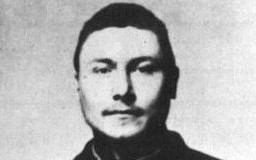 John Nordlund
Mass murderer · Sweden · 1900
John Filip Nordlund (also known as ”Mälarmördaren”, ”Mordlund”, ”Svarte Filip”)…
5 victims
John Nordlund
Mass murderer · Sweden · 1900
John Filip Nordlund (also known as ”Mälarmördaren”, ”Mordlund”, ”Svarte Filip”)…
5 victims
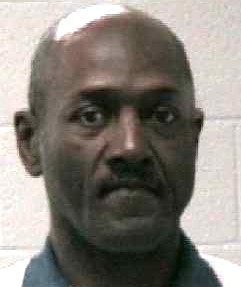 James Mathis
Murderer · USA · 1980
Name: James Mathis · Age: 51 · Status: Sentenced to death in May 1991 · May 199…
2 victims
James Mathis
Murderer · USA · 1980
Name: James Mathis · Age: 51 · Status: Sentenced to death in May 1991 · May 199…
2 victims
- Gender
- male
- Country
- New Zealand
- Location
- Glen Innes, Auckland, New Zealand
- Date of birth
- 1970
- Age at first offence
- 30
- Characteristics
- rape
- Victim profile
- Kylie Jones, 23
- Method of murder
- Stabbing with knife
- Date(s) of murder
- June 6, 2000
- Years active
- 2000
- Date of arrest
- 4 days later
- Status
-
Died in custody
Pleaded guilty; sentenced to an 18-year non-parole life sentence in October 2000; died in prison on November 26, 2009
Case record: Taffy Hotene
Background
Taffy Hotene was born in Murupara in 1970. He was brought up in a chaotic and abusive foster home in Mangere.
By the age of 16, Hotene was being arrested for attempted rape. At age 15, he first appeared in court for theft. At age 17, he appeared again in court for attempted rape at knifepoint.
Hotene underwent psychiatric examination in 1988 after being charged with assault with intent to commit sexual violation. He underwent psychological assessment and counselling while in prison.
Hotene was released in March 1991 but was back in custody in August following further offending. He was released in January 1992 but, within three weeks, at age 21, he committed a number of serious sexual and violent offences and was sentenced to 12 years imprisonment.
Hotene was described as a 30-year-old Māori man, and in prison he became involved with Black Power and had a history of violence. He received psychological monitoring and treatment for suicide risk, depression and grief counselling.
The offence
On June 6, 2000, Taffy Herbert Hotene abducted and killed Kylie Jones, an Auckland journalist. The attack occurred in a lonely reserve near her Glen Innes home.
Kylie Jones was repeatedly stabbed in the upper body. She was left naked in a shallow creek about 150m from her home in Glen Innes.
Hotene pleaded guilty to her murder, and also pleaded guilty to kidnapping Kylie Jones, detaining her and robbing her. In the attack, he stole some of her belongings, including three ATM cards. He also handed over a knife to his brother, George, at a party in Glen Innes in the days after the murder.
Police refused to comment on whether Hotene would face any more charges, and Kylie Jones had not been charged with rape in the proceedings described.
After the murder, Hotene tried to use one of the cards and police tracked him after witnesses provided a detailed description. Kylie Jones was 23 years old.
Hotene was on parole at the time of the killing.
In 1992, Hotene attacked three women in Wanganui. The Wanganui attacks took place between February 13 and 18, 1992. He bashed and raped a woman in a video shop, then attacked two other women in shops. His sentence for these attacks was 12 years.
Investigation
Detective Senior Sergeant Stu Allsopp-Smith was involved in the inquiry.
Detectives were investigating Kylie Jones’s murder and were still trying to piece together her last movements despite an arrest. Police said the arrest followed a massive manhunt in the east Auckland suburb where Kylie lived. The investigation involved hearing from anyone who saw Kylie from the time she left work in the city on Tuesday evening at about 5.30. It was believed she took one of two 625 buses to Glen Innes before she was attacked.
Arrest and court appearances
Hotene made a guilty plea shortly before 3 pm. He appeared in Auckland District Court for the guilty plea.
On June 11, 2000, police reported that a 29-year-old unemployed Glen Innes man would appear in Auckland District Court tomorrow charged with killing Kylie Jones; the report also referred to an arrest the previous night and a major part of the investigation still to come.
Kylie Jones’ family were in court for Hotene’s three-minute appearance. They asked Detective Senior Sergeant Stu Allsopp-Smith to say that they acknowledged the guilty plea, but that nothing would change what Hotene had done to Kylie, her partner and the family.
Detective Senior Sergeant Allsopp-Smith said he had no idea what persuaded Hotene to enter a guilty plea.
Sentencing
Justice Paul Neazor refused to impose preventive detention on Taffy Herbert Hotene in April 1992 for three attacks on Wanganui women, and sentenced him to 12 years in prison.
At the sentencing in the High Court at Wellington in 1992, the prosecutor, Bridget Mackintosh, sought an indefinite jail term with a minimum parole period of 10 years. Justice Neazor said Hotene, as a 21-year-old, was too young for preventive detention and that it was not plainly apparent he would offend again in a sexual way. Justice Neazor also said:
"It would be a dreadful prospect to impose such a sentence on a man who has really had no life outside institutions,"
Justice Neazor rejected that request and, under the law, Hotene had to be released after serving two-thirds of his sentence. He was required to be released in April 1992 and was out on parole when he attacked and killed Kylie Jones two months later.
On June 6, 2000, Hotene abducted and killed Kylie Jones in a lonely reserve near her Glen Innes home, and he later pleaded guilty.
In October 2000, Hotene was sentenced to an 18-year non-parole life sentence. He also received preventive detention and a 10-year non-parole term for raping Jones.
His sentencing date was set for October 2000.
Other related offences and prior convictions
In April 1992, Justice Neazor refused to impose preventive detention for three attacks on Wanganui women and sentenced Hotene to 12 years. This 12-year sentence included that he was convicted for crimes including rape and robbery.
The Wanganui attacks involved an altercation at a video shop and then attacks on two other women in shops. Hotene locked the video shop front door (4 pm) and, while beating a woman, someone knocked on the door. Hotene stuck his head up wearing his mohawk and said:
"Sorry, we're closed, come back in five minutes"
When attacking a woman in a Wanganui fruit shop, Hotene picked up a knife and stabbed her but it bent. He picked up another knife and that bent again and she escaped.
Hotene ran away and sprinkled pepper where he changed his clothes to put any dogs off the scent, and then jogged off.
Sergeant Craig Hawkins, who arrested Hotene for the Wanganui attacks, said it was clear Hotene would offend violently again, describing a dislike for women and stating Hotene said:
"Hey, if my missus wore a short dress she would get everything she deserved"
Sergeant Hawkins described Hotene as "cool, calm and collected" when attacking the woman in the video shop.
Parole release and conditions
Hotene was released by law on 12 April 2000 after serving two-thirds of his sentence. The Parole Board imposed conditions on his release. Because he was sentenced prior to 1993, he was not eligible for recall.
Hotene was released from prison on 12 April 2000 with the following conditions:
- Subject to standard conditions for the period 16 April 2000 to 15 April 2002.
- To reside at Ngati Arohanui Trust, Ponsonby, Auckland and to participate in the programmes offered, or at an address approved by the Probation Officer.
- Make an appointment within 72 hours of release with the Departmental Psychologist and keep such appointment and thereafter attend counselling as directed by the Probation Officer.
- To undertake other such counselling and treatment as directed by the Probation Officer.
- To complete an assessment for the Straight Thinking programme and if found suitable to complete the programme as directed by the Probation Officer.
- Not to make contact with the victim(s) directly or indirectly, without the written approval of the Probation Officer.
He was instructed to report to the Community Probation Service office at Henderson within 72 hours of release. He did report within 72 hours but at another office. On release, Hotene went directly to Ngati Arohanui Trust. The Manager of the Trust rang the Community Probation Service to report his arrival, and arrangements were then made for him to report to a Probation Officer at the Mount Eden Service Centre.
Although attendance at Ngati Arohanui Trust was a condition of release, the condition included “or at an address approved by the Probation Officer.” On leaving the programme he was not considered to be in breach of this condition.
The Probation Office discussed with Hotene why he left the programme and tried to facilitate his return, but he was not willing to return and the Trust was not willing for him to return if he was not motivated. He had an alternative address to live at with a family member, which had been assessed as appropriate and was approved by the Probation Officer, and appropriate counselling was arranged.
Hotene experienced difficulty settling into the community and finding stable accommodation and support. His frequent moves meant he reported to a number of different Probation Officers in the first weeks following release, and no single Probation Officer was able to take full responsibility to begin a planned case management assessment at an early enough point following release.
He did report as instructed on every occasion (10 reports) and attended weekly probation meetings and counselling. The aim of the Community Probation Service was to manage Hotene back into the community under the terms of his release.
The only release condition not met was the requirement for an appointment within 72 hours of release with the Department’s psychologist. He attended another appropriate counselling course.
Management in prison and programmes
While in prison, Hotene undertook Alternative to Violence Programmes (basic and follow-up), Substance Abuse Programmes, and programmes including Dynamics of Whanaungatanga, Skills for Living, and Lifestyle Changes.
There was publicity about Hotene’s involvement in the Alternatives to Violence programmes. He and another high-profile inmate were in the same block, attended the programme together, and subsequently facilitated a group that met to practise the principles taught through the programme. The involvement described did not include teaching or leading the programme at any time.
Hotene was referred to the Psychological Service for assessment and treatment. He was seen by a psychologist for periods in 1993, 1994, 1995, 1997, twice in 1998 and twice in that year. As part of this work, he attended and successfully completed two therapy groups for rapists. The remainder of his time was spent in individual sessions addressing issues related to his offending and relationship with women.
Hotene underwent treatment and monitoring for suicide risk, depression and grief counselling.
Just prior to his release, the prison became aware that Hotene was anxious about leaving prison and arranged for him to see a psychologist and a social worker to assist with his release. He was prepared for release including transport arrangements and was given a “Steps to Freedom” coupon to access Department of Work and Income assistance.
Procedural issues and risk assessment
A number of practice issues were identified in investigating the management of Hotene. These related to all three Services.
Hotene was assessed by the psychologist as “moderate” risk of reoffending. On review, the psychologist gave too much weight in her judgement to factors indicative of progress that could have mitigated his risk. This clinical judgement was described as dealing in probabilities rather than categorical terms.
Unrelated to his case, at the end of 1999 Psychological Service reports to the Parole Board were subject to clinical audit, and the principal finding was inadequacies in judgements of risk. As a result, risk assessment training was provided to Psychological Service staff. A session on risk assessment by Dr Paul Barrett was conducted at the Psychological Service conference the previous month.
Integrated Offender Management planned introduction of objective risk instruments including Risk of Conviction (ROC) and Risk of Imprisonment (ROI). The text described that this would assist in determining objective risk against which mitigating factors could be made.
A stated issue was that Auckland prison staff did not have access to Psychological Service reports. Access was considered necessary for effective offender management. Information could prompt a “Section 105” application, though it was stated that such an application would not have been made in this case because Hotene had been assessed as only “moderate” risk.
The Community Probation Service Manual required that a Probation Officer gather all relevant information and review the offender’s history and current sentence or order requirements, including explaining requirements and rights and responsibilities.
It was stated that since 1993 offender-related information had been held on Department computer systems. Probation Officers who dealt with Hotene had access to information about previous offences and rehabilitative programmes undertaken in prison. Pre-1993 information on Hotene’s closed file was not obtained mainly due to Hotene changing Probation Officers several times so administrative actions to retrieve the closed file were not completed.
The induction and sentence planning processes, including accessing and reviewing the closed file, were delayed. His decision to leave Ngati Arohanui Trust was followed up immediately and counselling was organised. It was stated that because he was unable to settle in the community, initial management was not able to be as planned and organised as the Community Probation Service Manual procedures require.
The text also stated that protocols were developed between the Public Prisons Service and the Psychological Service to govern sharing relevant offender information; Public Prisons Service reminded all staff of the requirement to send release papers to the appropriate CPS Service Centre prior to an offender’s release; and Community Probation Service staff were trained in practice standards for supervision and parole, with Auckland staff receiving training in June 2000 and a risk assessment training session with a UK Home Office expert held last month.
There was also a stated procedural issue involving release papers: release papers were not received by the CPS until five days after release and were sent to the wrong CPS Service Centre. CPS did receive advice of pending release eight days in advance, described as Victim Notification Register advice to prison. Sentence details were entered into IOMS on 21 March but the case was not allocated to a Probation Officer until after release. It was stated that cases were not allocated until release papers arrived because release plans could change before the final release date, and that if release papers had not been received by the CPS Service Centre before the offender reported for the first time (within 72 hours), the offender would be seen by the duty Probation Officer as happened in Hotene’s case. It was stated that this issue was procedural and that Hotene met with probation staff regularly.
Outcome
On November 26, 2009, Hotene died in prison. He was working at a pre-cast concrete factory within the prison grounds on that day, painting pre-cast panels for the Ohakea air base. Prison instructor John Kuratau said that each day when the eight inmates finished at the factory, four would stay behind to clean up, including Hotene.
At 3pm on November 26, 2009, Hotene was scanned by staff who had finished work and were going back to their units. John Hackshaw, principal instructor at the factory, said he received a phone call from a prison officer saying Hotene had not returned to his unit. Ten minutes later, he was phoned again that staff thought he was in a craft room at the unit. Ten minutes after that, he was phoned and told Hotene had not been found and was to be rung control. For 30 minutes, prison and factory staff searched the large factory yard. Hotene’s body was found at 4.20pm.
Department of Corrections inspector Niuia Aumua said he had found “significant shortcomings” in the way records had been kept by prison officers at Whanganui Prison. In his analysis, unit records had not correlated with the actual number of inmates. System changes were said to have been made since those shortcomings were discovered.
Whanganui Prison manager Hati Kaiwai said custodial prison staff and activities instructors had legal obligations around movement of inmates. He said there were errors that day and the forms had not been filled in properly ascertaining where prisoners were, and that the system was not used now.
Ms Carla na Nagara asked whether there was a system breakdown because staff did not know who was in the unit and who had stayed behind at the factory. Kaiwai agreed and accepted criticism. The system had been inappropriately used and staff had not signed prisoners in and out correctly. Ms na Nagara asked whether that meant prisoners were roaming freely between the factory and their units. Kaiwai said yes, it should not happen, but occasionally it did.
After Hotene’s death, there was a national review of all prison systems and an upgrade on security relating to musters. In the units, staff had previously been carrying out hourly face-to-name checks. The text stated the new system meant that, as of April 1, prisoner checks were done at unlock and lock-up, with a random check carried out during the day. It was stated:
"It allows staff to more actively manage prisoners rather than having to carry out an hourly muster."
Kaiwai said the search for Hotene had taken far too long and there had been confusion because forms had not been filled in properly. Ms na Nagara reserved her decision.
The text also described that the death was not considered suspicious, and the death was referred to the coroner for investigation. It stated that staff provided medical assistance but were unable to revive Hotene, and that he was pronounced dead by ambulance staff when they arrived. Leanne Field said staff provided medical assistance but were unable to revive Hotene, who was pronounced dead by ambulance staff when they arrived.
Timeline
- 1988 — Hotene underwent a psychiatric examination after being charged with assault with intent to commit sexual violation.
- March 1991 — Hotene was released from prison.
- August (year not specified) — Hotene was back in custody following further offending.
- January 1992 — Hotene was released, and within three weeks, at age 21, committed serious sexual and violent offences.
- February 13, 1992 — The Wanganui attacks began (to February 18, 1992).
- April 1992 — Justice Paul Neazor refused preventive detention and sentenced Hotene to 12 years for three attacks on Wanganui women.
- April (year not specified) — Hotene was required to be released after serving two-thirds of his sentence.
- June 6, 2000 — Hotene abducted and killed Kylie Jones in a reserve near her Glen Innes home; he later pleaded guilty to her murder and related offences.
- April 1, (year not specified) — The text described that a new prisoner-check system was used as of April 1.
- October (2000) — Hotene was sentenced to an 18-year non-parole life sentence, and also received preventive detention and a 10-year non-parole term for raping Jones.
- November 26, 2009 — Hotene died in prison; his body was found at 4.20pm.
Aftermath
After Hotene’s death, prisons throughout New Zealand were forced to adopt a new policy for keeping accurate records of all inmates’ movements behind bars. The investigation highlighted significant gaps in the systems of Whanganui Prison, and the coroner reserved her decision.
A national review of prison systems was conducted and there was an upgrade on security relating to musters.

Spotted an error, or have more information about this case?