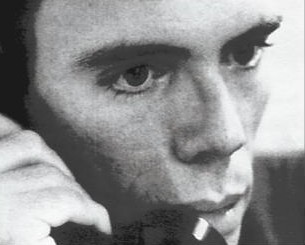
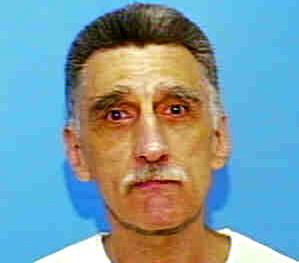
Timothy Dale Bunch
Murderer Ervil LeBaron
Murderer · USA · 1972
Ervil Morrell LeBaron (1925 to August 16, 1981) was the leader of a polygamous…
35 victims
Ervil LeBaron
Murderer · USA · 1972
Ervil Morrell LeBaron (1925 to August 16, 1981) was the leader of a polygamous…
35 victims
 Brian Kevin Rosenfeld
Murderer · USA · 1985
Brian Kevin Rosenfeld Brian Kevin Rosenfeld was sentenced to three concurrent l…
23 victims
Brian Kevin Rosenfeld
Murderer · USA · 1985
Brian Kevin Rosenfeld Brian Kevin Rosenfeld was sentenced to three concurrent l…
23 victims
 Marvin Gray
Murderer · USA · 1975
Marvin Gray was convicted killer who claimed responsibility for 23 slayings and…
23 victims
Marvin Gray
Murderer · USA · 1975
Marvin Gray was convicted killer who claimed responsibility for 23 slayings and…
23 victims
 Yahweh ben Yahweh
Murderer · USA · 1980
Yahweh ben Yahweh was born and legally named Hulon Mitchell Jr. (October 27, 19…
23 victims
Yahweh ben Yahweh
Murderer · USA · 1980
Yahweh ben Yahweh was born and legally named Hulon Mitchell Jr. (October 27, 19…
23 victims
 Russell Ellwood
Murderer · USA · 1991
Russell Ellwood was a former taxi driver. Authorities suspected him of killing…
20 victims
Russell Ellwood
Murderer · USA · 1991
Russell Ellwood was a former taxi driver. Authorities suspected him of killing…
20 victims
 Douglas Gretzler
Serial killer · USA · 1973
Douglas Gretzler was executed by lethal injection in Arizona on June 3, 1998. ·…
17 victims
Douglas Gretzler
Serial killer · USA · 1973
Douglas Gretzler was executed by lethal injection in Arizona on June 3, 1998. ·…
17 victims
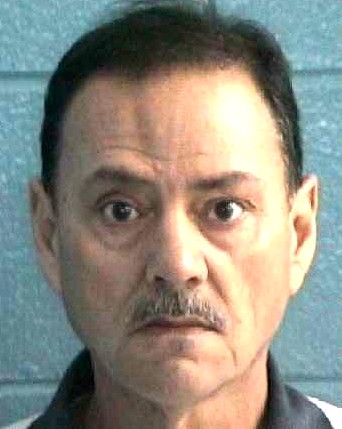 Roddy Childress
Murderer · USA · 1989
Roddy Elroy Childress was the half-brother of Jolene Kappus. In February 1989,…
2 victims
Roddy Childress
Murderer · USA · 1989
Roddy Elroy Childress was the half-brother of Jolene Kappus. In February 1989,…
2 victims
 Mark Dixie
Murderer · United Kingdom · 2005
Mark Philip Dixie — defendant Sally Anne Bowman — victim; British model Lewis S…
1 victim
Mark Dixie
Murderer · United Kingdom · 2005
Mark Philip Dixie — defendant Sally Anne Bowman — victim; British model Lewis S…
1 victim
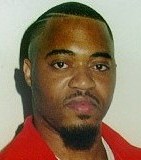 Christopher Dwayne Peterson
Spree killer · USA · 1990
Christopher Dwayne Peterson (born January 20, 1969, in Gary, Indiana, USA) was…
7 victims
Christopher Dwayne Peterson
Spree killer · USA · 1990
Christopher Dwayne Peterson (born January 20, 1969, in Gary, Indiana, USA) was…
7 victims
- Gender
- male
- Country
- USA
- Location
- Prince William County, Virginia, USA
- Date of birth
- 1959
- Age at first offence
- 23
- Characteristics
- rape, robbery, mutilation, armed robbery, torture
- Victim profile
- His girlfriend Su Cha Thomas, 40
- Method of murder
- Shooting
- Date(s) of murder
- January 31, 1982
- Years active
- 1982
- Date of arrest
- —
- Status
-
Executed
Executed by electrocution in Virginia on December 10, 1992
Case overview
Timothy Dale Bunch was convicted by jury trial and sentenced to death for murder in the commission of robbery while armed with a deadly weapon in violation of Va. Code Ann. § 18.2-31(d) (1988). His conviction and sentence were affirmed by the Supreme Court of Virginia on direct appeal. The Virginia courts considered and dismissed Bunch’s state petition of habeas corpus. Bunch appealed the district court’s dismissal of his federal habeas petition and argued multiple constitutional errors, primarily that his confession was admitted in violation of the Fifth Amendment and that he was denied effective assistance of counsel in violation of the Sixth Amendment.
Timeline
- January 31, 1982 — Bunch killed his girlfriend, Su Cha Thomas.
- February 1984 — Bunch filed a state petition for habeas corpus.
- May 1985 — The trial court dismissed the ineffective assistance of counsel claim after a plenary hearing.
- February 1988 — The Virginia Supreme Court denied Bunch’s petition.
- March 1990 — The district court dismissed Bunch’s federal habeas corpus petition.
- November 27, 1991 — The case was presented before the United States Court of Appeals for the Fourth Circuit.
- December 10, 1992 — Bunch was executed by electrocution in Virginia.
- December 12, 1992 — A New York Times article described the execution and associated litigation over videotaping.
The offence
On January 31, 1982, Bunch killed his girlfriend, Su Cha Thomas. The couple was at Thomas’ house, preparing to go out for dinner. Bunch hid in a downstairs bathroom to lure her. After shooting Thomas in the head, Bunch went upstairs and spent an hour or so drinking wine and listening to the stereo. He then ransacked the house, taking Thomas’ Rolex watch, a diamond ring, a string of pearls, and a gold chain.
Before he left, Bunch tied a knot in the scarf Thomas was wearing, pulled her unconscious body to a door, and hung her by the scarf from the doorknob.
According to the medical examiner, there was a combined cause of death: “a gunshot wound to the head ... with a secondary complication, asphyxiation by hanging.”
After the murder, Bunch pawned Thomas’ watch. A report filed with the police by the pawn shop triggered an investigation of Bunch, who was a sergeant in the United States Marine Corps.
Bunch had met Thomas while temporarily stationed at Quantico in Virginia, and he had since returned to his permanent station in Japan.
Investigation
Police investigators traveled to Japan to question Bunch. Two Virginia officials—police inspector Donald Cahill and an assistant Commonwealth’s attorney—traveled to Japan. They informed Bunch of his rights under Miranda v. Arizona, 384 U.S. 436, 86 S. Ct. 1602, 16 L. Ed. 2d 694 (1966). After Miranda warnings, Bunch signed a consent form and agreed to talk.
Bunch asserted that he asked for counsel “approximately a dozen times” during the interrogation. The Virginia officials claimed that Bunch never clearly requested counsel but only mentioned once that “he felt like he might want to talk to a lawyer.”
When that point occurred, the Commonwealth’s attorney left the room, but Cahill stayed and discussed another matter with Bunch for several minutes. As Cahill got up to leave, Bunch told Cahill he would cooperate and informed him that the gun was at his mother’s house in Indiana and that Thomas’ ring was in Japan.
Cahill and the Commonwealth’s attorney decided that interrogation should not continue unless Bunch signed another consent form. When Bunch refused to sign the form, the interview ended.
Bunch was still in military custody and was transported from Japan back to Quantico, which took forty-two hours. Military personnel did not question Bunch, but they informed him of his Miranda rights again during the flight.
Arrest and custody processing
After arrival at Quantico, Bunch proceeded through processing for delivery to state authorities. During processing, Bunch met with Major Donald Jillisky, an attorney with the Marine Judge Advocate General’s Office. Jillisky informed Bunch that he was not present as Bunch’s attorney, but only to advise him and to transfer him to state authorities. Jillisky told Bunch of the charges he was facing and that he would either have to obtain an attorney or have one appointed for him.
Jillisky instructed Bunch that “he did not have to say anything until he consulted with his lawyer,” and that “it was probably not in his best interest to say anything until he consulted with his lawyer.”
After completion of military processing, Bunch was turned over to Investigator Cahill for transportation to the state police station. During the drive, Cahill asked Bunch “if he felt he was ready to sit down and go over the case.” Cahill informed Bunch that he was under no obligation to speak with Cahill and that the decision was for Bunch to make.
Bunch told Cahill he had spoken with an attorney at Quantico who had advised him to contact his own lawyer before making any statements, but that he had decided to “get it off his chest” and tell the whole story.
At the station, Bunch was once again advised of his Miranda rights. He signed a consent form and confessed to Cahill.
Confession
In his confession, Bunch stated that he decided a few days before killing Thomas to kill someone, probably a prostitute. He decided on Thomas because “she was a slut and she reminded him too much of his wife and he wanted her money.”
Bunch told Cahill that he shot Thomas in the head from behind and had a sexual orgasm when doing so. After ransacking the house, he dragged Thomas to the doorknob and hung her by her scarf, again becoming sexually aroused. He gathered her jewelry and left the house.
Bunch later repudiated the statement that he had experienced sexual release when he shot Ms. Thomas in the head, but the appellate decision addressed the confession’s admissibility and related constitutional claims.
Trial
Bunch was tried for murder during the commission of armed robbery. The trial court suppressed the incriminating statements Bunch made in Japan, concluding they had been obtained in violation of his right to counsel. The court held admissible the confession Bunch gave to Cahill in Virginia, ruling that Bunch had “intelligently, wittingly, freely and voluntarily” waived his rights.
A jury convicted Bunch of capital murder and sentenced him to death based on the “vileness” of the crime. See Va. Code Ann. § 19.2-264.2 (1990).
The conviction and sentence were affirmed on direct appeal in Bunch v. Commonwealth, 225 Va. 423, 304 S.E.2d 271 (1983).
Sentencing
Under Virginia’s capital sentencing scheme, a death sentence could not be imposed unless a jury determined beyond a reasonable doubt that the defendant represented a future danger to society or that the defendant’s conduct was particularly vile. Va. Code Ann. §§ 19.2-264.2, -264.4(C) (1990). In Bunch’s trial, the trial court submitted only the question of vileness.
A jury could impose death for vileness only if the defendant’s conduct satisfied one of three statutory predicates: “torture, depravity of mind or aggravated battery to the victim.” Va. Code Ann. § 19.2-264.4(C) (1990).
Bunch argued that the trial court’s instructions on the death penalty were constitutionally infirm for two reasons: first, that the court should have instructed jurors that they must be unanimous as to which of the three vileness predicates existed; and second, that the vileness predicate was unconstitutionally vague and that the trial court erred in failing to provide a limiting instruction. The appellate court found no error in the instructions.
The appellate court noted that the Virginia legislature identified three different types of conduct any of which could satisfy a finding of vileness and that Virginia did not require jurors to identify the particular predicate on which they relied. The jurors were polled and indicated that the finding of vileness was unanimous. The appellate court concluded that this effectively mooted any claim of error in the instructions on unanimity.
The appellate court also stated that it had already rejected the argument that the Virginia vileness statute was unconstitutionally vague, citing Clozza v. Murray, 913 F.2d 1092, 1105 (4th Cir. 1990).
Bunch also alleged the trial court erred in failing to strike for cause two jurors allegedly biased in favor of the death penalty, thus yielding “a jury uncommonly willing to condemn a man to die.” The appellate decision held that Bunch did not raise the claim at trial or on direct appeal and that it was procedurally barred. It also found that the record revealed neither veniremember was biased because, although both had initially agreed with the statement that the death penalty should be imposed in every case of murder regardless of the facts and circumstances, both changed their positions upon immediate requestioning. The appellate decision concluded the failure to strike did not lead to a fundamental miscarriage of justice where the jurors stated their ability to consider fairly and impartially sentences besides death.
The Commonwealth introduced evidence at sentencing that Bunch associated with prostitutes and had thoughts about killing people and becoming a mercenary hit man. Bunch argued the evidence should have been excluded from the sentencing phase as relating only to future dangerousness and not to vileness. The appellate decision held that the objection was not raised at trial and that the state habeas court found the claim procedurally barred under Virginia’s contemporaneous objection rule, so review was also barred.
Bunch finally requested that the appellate court declare the Virginia death penalty statute and sentencing procedures facially unconstitutional. The appellate decision noted that the Supreme Court had upheld similar statutes as to future dangerousness and as to vileness and held that Bunch’s claim was conclusory.
Appeals
State proceedings
Bunch filed a state petition for habeas corpus in February 1984. The trial court dismissed all asserted points of error except the claim of ineffective assistance of counsel. The trial court conducted a plenary hearing and dismissed the ineffective assistance claim in May 1985. The Virginia Court of Appeals dismissed Bunch’s appeal for lack of jurisdiction, and the Virginia Supreme Court denied his petition in February 1988.
Federal proceedings and issues raised
Bunch appealed the district court’s dismissal of his federal habeas corpus petition. He raised numerous claims of constitutional error, and the appellate court addressed two major claims: admission of his confession and ineffective assistance of counsel. It then discussed remaining allegations.
Admission of confession
Bunch argued that admission of his confession violated both his right to counsel and his right to remain silent. The appellate decision addressed each claim.
For the right-to-counsel argument, the appellate decision stated that the Virginia Supreme Court ruled admission of the confession did not violate the right to counsel and applied the “new rule” doctrine under Teague v. Lane, Butler v. McKellar, and Engle v. Isaac. The appellate court concluded that Virginia’s ruling was susceptible to debate among reasonable minds at the time of the Virginia Supreme Court decision.
Bunch based his argument on Edwards v. Arizona, asserting Edwards established a per se rule that an accused in custody who invoked the right to counsel could not waive that right unless the accused initiated further conversation with police. Bunch maintained he never initiated any further exchanges after invoking his right to counsel and that under Edwards his confession should have been suppressed. He also asserted that the waiver issue should not have been reached because it arises only when the suspect initiates conversation.
The appellate court described how, at the time of the Virginia Supreme Court decision, Edwards had not dictated a contrary conclusion. The appellate court discussed how Edwards had left unresolved questions about initiation and interrogation and noted contemporaneous differences among other courts’ interpretations. It also discussed the Virginia Supreme Court’s reasoning that Investigator Cahill’s question to Bunch—whether he felt ready to sit down and go over the case—was a legitimate attempt to determine whether Bunch’s decision not to speak without an attorney had changed and did not constitute police-initiated interrogation under Edwards.
Bunch’s waiver argument was held to be waived because it was not raised in state habeas or even to the federal district court, citing Harrison v. Warden, Maryland Penitentiary, 890 F.2d 676 (4th Cir. 1989) and Whitley v. Bair, 802 F.2d 1487 (4th Cir. 1986). The appellate court also concluded the claim lacked merit and cited the Virginia Supreme Court’s statements that Bunch decided, despite repeated warnings and contrary advice, “he was ready to tell the whole story” and “wanted to get it off his chest,” and that moments before confessing he stated in writing that he did not want a lawyer and was willing to answer questions. The appellate court concluded there was no clearer case of a knowing and intelligent relinquishment of Miranda rights.
For the right-to-remain-silent argument, Bunch asserted that his confession should have been suppressed because he asserted his right to remain silent in Japan and investigators did not “scrupulously honor” that right as required by Michigan v. Mosley. The appellate court explained that when Bunch raised the claim in state habeas, the Commonwealth responded that it was procedurally defaulted for not being raised at trial or on direct appeal. The trial court dismissed for reasons stated in the motion to dismiss, and the Virginia Supreme Court refused the petition for appeal without evidence of merits consideration. The appellate court held that the procedural default was an adequate and independent state ground foreclosing federal habeas review.
Effective assistance of counsel
Bunch argued that he was denied effective assistance of counsel in violation of the Sixth Amendment. His primary argument was that counsel was ineffective in preparing and presenting mitigating evidence at sentencing. He also raised other alleged deficient performances that the appellate court held procedurally barred.
The appellate court applied the Strickland v. Washington standard requiring deficient performance and prejudice, stating Bunch bore the burden to show counsel’s performance was deficient and that it so prejudiced his defense as to deprive him of a fair trial.
The appellate court addressed mitigation preparation and presentation:
- It described that Bunch presented affidavits containing mitigating evidence at the state habeas court and argued they were easily available during trial.
- It stated counsel’s strategy did not call their psychiatrist for testimony because it risked harmful cross-examination based on state psychiatrists’ damaging findings, and counsel feared the psychiatric testimony would reinforce negative aspects of Bunch’s self-destructive behavior.
- The appellate court noted counsel was also concerned about “some unusual sexual orientation aspects of the case” and did not want the jury to hear about them.
- It described counsel’s contacts with military mitigating witnesses, including the commanding officer and the first sergeant at the correctional facility, and stated the commanding officer reported unsatisfactory working relationships, dismissal for drug related problems, and that Bunch would not have been recommended for re-enlistment; it also stated the first sergeant could not offer positive information.
- It described counsel’s finite time and decision not to pursue what appeared to be unfruitful lines of investigation.
- It described counsel contacting and interviewing Bunch’s parents and counsel’s concerns about reliability and potential impeachment. It stated Bunch’s father did not show up for an important meeting because he had gotten drunk the night before.
- It described counsel’s concern that calling Bunch’s father could downplay traumatic childhood history involving his absence, drinking problem, and abuse to Bunch’s mother. Counsel therefore made a strategic decision not to put him on the stand.
- It described Bunch’s mother as prepared and ready to testify about family and social histories, lack of disciplinary problems in school, lack of criminal record, and efforts to reconcile with her wife. It stated that, when she testified, counsel had to ask a number of leading questions to elicit favorable information and that her emotional affect was blunted, which diminished her effectiveness.
- It described Bunch’s argument that only one witness testified in his behalf and the appellate court’s rejection, including that while counsel asked Bunch and his parents for potential witnesses, they did not suggest any. The appellate court described the family mitigation as cumulative and that counsel believed other family member testimony would be cumulative with his mother’s testimony.
- It addressed an argument that counsel should have contacted Bunch’s ex-wife, noting Bunch instructed counsel not to contact his ex-wife or involve her.
The appellate court concluded Bunch’s counsel made reasonable professional judgments and did not render constitutionally defective assistance. It cited that counsel interviewed potential witnesses called to their attention and made strategic decisions with reasonable bases.
For additional ineffective assistance claims, Bunch alleged failures at the guilt phase including: adequate voir dire; objections to the Commonwealth’s opening statement; delivering an effective opening statement; objecting to irrelevant inadmissible testimony; objecting to improper cross-examination; preserving for review the adequacy of the Indiana search warrant; and objecting to admission of the gun. It also alleged other instances of ineffective assistance at sentencing. The appellate court affirmed the district court’s ruling that these other claims were procedurally barred because they were not presented to the Virginia Supreme Court for collateral review.
Outcome
The appellate court held Bunch’s claims to be without merit and affirmed the judgment of the district court. The judgment was affirmed. A dissent by Judge SPROUSE agreed with all of the majority opinion except Part II.A and stated a respectful dissent on the right-to-counsel issue.
Other details
Evidentiary matters during trial
Bunch challenged the introduction into evidence of two photographs of Thomas: one showing her hanging from the doorknob as she was found and one black and white photograph of Thomas on the autopsy table. The appellate court stated Bunch did not challenge the crime scene photograph at trial or on appeal and that the claim was precluded under Wainwright v. Sykes. For the autopsy photograph, the appellate court stated admission rested in the trial court’s discretion and that, absent extraordinary circumstances, admissibility questions were state law. It held the trial court admitted the photograph for identification purposes and that Bunch showed no extraordinary circumstances justifying disturbing the ruling; it also concluded admission did not violate fundamental fairness.
Sufficiency of evidence for robbery during murder
Bunch argued evidence was insufficient to establish a murder during commission of a robbery and relied on Branch v. Commonwealth. He asserted that the killing and unlawful taking were two separate acts and that there was no intent to steal at the time of the killing, and that the jewelry taking occurred only to disguise the crime. The appellate decision stated the Virginia Supreme Court had considered this argument on direct appeal and summarized the “overwhelming” evidence that Bunch killed Thomas during commission of a robbery. It listed evidence including Bunch’s statements to friends before the murder that he needed money badly and that he should “go up there to Dale City and knock that bitch off ... and get her rings and things,” and Bunch’s confession that his plan had been “to go down and take her jewelry and kill her and leave the area.”
Pathologist funding
Bunch asserted his Sixth Amendment right to cross-examine witnesses and his Fourteenth Amendment rights to due process and equal protection were violated when the trial court failed to provide funds for him to hire a pathologist. The appellate decision stated Bunch waived the claim at trial and did not present it on direct appeal or in any phase of state habeas, so it was barred under Wainwright v. Sykes and Slayton v. Parrigan.
Evidence of prior plan to rob a Pizza Hut
One of Bunch’s friends testified that Bunch spoke with him two weeks before the murder about wanting to rob a Pizza Hut. Bunch argued at trial and on direct appeal that the evidence was too remote to be relevant to intent to rob Thomas. On state habeas, Bunch enhanced his argument by asserting it was unduly prejudicial character evidence. The appellate court stated that his objection at trial was framed solely as irrelevancy and not as constitutional deprivation. The appellate court held the state habeas court dismissed the claim on procedural default, which foreclosed consideration on federal habeas review, and it found no reason to disturb the state trial court’s discretion on the evidentiary ruling.
Dissenting opinion by Judge SPROUSE
Judge SPROUSE stated that he concurred in the majority opinion except Part II.A and dissented from that part.
The dissent stated that the bright-line rule in Edwards clearly required that once a suspect invoked the right to counsel, police interrogation must not be renewed unless the accused initiated further communication. The dissent quoted Edwards’ holding:
when an accused has invoked his right to have counsel present during custodial interrogation, a valid waiver of that right cannot be established by showing only that he responded to further police-initiated custodial interrogation even if he has been advised of his rights. We further hold that an accused, such as Edwards, having expressed his desire to deal with the police only through counsel, is not subject to further interrogation by the authorities until counsel has been made available to him, unless the accused himself initiates further communication, exchanges, or conversations with the police.
The dissent characterized the question posed by Detective Cahill—“if he felt he was ready to sit down and go over the case”—as initiated by Cahill, not Bunch, and concluded it violated Bunch’s rights under Edwards. The dissent stated that the Virginia Supreme Court committed constitutional error in affirming denial of suppression and therefore dissented on the issue.

Spotted an error, or have more information about this case?