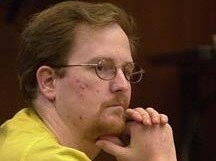
John Eric Armstrong
Serial killer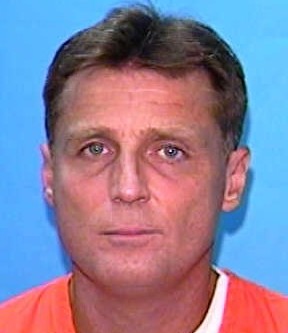 Glen Edward Rogers
Serial killer · USA · 1993
Glen Edward Rogers was a spree killer whose cross-country rampage in 1994-95 le…
70 victims
Glen Edward Rogers
Serial killer · USA · 1993
Glen Edward Rogers was a spree killer whose cross-country rampage in 1994-95 le…
70 victims
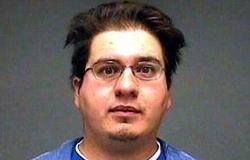 Efren Saldivar
Serial killer · USA · 1989
Efren Saldivar (born 30 September 1969) was an American serial killer who murde…
50 victims
Efren Saldivar
Serial killer · USA · 1989
Efren Saldivar (born 30 September 1969) was an American serial killer who murde…
50 victims
 Gary Ridgway
Serial killer · USA · 1982
Gary Leon Ridgway Ridgway was born 18-February-1949 in Salt Lake City, UT. He w…
49 victims
Gary Ridgway
Serial killer · USA · 1982
Gary Leon Ridgway Ridgway was born 18-February-1949 in Salt Lake City, UT. He w…
49 victims
 Charles Cullen
Serial killer · USA · 1984
Charles Cullen (born February 22, 1960) was a former nurse and the most prolifi…
45 victims
Charles Cullen
Serial killer · USA · 1984
Charles Cullen (born February 22, 1960) was a former nurse and the most prolifi…
45 victims
 Charles Ng
Serial killer · USA · 1983
Charles Chi-Tat Ng (Chinese: 吳志達/吴志达; born December 24, 1960) was a Chinese-Ame…
25 victims
Charles Ng
Serial killer · USA · 1983
Charles Chi-Tat Ng (Chinese: 吳志達/吴志达; born December 24, 1960) was a Chinese-Ame…
25 victims
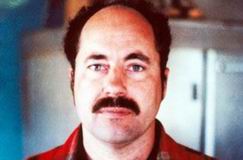 Leonard Lake
Serial killer · USA · 1983
Leonard Lake (October 29, 1945 – June 6, 1985) was an American serial killer. H…
25 victims
Leonard Lake
Serial killer · USA · 1983
Leonard Lake (October 29, 1945 – June 6, 1985) was an American serial killer. H…
25 victims
 Charles Mark Cohen
Murderer · USA · 1988
Charles Mark Cohen was 41 when the Delaware Board of Pardons refused to recomme…
3 victims
Charles Mark Cohen
Murderer · USA · 1988
Charles Mark Cohen was 41 when the Delaware Board of Pardons refused to recomme…
3 victims
 Emma Wilson
Murderer · United Kingdom · 2011
Emma Wilson was 25 when she was sentenced to life in prison with a minimum of 1…
1 victim
Emma Wilson
Murderer · United Kingdom · 2011
Emma Wilson was 25 when she was sentenced to life in prison with a minimum of 1…
1 victim
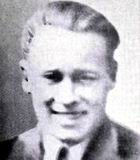 George Percy Stoner
Murderer · United Kingdom · 1935
George Percy Stoner was sentenced to death on May 31, 1935. His sentence was co…
1 victim
George Percy Stoner
Murderer · United Kingdom · 1935
George Percy Stoner was sentenced to death on May 31, 1935. His sentence was co…
1 victim
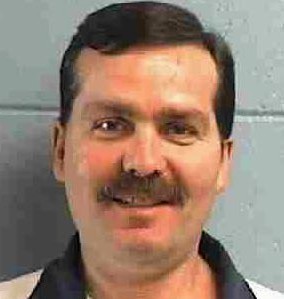 Anthony Goodin
Murderer · USA · 1987
Anthony Goodin was connected with homicide in the death of Marlin Carpenter, a…
1 victim
Anthony Goodin
Murderer · USA · 1987
Anthony Goodin was connected with homicide in the death of Marlin Carpenter, a…
1 victim
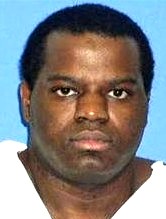 Donell Okeith Jackson
Murderer · USA · 1993
Donell Okeith Jackson was convicted of capital murder and was sentenced to deat…
1 victim
Donell Okeith Jackson
Murderer · USA · 1993
Donell Okeith Jackson was convicted of capital murder and was sentenced to deat…
1 victim
- Gender
- male
- Country
- USA
- Location
- Michigan/Illinois, USA
- Date of birth
- November 23, 1973
- Age at first offence
- 19
- Characteristics
- rape
- Victim profile
- Women (prostitutes)
- Method of murder
- Strangulation
- Date(s) of murder
- 1992 - 1999
- Years active
- 1992–1999
- Date of arrest
- April 12, 2000
- Status
-
Life imprisonment
Sentenced to life imprisonment in Michigan, USA, on April 3, 2001
Background
John Eric Armstrong was a former USS Nimitz sailor of Dearborn Heights, Michigan. He was described as a husband and father of two. He was known to family and friends as Eric.
Armstrong said he strangled five Detroit-area prostitutes and earlier killed 11 other prostitutes while an active duty sailor aboard the aircraft carrier. Academics said it was not unusual for serial killers to exaggerate their body count to extend feelings of superiority and domination.
Investigators tried to connect Armstrong to unsolved murders in the cities in which the USS Nimitz docked from 1993 until he was discharged in 1999. The Nimitz was in Hawaii only twice during those years, in 1996 and 1993. Honolulu police looked into unsolved murders for those years, and none matched the profile of Armstrong’s victims. The only local case described with a similar victim profile was a stripper, Lisa Fracassi, 36, who was found dead in her Nahua Street apartment in November 1994 with injuries to her neck. She was a dancer at what was then Exotic Paradise on Keeaumoku Street. There was no evidence linking Armstrong to Hawaii in 1994.
Family members remembered Armstrong as a loving son who only got counseling for a brief time after his young brother Mikey died. Armstrong rode his bike into speeding traffic at age 5, and he said he wanted to be with his baby brother. Four months after his brother Michael (Mikey) died, his father left the family in New Bern, North Carolina, to be with another woman in Georgia. The father departed before he raised cash for the family to buy a simple grave marker. There were indications that his father was neglectful. Armstrong broke his leg when he fell out of a window when he was 2 while his father was supposed to be watching him.
As a child, Armstrong fished and played Nintendo and baseball and won a small trophy for a school debate. He was described as an unassuming student who was a B and C student. He talked of becoming a police officer. From his early years, he never wanted to be known as John, saying it was the name of his abusive, unsupportive father. Armstrong stopped using his first name to distance himself from that man. He was known as Eric to family and friends. When he was arrested, he was wearing a tan shirt with Eric written across it.
Assistant Principal Terry Fuhrman of New Bern High School said Armstrong was relatively unmemorable and not a discipline problem. Fuhrman said Armstrong graduated in 1992 in a class of about 350. A schoolmate said Armstrong was a very smart boy and that nobody would have expected him to do what he was accused of doing. Another acquaintance said he was a basic high school student who tried to fit in with everyone else.
After high school, Armstrong worked for several months at a grocery store and then enlisted in the Navy in 1992 and left the next year. On the Nimitz, he took required safety education classes, including one that warned against soliciting prostitutes. Armstrong’s last job on the ship was as the barber shop supervisor, and he received two good conduct medals, each medal representing three to four years of honorable service. He was described as a quiet man aboard the ship known as “Opie,” the kind of man “moms want their kids to meet.” Shipmates described conflicting details about his job on the Nimitz, including descriptions as a mechanic and a barber, but said his tour of duty aboard the ship was unremarkable and that he seemed to excel as a sailor.
Jhun Esteves of Bremerton, Armstrong’s chief petty officer aboard USS Nimitz from 1994 to 1997, said Armstrong was his sailor of the month at one time and had an unblemished record aboard the ship when he was working for him.
Armstrong met Katie Rednoskea, described as a former swimmer and graduate of Dearborn High School, in 1998, when she became Armstrong’s wife. Armstrong’s wife was pregnant with their second child. The account stated that she did not believe her husband could be responsible for the killings and was in extreme denial.
Armstrong’s lawyer Robert Mitchell described him as a very distraught and very disturbed young man with emotional problems that emanated many, many years ago, and said compassion arose from the story. Wayne County Assistant Prosecutor Elizabeth Walker said she had enough people she had real compassion about and that five were dead and three got away.
The offence
Armstrong told Detroit police he strangled five Detroit-area prostitutes and earlier killed 11 other prostitutes while on the USS Nimitz. Police said Armstrong was responsible for the five local slayings that had been confirmed. Police said investigators in other jurisdictions were not yet able to attach his story to any bodies.
Armstrong was linked by police to killings beyond Detroit, and he gave details during his confession. He told police about killings in Washington State, Hong Kong, Thailand, Hawaii and the Middle East. In Seattle, he said he killed a man after an argument and killed two prostitutes. He said another prostitute was murdered in Spokane. Authorities said that between his arrest and arraignment Friday, he shared details about as many as 30 killings. Authorities said Armstrong also killed Kelly Hood, Rose Marie Felt, 32, and Nicole Young, an 18-year-old Chicago woman who was brought to Detroit by her boyfriend, forced into prostitution and abandoned.
In the timeline and narrative, Wendy Jordan was described as the victim of a first-degree murder conviction. Wendy Jordan was described as a Detroit prostitute. Her body was discovered in the Rouge River in January 2000. She was strangled.
The narrative included mention of Monica Johnson, a 31-year-old prostitute who police found unconscious and barely alive near Interstate 94. She died at Ford Hospital in Detroit before talking to authorities. The narrative also discussed an attack and failed testimony by Wilhemina Drane, described as a self-described prostitute who spoke extensively to the media after she said she was attacked and refused to testify because of the presence of cameras in the courtroom.
The narrative stated Armstrong told police he sometimes returned to dead bodies to have sex with them. It also stated that Armstrong told investigators he had strangled a woman in Virginia and driven over her body with his Jeep. The woman described in that account was Linette Hillig, 34 years old, discovered behind a bingo parlor in Norfolk on March 5, 1998.
Investigation
The investigation began when police found bodies of three strangled prostitutes—Rose Marie Felt (32), Kelly Hood (34) and Robbin Brown (20)—in a Detroit railroad yard on April 10, 2000. The bodies had been placed there over the past month. Technicians determined that Hood had been dumped three weeks prior, sometime in mid-March. Felt’s body had been there about a month. Nicole Young had apparently been murdered sometime within 12 hours of the discovery of the bodies. Police located a fourth body near the site but believed it was from an unrelated murder.
By the end of the day, a multi-jurisdictional force comprised of the Detroit Police Sex Crimes Unit, the Violent Crimes Task Force, the FBI, the Michigan State Police, Conrail Railroad Police and the Wayne County Medical Examiner’s Office was formed to investigate the slayings. The investigation was described as moving quickly, with investigators linked three reported assaults of prostitutes with the murders of Hood, Felt and Young. Investigators began round-the-clock patrols in high-traffic areas where Detroit’s prostitutes converged, focusing on the Michigan Avenue and Livernois corridor after consulting with the FBI agents who created a profile of the killer.
The Dearborn Heights investigation began after police found Wendy Jordan’s body. Armstrong called Dearborn Heights police and reported a woman’s body in the Rouge River. Armstrong said he was atop a bridge spanning the icy water of the Rouge River and as he leaned over the side he saw something on the riverbank twenty feet below and recognized it was a body. Authorities learned Wendy Jordan had been strangled and had evidence of a struggle. A preliminary examination revealed she had recently had sexual intercourse and a semen sample was taken.
Police were initially skeptical of Armstrong’s account of how he found the body, and later found additional witnesses who said they saw Armstrong on the bridge before he claimed he happened upon the scene. Armstrong vehemently denied having anything to do with Jordan’s death. A Royal Oak Police Sgt. James Serwatowski said: “He’d never admit to anything, but he wouldn’t argue either.” Serwatowski also said Armstrong would sometimes hang his head and close his eyes when investigators went over his story and pointed out where it diverged from known facts. Armstrong’s neighbors assumed that the police were visiting because he had stumbled across Jordan’s body.
There was physical evidence available in the Jordan homicide. Investigators had what was presumably the killer’s DNA, and the medical examiner’s office found tiny fibers on Jordan’s clothes that probably came from a vehicle she had been in shortly before being dumped in the river. Tests were in the works to identify the type of vehicle. When the tests came back indicating fibers on Wendy’s body matched those in Armstrong’s Jeep, investigators sought a warrant but were turned away because of a Wayne County prosecutor’s policy not to issue an arrest warrant for a homicide until the State Police lab issued its final report.
The narrative stated that the fake police report incident preceded the Jordan case. Novi police told Dearborn Heights police Armstrong had placed a 911 call from his job as a security guard in early November to report he had been attacked while breaking up a robbery. Investigating officers found Armstrong bleeding from superficial wounds to the face and arms. Novi Police Chief Doug Shaefer said: “Apparently he just wanted to attract attention to himself; something sensational, which seems to be part of his make-up.” The fake report cost Armstrong his job. Investigators visited Armstrong at home; he consented to gather fibers from his car and to give them a blood sample. Samples were shipped to State Police crime labs in Lansing, Michigan.
The narrative stated Monica Johnson had been intimate with Armstrong. Monica Johnson was found unconscious and barely alive near Interstate 94.
Detectives described a delay that allowed Armstrong time to kill again. A narrative account stated that investigators had no reason to suspect a serial killer early in the Jordan probe and did not rush, because the poor woman was dead. Another narrative account described that the police and prosecutors were cautious enough that Armstrong was allowed to remain on the loose and slay three more women.
The narrative recorded that Armstrong’s confession was used to drive leads and that authorities around the world tried to match his accounts to unsolved murders but were hampered in many places by poor record keeping or unsophisticated investigations.
Navy officials were involved after receiving a call from the FBI. Navy Lt. Cmdr. Larry Thomas said the Navy began investigating after receiving a call from the FBI, and that the Navy was trying to confirm the suspect’s identity and whether he had been enlisted.
Arrest
Armstrong was arrested at 12:30 a.m. Wednesday, April 12, 2000. Officers stopped Armstrong on Michigan Avenue near Lonyo on Detroit’s southwest side in his Jeep Wrangler. Police said the area was frequented by prostitutes, whom he seemed to target in particular. Assistant Police Chief Marvin Winkler said: “Basically, he told us he either killed, or tried to kill, every prostitute he'd ever had sex with.” Winkler also said: “He expressed remorse several times and was crying like a baby.”
The narrative also stated Armstrong was answering questions without a lawyer present, appeared lucid, and was cooperating with the Police investigation. It stated that police confronted him with a pile of evidence and he quickly broke down. Winkler said: “He expressed remorse several times and was crying like a baby.” Police said Armstrong’s confession began shortly after he was arrested and included remorse.
Trial
A two-week trial in March 2001 resulted in conviction for the death of Detroit prostitute Wendy Jordan. The narrative stated Armstrong was convicted of first-degree murder in March 2001 for the death of Wendy Jordan.
During the trial account, Wendy Jordan was described as 39 years old. Armstrong told police he found Wendy Jordan’s body half naked in the Rouge River in January 2000 and that she was strangled. The narrative stated Armstrong showed no emotion and sat still as the verdict was read, and his family left the courtroom quickly without commenting.
Armstrong’s attorney Robert Mitchell said he planned to file a motion to set aside the jury’s decision. Katie Armstrong said her husband couldn’t have killed Wendy Jordan because he left their home only briefly that day to buy cold medication. Police and prosecutors said Armstrong had sex with Jordan, killed her and dumped her in a river. The narrative stated police said Armstrong confessed.
The narrative stated that Armstrong had been charged with five counts of first-degree murder and four counts of assault with intent to murder in connection with alleged Detroit-area crimes. Later, one charge was dismissed after Wilhemina Drane, a self-described prostitute, refused to testify because of the presence of cameras in the courtroom.
The narrative also stated Armstrong was arraigned in 36th District Court in Detroit on April 28, 2000, in the deaths of four women and the attempted murders of three others. Another account stated that on April 14, 2000 he was to be arraigned on five charges of murder and three attempted murders.
The narrative included that Armstrong was ordered to stand trial in Wayne Circuit Court for the murder of Kelly Hood and for the attack on another prostitute, Cynthia Smith, on Aug 15, 2000. It also stated Armstrong faced circuit court arraignment on Sept 1, 2000, and faced his first trial in Wayne County Circuit Court for the murder of Wendy Jordan on Feb 27, 2001. A timeline entry stated jury selection started for Armstrong’s second trial on June 5, 2001, and on June 18, 2001 Armstrong pleaded guilty to killing three prostitutes last year while keeping the slim hope that an appeals court could overturn all five of his murder convictions. The narrative stated Armstrong contemplated suicide while sitting in a maximum security psychiatric ward of the Wayne County Jail in April 2000.
Sentencing
Armstrong was sentenced to life in prison without possibility of parole. A sentencing hearing occurred on April 3, 2001, and he was ordered to spend the rest of his life in prison without possibility of parole. The current status field stated: “Sentenced to life imprisonment in Michigan, USA, on April 3, 2001.”
Appeals
No appeals outcome was provided.
Outcome
Armstrong was convicted of first-degree murder for Wendy Jordan’s death and was sentenced to life in prison without possibility of parole.
Aftermath
In the Wayne County Jail, Armstrong was being held in the psychiatric observation unit under closer than normal scrutiny. In his sole appearance in court, a clearly distraught Armstrong was quiet and contrite, and his only comment to the media was a mumbled, “sorry.”
Authorities around the world were tracking down leads to determine if Armstrong’s story was true, while the work was hampered in many places by poor record keeping or unsophisticated investigations. Armstrong’s attorney Robert Mitchell doubted that his client had left a string of bodies across the globe, describing him as a very distraught and very disturbed young man with emotional problems and saying some arose out of compassion. Wayne County Assistant Prosecutor Elizabeth Walker said: “I have enough people I have real compassion about — five are dead and three got away.”
For the friends and family of the victims, the narrative stated there was little solace that the man accused of the killings was in custody. Kelly Hood’s younger sister said: “Think about all the other sisters and wives,” and said: “Not everyone has a perfect life, but they all had families somewhere.” She also said: “I'm still numb about it,” and: “My sister had a good husband and a good family. She always had a heart of gold.”
Timeline
- 1974 — Armstrong was born.
- 1976 — Armstrong broke his leg when he fell out of a window while his father was supposed to be watching him.
- Jan. 1979 — Armstrong’s 2-month-old brother Michael died from sudden infant death syndrome.
- 1979 — Armstrong rode his bike into speeding traffic, saying he wanted to be with his baby brother.
- 1992 — Armstrong graduated from the New Bern High School.
- 1992 — Armstrong joined the navy in Raleigh, North Carolina.
- 1993 — Armstrong started working as a ship’s serviceman on the USS Nimitz.
- 1995 — He was designated a third-class petty officer, a rank he had at his discharge.
- Sept. 25, 1998 — Armstrong and Katie Rednoske were married at a church in Redford Township.
- April, 1999 — Armstrong was honorably discharged from the navy.
- Dec. 3, 1999 — Monica Johnson was found unconscious and died the same day at Ford Hospital in Detroit.
- Jan. 2, 2000 — Wendy Jordan’s body was found in the icy Rouge River in Dearborn Heights.
- April 10, 2000 — Investigators found the strangled bodies of Rose Marie Felt, Kelly Hood and Robbin Brown in a railroad yard in southwest Detroit.
- April 12, 2000 — Armstrong was arrested around 12:30 a.m.
- April, 2000 — Armstrong contemplated suicide as he sat in a maximum security psychiatric ward of the Wayne County Jail.
- April 28, 2000 — Armstrong was arraigned in 36th District Court in Detroit in the deaths of four women and the attempted murders of three others.
- Aug 15, 2000 — Armstrong was ordered to stand trial in Wayne Circuit Court for the murder of Kelly Hood and for the attack on another prostitute, Cynthia Smith.
- Sept 1, 2000 — Armstrong faced circuit court arraignment.
- Feb 27, 2001 — Armstrong faced his first trial in Wayne County Circuit Court for the murder of Wendy Jordan.
- March 8, 2001 — Armstrong was convicted of first-degree murder in the death of Wendy Jordan.
- April 3, 2001 — Sentencing hearing: he was ordered to spend the rest of his life in prison without possibility of parole.
- June 5, 2001 — Jury selection started for Armstrong’s second trial.
- June 18, 2001 — Armstrong pleaded guilty to killing three prostitutes last year while keeping the slim hope that an appeals court could overturn all five of his murder convictions.
Other details
A statement attributed to Detroit Police Chief Benny Napoleon included: “When you kill three people on three separate occasions, and leave them in the same location, then yes,” and: “It’s very serious and we’re taking it very seriously as a department.” Napoleon also recalled a prior Detroit serial killer who “raped and strangled 11 women,” with Benjamin (Tony) Atkins, 29, convicted and dying in September 1997.
The narrative included repeated quotations from James Fox about why prostitutes were common targets:
- “They are the most common target,” Fox said.
- “They are women who get into cars and find themselves at the mercy of strange men. For the killer, it is psychologically easier to kill them because he already views them as worthless sex machines who exist only to give pleasure.”
The narrative included quotations from Drane about the attack on her:
- “His hand reached out and grabbed my neck,”
- “I was lucky I was wearing a scarf. He got my scarf and had a hold of me real tight.”
- “His fingers were around my windpipe,”
- “I sprayed him in the face with it,”
- “And then I jumped out of the car.”
The narrative included a quotation attributed to Armstrong at the Rouge River discovery interview:
- “That’s pretty much the way it happened,” Eric Armstrong replied.
- “How many times do you want me to tell it. I'm not the bad guy, here. I called you guys, remember?”
The narrative included a quotation attributed to Assistant Police Chief Marvin Winkler:
- “Basically, he told us he either killed, or tried to kill, every prostitute he'd ever had sex with.”
- “He expressed remorse several times and was crying like a baby.”
The narrative included quotations attributed to investigators and psychologists:
- State prison psychologist Richard Walter said: “A serial killer likes to "play cat-and-mouse with the police; catch me if you can and you terrorize the community at large. Generally, it's their arrogance that gets them done in.”
- Eric W. Hickey said: “They have him for five, he might as well go for 15 or 20 and get a big name,”
- Hickey also said: “They have low self-esteem and they want some recognition.”
- Clinical psychologist Jennifer Balay said Armstrong told her he saw his birth father's face superimposed on the faces of prostitutes.
The narrative included a quoted statement attributed to Novi Police Chief Doug Shaefer:
- “Apparently he just wanted to attract attention to himself; something sensational, which seems to be part of his make-up.”
The narrative included a statement attributed to Detective James Hines:
- “Once he began to talk, he was freely giving very intimate details about the case,”
- and: “His demeanor was shifting quite often from being calm to irritable to sometimes sad.” Hines also said: “He described in great detail each of the killings, giving details only the killer would know.” Hines further said: “His mood would fluctuate from calm to an appearance of anger. But the anger didn't appear to be sincere,”
The narrative included quotations attributed to FBI Special Agent John Bell:
- “We really don't like to talk about the existence of a confession until such time as we have an actual warrant in our hand, but suffice it to say, he is cooperating with us,” and
- “This is not going to be solved, this won't be completed, in the next week. Literally we will be months dealing with other governments and police officers around the world,”
The narrative included a statement attributed to Detective James Hines about his call to Katie Armstrong:
- Hines said he called Armstrong’s wife to let her know he was in police custody and was facing criminal charges, and: “She was a very loud and rambunctious woman.”
The narrative included statements attributed to Detroit Police Cmdr. Dennis Richardson:
- “There are gaps in his time line that we are concerned about,”
- and: “However, nothing outside of Michigan has been confirmed yet. Our investigation is continuing very aggressively and very meticulously.”
The narrative included another statement attributed to Detroit police Officer Octaveious Miles:
- “As the investigation keeps going on, bodies keep popping up. The numbers keep increasing,”
- and: “There is a similar pattern that ties them all together that creates a trail.”
The narrative included a statement attributed to Associated Press reporting through a Detroit Assistant Police Chief Marvin Winkler:
- “There may be as many as 18 to 20” deaths worldwide.
The narrative included a statement attributed to FBI agents and others:
- “There are gaps in his timeline we are concerned about,” and “Nothing outside of Michigan has been confirmed yet.”
- A sentence stated: “Nothing outside of Michigan has been confirmed yet.”
The narrative included that Armstrong received the Navy/Marine Corps Achievement Medal; two good conduct medals; the Navy Unit Commendation Ribbon; the Meritorious Unit Commendation ribbon; the National Defense Service Medal; Armed Forces Expeditionary Medal; and two Sea Service Deployment ribbons.
The timeline included an entry stating Armstrong contemplated suicide in April 2000 in a maximum security psychiatric ward of the Wayne County Jail.
The narrative included references to victim ages and identities in multiple places, including Rose Marie Felt (32), Kelly Hood (34), Robbin Brown (20), Wendy Jordan (39), Nicole Young (18), Monica Johnson (31), and Linette Hillig (34).
Spotted an error, or have more information about this case?