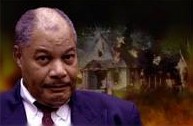
James Campbell
Murderer?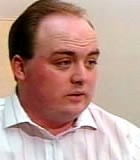 Richard Allen Williams
Murderer? · USA · 1992
Boone County Prosecutor Kevin Crane dismissed the charges in August 2003 after…
10 victims
Richard Allen Williams
Murderer? · USA · 1992
Boone County Prosecutor Kevin Crane dismissed the charges in August 2003 after…
10 victims
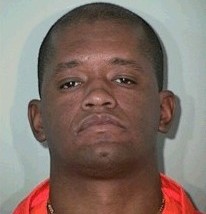 Andre Minnitt
Murderer? · USA · 1992
Andre Minnitt was convicted of crimes connected to the El Grande Market slaying…
3 victims
Andre Minnitt
Murderer? · USA · 1992
Andre Minnitt was convicted of crimes connected to the El Grande Market slaying…
3 victims
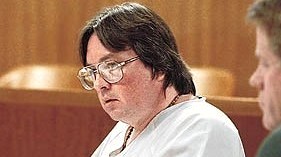 Floyd Tapson
Murderer? · USA · 1987
Floyd Tapson was convicted by a jury in the Thirteenth Judicial District Court,…
3 victims
Floyd Tapson
Murderer? · USA · 1987
Floyd Tapson was convicted by a jury in the Thirteenth Judicial District Court,…
3 victims
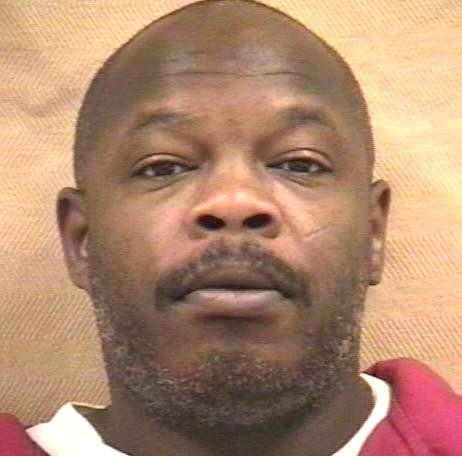 Glen Edward Chapman
Murderer? · USA · 1992
Defendant: Glen Edward Chapman Legal case references: In the Supreme Court of N…
2 victims
Glen Edward Chapman
Murderer? · USA · 1992
Defendant: Glen Edward Chapman Legal case references: In the Supreme Court of N…
2 victims
 Jerry Hobbs
Murderer? · USA · 2005
Jerry Hobbs III was the father of Laura Hobbs, an 8-year-old girl. He was also…
2 victims
Jerry Hobbs
Murderer? · USA · 2005
Jerry Hobbs III was the father of Laura Hobbs, an 8-year-old girl. He was also…
2 victims
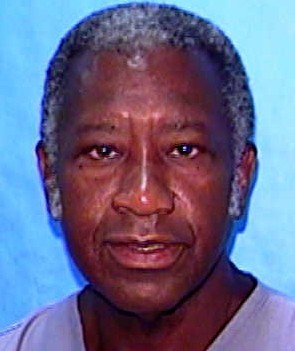 Freddie Lee Williams
Murderer · USA · 1980
Freddie Lee Williams was convicted and sentenced to death for the 11/07/80 murd…
1 victim
Freddie Lee Williams
Murderer · USA · 1980
Freddie Lee Williams was convicted and sentenced to death for the 11/07/80 murd…
1 victim
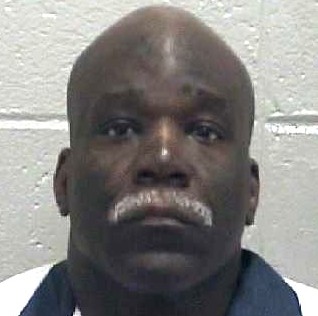 Michael Anthony Cohen
Murderer · USA · 1985
Michael Anthony Cohen, 40, was sentenced to death in Glynn County in December 1…
1 victim
Michael Anthony Cohen
Murderer · USA · 1985
Michael Anthony Cohen, 40, was sentenced to death in Glynn County in December 1…
1 victim
 Otoya Yamaguchi
Murderer · Japan · 1960
Otoya Yamaguchi (山口 二矢, Yamaguchi Otoya, February 22, 1943 - November 2, 1960)…
1 victim
Otoya Yamaguchi
Murderer · Japan · 1960
Otoya Yamaguchi (山口 二矢, Yamaguchi Otoya, February 22, 1943 - November 2, 1960)…
1 victim
 Windell Broussard
Murderer · USA · 1992
Windell Broussard was convicted of capital murder for the killing of Dianna Bro…
2 victims
Windell Broussard
Murderer · USA · 1992
Windell Broussard was convicted of capital murder for the killing of Dianna Bro…
2 victims
 Jeffrey Tokar
Murderer · USA · 1992
March 11, 1992 — Jeffrey Tokar picked up his girlfriend, Sandra Stickley, share…
1 victim
Jeffrey Tokar
Murderer · USA · 1992
March 11, 1992 — Jeffrey Tokar picked up his girlfriend, Sandra Stickley, share…
1 victim
- Gender
- male
- Country
- USA
- Location
- Michigan, USA
- Date of birth
- ???
- Characteristics
- to collect insurance money, arson
- Victim profile
- His wife, Ruthie, and one of his daughters, Sherri
- Method of murder
- Fire (carbon monoxide poisoning)
- Date(s) of murder
- March 10, 1997
- Years active
- 1997
- Date of arrest
- —
- Status
-
Acquitted / overturned
Jury acquitted James Campbell of the murder and arson charges in January 1998
Timeline
- September 1997 — James Campbell’s first trial ended with a hung jury.
- January 1998 — In a second trial, a jury acquitted James Campbell of the murder and arson charges.
- Late January 1998 — A trial Court TV taped the proceedings in the second trial.
- March 10, 1997 — Ruthie Campbell returned home after a night of gambling with her cousin, Dorothea Walker, in Windsor, Canada; the fire and subsequent deaths occurred during the early morning hours.
Background
James Campbell was married to Ruthie Campbell for 39 years. Ruthie Campbell worked as a dispatcher for the Fire Department and earned a salary of about $57,000. She had accumulated an annuity totaling almost $300,000.
Ruthie Campbell had taken a one-time withdrawal of $70,000 under a Michigan law that allowed a one-time withdrawal from an annuity fund. She did not spend any of the money on Campbell and used it primarily on herself and to buy their other daughter, Diane, a car.
Ruthie had reported Campbell to the police for credit card fraud because he obtained a credit card under his and Ruthie’s name without her permission. Prosecutors also claimed that Campbell had a gambling problem, accumulating a debt of approximately $114,000 and filing for personal bankruptcy at the time of Ruthie’s death. Investigators said Campbell resented Ruthie’s money and her unwillingness to spend it on him.
The offence
James Campbell was charged with first-degree murder in the fire-related deaths of his wife, Ruthie, and one of his daughters, Sherri. Prosecutors believed Campbell killed his wife in order to collect homeowner’s insurance worth $65,000 so that he could handle his debts.
Campbell claimed that Ruthie’s death was a suicide. He said Ruthie went into a rage after an argument and purposely set the house of fire.
Prosecutors believed Campbell hid and waited for Ruthie to come home, then set the house on fire using a newly purchased can of gasoline. They also argued that Campbell did not know his daughter Sherri would be at the house at the time of the fire.
Investigation
Investigators said Campbell managed to remove the most recent insurance papers from the house before the blaze. Investigators also stated that Ruthie had changed the terms of her annuity fund in 1993, removing Campbell as a beneficiary and including only her two daughters, Sherri and Diane Muhammad.
At the time of the second trial, no one had received the proceeds from Ruthie’s annuity fund and homeowners’ insurance. Under normal conditions, the homeowners’ insurance would go to Campbell because he and Ruthie jointly owned the house. If Campbell was found criminally or civilly responsible for Ruthie’s death, Muhammad would receive the proceeds, and Muhammad was reportedly planning to file a wrongful death suit against her father.
Muhammad was the state’s chief witness against Campbell and claimed Campbell was money-hungry and had plenty of motives to commit the crime. The defense discredited Muhammad’s allegations by labelling her as “the money-greedy one” who would receive all the monetary proceeds if Campbell went to jail.
Arrest / Police questioning
Allegedly, when Campbell went to the police station for questioning, he told an officer that he was responsible for the fatal fire. The defense disputed this claim by saying Campbell was under duress and did not mean to claim responsibility for the blaze.
Trial
Prosecutors’ theory
Prosecutors believed Campbell hid in the attic while he waited for Ruthie to come home. When Ruthie entered the house, prosecutors said Campbell took a newly purchased can of gasoline and doused the house with it, starting at the top of the stairs and working his way down through the house. Prosecutors said Campbell allowed a safe exit for himself out the downstairs kitchen after setting the house on fire.
At trial, prosecutors also maintained the idea that Campbell did not know Sherri would be at the house at the time of the fire.
Defense theory
The defense claimed that when Ruthie came home, Campbell was sleeping. The defense said Ruthie started cooking and the smell of food woke Campbell up.
Campbell said he and Ruthie argued about the kitchen sink being “clogged up,” and Ruthie went into a rage. He said Ruthie chased him around the house with pots and pans and doused the house with gasoline. Campbell said he left the house to “cool off” and drove to his brother’s house for refuge.
Campbell said that when he later learned about the death of Ruthie and their daughter Sherri, he was shocked. He said the house was not on fire when he left, and he thought Sherri would be able to calm her mother down. Campbell said he did not realize his wife would set the house on fire and kill herself and Sherri.
Campbell also stated that job stress, Ruthie’s gambling habits, and a recent lack of sleep caused her to “crack” during their argument. Friends and relatives of the alleged victim said they saw no change in her behavior that would have indicated suicidal tendencies shortly before her death.
Witnesses and deliberations
After only three hours of deliberations, the jury acquitted James Campbell of the murder and arson charges against him.
Sentencing
If convicted of first-degree murder, Campbell faced life in prison without parole.
Outcome
In a second trial in January 1998, the jury acquitted James Campbell of the murder and arson charges against him.
Campbell’s first trial in September 1997 ended with a hung jury.
Aftermath
Muhammad was reportedly planning to file a wrongful death suit against her father. Campbell may still face a civil suit from his daughter Diane Muhammed as they squabble over the proceeds from Ruthie Campbell’s annuity and homeowner’s insurance policy.
Other details
Ruthie Campbell returned home after a night of gambling with her cousin, Dorothea Walker, in Windsor, Canada. Ruthie called Walker to let her know she had gotten home safely.
What happened next was unclear. According to the prosecution, James Campbell hid in the attic while he waited for Ruthie to come home.
Campbell eventually ended up at his brother’s house. Whether police later found him and informed him about the fire and the deaths of his wife and daughter was part of the disputed or unclear narrative.
Ruthie and Sherri Campbell were found dead in an upstairs bedroom. They died from intense heat and possibly carbon monoxide poisoning. The front of their bodies were completely charred.
Two names appeared for the daughter involved in the case: Sherri Campbell and Sherri Campbell’s name was also referenced in relation to the murder and arson charges.
Campbell’s wife had accumulated an annuity totaling almost $300,000, and under normal conditions homeowners’ insurance would go to Campbell because he and Ruthie jointly owned the house.

Spotted an error, or have more information about this case?