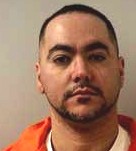
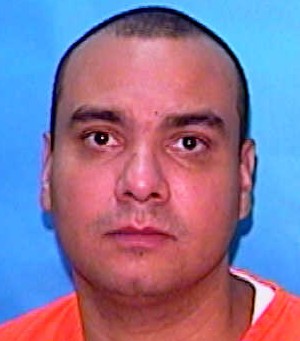
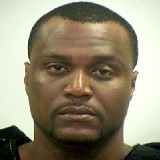
Luis Cabrera
Murderer Brian Kevin Rosenfeld
Murderer · USA · 1985
Brian Kevin Rosenfeld Brian Kevin Rosenfeld was sentenced to three concurrent l…
23 victims
Brian Kevin Rosenfeld
Murderer · USA · 1985
Brian Kevin Rosenfeld Brian Kevin Rosenfeld was sentenced to three concurrent l…
23 victims
 Russell Ellwood
Murderer · USA · 1991
Russell Ellwood was a former taxi driver. Authorities suspected him of killing…
20 victims
Russell Ellwood
Murderer · USA · 1991
Russell Ellwood was a former taxi driver. Authorities suspected him of killing…
20 victims
 Robert Martines Perez
Murderer · USA · 1994
Name: Robert Martines Perez · Other name used in proceedings: Robert Martinez P…
15 victims
Robert Martines Perez
Murderer · USA · 1994
Name: Robert Martines Perez · Other name used in proceedings: Robert Martinez P…
15 victims
 Billy Frank Vickers
Murderer · USA · 1993
Billy Frank Vickers Vickers was executed by lethal injection in Texas on Januar…
14 victims
Billy Frank Vickers
Murderer · USA · 1993
Billy Frank Vickers Vickers was executed by lethal injection in Texas on Januar…
14 victims
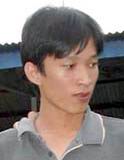 Took Leng How
Murderer · Singapore · 2004
Defendant: Took Leng How (vegetable packer) · Victim: Huang Na (female, 8 years…
1 victim
Took Leng How
Murderer · Singapore · 2004
Defendant: Took Leng How (vegetable packer) · Victim: Huang Na (female, 8 years…
1 victim
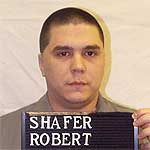 Robert Andrew Shafer
Murderer · USA · 1990
Robert Andrew Shafer was sentenced to death on January 6, 1993. His conviction…
2 victims
Robert Andrew Shafer
Murderer · USA · 1990
Robert Andrew Shafer was sentenced to death on January 6, 1993. His conviction…
2 victims
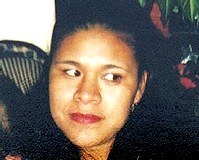 Gilberta Estrada
Murderer · USA · 2007
Gilberta Estrada was identified as the 25-year-old woman who hanged three of he…
3 victims
Gilberta Estrada
Murderer · USA · 2007
Gilberta Estrada was identified as the 25-year-old woman who hanged three of he…
3 victims
 Calvin Shuler
Murderer · USA · 1997
Calvin Alphonso Shuler was sentenced to death for killing guard James “J.B.” Br…
1 victim
Calvin Shuler
Murderer · USA · 1997
Calvin Alphonso Shuler was sentenced to death for killing guard James “J.B.” Br…
1 victim
 Eric Stanley Graham
Mass murderer · New Zealand · 1941
Eric Stanley Graham (also known as Stan) was a New Zealand mass murderer who ki…
7 victims
Eric Stanley Graham
Mass murderer · New Zealand · 1941
Eric Stanley Graham (also known as Stan) was a New Zealand mass murderer who ki…
7 victims
 Geoffrey Griffin
Serial killer · USA · 2000
Geoffrey Griffin (also referred to as Geoffrey T. Griffin) was convicted of kil…
7 victims
Geoffrey Griffin
Serial killer · USA · 2000
Geoffrey Griffin (also referred to as Geoffrey T. Griffin) was convicted of kil…
7 victims
- Gender
- male
- Country
- USA
- Location
- New Jersey/Delaware, USA
- Date of birth
- November 7, 1969
- Age at first offence
- 26
- Characteristics
- rape?, robbery
- Victim profile
- Fundador Otero / Brandon Saunders and Vaughn Rowe
- Method of murder
- Suffocation with a plastic bag / Shooting
- Date(s) of murder
- 1995 - 1996
- Years active
- 1995–1996
- Date of arrest
- —
- Status
-
Sentenced to death
Sentenced to death on March 14, 2002
Background
Luis Cabrera was charged in connection with two homicides.
Fundador Otero was identified as a victim later connected to a burned body discovered in a dumpster in Willingboro, New Jersey.
Brandon Saunders and Vaughn Rowe were discovered in a wooded area of Rockford Park on January 21, 1996.
The offence
On January 5, 1995, a burned body was discovered in a dumpster in Willingboro, New Jersey.
Two years later, it was established that the victim was Fundador Otero, an acquaintance of Luis Cabrera’s father.
Cabrera was charged with two counts of murder first degree and one count each of burglary first degree and conspiracy.
In the account given by codefendant Luis Reyes under a plea agreement with the State, Cabrera told Reyes the day before the killing that Cabrera’s father “had a problem” with Otero and that Cabrera was going to kill Otero. Cabrera solicited Reyes’ help and Reyes “some what reluctantly agreed.”
The next night, Cabrera and Reyes drove to Otero’s house. Cabrera kicked down the front door and began accusing Otero of talking to the police and “doing [Cabrera’s] father wrong.” Cabrera told Reyes to hold Otero and, while Otero was immobilized, Cabrera held a plastic bag over Otero’s head until he suffocated.
Cabrera and Reyes put Otero’s body in Otero’s pickup truck and drove to New Jersey. They abandoned the truck, threw Otero into a dumpster, and set fire to the body.
On January 21, 1996, a pedestrian discovered the bodies of Brandon Saunders and Vaughn Rowe in a wooded area of Rockford Park. The victims appeared to have been killed and then dragged to the location in the woods, where they were covered in a maroon bed sheet. Both victims had been shot in the back of the head. Rowe had also been beaten.
Investigation
Wilmington Police Detective Mark Lemon was assigned as the chief investigator.
Police eventually regarded Luis Cabrera as a suspect. Several items of physical evidence linked Cabrera to the victims.
Within a week of the murders, Cabrera returned to a store in Wilmington a pager belonging to Saunders. Cabrera later told police that he had found the pager on the ground near his father’s home.
Police also recovered from Rowe a watch programmed with the phone number to Cabrera’s father’s home.
When police searched Saunders’ bedroom, they found an ISS Service system business card on which was written “434-6154 Big Lou.”
Cabrera and Luis Reyes, who also was charged and convicted in connection with the murders, both worked at ISS. Some people knew Cabrera as “Big Louie” and Reyes as “Little Louie.”
In April of 1997, Detective Lemon seized a maroon bed sheet from the basement of Cabrera’s father’s home, where Cabrera slept.
An FBI forensic examiner testified that the flat sheet covering the bodies appeared to match the fitted sheet seized from Cabrera’s residence.
An ATF firearms and toolmarks examiner analyzed ballistics evidence, comparing bullets found in the victims’ bodies with a handgun that was owned by Cabrera’s father and seized from the Cabrera residence. The ATF examiner testified that the bullet recovered from Rowe’s body had been fired from the Cabrera handgun.
Detective Lemon also seized numerous belts from the Cabrera residence in April of 1997.
Arrest / charging
Luis Cabrera was indicted in December 1999, nearly four years after the homicides.
Cabrera was indicted on two counts of Murder First Degree, two counts of Possession ofa Firearm During the Commission of a Felony, and two counts of Conspiracy FirstDegree.
The State sought the death penalty.
Trial
Cabrera did not testify at trial in the Otero matter. In that case, his codefendant, Luis Reyes, described the crime, in detail, under a plea agreement with the State.
In the Saunders and Rowe matter, the State presented testimony that included the following.
Donna Ashwell, Cabrera’s neighbor, testified that she heard an argument in their common basement one Saturday evening in January 1996, sometime before 9:30 or 10:00. She recognized Cabrera’s voice and heard a loud crash. Ashwell went to the basement door to investigate and saw Reyes, who, in response to Ashwell’s inquiry about the noise, told her they would leave. Later that evening, Cabrwell apologized to Ashwell for making so much noise. Ashwell later discovered that a shovel she had used to clear snow was missing.
Cabrera’s wife testified that she and Cabrera married in December of 1994 and lived together until October of 1995. She believed that Cabrera later left their apartment in the fall of 1996 and began living with his father. She testified that she and Cabrera had owned a set of burgundy-colored sheets that she did not take with her when she left.
Mileska Mathis testified at trial that she met Cabrera in 1994 and had sporadic sexual encounters with him over the course of several years. Mathis testified that she was familiar with Cabrera’s clothing style and identified a distinctive belt seized from his residence as one that she likely would have worn. She also stated, however, that she did not specifically recognize the belt.
Dr. Richard Callery testified that during the January 1996 autopsy of Mr. he observed an injury that resembled the imprint of a belt buckle.
Two weeks before his testimony in 2001, Dr. Callery measured one of the belts seized by Lemon and compared it to photographs of Rowe’s injuries. He opined that the belt was consistent with one that might have caused the injuries.
The defense strategy focused on highlighting gaps in the circumstantial evidence presented by the State and questioning and contradicting the reliability of the opinions of the State’s expert witnesses.
The defense presented testimony of Keith Powell, a friend of Saunders and Rowe. Powell testified that he, the victims, and Kim Payne had been smoking marijuana at Saunders’ home during the evening before the victims’ bodies were discovered. Saunders then received a page from someone. The four teenagers left the house; Saunders explained he was going to get more marijuana. Powell estimated that he left Saunders’ home between 10:30 and 11:30 that night.
The State impeached the credibility of Powell’s testimony with his prior inconsistent statements and poor recollection by demonstrating that he was frequently high during that period of his life, and by showing that he was not sure whether he saw the victims on a Friday or a Saturday night.
The State also called Kim Payne to testify that she had never been at Saunders’ home when Powell was there.
The jury found Cabrera guilty of all charges.
In the Otero matter, near the end of trial, the court conferred with counsel about jury instructions. The court did not accept either side’s proposed language on the instruction concerning accomplice testimony. Instead, the court gave a modified version of its own instruction. The jury found Cabrera guilty on all charges.
Sentencing
In the Otero matter, after a penalty hearing, the trial court sentenced Cabrera to life in prison.
In the Saunders and Rowe matter, the sentencing judge sentenced Cabrera to death on both counts of murder.
At the penalty phase, the court instructed the jury to find the existence of a statutory aggravating factor. The jury found the statutory aggravating factor by unanimous vote. Then, by a vote of eleven to one, the jury found that the aggravating circumstances outweighed the mitigating circumstances.
Cabrera was sentenced to death on March 14, 2002.
Other details
Cabrera’s indictment timing placed it in December 1999, nearly four years after the homicides.
During the Otero matter, Cabrera held a plastic bag over Otero’s head until he suffocated.
Near the end of the Otero trial, the court gave a modified version of its own instruction regarding accomplice testimony after not accepting either side’s proposed language.
Outcome
The jury returned a guilty verdict on all charges in the Saunders and Rowe matter, and the judge sentenced Cabrera to death on both counts of murder.
Spotted an error, or have more information about this case?