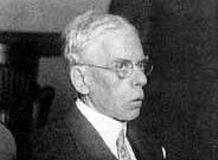
Henry Colin Campbell
Murderer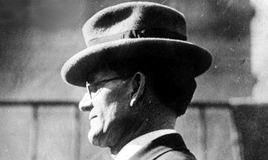 William Hale
Murderer · USA · 1921
Name: William Hale · Known as: the so-called "King of the Osage Hills" · Occupa…
24 victims
William Hale
Murderer · USA · 1921
Name: William Hale · Known as: the so-called "King of the Osage Hills" · Occupa…
24 victims
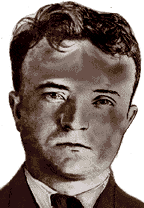 Paul Jaworski
Murderer · USA · 1926
Paul Jaworski was born in Poland as Paul Poluszynski in 1900. He later immigrat…
20 victims
Paul Jaworski
Murderer · USA · 1926
Paul Jaworski was born in Poland as Paul Poluszynski in 1900. He later immigrat…
20 victims
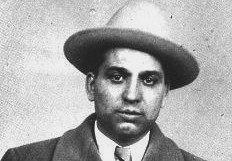 Harry Maione
Murderer · USA · 1937
Harry “Happy” Maione (1908 – February 19, 1942) was a New York mobster who serv…
12 victims
Harry Maione
Murderer · USA · 1937
Harry “Happy” Maione (1908 – February 19, 1942) was a New York mobster who serv…
12 victims
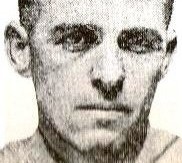 Edward Adams
Murderer · USA · 1920
Edward J. "Eddie" Adams was born in 1887 on a farm in Hutchinson, Kansas as W.J…
7 victims
Edward Adams
Murderer · USA · 1920
Edward J. "Eddie" Adams was born in 1887 on a farm in Hutchinson, Kansas as W.J…
7 victims
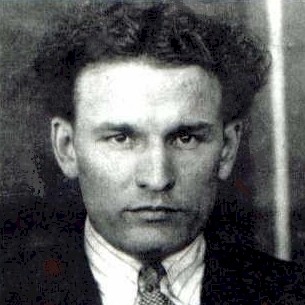 William Kenneth Wagner
Murderer · USA · 1924
William Kenneth (Kinnie) Wagner (born February 18, 1903 in Scott County, VA) wa…
6 victims
William Kenneth Wagner
Murderer · USA · 1924
William Kenneth (Kinnie) Wagner (born February 18, 1903 in Scott County, VA) wa…
6 victims
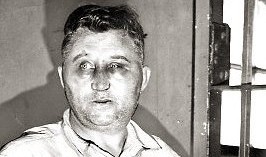 Harry Powers
Murderer · USA · 1931
Harry Powers was executed by hanging on March 18, 1932, at the West Virginia Pe…
5 victims
Harry Powers
Murderer · USA · 1931
Harry Powers was executed by hanging on March 18, 1932, at the West Virginia Pe…
5 victims
 Ana Maria Cardona
Murderer · USA · 1990
Ana Maria Cardona was sentenced to death on April 1, 1992. She was resentenced…
1 victim
Ana Maria Cardona
Murderer · USA · 1990
Ana Maria Cardona was sentenced to death on April 1, 1992. She was resentenced…
1 victim
 Ronald Eric Salazar
Homicide · USA · 2005
Ronald Eric Salazar was 14 when police said he killed his 11-year-old sister in…
1 victim
Ronald Eric Salazar
Homicide · USA · 2005
Ronald Eric Salazar was 14 when police said he killed his 11-year-old sister in…
1 victim
 William Chester Minor
Homicide · United Kingdom · 1872
William Chester Minor was found not guilty on grounds of insanity on April 6, 1…
1 victim
William Chester Minor
Homicide · United Kingdom · 1872
William Chester Minor was found not guilty on grounds of insanity on April 6, 1…
1 victim
 Milos Milosevic
Murderer · USA · 1966
Milos Milosevic (Serbian: Miloš Milošević) (July 1, 1941 – January 30, 1966) wa…
1 victim
Milos Milosevic
Murderer · USA · 1966
Milos Milosevic (Serbian: Miloš Milošević) (July 1, 1941 – January 30, 1966) wa…
1 victim
 Sean Paul Hanify
Murderer ( claims to be a serial killer) · USA · 1989
Sean Paul Hanify described himself as a serial killer. He was convicted of firs…
8 victims
Sean Paul Hanify
Murderer ( claims to be a serial killer) · USA · 1989
Sean Paul Hanify described himself as a serial killer. He was convicted of firs…
8 victims
 Raymond Burgess
Murderer · USA · 1977
Raymond Burgess was sentenced to death on February 25, 1992. His case involved…
2 victims
Raymond Burgess
Murderer · USA · 1977
Raymond Burgess was sentenced to death on February 25, 1992. His case involved…
2 victims
- Gender
- male
- Country
- USA
- Location
- Elizabeth, Union County, New Jersey, USA
- Date of birth
- 1896
- Age at first offence
- 32
- Characteristics
- arson, alcohol, drug addict, history of mental illness
- Victim profile
- Margaret Brown / Mildred Mowry
- Method of murder
- Shooting
- Date(s) of murder
- 1928 / 1929
- Years active
- 1928–1929
- Date of arrest
- April 11, 1929
- Status
-
Executed
Executed by electrocution in New Jersey on April 18, 1930
Case record: Henry Colin Campbell
Henry Colin Campbell, known as "The Torch Murderer," was executed by the State of New Jersey on April 18, 1930 for the murder of Mildred Mowry.
Background
Campbell met his victims through a matrimonial agency, presenting himself to them through personal advertisements and promises of marriage. He used a matchmaking service in Detroit to marry several women between 1910 and 1928, while police investigating his life were never able to find any record of divorce actions.
He worked during adult life as a civil engineer and advertising executive and posed as a physician.
Campbell was also described as a career criminal and a bigamist. He had previous crimes that were described as non-violent.
A quotation attributed to Rosalie Campbell described Campbell’s condition over time:
"wonderful always"
"he began to fall. He had headaches and began to lose weight. Then he started taking something for his headaches… He took the medicine not very frequently at first, then more frequently."
During the few months prior to the murder, Rosalie Campbell said that Campbell’s nervousness and irritability appeared to be building toward a peak, and that for no apparent reason he had begun carrying a gun.
In court, Campbell was described as clearly affected by his morphine addiction.
Campbell was characterized in the proceedings as having claims of amnesia used to demonstrate his mental instability and hopefully keep him off death row.
The offence
Mildred Mowry was found after her disappearance. She had been shot through the head, her body was dumped beside a highway, doused with gasoline, and set afire. Her skull was described as blasted by a bullet in the account of the discovery.
Campbell murdered Mildred Mowry to collect on a $1,000 investment she owned. He burned her corpse.
In relation to a similar murder, Campbell was suspected of involvement in the death of Margaret Brown in 1928. Brown had also been shot in the head, her body had been dumped on the side of a road, and her body had been set on fire. Evidence indicated the similarities between the Brown case and the Mowry case, but it was stated that it proved impossible to fix the blame for Brown’s murder on Campbell.
Investigation
The charred remains of Mildred Mowry, with her skull blasted by a bullet, were found beside a highway in Cranford, New Jersey, on February 23, 1929.
Local police struggled to identify the victim for six weeks until a routine circular came back from Greenville, Pennsylvania, saying the corpse sounded very much like a local woman, Mildred Mowry, who had been missing since early February.
Investigation revealed that in August 1928 Mildred Mowry had apparently married a 60-year-old doctor named Richard Campbell. It was stated that she met this doctor through a matrimonial agency.
The account states that one day after the ceremony, Campbell convinced Mildred to deposit her life savings of $1,000 in his bank account, then claimed pressure of work and took off for California. Mildred allegedly tried to keep in touch by mail as the silences between letters grew longer.
It was stated that Campbell had moved no farther than Elizabeth, New Jersey, while living under his real name of Henry Colin Campbell with his genuine wife and family. When police came to his door, it was stated they had an arrest warrant for murder.
A pair of shoes at the Mowry crime scene were traced to Campbell. Prosecutor Abe J. David read aloud a confession made by Campbell shortly after his arrest in which Campbell admitted killing Mildred to conceal his bigamous marriage.
During the trial, it was stated that Prosecutor Abe J. David offered into evidence 17 letters written by Campbell to the murdered woman.
Arrest
Police came knocking on Campbell’s door on April 11, 1929 with an arrest warrant for murder.
After the arrest, Campbell was described as having a .38 automatic murder weapon recovered from his home.
Trial
Campbell stood trial for murdering his bigamous wife, Mildred Mowry.
Court proceedings and fitness to plead
When the case against Campbell came to court on June 9, 1929, the first day was given over to evidence from two alienists, described as psychologists, Drs. Gus Payne and Lawrence Collins. They declared that Campbell, although clearly affected by his morphine addiction, was legally fit to stand trial.
Parties and case details
The trial details included:
- Defendant: Henry Colin Campbell
- Crime charged: Murder
- Chief defense lawyer: Francis A. Gordon
- Chief prosecutor: Abe J. David
- Judge: Clarence E. Case
- Place: Elizabeth, New Jersey
- Date of trial: June 9-13, 1929
- Verdict: Guilty
- Sentence: Death
Defence and confession
At no point did Campbell attempt to deny that he had first shot and then burnt Mildred. The evidence described the murder weapon as a .38 automatic recovered from his home. Campbell’s position in court was that he had no recollection of having done so.
Prosecutor Abe J. David ridiculed the claim and read aloud a confession Campbell made shortly after his arrest:
- Campbell admitted killing Mildred to conceal his bigamous marriage.
Campbell’s wife, Rosalie Campbell, testified in support. She described his downward spiral and his symptoms, including headaches, weight loss, and his increasing use of medication.
In testimony, Campbell claimed he had visited Mildred on February 21 in order to return the money she had lent him. He said that, before visiting, he needed to raise funds and had driven Mildred to several banks, none of which would help him. He also stated that during the journey he told Mildred of his secret life, and that Mildred told him that she did not want him to leave his wife and children.
Campbell maintained that throughout the journey he kept dosing himself with drugs to "keep my nerve from going to pieces." He then said everything went blank.
During direct questioning, Gordon asked:
"Do you have any recollection of shooting Mrs. Mowry and burning her body?"
Campbell responded:
"No, I don't remember doing so."
Cross-examination and documentary evidence
Prosecutor David was described as introducing a crossexamination by thrusting two application forms for "friendship clubs" in front of Campbell. Campbell cringed when he saw them.
In one of the forms, under the heading "Disposition," Campbell had answered:
"The best ever if well treated,"
In both forms, Campbell described his health as:
"good."
Prosecutor David also referenced Campbell’s listed preference:
"Widows with no children"
Campbell lowered his head and said nothing, described as defeated.
In closing arguments, Prosecutor Abe J. David went over Campbell’s original confession point by point, stating it matched in every detail the known circumstances of the crime. David implored the jury to set aside both sympathy and any scruples they might have against capital punishment. David described Campbell as a thrice-married rogue with a string of convictions for fraud and forgery that had led to numerous jail terms, and he stated that Campbell’s wife and three children would be "better off without him."
Judge’s charge on insanity
Judge Clarence E. Case addressed insanity in his final charge to the jury:
"If the defendant was conscious of the nature of his act he cannot be acquitted.
The law does not recognize that form of insanity in which the faculties are so affected as to render a person suffering from it unable to control those urges … In medicine a man who steals and cannot control his stealing is called a kleptomaniac, in law he is regarded as a thief and punishable as such.
If the accused sets up a defense of insanity the burden of proof lies with him; he must overcome the legal presumption of his sanity."
Verdict and sentence
On June 13, 1929, the jury found Campbell guilty of first degree murder, with no recommendation for mercy. He was sentenced to death.
Sentencing and execution
On April 17, 1930, the philandering "doctor" went on his final date—with the electric chair.
Campbell was executed by electrocution in New Jersey on April 18, 1930.
Appeals
No appeals were described.
Outcome
The jury found Henry Colin Campbell guilty of first degree murder of Mildred Mowry, with no recommendation for mercy, and he was sentenced to death. He was executed by electrocution in New Jersey on April 18, 1930.
Campbell was suspected in a separate similar murder involving Margaret Brown in 1928, but it proved impossible to fix the blame for that murder on Campbell, and he never stood trial for Brown’s murder.
Aftermath
Mildred Mowry was murdered in a case that was later characterized as involving deception through bigamy and matchmaking. Campbell’s shoes at the Mowry crime scene were traced to him, and he subsequently confessed to killing her. The execution followed after the conviction and death sentence.
Spotted an error, or have more information about this case?