
Masumi Hayashi
Mass murderer Mamoru Takuma
Mass murderer · Japan · 2001
Mamoru Takuma (宅間 守; November 23, 1963 – September 14, 2004) was a Japanese jan…
8 victims
Mamoru Takuma
Mass murderer · Japan · 2001
Mamoru Takuma (宅間 守; November 23, 1963 – September 14, 2004) was a Japanese jan…
8 victims
 Tomohiro Kato
Mass murderer · Japan · 2008
Tomohiro Katō was held in custody and was in prison awaiting trial. Tomohiro Ka…
7 victims
Tomohiro Kato
Mass murderer · Japan · 2008
Tomohiro Katō was held in custody and was in prison awaiting trial. Tomohiro Ka…
7 victims
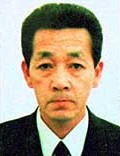 Mitsuhiro Kobayashi
Mass murderer · Japan · 2001
Mitsuhiro Kobayashi was a former taxi driver. During the trial, he admitted set…
5 victims
Mitsuhiro Kobayashi
Mass murderer · Japan · 2001
Mitsuhiro Kobayashi was a former taxi driver. During the trial, he admitted set…
5 victims
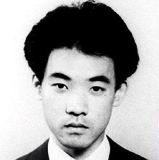 Yasuaki Uwabe
Mass murderer · Japan · 1999
Yasuaki Uwabe (Japanese: 上部康明) was born in Shimonoseki, Yamaguchi. After gradua…
5 victims
Yasuaki Uwabe
Mass murderer · Japan · 1999
Yasuaki Uwabe (Japanese: 上部康明) was born in Shimonoseki, Yamaguchi. After gradua…
5 victims
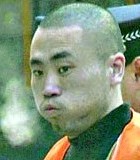 Yang Ning
Mass murderer · Japan · 2003
Yang Ning was a Chinese man sentenced to death over the killing of a family of…
4 victims
Yang Ning
Mass murderer · Japan · 2003
Yang Ning was a Chinese man sentenced to death over the killing of a family of…
4 victims
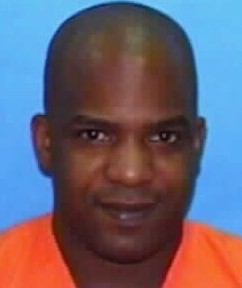 Henry Alexander Davis
Murderer · USA · 1987
Henry Alexander Davis was tried in the Tenth Judicial Circuit, Polk County. The…
1 victim
Henry Alexander Davis
Murderer · USA · 1987
Henry Alexander Davis was tried in the Tenth Judicial Circuit, Polk County. The…
1 victim
 Robert Wayne Harris
Mass murderer · USA · 1999
March 15, 2000 — Robert Wayne Harris masturbated in front of a female customer…
6 victims
Robert Wayne Harris
Mass murderer · USA · 1999
March 15, 2000 — Robert Wayne Harris masturbated in front of a female customer…
6 victims
 Anton Probst
Mass murderer · USA · 1866
Anton Probst was born in Germany in 1843 and came to the United States in 1863,…
8 victims
Anton Probst
Mass murderer · USA · 1866
Anton Probst was born in Germany in 1843 and came to the United States in 1863,…
8 victims
 Franklin DeWayne Alix
Murderer · USA · 1997
Franklin DeWayne Alix was a Texas death row inmate who was executed in 2010. Du…
4 victims
Franklin DeWayne Alix
Murderer · USA · 1997
Franklin DeWayne Alix was a Texas death row inmate who was executed in 2010. Du…
4 victims
 Jack Unterweger
Serial killer · USA / Czechoslovakia · 1976
Johann “Jack” Unterweger was an Austrian serial killer. He was born in 1950 in…
12 victims
Jack Unterweger
Serial killer · USA / Czechoslovakia · 1976
Johann “Jack” Unterweger was an Austrian serial killer. He was born in 1950 in…
12 victims
 Lee Roy Martin
Serial killer · USA · 1967
Name: Lee Roy Martin Lee Roy Martin was sentenced to four life sentences in 196…
4 victims
Lee Roy Martin
Serial killer · USA · 1967
Name: Lee Roy Martin Lee Roy Martin was sentenced to four life sentences in 196…
4 victims
- Gender
- female
- Country
- Japan
- Location
- Wakayama, Wakayama Prefecture, Japan
- Date of birth
- July 22, 1961
- Age at first offence
- 37
- Characteristics
- poisoner, drugs
- Victim profile
- Takatoshi Taninaka, 64 / Takaaki Tanaka, 53 / Miyuki Torii, 16 / Hirotaka Hayashi, 10
- Method of murder
- Poisoning (arsenic)
- Date(s) of murder
- July 25, 1998
- Years active
- 1998
- Date of arrest
- Same
- Status
-
Sentenced to death
Sentenced to death on December 10, 2002
Case details
Masumi Hayashi (林 真須美, Hayashi Masumi, born July 22, 1961) was a Japanese woman convicted of putting poison in a pot of curry being served at a 1998 summer festival in the Sonobe district of Wakayama, Wakayama, Japan.
The offence
A communal pot of curry served to residents of Sonobe district, Wakayama, was poisoned with at least 1,000 grams of arsenic on July 25, 1998. The amount was enough to kill over 100 people.
Two children and two adults fell sick and died after consuming the curry, and 63 other people suffered from acute arsenic poisoning.
The killed victims were:
- Takatoshi Taninaka, 64
- Takaaki Tanaka, 53
- Hirotaka Hayashi, 10
- Miyuki Torii, 16
Investigation
Attention quickly focused on 37-year-old Hayashi after a witness saw her at the curry dish. Hayashi had easy access to arsenic because her husband was an exterminator.
The arsenic found in the curry was identical to arsenic found in Hayashi’s own home from her husband’s extermination business.
Arrest
Hayashi was held in jail after she was arrested in October 1998.
In May 2000, Hayashi was rushed to hospital after swallowing metal nails, apparently during the course of a nervous breakdown.
Trial
Hayashi pleaded innocent.
At trial, she was sentenced to death in December 2002. A Wakayama District Court sentenced her to death.
A Wakayama District Court presiding judge Ikuo Ogawa said in condemning Hayashi to death at the Wakayama District Court:
"It was a cold-blooded, indiscriminately-targeted crime. The defendant also has ingrained criminal tendencies,"
The judge rejected prosecutors’ argument that Hayashi laced the curry with enough arsenic to kill 1,350 people because she was "furious" after being snubbed by her neighbors during the festival. Ogawa said:
"It is true that the defendant felt that her neighbors were alienating her but there was no evidence to support she was furious with them," Ogawa said. "However, the obvious lack of motive does not affect the court to logically conclude who was responsible for this crime."
Ogawa explained that through circumstantial evidence, the court reached its guilty verdict, spending some seven hours explaining why the court reached its guilty verdict. Ogawa said:
"Three separate tests carried out on the traces of arsenic found at Hayashi's home came to the same conclusion that it matches the arsenic detected in the curry," Ogawa said. "Moreover, the possibility that the curry was laced with arsenic during the 40-minute period the defendant was watching the pots alone is extremely high."
The court recognized that Hayashi was easily able to obtain arsenic because of her husband’s involvement in a termite extermination business. Ogawa said:
"She was well aware that just a small portion of arsenic was enough to kill people," Ogawa said in concluding that she had intent to kill.
Ogawa said about the curry pot:
"There was no-one among the people in the area who had such opportunity to put arsenic into the pot but the defendant,"
Other offences tried at the same time
Apart from the curry poisoning case, Hayashi was found guilty on three counts of attempted murder, described as important facts that strongly suggested she was responsible for the curry case.
The court ruled on multiple incidents:
- In February 1997, Hayashi fed her husband, Kenji, with food laced with arsenic in a failed attempt to claim payouts of life insurance policies taken out on him.
- Seven months later, Hayashi served a poisoned dish to a lodger who fell ill and was hospitalized. She pocketed some 5 million yen that insurance companies paid for the lodger to cover his medical costs.
- In March 1998, Hayashi put arsenic into a bowl of noodles given to an acquaintance in a bid to claim his insurance payouts.
Hayashi was also acquitted for another attempted murder supposed to have taken place in 1987, with the court ruling that prosecutors’ argument was illogical.
Hayashi was also found guilty of three insurance fraud schemes she pulled off with Kenji from October 1993 to the end of 1997. The couple wounded themselves and claimed over 150 million yen in the period by exaggerating the extent of their injuries.
Kenji was already serving a six-year term for the insurance fraud.
Sentencing
The December 11, 2002 reporting stated that Wakayama mass murderer Masumi Hayashi must be hanged, and a court ruled that she must be hanged.
She was sentenced to death by a district court in the prefecture of Wakayama.
Appeals
After sentencing, Hayashi’s lawyers appealed the ruling to the Osaka High Court.
On June 28, 2005, a high court in Osaka upheld her death sentence.
Hayashi’s lawyers insisted on her innocence because only circumstantial evidence existed.
On April 21, 2009, the Supreme Court of Japan rejected her final appeal.
In July 2009, Hayashi formally petitioned for a retrial, and the court’s decision was pending.
The Supreme Court’s presiding judge Kohei Nasu said:
"although there was no direct evidence to prove her involvement in the poisonings, circumstantial evidence left no room for doubt."
Nasu said that the rulings of two lower courts were upheld, and:
"he said that Hayashi bore a heavy responsibility for taking four innocent lives,"
Outcome
The Supreme Court rejected Hayashi’s final appeal and upheld her death sentence.
Victims and impact
Symptoms among survivors and victims included:
- 4 died and 63 survived
- Acute symptoms during the first 2 weeks included nausea, vomiting, abdominal pain, diarrhea, weakness, headache, exanthem, enanthem, hypopotassaemia, hyperphorpahataemia, leukocytosis, leukopenia, thrombocytopenia, anemia, increase in aspartate transaminase, increase in alanine transaminase, hypotension, prolonged QT interval, T wave alternans, ST segment change, cardiomegaly, pulmonary edema, pleural effusion.
Dermatological findings during the first 2 weeks included:
- subconjunctival hemorrhage (24%)
- flushing erythema (8%)
- facial oedema (21%)
- maculopapular eruption (13%)
- acral desquamation (17%)
Dermatological findings in 21 patients at 3 months included:
- Beau’s lines (52%)
- Mees’ lines (48%)
- total leukonychia (33%)
- onychodystrophy (24%)
- periungual pigmentation (43%)
- acral desquamation (19%)
Hayashi’s case gained public attention and inspired a wave of copycat poisonings.
Aftermath
Civil litigation
Relatives of three of the four people who died in 1998 after eating curry laced with arsenic filed a 30 million yen lawsuit Tuesday against Hayashi in the Wakayama District Court.
The suit specifically blamed Hayashi for killing Takatoshi Taninaka, Takaaki Tanaka, and Miyuki Torii by putting arsenic in curry served at a neighborhood festival on July 25, 1998. Plaintiffs demanded 10 million yen each for their emotional anguish.
The family of the fourth victim, Hirotaka Hayashi, 10, sought redress from the hospital that treated him, saying he did not receive proper treatment. That case was rejected by the district court and they appealed to the Osaka High Court.
Thirty-eight people who were sickened by the poisoned curry filed a damages suit for some 107.5 million yen against Hayashi in 1999, but the relatives of those who died did not take part.
Public statements and reported reactions
Masumi Hayashi, 47, was convicted of killing two adults and two children at a village fete in 1998 in the western Japanese prefecture of Wakayama.
The Supreme Court’s judge called the crime:
"cruel and despicable"
Prosecutors argued Hayashi was enraged after being shunned by her neighbours and put arsenic in the curry when she was alone in the garage where it was being prepared.
Chemical experts testified that the arsenic was:
"the same product"
Hayashi denied being involved in the deaths and refused to testify.
Copycat and responses
At the time, the case sparked a rash of copycat incidents across Japan.
Other details
Hayashi was a mother of four.
Hayashi had been an insurance saleswoman prior to the murders.
Hayashi was believed to have tried to kill her husband at least once.
The motive of the mother of four in this case was said to be anger at her neighbors for shunning her family.
Kenji was involved in a termite extermination business.
A high-school girl said she saw Hayashi "walking around the pots like a bear" in the garage of the house where the curry was cooked.
Hayashi denied she was responsible for the curry poisoning at the start of her trial in May 1999, but refused to testify.
Amnesty International reported that there were at least 118 people currently on death row in Japan, some 50 of whom had their sentences upheld and could be executed at any time. Amnesty International also reported that prisoners were informed they were going to be executed less than two hours before they were hanged and that family and friends were not told in advance. The Japan Federation of Bar Associations called for a moratorium on executions so a public debate could be held on Japan’s capital punishment policy.
In accordance with a court practice when handing down the death penalty, the judge began the proceedings by leaving the reading of a formal adjudication until the end. Since there was no confession and no direct evidence connecting Hayashi to the curry poisoning case, the judge spent some seven hours explaining why, through circumstantial evidence, the court reached its guilty verdict.


Spotted an error, or have more information about this case?