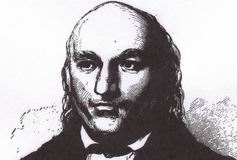
Rev. George Carawan
Murderer John Doyle Lee
Murderer · USA · 1857
Name: John Doyle Lee Lifespan: September 12, 1812 - March 23, 1877 Legal outcom…
120 victims
John Doyle Lee
Murderer · USA · 1857
Name: John Doyle Lee Lifespan: September 12, 1812 - March 23, 1877 Legal outcom…
120 victims
 Champ Ferguson
Murderer · USA · 1861
Champ Ferguson was born November 29, 1821 in Clinton County, Kentucky, near the…
100 victims
Champ Ferguson
Murderer · USA · 1861
Champ Ferguson was born November 29, 1821 in Clinton County, Kentucky, near the…
100 victims
 Edward Rulloff
Murderer · USA · 1845
Edward Rulloff was executed by hanging on May 18, 1871. His execution followed…
3 victims
Edward Rulloff
Murderer · USA · 1845
Edward Rulloff was executed by hanging on May 18, 1871. His execution followed…
3 victims
 Isaac Wood
Murderer · USA · 1855
Isaac L. Wood was a Livingston Republican mentioned in July 1858 execution cove…
2 victims
Isaac Wood
Murderer · USA · 1855
Isaac L. Wood was a Livingston Republican mentioned in July 1858 execution cove…
2 victims
 Artem Anoufriev
Serial killer · Russia · 2010
Artem Anoufriev (born in October 4, 1992) was one of two serial killers from Ir…
6 victims
Artem Anoufriev
Serial killer · Russia · 2010
Artem Anoufriev (born in October 4, 1992) was one of two serial killers from Ir…
6 victims
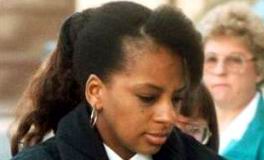 Carolyn King
Murderer · USA · 1993
Carolyn King was convicted along with Bradley Martin of the 1993 murder of 74-y…
2 victims
Carolyn King
Murderer · USA · 1993
Carolyn King was convicted along with Bradley Martin of the 1993 murder of 74-y…
2 victims
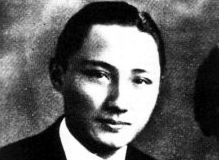 Miao Chung-yi
Murderer · United Kingdom · 1928
Chung Yi Miao was an American Chinese with a doctorate in law. He was 28 years…
1 victim
Miao Chung-yi
Murderer · United Kingdom · 1928
Chung Yi Miao was an American Chinese with a doctorate in law. He was 28 years…
1 victim
 Anne Stout
Murderer · USA · 2007
Anne Marie Stout was convicted following a three-week trial in 2008 of shooting…
1 victim
Anne Stout
Murderer · USA · 2007
Anne Marie Stout was convicted following a three-week trial in 2008 of shooting…
1 victim
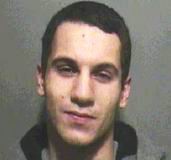 Dyson Allen
Homicide · United Kingdom · 2012
Dyson Allen was convicted for starting a fire in a wardrobe in the children’s b…
4 victims
Dyson Allen
Homicide · United Kingdom · 2012
Dyson Allen was convicted for starting a fire in a wardrobe in the children’s b…
4 victims
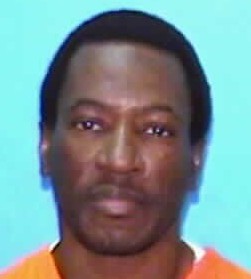 Ian Lightbourne
Murderer · USA · 1981
Ian Deco Lightbourne was convicted and sentenced to death for the first-degree…
1 victim
Ian Lightbourne
Murderer · USA · 1981
Ian Deco Lightbourne was convicted and sentenced to death for the first-degree…
1 victim
- Gender
- male
- Country
- USA
- Location
- Goose Creek, North Carolina, USA
- Date of birth
- 1 800
- Characteristics
- —
- Victim profile
- Clement H. Lassiter
- Method of murder
- Shooting
- Date(s) of murder
- November 15, 1852
- Years active
- 1852
- Date of arrest
- January 1953
- Status
-
Died in custody
Convicted in November 1853; immediately after the verdict Carawan shot the prosecuting attorney and then killed himself.
Case record: Rev. George Carawan
Timeline
- November 1853 — Carawan was convicted; immediately after the verdict he shot the prosecuting attorney and then killed himself.
- 15 November 1852 — Clement H. Lassiter left his home on foot to go to the Lake (Mattamuskeet) where he had engaged another school.
- Monday, 15 November 1852 — Lassiter passed Carawan’s house on his way to the Lake at about 3 o’clock, P.M.
- Three days later — Lassiter’s body was found in a shallow grave in a swamp.
Background
Rev. George Carawan was a Baptist preacher described as a popular preacher in the Baptist Church, with strong will and a powerful influence over his friends. He was also described as feared as much as hated by his foes.
Clement H. Lassiter was a quiet school-teacher.
Some months before the murder, Lassiter boarded in Carawan’s house. A quarrel arose between Carawan and Lassiter, with Carawan alleging that Lassiter was too familiar with Carawan’s wife. Carawan talked among neighbors about Lassiter, including that Lassiter “ought to be shot,” that shooting was too good for him, and that Carawan and Lassiter could not live in the same neighborhood. Carawan also tried to get out a peace warrant against Lassiter, alleging that Lassiter had attempted to take his life.
Lassiter sued Carawan for slander, laying damages at $2,000 (another account gave damages at $2000). A few hours after the writ was served, Lassiter was killed.
Carawan was arrested and held in jail for ten months until the trial began.
Letters received by the sheriff of Hyde from Tennessee suggested that Carawan had been in that state preaching under the assumed name of John Forbes.
There was also a report that Carawan had knocked his wife down with a chair and beat her until it broke, then continued to beat her with a large stick until Lassiter interfered to prevent her being murdered.
The offence
Carawan was tried for the murder of Clement H. Lassiter, a school-teacher, in Hyde County.
Lassiter was killed by gunshot wounds. Several shots were taken from the body—three from the heart. Three sizes of shot were found in the body, and in one of the barrels of Carawan’s gun, found in his house, just such shot of three sizes was found.
A later account described the killing as occurring when Lassiter went by Carawan’s house near the public road, and Carawan ran through his field to cut him off, overtook him in the savannah, and shot him dead. The later account also described Carawan carrying the body about half a mile into the swamp, throwing it face down into the mud, stomping him below the surface of the road, and covering over the body with brush, then running off and making his escape from the County, eluding pursuit.
Investigation
Suspicion quickly fell on Carawan after Lassiter disappeared. The body was found in a shallow grave in a swamp in a context described as an open lot surrounded with briars and underbush, covered with moss.
The moss over the grave had been carefully removed; the grave was dug just large enough to hold the body; the body was pressed into it; the grave was filled up even with the surrounding earth and pressed down; and the moss was carefully laid back up in it. The moss leaving no trace of a foot-print was described as leaving no sign that anybody had been there, except that the moss over the grave had faded a little. About a handful of fresh dirt was near it, and a dead limb of a tree had apparently been recently disturbed, with the bark apparently fallen from it lying in one spot and the limb in another. The men who were searching for the body had stopped in that lonely spot to rest when these appearances attracted attention and the body was found.
Carawan’s slave testified that Carawan had him assist in hiding the body, but testimony from a slave was described as inadmissible in North Carolina courts in 1853.
The defense later relied on the argument that it was impossible for Carawan to have gone through the woods after Lassiter passed his house fast enough to have cut him off.
Carawan was described as fleeing the area after the body was found.
Arrest
Carawan was arrested and held in Hyde County jail.
A later account described that that night Carawan left Hyde County, telling his nephew, Sawyer, that if he stayed there he should be hung, and that he should send for his family and Sawyer must go with them.
Another account described that from this time till his arrest at night in his house in January following, the State did not know his whereabouts.
Trial
The trial was for the murder of Clement H. Lassiter.
Carawan was arraigned before the Superior Court of Hyde at the Spring term of this year, and on his affidavit that he could not have justice done in Hyde, the case was removed to Beaufort.
The trial commenced on Wednesday last in the Superior County. Judge Bailey presided.
The case was managed for the State by Geo. S. Stevenson (Solicitor), E. J. Warren, and D. M. Carter, Esqs. The defense was managed by James W. Bryan, F. B. Satterthwaite, and W. B. Redmon, Esqs, and Hon. R. S. Donnell.
The trial was described as occupying six days and as thoroughly prepared on both sides.
Carawan’s communications were signed “The Old Horse In the Stable.” These communications included a letter and other communications written by Carawan to an unknown friend, with the prosecution counsel standing ready to interpret what they meant. The quoted letter and related quoted statements were as follows:
"MY DEAR OLD FRIEND:--Do let me know through the channel I have prescribed. Also, let my poor wife know what is the prospect, and she can give me to understand. Tell her to be careful, for they are going to have her sworn; and that is one reason why they have cut her off from me—is for the purpose of setting her against me if they can, and take advantage of her weak mind. Caution her to be on her watch, and not to talk any on the subject, and not to suffer them to be question her, and if they try, let her answer be this, "to let that be done on the trial," and stop there. Don’t forget to tell her, if you please. Try to write her a letter in by the lawyers at court, if you cannot get them in by Hoyt, but you can. Get him also to take mine, and I will pay him for you. Tell my wife to give him something, but be sure to do the main thing—to put aside that evidence by hook or by crook. Were you here and suffering as I do now,, I would go to death almost, to rescue you. You cannot begin to think how bad it is. I can’t tell myself. I have said enough for you to understand...."
Carawan also wrote to his unknown friend:
"You understand me."
The prosecution closed that same evidence.
On the following day, November 26, the defense announced it would impeach the testimony of Carawan Sawyer. Several persons said Sawyer had told different and less damaging stories about Carawan at the time of the murder, and that during the early days of the trial Sawyer boasted in his cups of money he would make.
Carawan’s defense set up that three of the witnesses (including Sawyer) had sworn falsely and committed willful and deliberate perjury, and that it was impossible for Carawan to have gone through the woods after Lassiter passed his house quick enough to have cut him off.
David M. Carter delivered the opening argument for the prosecution. Satterthwaite addressed the jury though ill and sometimes wavered on his feet. Stevenson followed for the state, and Rodman followed for the defense. Bryan closed the argument for the prisoner, and Warren made the final speech to the jury. The jury was described as deliberating after a recess, and then returning with a verdict of guilty.
Warren’s remarks included the following quoted passages:
"We have heard enough eloquence and rhetoric," he said, "and rhetoric and eloquence enough to acquit the prisoner at the bar, if rhetoric and eloquence could avail him. We would suppose that not George W. Carawan, but the state’s counsel, the witnesses for the prosecution, and the people of Hyde , were on trial here for high crimes and misdemeanors.... But the evidence in this case discloses a murder as foul and atrocious as can be found in the history of crime."
"What is circumstantial?" he asked. "It is the evidence of facts, which, according to the course of human experience, usually, and almost invariably accompany an act....If a man commits theft, he does it not in the presence of his fellows. If he commits arson, or burglary, or robbery, he takes no witness with him to testify to the act. If he commits murder, if he coolly and deliberately plots the crime of blood, he seeks to perpetrate the crime where no eye can see him, and where no human sagacity can follow his footsteps. How can he be detected, or brought to answer to justice and the violated law, except by administering the rules of circumstantial evidence?"
Warren finished with:
"I trust," he finished, " that you will so perform your duty, as to satisfy both your own consciences and the claims of public justice."
Judge Bailey’s charge included the following quoted passage:
"You will not convict, gentlemen of the jury, on the testimony of a single tainted witness," he said. "If the matter goes only to his discredit, to his bad character—if his statements out of doors differ from his statements on the stand, the jury will consider the testimony, and give it that weight which it deserves. But if on the stand, in questions pertinent to the issue, he should deny a particular thing, or say that he did not remember when he did remember, and the denial is corrupt, then the witness is guilty of perjury, and the rule is that you must set the whole aside."
After the jury commenced deliberations, Carawan went under guard to supper and told his wife:
"The jury will acquit me and I will go to Hyde County tomorrow morning on the steamboat."
After an hour passed and the judge summoned the jury, attorneys, and defendant back to the courtroom, Judge Bailey clarified his earlier remarks, saying:
"The prisoner’s counsel claim that they have a right to have the testimony of this witness set aside by a stubborn rule of the law," he clarified his earlier remarks and sent the jury back to its room to make up its own mind.
Carawan’s spirits sank, and he told his wife:
"I shall be condemned tomorrow," he told his wife, "and then they will fasten me up in this place, and you will never be permitted to see me again until I am taken out to be hung."
Carawan asked and received permission for his wife and children to spend the night with him in jail. His wife achieved a make-shift bed for the three little boys. Carawan paced his dungeon, talked to her, shaved, and ate a hearty breakfast. He handed his spectacles and the inkstand to Mary Carawan with instructions:
"Put them away," he directed her, "and be careful not to spill the ink."
A note folded small between his fingers was described as never being seen again.
Deputy Sheriff Joseph J. Hinton came to lead him to court. Carawan called goodbye to other prisoners:
"Goodbye," he called to other prisoners. You will never see me again."
He also shook the hand of the jailer’s wife and turned to leave.
At 8:30 the jury appeared. The clerk asked if the jury had agreed upon a verdict, and Benjamin Patrick, the foreman, replied. The clerk asked who should say for the jury, and then Benjamin Patrick rose. The clerk ordered the jury to hold up their right hand and asked, “What say you—is he guilty of the felony whereof he stands indicted, or not guilty?” Patrick answered “Guilty.” The jury was polled, with each juror answering “Guilty.”
After the verdict was recorded and the jury discharged, Carawan rose, snatched a single-barreled pistol from inside his shirt, and aimed at Warren. He fired. Warren fell sprawling but struggled up again.
Carawan drew another pistol. Deputy Sheriff Joseph J. Hinton sprang to grapple with him. Carawan pushed the muzzle against his own head behind the ear and touched the trigger, collapsing into his chair. Examination later proved that Carawan’s brain had been pierced from side to side, the bullet lodging just above his left eye, and he died instantly or as instantly as Lassiter had died.
Sentencing
Carawan was pronounced guilty by the jury verdict of guilty of the felony and murder whereof he stood indicted. He was not described as being sentenced before he committed suicide and shot the prosecuting attorney.
Outcome
Carawan was convicted in November 1853. Immediately after the verdict was rendered, Carawan shot the prosecuting attorney, then killed himself.
Warren was struck by the bullet near his breast just above the heart but the bullet glanced off, leaving only a slight wound. The account described that Warren replied to anxious questions that he was unhurt and later confirmed the bullet struck a locket under his clothes.
Carawan was described as being buried appropriately on the spot where once a gallows had stood near the Beaufort County almshouse. Later his relatives brought the body to Rose Bay, where neighbors protested against the burial there. The final grave was dug at Juniper Bay, some miles distant.
A story was told for years that Carawan’s unquiet spirit walked the shore at that point.
Aftermath
The later reports described intense excitement in the community.
Other details
Carawan was described as 56 years old in the case summary and in the trial account.
Carawan was described as maintaining his self-control throughout the trial, even when the clothes worn by Lassiter when he was killed were exhibited in court, pierced with bullet holes and stained with blood.
In one account, Carawan’s firing at Warren struck near his heart but glanced off a locket and did little damage.
In one narrative account, Carawan’s brain was pierced from side to side, the bullet lodging just above his left eye.
Carawan’s background was further described in a postscripted report that stated:
- “Carawan quarreled with his neighbor, then shot him and buried his body in the woods.”
- “By Southern law, Carawan’s Negro servant who had helped him to bury the body could not testify against him.”
- Despite this, Carawan was convicted.
That same postscript report provided the quoted attribution:
"Carawan quarreled with his neighbor, then shot him and buried his body in the woods. By Southern law, Carawan's Negro servant who had helped him to bury the body could not testify against him. Despite this, he was convicted. Immediately after the verdict was rendered, Carawan shot the prosecuting attorney, then killed himself."
A separate report also described that Carawan had been married three times, had children by each marriage, and claimed circumstances indicating that both of his deceased wives came to their deaths by his hands.
The report about Washington County and the Raleigh Register described that Lassiter was employed in teaching Geography upon some new principle and had not been long in Hyde County.
An extract labeled “The New York Times December 5, 1953” provided an additional coded listing including “DISPOSITION: Suicide by gunshot during murder trial, 1852.” It also included “MOTIVE: PC MO: Killed first wife, second wifes suspected lover, and a male neighbor.”
Another coded listing included: “Trial of Rev. Geo. W. Carawan … for the Murder of Clement H. Lassiter, Schoolmaster” and “Motive unclear” was not used; the motive in the coded listing was “Killed first wife, second wifes suspected lover, and a male neighbor.”
People named in the case included:
- Rev. George Carawan (defendant; Baptist preacher)
- Clement H. Lassiter (schoolmaster; murdered)
- George Washington Carawan (full name as recorded in court proceedings)
- Mary Carawan (wife)
- Carawan Sawyer (nephew; described as a witness)
- Joseph J. Hinton (Deputy Sheriff)
- Benjamin Patrick (foreman)
- Judge Bailey (judge)
- Solicitor Stevenson (for the State)
- Edward Warren (for the State)
- D. M. Carter (for the State; delivered opening argument)
- E. J. Warren (for the State)
- James W. Bryan (for the defence)
- F. B. Satterthwaite (for the defence)
- W. B. Redmon (for the defence)
- Hon. R. S. Donnell (for the defence)
- Warren (final speech to the jury; also the prosecuting counsel wounded)
- Mr. Jollie (clerk)
- Mrs. Carawan (wife’s place in the courtroom is noted)
- Hoyt (mentioned in Carawan’s letter)
- Hyde (mentioned as the location of arraignment and removal)
- Beaufort (mentioned as removal venue and trial context)
- Hyde County (murder location and jail)
- Rose Bay (where relatives initially brought the body and neighbors protested)
- Juniper Bay (final grave location)
- Beaufort County almshouse area where a gallows had stood near it
Spotted an error, or have more information about this case?