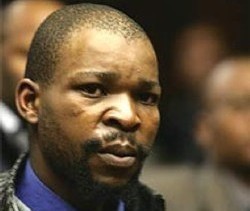
Sipho Dube
Serial killer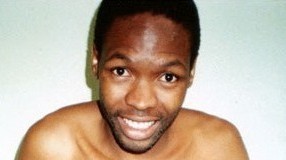 Moses Sithole
Serial killer · South Africa · 1994
Moses Sithole (November 17, 1964) was a serial rapist and serial killer in Sout…
38 victims
Moses Sithole
Serial killer · South Africa · 1994
Moses Sithole (November 17, 1964) was a serial rapist and serial killer in Sout…
38 victims
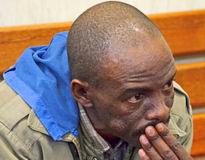 Bulelani Mabhayi
Serial killer · South Africa · 2007
Bulelani Mabhayi was a serial killer who terrorised the rural villagers of Thol…
20 victims
Bulelani Mabhayi
Serial killer · South Africa · 2007
Bulelani Mabhayi was a serial killer who terrorised the rural villagers of Thol…
20 victims
 Velaphi Ndlangamandla
Serial killer · South Africa · 1998
Velaphi Ndlangamandla, known as the “saloon killer”, was convicted in connectio…
19 victims
Velaphi Ndlangamandla
Serial killer · South Africa · 1998
Velaphi Ndlangamandla, known as the “saloon killer”, was convicted in connectio…
19 victims
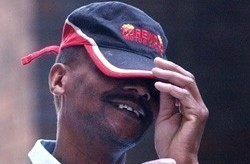 Jimmy Maketta
Serial killer · South Africa · 2005
Jimmy Maketta was born in 1964 or 1965. He was a South African rapist and seria…
16 victims
Jimmy Maketta
Serial killer · South Africa · 2005
Jimmy Maketta was born in 1964 or 1965. He was a South African rapist and seria…
16 victims
 James Roszko
Murderer · Canada · 2005
James Roszko was a Canadian man operating a hydroponic marijuana grow-op in Roc…
4 victims
James Roszko
Murderer · Canada · 2005
James Roszko was a Canadian man operating a hydroponic marijuana grow-op in Roc…
4 victims
 Garcia Glen White
Murderer · USA · 1989
Garcia Glen White was the subject of a case involving an argument and rape. Gar…
3 victims
Garcia Glen White
Murderer · USA · 1989
Garcia Glen White was the subject of a case involving an argument and rape. Gar…
3 victims
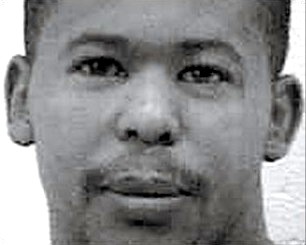 Kenneth Wilson
Murderer · USA · 1993
Kenneth L. Wilson was put to death by injection at the Greensville Correctional…
1 victim
Kenneth Wilson
Murderer · USA · 1993
Kenneth L. Wilson was put to death by injection at the Greensville Correctional…
1 victim
 Albert Martinez Carreon
Murderer · USA · 2001
Albert Martinez Carreon was sentenced to death on May 1, 2003 (ADC#045169). Car…
1 victim
Albert Martinez Carreon
Murderer · USA · 2001
Albert Martinez Carreon was sentenced to death on May 1, 2003 (ADC#045169). Car…
1 victim
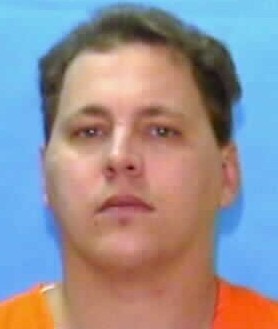 Michael J. Griffin
Murderer · USA · 1995
Michael J. Griffin was sentenced to death for the first-degree murders of Tom M…
2 victims
Michael J. Griffin
Murderer · USA · 1995
Michael J. Griffin was sentenced to death for the first-degree murders of Tom M…
2 victims
- Gender
- male
- Country
- South Africa
- Location
- KwaZulu-Natal/Johannesburg, South Africa
- Date of birth
- 1976
- Age at first offence
- 25
- Characteristics
- rape, kidnapping
- Victim profile
- Rashunthee Singh, 38 , in Ladysmith and Lukhanyo Kuwane, 10, Tina Bernardes, 11, Nomnikelo Jumba, 14, Thabo Dlongolo, 14, nine-year-old Anele Mbuku and his cousin Siyabonga Mbuku, 12 , in Johannesburg
- Method of murder
- Strangulation / Beating
- Date(s) of murder
- 2001 - 2003
- Years active
- 2001–2003
- Date of arrest
- November 9, 2003
- Status
-
Life imprisonment
Sentenced to 10 life sentences for seven murders and three rapes, plus an additional 114 years for a host of other crimes, on August 23, 2006
Case overview
Sipho Dube was convicted of seven murders and three rapes and was sentenced to 10 life sentences. He also received an additional 114 years for other offences. The case concerned serial killings and assaults committed between May 2001 and January 2004, involving children and a 38-year-old woman.
Dube was described as a loner from the Mhlomayo area near Nambithi (formerly Ladysmith) who moved to Johannesburg late 2002 and lived by collecting cardboard and scrap metal. He taught himself to read in several languages and was fluent in English. He was described as a chain smoker and as walking with his hands in his pockets. He had scars on his face and sometimes wore a beard and moustache.
Timeline
- May 2001 — Rashunthee Hariduth Singh was murdered in Ladysmith.
- 1993 — Dube said his first sexual encounter had been in 1993 when he was still at school.
- January 1999 — Dube was sentenced to three months imprisonment for housebreaking in Ladysmith.
- May 2001 — Judge Moshidi described the offences as planned and committed in Ladysmith, Weenen in KwaZulu-Natal, and Johannesburg between May 2001 and January 2004.
- April 13, 2003 — Moses Dlongolo and his common-law wife, Martha Mthimunye, reported their 14-year-old son Thabo missing.
- August 2003 — Nomnikelo Jumba was killed in Bertrams; evidence of semen was found on her trousers.
- September 18, 2003 — Lukhanyo Kuwane and a 15-year-old friend were approached by Dube pushing a trolley loaded with cardboard boxes.
- September 24, 2003 — Anele Mbuku (9) and Siyabonga Mbuku (12) disappeared after being with Dube at Mayfair, Johannesburg.
- November 8, 2003 — Tina Bernardes was kidnapped.
- November 9, 2003 — Dube was arrested after being traced by members of the Bernardes family.
- January 12, 2004 — Dube escaped from Wynberg magistrate's court after responding to another prisoner's name.
- January 16, 2004 — Dube was arrested again after allegedly attempting to steal a vehicle and stabbing the owner.
- January 2004 — The alleged crime spree was described as ending in January 2004.
- May 2004 — Superintendent Piet Byleveld and a team of detectives visited Dube’s aunt at her home to explain charges Dube was facing.
- August 7, 2006 — Judge Moshidi prepared to pass judgment.
- August 8, 2006 — The Johannesburg High Court found Dube guilty.
- August 16, 2006 — Dube’s sentence hearing continued after evidence about rehabilitation and childhood upbringing.
- August 17, 2006 — The matter was postponed because his lawyer, Jesse Penton, had to attend to his ailing mother.
- August 22, 2006 — Prosecutor Joannie Spies made submissions for harsh sentence.
- August 23, 2006 (10am) — Dube was sentenced to 10 life sentences and an additional 114 years.
- March 2004 — Police found Dube under a false name in Johannesburg Prison.
- April 2004 — Dube phoned Superintendent Piet Byleveld and offered to point out alleged crime scenes.
- January 2004 to March 2004 — Dube was described as being absent for three months after his escape, before re-arrest and discovery of his location.
Background
Sipho Dube had no documented history of birth registration; his birth was never registered, he had no identity book, and his fingerprints were not on record. He claimed to be 26 at the time but appeared older.
He grew up in the Mhlomayo area near Nambithi. He had little schooling and left Mhlomayo Primary School in Grade five; he was described as leaving in Grade five and later leaving school of his own will. His Grade three teacher, Tozi Sithebe, named him “Ndoji”, loosely translated as “the one who dodges classes”, because of his constant absence from school.
Dube was described as troubling from a young age, including stealing and repeated misconduct. His neighbours described him as ill-disciplined and that he grabbed a young girl on his way to rape her.
Health, temperament, and daily life descriptions
Dube was described as chain smoking and as walking with his hands in his pockets. He sometimes wore a beard and moustache. He had scars on his face. He was described as a dark black male, 1,65 metres tall and of medium build.
The offences
Dube approached victims in public places and then taken under bridges, or to mine dumps or bushes were they were assaulted, raped and murdered. He was described as luring victims by “promising them toys, or pretending to be a police officer or a handyman who could fix electrical appliances for them”.
After kidnapping a child, Dube prayed; if the prayer was a “good one” he let the child go, and if it was a “bad” prayer he murdered the child.
Judge Moshidi described the offences as having a consistent modus operandi. He said victims were approached in public places and then taken to deserted spots under bridges, mine dumps, or bushes where they were assaulted, raped and murdered.
Victims and incidents
Rashunthee Hariduth Singh
Rashunthee Hariduth Singh, a widow and mother of two aged 38, was last seen when she told her mother she was going to the bank and would be late returning home. Inspector Simon Mkhize found Singh’s body at a monument near an Indian residential area in Ladysmith while patrolling the area.
Mkhize testified that Singh had been robbed and her face had been badly mutilated. She had not been raped. Upon Mkhize’s arrival, he noticed a number of big rocks next to the body. The manner of killing made it difficult to ascertain her race until he observed the texture of her hair, concluding she was of Indian descent.
Nomnikelo Jumba
Nomnikelo Jumba, 14, was killed in Bertrams in August 2003. Semen was found on her trousers. Dube was released at the scene without questioning about the girl’s death. Dube told the police officer how Nomnikelo had run down a hill before she collapsed and died after she was raped.
Dube led police up the hill and they found Nomnikelo’s bloodied school blazer. She had been stabbed in the neck and under the armpit.
Judge Moshidi described Dube as having been present at the murder scene and said that on one occasion Dube insisted police should go up a hill and while there showed them a bloodied school blazer and books, stating that Nomnikelo Jumba had been raped there before the killing.
Moses Dlongolo and Thabo Dlongolo
Moses Dlongolo and his common-law wife, Martha Mthimunye, reported their 14-year-old son Thabo missing on April 13, 2003. Police found Thabo’s body a few kilometres from the family’s Regents Park home in Johannesburg’s southern suburbs 12 days after his disappearance.
It was almost two-and-a-half years later, on August 25, 2005, that they told the parents their son had been murdered and that his body had been recovered. They had to identify the body from police photographs.
Thabo’s mother said: “It broke my heart when I looked at my sons body in the photographs - both arms were missing.” Mthimunye said that on April 13, 2003 she had sent her son to a shop but he never returned. She later received a call from a man identifying himself as “Sipho” saying she must tell her husband that he must forget about his son. The man called again, telling Dlongolo he had killed Thabo and that they would find Thabo’s body in a bushy area a few kilometres from their Regents Park home.
Judge Moshidi described Dube as being present at murder scenes and found that circumstantial evidence and Dube’s presence pointed to involvement.
Lukhanyo Kuwane
Lukhanyo Kuwane, 10, and a 15-year-old friend were on their way home from school when they were approached on September 18, 2003 by a man pushing a trolley loaded with cardboard boxes. The man asked them to help carry the boxes, promising R20 each.
The friend refused to accompany Dube, stating: “I never walk with strangers”. Lukhanyo then accompanied Dube.
A day later, Lukhanyo’s badly injured naked body was found on the side of the road in Wemmer Pan, southern Johannesburg, by a motorist. The motorist testified under the name “Van der Kolf”. He said he noticed the child lying next to the road while driving to his Turffontein home with his wife. Two men were trying to help the boy. The motorist stated that the boy was calling his friend’s name and had open wounds on his face. The motorist called for an ambulance, but it never arrived. He and the other men took Lukhanyo to hospital, where he died the next day.
A state pathologist testified in court that Lukhanyo’s injuries were among the worst she had ever seen.
Judge Moshidi described Dube as having been present at the murder scene of Lukhanyo Kuwane and that the body was found badly battered and later confirmed to have a fractured skull and severe brain damage.
Anele Mbuku and Siyabonga Mbuku
For Anele Mbuku, 9, and his cousin Siyabonga Mbuku, 12, they disappeared on September 24, 2003 after carrying a toy Dube had been selling at Mayfair, Johannesburg. Their mother, Sophie Mbuku, told Dube she could not afford the toy because she was unemployed and asked him to leave the house.
Mbuku then sent Anele and Siyabonga to fetch something at her sister’s house nearby. After a few minutes, they did not return and Mbuku saw the children with Dube. She ordered Dube to stay away from the boys and threatened to call the police. Dube and the children then disappeared.
When Dube confessed, Mbuku testified he gave police different accounts: he left the boys at a dam and later dumped their bodies in the veld; on a third occasion he said he did not know where the bodies were.
For two months their families searched for them. The families later found their decomposed bodies near a dam a few kilometres away from their home.
During Mbuku’s testimony identifying Dube, he screamed at her: “I never killed your children. Get out of my face.”
Mbuku’s father and aunt in the Eastern Cape suffered heart attacks and died because of the shock of the children’s disappearance.
Tina Bernardes
Tina Bernardes, 11, was kidnapped on November 8, 2003. Her bludgeoned body was found hidden under a bush on a mine dump near the Denver offramp on the M2 highway the following afternoon.
Maria Johnson, Tina’s aunt, said she was selling clothing in Jules Street, Malvern, when Dube approached her and asked her to sell two cellphones for him. She asked Tina and her 12-year-old cousin to accompany Dube to fetch the phones. Johnson said: “When they went around the corner, I lost sight of them.” She said: “Five minutes later, Tina's cousin came to report that Tina was "gone"”. Johnson said that she began to lose trust in Dube when she smelt alcohol on him.
When Tina failed to return, a massive search started.
Arrest, escape and re-arrest
After Tina’s disappearance, her uncle, Mario Bernardes, distributed hundreds of flyers displaying Tina’s photograph. Mario Bernardes met Alfred Nyanga, a homeless man living under the M2 East interchange bridge, who claimed he had seen Dube walking with a white girl towards the highway and said he recognised Dube because he often saw him at a scrapyard in Eloff Street.
Mario Bernardes gave Nyanga R50 and asked him to phone him if he saw Dube again. The next day, Nyanga phoned Bernardes and said Dube was at the scrapyard. Mario Bernardes and his brother Joaquim hurried to the scrapyard, where Nyanga pointed out Dube to them. They took Dube to Johnson, who confirmed he was the man who accompanied them. Bernardes contacted the police, and on November 9, 2003 they arrested Dube.
Two months later, Dube escaped from Wynberg magistrate’s court. He walked out of the building after responding to another prisoner’s name.
Later he was arrested under the false name Clifford Mbatha for attempted theft of a vehicle and stabbing the owner, and he was sent to Johannesburg Prison. The car owner, Adams, testified that he was visiting a friend in Malvern on January 16, 2004. After parking his car outside, he walked into the friend’s house and a few minutes later the car alarm went off. He went outside and noticed three men trying to break into his car. The men ran away and Adams chased them. Adams identified one of the men in court as Dube. Adams said that Dube got tired and decided to sit down in the street. Adams confronted him and Dube promised to lead him to the house where his two accomplices lived. Adams stated that while on the way to the house where Dube pointed out his accomplices, Dube pulled out a knife and stabbed Adams in an arm. Adams and others decided to take Dube to Cleveland Police station where he was detained.
Police questioning and defence claims
During questioning by police, Dube could remember most of the incidents and sometimes went into great detail about how he had raped or murdered a child.
Dube said his first sexual encounter was in 1993 when he was still at school. When asked whether he had ever had sex with a man, he said that a man he said was gay had forced him to have sex by placing the penis between Dube’s thighs and telling Dube to do the same. Dube stated that the simulation was similar to what his male victims had apparently endured. When asked if he had done it with anyone else, he answered “no”.
When asked whether he liked children, Dube said: “Yes, there's a difference between children and adults: children are god's children. I like the company of both boys and girls”. He said children aged “mainly” between six and 12 years old were “the 'best'” for him, and that he liked all children.
Dube accused investigating officer Piet Byleveld of being involved in assault and stated that Byleveld had muti. Dube also claimed he was tortured by police to point out the places where his alleged crimes had taken place. He said he believed the police actions and pain he had suffered were coming back to haunt him.
Trial proceedings
Court behaviour and threats
During sentencing proceedings, photographers were present inside court 2F to take pictures. Dube was infuriated and verbally attacked them in Zulu. Translated, what he said meant: “You can take pictures until your camera starts looking like a vagina. Why can't you go and take pictures of your mother?”
He tried to attack journalists and family members of victims and was stopped by policemen. Relatives taunted him. One family member of a victim shouted: “The world needs to see the face of a serial killer,” then: “The blood of our children will haunt you to your grave. You will rot in hell,” and also said: “I will come to you and strangle you”.
Dube hurling abuse led to police removing him from the dock to basement cells. He refused to come out of the cells and demanded that police remove photographers. He held up proceedings for three-and-a-half hours. The judge ordered police to use reasonable force to bring him back up.
As he walked up the steps to the dock, Dube shouted that he was going to commit suicide by setting himself alight because the court did not want to listen to him.
When proceedings resumed, Judge Moshidi asked why he was refusing to attend. Dube remained seated and bowed his head, prompting the judge to order him to stand up. When asked three times, Dube remained defiant and did not respond.
While the judge was explaining consequences for not attending, Dube shoved a newspaper inside his blue tracksuit top, took out a cigarette lighter, and set the newspaper alight. A female interpreter shouted and screamed, and three police officers jumped into the dock, put out flames and subdued him. The judge adjourned proceedings until police had dealt with the problem.
As police prepared to strip-search him, Dube shouted: “Kill me, kill me. Choke me like you did, choke me.” Police removed his trousers belt and shoelaces in anticipation of an attempt at suicide. Dube threatened to throw himself down the steps leading to cells.
When police handcuffed him, Dube continued screaming and threatening to throw himself down the steps. Three policemen went to man the exit.
When Wilson Mgobhozi tried to sketch him, Dube shouted: “I don't want to be sketched! Why are you doing that? I will come to you and strangle you!”
Dube also shot back and made threats and abuse during sentencing. At one point during sentencing he told a policeman, when water was confiscated, “Why are you taking this? It's just water.” He then said: “What do you want from me, captain? I'm just respecting you?” and said: “I hope you get run over by a car and your testicles get smashed,” and added: “Your muti won't work.”
Verdict
Judge Seun Moshidi concluded: “I conclude the State has proven the accused guilty beyond reasonable doubt,” and said: “It is highly unlikely that all police officers and witnesses will conspire against the accused and falsely implicate him.”
Judge Moshidi described Dube as having twice been present at murder scenes and said circumstantial evidence and Dube’s presence on the murder scenes pointed to his involvement. He also referred to evidence that Dube insisted police should go up a hill to find Nomnikelo Jumba’s school blazer and books and described severe injuries in other cases.
Judge Moshidi said he considered evidence of similar modus operandi and referred to fractured skulls in two victims.
Sentencing
On August 23, 2006 at 10am, Dube shuffled into the dock wearing a grey and black woollen cap and dark glasses, dark jeans and white Nike takkies as he sat down and covered his head with his hands.
Dube was given 10 life sentences. The judge sentenced him to an additional 114 years. The sentences were stated to run concurrently, giving an effective life sentence described as a minimum of 25 years.
Judge Moshidi presided, and the sentence was handed down after Dube’s conviction.
Crimes of which he was convicted and sentences imposed
Dube was convicted of murdering Rashunthee Singh, 38, in Ladysmith and Lukhanyo Kuwane, 10; Tina Bernardes, 11; Nomnikelo Jumba, 14; Thabo Dlongolo, 14; nine-year-old Anele Mbuku; and his cousin Siyabonga Mbuku, 12, in Johannesburg.
He was also convicted of three rapes, 11 kidnappings, six indecent assaults, one assault with intent to cause grievous bodily harm, one common assault, one robbery, and one theft—described as a total of 31 crimes. He had originally faced 41 charges.
The Johannesburg High Court sentenced him to one life term for each of the seven murders and three rapes and an additional 114 years for crimes ranging from kidnapping, indecent assault and robbery.
Appeals
No appeal information was provided.
Outcome
Dube was sentenced to 10 life sentences and an additional 114 years for crimes including seven murders and three rapes, with kidnapping and other offences also resulting in convictions.
Aftermath and reactions
Asanda Jumba, whose younger sister Nomkelo Jumba was one of Dube’s victims, cried when she heard Dube was going to jail for life. She said: “I am happy with the sentence, even though my sister won't come back. She died brutally. I hope he rots in jail,”.
An unnamed aunt of nine-year-old Tina Bernardes said: “He got what he deserved, although I think he should have got the death sentence.”
A mother of another murdered child, Nandi Kuwane, said she was thrilled with the sentence. She said: “I won't stop crying for my son. I can't forget about him. He was taken away from me and I am so sad,”.
Families of the children murdered by Dube, previously unknown to each other, comforted each other outside the courtroom and exchanged phone numbers, promising to call each other.
Chief investigator Superintendent Piet Byleveld said the police believed Alfred Nyanga had “vanished” and that despite a massive search to locate him to testify in Dube’s trial, he was never seen again after pointing Dube out to Bernardes. Byleveld stated: “He was an important state witness … he helped us to track Dube down. He was important in that he actually saw her [Tina]. We've tried to find him for the last three years. Even before we closed the state's case, we were trying to trace him. But at least we got a conviction. At the end of the day, that's what matters,”.
Bernardes said: “There are no heroes in any of this. We were out there looking for someone [Tina] who meant a lot to our family. But if there's anyone who you can call a hero, it was Alfred. He put his life at risk for us,".
Chief investigator Superintendent Piet Byleveld also said: “He was an important state witness … he helped us to track Dube down.
Other details
Dube was described as having had earlier convictions, including an 18-month sentence for attempted theft in Ladysmith in 1997, and a three-month imprisonment sentence for housebreaking in Ladysmith in January 1999.
A judge and commentators referenced that Dube was accused in connection with offences including theft and robbery, and that he was acquitted on certain charges including charges related to seven kidnappings, two robberies, escaping from custody, and trying to steal a car.
Judge Moshidi raised concerns relating to doctors who examined rape victims, including a doctor contradicting herself on findings about the rape of a 13-year-old girl in October 2003.
The trial included submissions about rehabilitation. Police forensic psychologist Gerald Labuschagne testified that Dube could not be rehabilitated and described him as a “serial sexual murderer and paedophile”. Labuschagne said: “Studies prove that child molesters are most difficult to rehabilitate... in this instance, the accused qualifies,”.
Labuschagne also said Dube’s motive in committing the crimes was not primarily material gain and described the accused as having elements of a “power-control murderer”. He testified that Dube had used intelligence to gain young victims’ trust.
Defence called Dube’s aunt, Sibongile Mkhize, who testified about his upbringing and blamed Dube’s paternal family, stating: “his father failed to perform imbeleko - a traditional ceremony - for him and this led to his bad behaviour”.
State advocate Joannie Spies described Dube’s actions as premeditated and contemptuous toward victims, and made sentencing submissions seeking life imprisonment for murders and rapes. Attorney Jesse Penton argued in mitigation and urged concurrent sentences to allow parole after serving 25 years, and asked the court to show mercy and consider Dube “as a human being”.

Spotted an error, or have more information about this case?