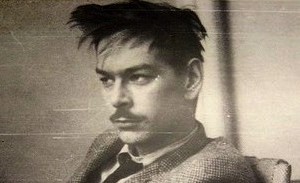
Lucien Carr
Homicide William Heirens
Homicide · USA · 1945
William George Heirens (born November 15, 1928 in Evanston, Illinois) was an Am…
3 victims
William Heirens
Homicide · USA · 1945
William George Heirens (born November 15, 1928 in Evanston, Illinois) was an Am…
3 victims
 Edward Gein
Homicide · USA · 1954
Edward Gein was sentenced to life imprisonment in 1968. He was found not guilty…
2 victims
Edward Gein
Homicide · USA · 1954
Edward Gein was sentenced to life imprisonment in 1968. He was found not guilty…
2 victims
 George Stinney
Homicide · USA · 1944
George Junius Stinney Jr. was executed by electrocution on June 16, 1944. He wa…
2 victims
George Stinney
Homicide · USA · 1944
George Junius Stinney Jr. was executed by electrocution on June 16, 1944. He wa…
2 victims
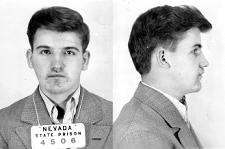 Floyd Loveless
Homicide · USA · 1942
Floyd Loveless was the person executed by asphyxiation-gas on September 29, 194…
1 victim
Floyd Loveless
Homicide · USA · 1942
Floyd Loveless was the person executed by asphyxiation-gas on September 29, 194…
1 victim
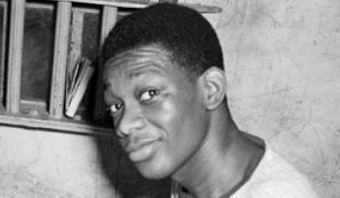 Willie Francis
Homicide · USA · 1944
Willie Francis (c. 1930 – May 9, 1947) was an African American sentenced to dea…
1 victim
Willie Francis
Homicide · USA · 1944
Willie Francis (c. 1930 – May 9, 1947) was an African American sentenced to dea…
1 victim
 Ljubiša Bogdanović
Mass murderer · Serbia · 2013
Ljubiša Bogdanović was born in Velika Ivanča in 1953. He served as a Serb veter…
13 victims
Ljubiša Bogdanović
Mass murderer · Serbia · 2013
Ljubiša Bogdanović was born in Velika Ivanča in 1953. He served as a Serb veter…
13 victims
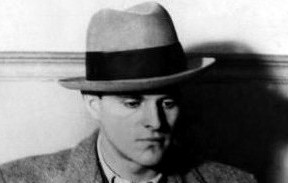 Georges Gauchet
Murderer · France · 1930
Georges Gauchet was a French aristocrat described as a “playboy” of Paris. He w…
1 victim
Georges Gauchet
Murderer · France · 1930
Georges Gauchet was a French aristocrat described as a “playboy” of Paris. He w…
1 victim
 Errol Dehaney
Murderer · USA · 1995
Errol Dehaney was sentenced to life in prison on December 8, 1999. He was charg…
3 victims
Errol Dehaney
Murderer · USA · 1995
Errol Dehaney was sentenced to life in prison on December 8, 1999. He was charg…
3 victims
 Frank James Coppola
Murderer · USA · 1978
Frank James Coppola (1944–August 10, 1982) was a former police officer from Por…
1 victim
Frank James Coppola
Murderer · USA · 1978
Frank James Coppola (1944–August 10, 1982) was a former police officer from Por…
1 victim
 Stephen Port
Serial killer · United Kingdom · 2014
Stephen Port (born 1975) was a convicted British rapist and serial killer who m…
4 victims
Stephen Port
Serial killer · United Kingdom · 2014
Stephen Port (born 1975) was a convicted British rapist and serial killer who m…
4 victims
- Gender
- male
- Country
- USA
- Location
- New York City, New York, USA
- Date of birth
- March 1, 1925
- Age at first offence
- 19
- Characteristics
- altercation, homosexual, rape?, drugs, history of mental illness
- Victim profile
- David Kammerer, 35
- Method of murder
- St abbing with a Boy Scout knife
- Date(s) of murder
- August 14, 1944
- Years active
- 1944
- Date of arrest
- Next day (surrenders)
- Status
-
Died in custody
Sentenced to a term of one-to-twenty years in prison on October 9, 1944; released on parole in 1946; died on January 28, 2005
Case details
Lucien Carr (March 1, 1925 – January 28, 2005) was a key figure in the Beat generation and later an editor for United Press International.
Carr was born in New York City. His parents, Russell Carr and Marian Gratz Carr, were both products of socially prominent St. Louis families. After his parents separated in 1930, Carr and his mother moved back to St. Louis, where he spent the rest of his childhood.
Carr met David Kammerer (born 1911) at age 14. Kammerer was a teacher of English and a physical education instructor at Washington University in St. Louis. Kammerer was also a childhood friend of William S. Burroughs, another St. Louis figure who knew the Carr family. Burroughs and Kammerer had gone to primary school together, and as young men, they traveled together and explored Paris’s night life; Burroughs later described Kammerer as “was always very funny, the veritable life of the party, and completely without any middle-class morality.”
Kammerer met Carr while leading a youth group of which Carr was a member and quickly became infatuated with the teenager. Over the next five years, Kammerer pursued Carr, showing up wherever the young man was enrolled at school. Carr later insisted, as did his friends and family, that Kammerer had been stalking-hounding him sexually with predatory persistence. The uncertainty about whether Kammerer’s attentions were frightening or flattering was noted as a matter of debate among those who chronicled the history of the Beat Generation.
Carr moved quickly from school to school, from the Phillips Academy in Andover, Massachusetts to Bowdoin College in Brunswick, Maine and then to the University of Chicago. Kammerer followed him to each one. Carr and Kammerer socialized on occasion.
Carr insisted that he never had sex with Kammerer. Burroughs believed this, and a biographer, Dennis McNally, later wrote that Kammerer “was a Doppelgänger whose sexual desires Lucien would not gratify; their connection was an intertwined mass of frustration that hinted ominously of trouble.”
Carr’s University of Chicago career ended with an episode in which he put his head into a gas oven. He explained the act as a “work of art.” Carr’s family believed the episode was catalyzed by Kammerer. Carr then spent two weeks in the psychiatric ward at Cook County hospital. After Carr’s mother moved to New York City, she brought him there and enrolled him at Columbia University.
Early Beat connections
Carr met Allen Ginsberg at Columbia University. Carr befriended Ginsberg in the Union Theological Seminary dormitory on 122nd street (an overflow residence for Columbia) after Ginsberg knocked on his door to find out who was playing a recording of a Brahms trio. Carr also befriended a young woman named Edie Parker, who introduced Carr to her boyfriend, Jack Kerouac. Jack Kerouac was 22 and nearing the end of his short career as a sailor. Carr introduced Ginsberg and Kerouac to each other, and both were introduced to Carr’s older friend with first-hand experience of decadence: William Burroughs.
Carr and Ginsberg discussed their “New Vision,” a thesis that helped underpin the Beats’ creative rebellion, including:
- “Naked self-expression is the seed of creativity.”
- “The artist’s consciousness is expanded by derangement of the senses.”
- “Art eludes conventional morality.”
Carr was described as the core of the New York Beat scene, with the movement forming around him. As Ginsberg put it, “Lou was the glue.” According to Kerouac, Carr once convinced him to get into an empty beer keg, which Carr then rolled down Broadway.
Ginsberg wrote in his journal at the time: “Know these words, and you speak the Carr language: fruit, phallus, clitoris, cacoethes, feces, foetus, womb, Rimbaud.”
Carr was credited with introducing Ginsberg to the poetry and the story of Arthur Rimbaud, the 19th-century French poet. Rimbaud became a major influence on Ginsberg’s poetry.
Carr was also described by a fellow student from Lionel Trilling’s humanities class as “stunningly brilliant…. It seemed as if he and Trilling were having a private conversation.” Students described Carr as a talented and dissolute prank-loving late-night reveler who haunted Chelsea and Greenwich Village until dawn.
Carr retaliated after finding his bed short-sheeted by spraying his dorm-mates’ rooms with the hallway fire-hose while they were still sleeping. On another occasion, he was asked why he carried a jar of jam across campus and he explained that he was “going on a date.”
Kammerer in the Columbia circle
Kammerer remained part of the crowd for ten months. During this time, he was described as still infatuated with Carr, who sometimes avoided him and at other times indulged Kammerer’s attentions. The narrative included accounts that Kammerer’s presence and lovelorn devotion made many other Beats uncomfortable. Burroughs found Kammerer trying to hang Kerouac’s cat.
Kammerer’s finances and mental condition were described as decaying; he was barely scraping by, helping a janitor clean his building on Morton Street in exchange for rent. In July 1944, Carr and Kerouac began talking about shipping out of New York on a Merchant Marine vessel, a scheme that drove Kammerer frantic with anxiety at the possibility of losing Carr. In early August 1944, Kammerer crawled into Carr’s room via a fire escape and watched him sleep for half an hour. A guard caught him as he crawled back out.
The offence
On August 13, 1944, Carr and Kerouac attempted, and failed, to ship out of New York to France on a merchant ship. After being kicked off the ship by the first mate at the last minute, Carr and Kerouac drank together at the West End, a Beats’ bar. Kerouac left first and ran into Kammerer, who asked where Carr was. Kerouac told him. Kammerer then caught up to Carr at the West End, and they went for a walk that ended in Riverside Park on Manhattan’s upper west side.
Carr’s version described that he and Kammerer were resting near 115th street when Kammerer made another sexual advance. When Carr rejected it, Carr said Kammerer assaulted him physically and, as Kammerer was larger, Kammerer gained the upper hand. In desperation and panic, Carr said he stabbed Kammerer, using a Boy Scout knife from his St. Louis childhood. Carr then tied Kammerer’s hands and feet, wrapped Kammerer’s belt around his arms, weighted the body with rocks, and dumped it in the Hudson River.
Carr later went to William Burroughs’s apartment. Carr gave Burroughs Kammerer’s bloodied pack of cigarettes and explained the incident. Burroughs flushed the cigarettes down the toilet and told Carr to get a lawyer and turn himself in. Carr instead sought out Kerouac, who helped Carr dispose of the knife and some of Kammerer’s belongings. Carr and Kerouac then went to a movie and the Museum of Modern Art to look at paintings. Carr then went to his mother’s house and later to the office of the New York District Attorney, where he confessed.
Carr was charged with second-degree murder. Carr ultimately pled guilty to manslaughter.
Carr stated in court that Kammerer had stalked him in a homosexual obsession, with Carr’s narrative describing unwanted sexual advances by Kammerer.
The Daily News called the killing an “honor slaying.”
Investigation
The prosecutors were described as uncertain whether Carr’s story was true or whether a crime had even been committed. They kept Carr in custody until they recovered Kammerer’s body.
Carr identified the corpse and then led police to where he had buried Kammerer’s eyeglasses in Morningside Park.
Arrest / custody
Carr confessed and was held in custody until the body was recovered. Kerouac was arrested as a material witness, as was Burroughs. The narrative also described bail processes involving Edie Parker’s family and Jack Kerouac’s release after marriage.
Burroughs’s father posted bail, while Kerouac’s father refused to post the hundred-dollar bond to bail him out. Ultimately, Edie Parker’s parents agreed to post the money if Kerouac would marry their daughter. With detectives serving as witnesses, Edie and Jack were married at the Municipal Building. After Kerouac’s release, he moved to Grosse Pointe Park, Michigan, Parker’s hometown.
Trial
Carr was charged with second-degree murder and the story was closely followed in the press. Carr pled guilty to manslaughter, and his mother testified at a sentencing hearing about Kammerer’s predatory habits.
Carr’s court account included the assertion that Kammerer had stalked him in a homosexual obsession. The legal narrative also described that the prosecution kept him in custody while they recovered the body, and that Carr identified the corpse and led police to buried eyeglasses.
Sentencing
Carr was sentenced to a term of one-to-twenty years in prison for murder. He served the minimum two years in the Elmira Correctional Facility in Upstate New York and was released on parole in 1946.
The sentencing hearing was described as involving testimony from Carr’s mother about Kammerer’s predatory habits.
Appeals
No appeal outcome was provided in the supplied information.
Outcome
Carr stabbed David Kammerer to death on August 13, 1944, and disposed of the body in the Hudson River as described in Carr’s confession. Carr was sentenced on October 9, 1944, served two years at Elmira, and was released on parole in 1946. David Kammerer died as a result of the stabbing.
Aftermath
Relationship to Beat-generation writing
In Jack Kerouac’s The Town and the City, Carr was represented by the character “Kenneth Wood.” A more literal depiction of events was later given in Kerouac’s Vanity of Duluoz.
Allen Ginsberg began a novel about the crime called The Bloodsong, but his English instructor convinced him to abandon it to avoid more negative publicity for Carr or the university. Later, author Bill Morgan’s account described that the Carr incident also inspired Kerouac and Burroughs to collaborate in 1945 on a mystery novel entitled And the Hippos Were Boiled in Their Tanks, which was not published.
Prison period and post-release career
After his prison term, Carr went to work for United Press, which later became United Press International. He was initially hired as a copy boy in 1946. He became the night news editor in 1956 and then headed the general news desk until his retirement in 1993.
A later narrative described Carr as being known for brevity as an editor and for a repeated suggestion: “Why don’t you just start with the second paragraph?” Another reporter quoted Carr as having two acceptable standards for a good lead: “Make me cry or make me horny.”
Carr asked Ginsberg to remove his name from the dedication at the start of “Howl.” Carr also warned Ginsberg to “keep the hustlers and parasites at arm’s length.”
Carr was described as serving as a best man when Kerouac married Joan Haverty in November 1950.
A narrative described Carr being credited with providing Kerouac a roll of teletype paper “pilfered” from the UP offices, on which Kerouac wrote the entire first draft of On the Road in a 20-day marathon fueled by coffee, speed, and marijuana. It was further stated that the scroll was real, but that Carr’s share of this first draft story was probably a conflation of episodes involving the 119-foot first roll written in April 1951 and a later second draft written on United Press teletype. Carr briefly moved Kerouac into Carr’s apartment on 21st street for the second draft in May, after which Kerouac transferred work to individual pages for his publisher.
Marriages and family
The information provided described that Carr married Francesca van Hartz and that they had three children: Simon, Caleb, and Ethan. It also stated that Ethan (in 1994, Caleb published The Alienist) was not consistent in naming as written, but the supplied facts included: “in 1994, Caleb published The Alienist , a novel which became a best-seller and made the son the acclaimed author his father once meant to be.” The narrative stated that Caleb Carr is Lucien Carr’s son.
For a period, Carr was married to Kerouac’s ex-girlfriend Alene Lee, on whom the character of Mardou Fox had been based in Kerouac’s The Subterraneans.
Carr died at George Washington University Hospital after collapsing at his Washington, D.C. home. He died in January 2005 after a long battle with bone cancer.
Additional quoted statements
Jack Kerouac wrote in an October 1944 letter to Ginsberg about Carr:
“Lucien is different, or at least, his egocentricity is different; he hates himself intensely...Hating himself as he does, hating his human kindness he seeks new vision, a post human, post intelligence.”
Kerouac also wrote in a September 1949 journal entry of a “Haunted Lucien.”
A quote attributed to jazz musician David Amram described Carr in the mid-1950s:
“When I met him in the mid-50s,” wrote jazz musician David Amram, Carr “was so sophisticated and worldly and fun to be with that even while you always felt at home with him, you knew he was always one step ahead and expected you to follow.”
A description also quoted a former UPI managing editor calling Carr “the absolute best newsman I ever knew.”
Ginsberg was quoted describing Carr as “the most angelic looking kid I ever saw, with blond hair.”
Other details
Positions and employment timeline
Carr was employed for 47 years with UPI. He was hired as a copy boy in 1946, promoted to night news editor in 1956, headed the general news desk until retirement in 1993, and spent time sailing on the Chesapeake Bay after retirement.
Carr’s favorite news story of his career was described as the 1969 Apollo moon landing.
Associated beat-generation side notes
Kerouac was described as being arrested as an accessory after helping Carr to dispose of evidence, and bail was set for $2,500. Kerouac persuaded Edie Parker he would marry her if she helped him make bail, and Edie bailed Jack out of jail. Their marriage was annulled only one year later.
The narrative also stated that Carr did not attend Kerouac’s funeral in Lowell in October 1969.
Death details
Carr died in Washington, DC after collapsing at his Washington, D.C. home and after a long battle with bone cancer. His death date was January 28, 2005.
Locations and persons mentioned
St. Louis, Missouri was the place where Carr and Kammerer met and where the relationship described began. New York City included Columbia University, Riverside Park, the West End bar, and Morningside Park. Morton Street in the West Village was where Kammerer moved into an apartment. Washington, D.C. was the location of Carr’s home and of George Washington University Hospital.
Other named individuals included Russell Carr, Marian Gratz Carr, Jack Kerouac, Allen Ginsberg, William S. Burroughs, Edie Parker, Joan Vollmer, Joan Haverty, Anna Kross, Lionel Trilling, Herbert Huncke, Dennis McNally, Caleb Carr’s spouse was not named, David Amram, Caleb’s publisher details were not provided, and Dennis McNally was named as the author of commentary about Kammerer and Carr.
Other referenced works and titles included The Town and the City, Vanity of Duluoz, And the Hippos Were Boiled in Their Tanks, The Bloodsong, Howl and Other Poems, On the Road, The Subterraneans, The Alienist, Word Virus, and The Beat Generation in New York by Bill Morgan.
Spotted an error, or have more information about this case?