Robert George Irwin
Homicide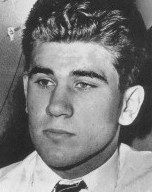 William Heirens
Homicide · USA · 1945
William George Heirens (born November 15, 1928 in Evanston, Illinois) was an Am…
3 victims
William Heirens
Homicide · USA · 1945
William George Heirens (born November 15, 1928 in Evanston, Illinois) was an Am…
3 victims
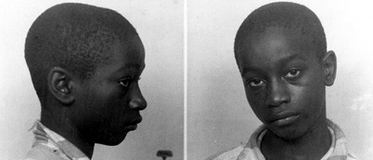 George Stinney
Homicide · USA · 1944
George Junius Stinney Jr. was executed by electrocution on June 16, 1944. He wa…
2 victims
George Stinney
Homicide · USA · 1944
George Junius Stinney Jr. was executed by electrocution on June 16, 1944. He wa…
2 victims
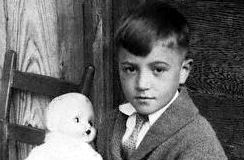 Carl Newton Mahan
Homicide · USA · 1929
Name: Carl Newton Mahan Carl Newton Mahan was described as a 6-year-old from Pa…
1 victim
Carl Newton Mahan
Homicide · USA · 1929
Name: Carl Newton Mahan Carl Newton Mahan was described as a 6-year-old from Pa…
1 victim
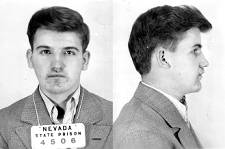 Floyd Loveless
Homicide · USA · 1942
Floyd Loveless was the person executed by asphyxiation-gas on September 29, 194…
1 victim
Floyd Loveless
Homicide · USA · 1942
Floyd Loveless was the person executed by asphyxiation-gas on September 29, 194…
1 victim
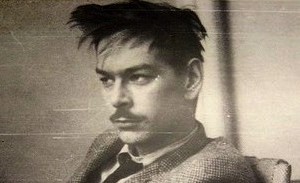 Lucien Carr
Homicide · USA · 1944
Lucien Carr (March 1, 1925 – January 28, 2005) was a key figure in the Beat gen…
1 victim
Lucien Carr
Homicide · USA · 1944
Lucien Carr (March 1, 1925 – January 28, 2005) was a key figure in the Beat gen…
1 victim
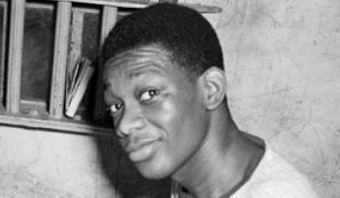 Willie Francis
Homicide · USA · 1944
Willie Francis (c. 1930 – May 9, 1947) was an African American sentenced to dea…
1 victim
Willie Francis
Homicide · USA · 1944
Willie Francis (c. 1930 – May 9, 1947) was an African American sentenced to dea…
1 victim
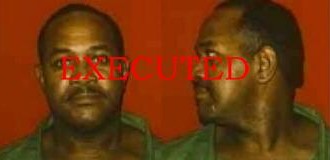 J. D. Gleaton
Murderer · USA · 1977
J. D. Gleaton was executed by lethal injection in South Carolina on December 4,…
1 victim
J. D. Gleaton
Murderer · USA · 1977
J. D. Gleaton was executed by lethal injection in South Carolina on December 4,…
1 victim
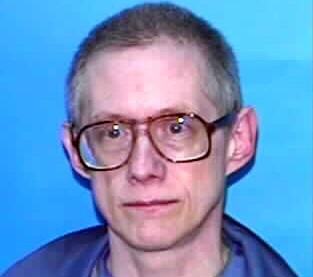 John Crutchley
Serial killer ? · USA · 1977
June 1986 — Crutchley plea-bargained to guilt on kidnap and rape charges in exc…
10 victims
John Crutchley
Serial killer ? · USA · 1977
June 1986 — Crutchley plea-bargained to guilt on kidnap and rape charges in exc…
10 victims
 Jack Unterweger
Serial killer · USA / Czechoslovakia · 1976
Johann “Jack” Unterweger was an Austrian serial killer. He was born in 1950 in…
12 victims
Jack Unterweger
Serial killer · USA / Czechoslovakia · 1976
Johann “Jack” Unterweger was an Austrian serial killer. He was born in 1950 in…
12 victims
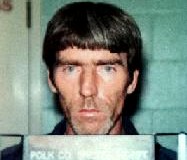 Daniel Joseph Blank
Serial killer · USA · 1996
Daniel Joseph Blank was a mechanic and was described as a gifted mechanic and a…
6 victims
Daniel Joseph Blank
Serial killer · USA · 1996
Daniel Joseph Blank was a mechanic and was described as a gifted mechanic and a…
6 victims
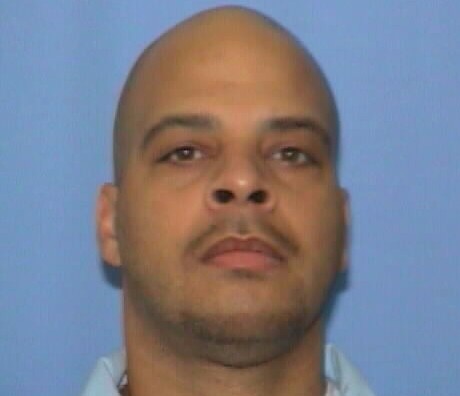 Ralph Harris
Serial killer · USA · 1992
Ralph Harris was found guilty by a jury on March 3, 1999, for the August 17, 19…
6 victims
Ralph Harris
Serial killer · USA · 1992
Ralph Harris was found guilty by a jury on March 3, 1999, for the August 17, 19…
6 victims
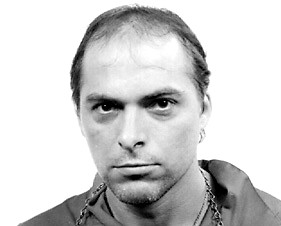 John Matthew Stephenson
Murderer · USA · 1996
John Matthew Stephenson was sentenced to death on June 17, 1997. He was on deat…
3 victims
John Matthew Stephenson
Murderer · USA · 1996
John Matthew Stephenson was sentenced to death on June 17, 1997. He was on deat…
3 victims
- Gender
- male
- Country
- USA
- Location
- New York City, New York, USA
- Date of birth
- 1907
- Age at first offence
- 30
- Characteristics
- history of mental illness, alcoholic, rape, abuser
- Victim profile
- Veronica Gedeon, her mother and a man lodger
- Method of murder
- Strangulation / St abbing with icepick
- Date(s) of murder
- March 27, 1937
- Years active
- 1937
- Date of arrest
- June 26, 1937
- Status
-
Died in custody
Sentenced to life imprisonment on November 1938. Died in 1975
Case record: Robert George Irwin
Overview
Robert George Irwin (1908–1975) was an artist-sculptor and a recurring mental hospital patient. He pled guilty to killing three persons on Easter weekend in 1937 in the Beekman Hill area of New York City’s Turtle Bay neighborhood. His case received substantial publicity, and he later remained incarcerated for life.
People
- Robert George Irwin was the accused.
- Veronica “Ronnie” Gedeon was one of the victims; she had been a model who often appeared in seductive pulp magazine pictures.
- Mary Gedeon was a victim; she was Veronica’s mother.
- Frank Byrnes was a victim; he was a deaf English waiter.
- Ethel Gedeon Kudner was Mary Gedeon’s elder daughter; Irwin had intended to kill her.
- George Kudner was Ethel Gedeon Kudner’s husband.
- Joseph Gedeon was Mary Gedeon’s ex-husband.
- Charles Robinson was an upstairs neighbor who noticed the door to the Gedeons’ flat was partially open and closed it.
- Samuel Leibowitz was a criminal defense attorney who appeared as Irwin’s attorney.
- Judge James Wallace sentenced Irwin.
- State Inspector John Lyons made a statement about Irwin.
- William A. Adams was the warden of The Tombs detention center.
- Joseph Medill Patterson was New York Daily News publisher.
- Detective magazine figures included a picture shown to Pantry Maid Henrietta Koscianski.
- Henrietta Koscianski was a pantry maid at Cleveland’s Statler Hotel; she later recognized a resemblance.
- Bob Murray was the name of a bar boy associated with the Cleveland hotel (Irwin).
- John W. Dienhart was city editor of the Chicago Herald-Examiner.
- G. Duncan Bauman and Austin O’Malley were reporters involved in keeping Irwin in a room in the Morrison Hotel in Chicago.
- Cook County Sheriff received Irwin when he surrendered.
- Mary Gedeon’s flat was at 316 E. 50th Street.
Timeline
- March 18, 1937 — Irwin was expelled from the Theological School of St. Lawrence University at Canton, New York, because of “instability.”
- March 28, 1937 (Easter Sunday) — Relatives arriving at the Gedeon flat for dinner discovered the partially-clothed bodies of Mary Gedeon and her younger daughter Veronica in Veronica’s bedroom; Mary Gedeon had been strangled and stabbed, and Veronica had been strangled; in a nearby room they found the body of Frank Byrnes, who had been stabbed many times.
- Late June 1937 — In Cleveland, a pantry maid in Statler Hotel saw a picture of Irwin and noticed a resemblance to a bar boy working there under the name of Bob Murray; the bar boy cleaned out his locker and disappeared soon after being questioned about his last name and whether he knew Robert Irwin.
- Next day — The Chicago Tribune received a call from someone claiming to be Irwin offering to surrender for a price, and the call was dismissed as a prank.
- Following arrangement — The Hearst-owned Chicago Herald-Examiner received a similar call, took it seriously, and arranged for Irwin to be paid $5,000 for an exclusive story and surrender.
- After Irwin came to the newspaper’s offices — Chicago city editor John W. Dienhart and reporters G. Duncan Bauman and Austin O’Malley kept Irwin in a room in the Morrison Hotel in Chicago while he worked on the terms of a confession to the Beekman Hill murders that the newspaper would publish as an exclusive, while briefly shielding him from police.
- Hours after New York police took Irwin into custody — He was indicted for three counts of first degree murder.
- Fall of 1938 — As Irwin’s trial date approached, William A. Adams said: “Irwin certainly isn’t crazy now. He’s as normal as any man in prison.”
- Shortly after a jury was selected — Irwin pled guilty to three counts of second degree murder, in exchange for avoiding the death penalty, and a promise that a pair of trousers that he abandoned in a suitcase left at Grand Central Station in 1937 would be returned to him.
- November 1938 — He was sentenced to life imprisonment.
- December 10, 1938 — Irwin arrived at Dannemora State Hospital.
- 1975 — Irwin died of cancer in Matteawan State Hospital for the Criminally Insane in Fishkill, New York.
Background
Irwin was the son of evangelist parents, and he was reportedly born in a tent on an old-fashioned camp meeting ground in Portland, Oregon. His father deserted the family before Robert was three years old, leaving them impoverished. When a family court judge noted that Robert could learn a trade at a state reformatory, he volunteered and spent fifteen months there, where he first learned to sculpt. He soon idolized Lorado Taft, and later moved in with Taft’s family. He later worked for a waxworks studio in Los Angeles and carved commercial busts of President Franklin D. Roosevelt and other public figures.
Irwin was considered “brilliant if erratic and at times violent.” He tried to emasculate himself, using a razor. He consented to be committed to a state mental hospital and initially stayed for a year. After his discharge, he moved into a New York City rooming house owned by Mary Gedeon. There, Irwin had become infatuated with her daughter Ethel, but his love was not returned. He underwent further mental illness treatment for two more years at Rockland State Hospital in Orangeburg, New York, and was released in the summer of 1936. By then, Ethel Gedeon had married George Kudner.
Irwin made a sculpture of Ethel with a cobra coiled around her neck. He enrolled as a student at the Theological School of St. Lawrence University at Canton, New York, but he was expelled on March 18, 1937, ten days before Easter, because of “instability.” He then rented (for a single day) a $2.50-a-week room in a house on 52nd Street in New York City, several blocks from Mary Gedeon’s rooming house at 316 E. 50th Street. After considering and rejecting the idea of drowning himself in the East River, he walked to the Gedeon rooming house.
The offence
On March 28, 1937 (Easter Sunday), relatives arriving at the Gedeon's flat for dinner discovered the partially-clothed bodies of Mary Gedeon and her younger daughter Veronica in Veronica’s bedroom. Mrs. Gedeon had been strangled and stabbed, and Veronica had been strangled. In a nearby room, they discovered the body of Frank Byrnes, a deaf English waiter who had been stabbed many times.
The police investigation revealed that around 3:00 a.m., Veronica had returned intoxicated from a date. Fifty minutes earlier, Charles Robinson had noticed the door to the Gedeons’ flat was partially open and had closed it. Detectives concluded that the assailant had entered the apartment before Veronica arrived and waited for her. Detectives concluded that Brynes was likely killed while he slept.
Police attention initially focused on a driver, then on Mary Gedeon’s ex-husband, Joseph Gedeon. By April 7, attention had shifted toward Irwin, in part because a sculpture carefully carved in ordinary bath soap was discovered at the crime scene.
In his published confession, Irwin stated that he originally intended to kill Ethel Gedeon Kudner because “she was the dearest object in the world” to him, but that he “accidentally” killed the others instead. He explained that he went to the Gedeons’ flat, expecting to find Ethel. He struck then strangled Mary Gedeon after she had asked him to leave. After Veronica arrived, he terrorized her, but strangled her only after she called him by name, showing she recognized him. Afraid to leave alive a possible witness (but unaware of Byrnes’ deafness), Irwin entered Byrnes' room and then stabbed him to death in his bed.
Irwin compared himself to a radio in his confession to New York detectives:
Bob Irwin is nothing. I am only a receiving set. An extremely imperfect one, which can indistinctly tune in the divine mind. You have heard a radio that isn’t working well. You turn the dials and get a squawking. Only once in a while can we get the pure clear music. My whole idea in life was to perfect myself so ‘the receiving set’ could always get the divine music at its best.
The published confession also included an extended excerpted account:
He went to the Gedeon apartment. . . . "I drew Mrs. Gedeon's picture to kill as much time as possible. In comes this little Englishman. She introduced him to me. He went to his room. . . . I said, 'I am going to stay here until I see Ethel [the elder daughter].' She . . . yelled, 'Get out of here.' I hit her. . . . I choked her. . . . All the time this damned Englishman was in the next room just ten feet away. She put up a hell of a fight . . . my hands were full of blood. I smeared it on her, on her face and on her breast. I threw her in the bedroom under the bed. . . . "Finally Ronnie [Veronica Gedeon, the artists' model daughter] came in. She went into the bathroom. . . . I thought she was never coming out. . . . I made a sort of blackjack out of a piece of soap in a cloth. . . . I hit her. But the soap just splattered. . . . I grabbed her from behind. . . . I can very well believe that she was drunk because she didn't put up any fight at all. I . . . took her in her room . . . held her just tight enough so that she could breathe. She asked me not to attack her, 'Please don't, I've had an operation.' I strangled her. When Ronnie was dead, I looked at her with a sick feeling all through me. Her beauty was gone. . . . Blue death seemed to issue from her—like a sort of spiritual emanation. . . . My brain was working so fast I could almost hear it. . . . The Englishman. I must kill him too. . . . I stood for a moment over his bed. . . . Asleep? But how could I be sure? . . . I lifted the ice pick, point down, and struck. . . . Afterwards, in the newspapers, I read that he had been stabbed 15 times. I don't know. . . . It was morning when I stepped out and closed the door. . . . There was an overwhelming weariness all through me. . . . I was so sleepy, I could hardly walk the short distance around the corner to my room. I went in and dropped on my bed. It was not until evening that I was awakened by the cries of newsboys below my window. . . . They were yelling about a 'triple murder.' . . . It did not frighten me. I was as calm as I ever had been. I was sure that I would not be suspected. I was so sure of this that I did not even take the trouble to move from the neighborhood—not for a week."
Irwin later explained that the three murders were not intended, and that he had intended to murder only Ethel Gedeon Kudner with whom he had been in love years before when he was a roomer at the Gedeons’. He said the murder was to satisfy “an overpowering urge for a tremendous emotional experience,” and he stated:
"I thought that after killing Ethel, then they would kill me in the chair, but I didn't care. Then I said to myself that after being in the nut house all of your life, you can't go to the chair. . . . They'll put me in the nut house again and then I'll be there all the rest of my life and catch up with myself, in a spiritual way."
Investigation
A sculpture carefully carved in ordinary bath soap was discovered at the crime scene. Detectives concluded the assailant had entered the apartment before Veronica arrived and waited for her.
Inspector John Lyons was reported as stating of Irwin:
“It makes no difference whether he committed three hundred murders, so far as the State is concerned. His psychopathic background shows he is insane."
A nationwide manhunt for Irwin followed the April 7 shift of attention.
Arrest and surrender
In late June 1937, Henrietta Koscianski, a pantry maid at Cleveland's Statler Hotel, saw a picture of Irwin in a pulp magazine and noticed a resemblance to a bar boy who had been working at the hotel for less than two months under the name of Bob Murray. Koscianski asked him about his last name and whether he knew about Robert Irwin. He cleaned out his locker and disappeared soon after she asked.
The next day, the Chicago Tribune received a call from someone claiming to be Irwin and offering to surrender for a price, but the Tribune dismissed the call as a prank. The Hearst-owned Chicago Herald-Examiner received a similar call, took it seriously, and made an arrangement under which Irwin would be paid $5,000 for an exclusive story, then surrender. Irwin came to the newspaper’s offices and was kept in a room in the Morrison Hotel in Chicago while working on terms of a confession to the Beekman Hill murders that the newspaper would publish as an exclusive, while briefly shielding him from police. Irwin’s defense lawyer Samuel Leibowitz appeared as Irwin’s attorney.
After Irwin arrived in New York City, he was turned over to police. Hours after police took Irwin into custody, he was indicted for three counts of first degree murder. Irwin surrendered to the Cook County Sheriff when he was finally surrendered.
Trial
Contrary to Inspector Lyon’s initial view that Irwin was insane, New York found him normal for trial purposes. William A. Adams said as Irwin’s trial date approached in the fall of 1938:
“Irwin certainly isn’t crazy now. He’s as normal as any man in prison.”
Irwin attorney Liebowitz replied:
“was, is and will be hopelessly insane. He’s crazy as a bedbug.”
Soon after a jury was selected, Irwin pled guilty to three counts of second degree murder, in exchange for avoiding the death penalty, and a promise that a pair of trousers abandoned in a suitcase left at Grand Central Station in 1937 would be returned to him.
Sentencing
Judge James Wallace sentenced Irwin to 139-years-to-life in prison, assigning 99 years-to-life for the slaying of Byrnes, 20 years-to-life for the slaying of Mary Gedeon, and 20 years-to-life for the slaying of Veronica Gedeon. He was sent to Sing Sing Prison for a psychological evaluation, where prison doctors ruled him “very definitely insane.”
After sentencing, Irwin was deemed “definitely insane” by state psychiatrists. He then arrived at Dannemora State Hospital on December 10, 1938.
Outcome
Irwin was sentenced to life imprisonment. He spent the rest of his life in secure mental institutions.
Death and legacy
Irwin died of cancer in 1975 in Matteawan State Hospital for the Criminally Insane in Fishkill, New York.
His enduring legacy included the way newspapers exploited the crime through sensationalist headlines and racy photos, culminating with a paid confession that nearly put him in the electric chair. In the immediate aftermath, Joseph Medill Patterson responded to criticism of sensationalism, editorializing:
“murder sells papers, books, plays because we are all fascinated by murder.”
Patterson defended the News’ choice to give the story greater attention than President Roosevelt’s failed attempt to “pack” the U.S. Supreme Court, explaining:
“perhaps people should be more interested today in the Supreme Court than in the Gedeon murder, but we don’t think they are. Easter Killer Monday, Jul. 05, 1937 Time.com Buxom, black-eyed Henrietta Koscianski, 19, a pantry maid in Cleveland's Statler Hotel, gave her starched white blouse a straightening pat and winked at one of the other girls as the young man who washed bar glasses and supplied cracked ice came on duty one night last week. "Say, Bob," she asked, "what's your last name?" "Murray," he answered quickly. "Why?" "Oh, nothing. But did you ever hear of Robert Irwin?" "No," he said, turning away. Few minutes later he disappeared. Two nights before the bar boy had done a clever pencil sketch of Henrietta, and she had had a chance to study his face as he sketched. Business was slow that night and later she had gone upstairs to borrow something to read from one of the other girls. In a detective magazine she had seen a picture of 29-year-old Robert Irwin, former insane asylum inmate, sculptor of sorts, wanted in Manhattan for the horrible Easter Sunday murders of the beauteous artists' model Veronica Gedeon. her mother and a man lodger. "Why that looks like our Bob!" she exclaimed. She showed the picture to the other girl who agreed on the resemblance. Friday night she would show it to Bob. It would amuse him. By midnight Friday, Pantry Maid Koscianski was all atremble. The bar boy had obviously skipped town. His locker was empty. The police had been to his $1.50 a week hotel, found only an old pair of shoes and New York newspapers with stories about the Gedeon murders and the recent death threats against a staff physician at Rockland State Hospital where Irwin had once been a mental patient. "I feel like a nickel now," mumbled Miss Koscianski.-"I didn't call the police because I just thought it was a coincidence. I didn't have the nerve to think of him actually as a killer." Next day, to Hearst's Chicago Herald & Examiner came one of those incredible strokes of luck that make newspaper life worth living. Robert Irwin, the most sought-after murderer then at large in the U. S. (TIME, April 12), had just telephoned the Chicago Tribune ("Worlds Greatest Newspaper"), offered to surrender for a price, was not believed. So he called the Hearst paper, had his terms accepted, and slouched into their offices to pour out the story of the Gedeon murders in a voluminous, jumbled, sex-loaded signed confession. From late Saturday until Sunday afternoon Hearst writers and cameramen had their prize to themselves. Other papers, writhing as Hearst extra after extra hit the stands, howled to Chicago's police. Detectives searched the Herald & Examiner office in vain. Irwin had been spirited away to the Morrison Hotel where Hearst men played cards with him, treated him well. When he was finally surrendered to the Cook County Sheriff the next afternoon he looked rested and refreshed and his white linen suit was crisp. Awaiting him in Manhattan by prearrangement was the famed criminal defense lawyer, Samuel Leibowitz. Toward midnight, in a Hearst-chartered transport. Prisoner Irwin was flown to New York City to face the murder charges. It was his first flight, would probably be his last. Hearstpapers nationwide screamed the headlines IRWIN SURRENDERS!—CONFESSES! EXCLUSIVE! Excerpts: He went to the Gedeon apartment. . . ."
Pantry maid Henrietta Koscianski had said:
''I ddn t know whether I'll return to my job as pantry-maid or not," she said.
After the murders, Irwin had gone from Manhattan by train to Philadelphia, by bus to Washington, D. C., by devious means to Cleveland where he had stayed until surprised by the pantry maid's question.
Other details
- The crime was publicized with eye-catching photos of Miss Gedeon and headlines describing Irwin as the “mad sculptor.”
- Veronica Gedeon left behind a portfolio of sexy photos that, in retrospect, had no relevance to the crime, its cause or Irwin’s responsibility for it.
- The publicity kept the story on front pages of newspapers around the country for months and ultimately helped to bring Irwin into custody.
- Irwin’s prosecution ended through a plea-bargain that kept him incarcerated for life and renewed debate about the use and scope of New York’s version of the insanity defense.
- Irwin had been expelled from St. Lawrence University on March 18, 1937.
- Irwin’s confession described strangling and stabbing, and he described building a blackjack out of a piece of soap wrapped in cloth.
- Irwin had abandoned a suitcase left at Grand Central Station in 1937 containing a pair of trousers; the promise in his plea bargain was that the trousers would be returned to him.
- There were death threats against a staff physician at Rockland State Hospital where Irwin had once been a mental patient.
Spotted an error, or have more information about this case?