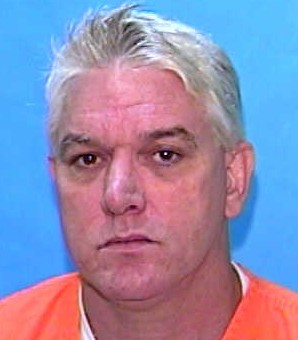
Elmer Carroll
Murderer Brian Kevin Rosenfeld
Murderer · USA · 1985
Brian Kevin Rosenfeld Brian Kevin Rosenfeld was sentenced to three concurrent l…
23 victims
Brian Kevin Rosenfeld
Murderer · USA · 1985
Brian Kevin Rosenfeld Brian Kevin Rosenfeld was sentenced to three concurrent l…
23 victims
 Yahweh ben Yahweh
Murderer · USA · 1980
Yahweh ben Yahweh was born and legally named Hulon Mitchell Jr. (October 27, 19…
23 victims
Yahweh ben Yahweh
Murderer · USA · 1980
Yahweh ben Yahweh was born and legally named Hulon Mitchell Jr. (October 27, 19…
23 victims
 Russell Ellwood
Murderer · USA · 1991
Russell Ellwood was a former taxi driver. Authorities suspected him of killing…
20 victims
Russell Ellwood
Murderer · USA · 1991
Russell Ellwood was a former taxi driver. Authorities suspected him of killing…
20 victims
 Robert Martines Perez
Murderer · USA · 1994
Name: Robert Martines Perez · Other name used in proceedings: Robert Martinez P…
15 victims
Robert Martines Perez
Murderer · USA · 1994
Name: Robert Martines Perez · Other name used in proceedings: Robert Martinez P…
15 victims
 John Makin
Murderer · Australia · 1892
John Makin (14 February 1845 – 15 August 1893) was an Australian baby farmer wh…
12 victims
John Makin
Murderer · Australia · 1892
John Makin (14 February 1845 – 15 August 1893) was an Australian baby farmer wh…
12 victims
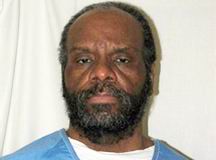 Albert G. Brown
Murderer · USA · 1980
Albert Greenwood Brown, Jr. (born August 18, 1954) Albert Greenwood Brown, Jr.…
1 victim
Albert G. Brown
Murderer · USA · 1980
Albert Greenwood Brown, Jr. (born August 18, 1954) Albert Greenwood Brown, Jr.…
1 victim
 Gary Ploof
Murderer · USA · 2001
Gary W. Ploof was a U.S. Air Force Staff Sergeant stationed with his wife, Heid…
1 victim
Gary Ploof
Murderer · USA · 2001
Gary W. Ploof was a U.S. Air Force Staff Sergeant stationed with his wife, Heid…
1 victim
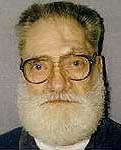 James Henry Hampton
Murderer · USA · 1992
James Henry Hampton was executed by lethal injection in Missouri on March 22, 2…
2 victims
James Henry Hampton
Murderer · USA · 1992
James Henry Hampton was executed by lethal injection in Missouri on March 22, 2…
2 victims
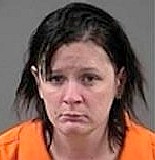 Kathy Coy
Murderer · USA · 2011
Kathy Coy was a defendant in a case involving the killing of a pregnant acquain…
1 victim
Kathy Coy
Murderer · USA · 2011
Kathy Coy was a defendant in a case involving the killing of a pregnant acquain…
1 victim
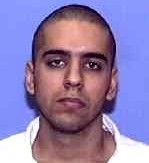 Kenneth Vodochodsky
Murderer · USA · 1999
Kenneth Vodochodsky was born on 08/16/1980. His TDCJ number was 999377. He was…
3 victims
Kenneth Vodochodsky
Murderer · USA · 1999
Kenneth Vodochodsky was born on 08/16/1980. His TDCJ number was 999377. He was…
3 victims
- Gender
- male
- Country
- USA
- Location
- Orange County, Florida, USA
- Date of birth
- August 19, 1956
- Age at first offence
- 34
- Characteristics
- rape, child molester, torture
- Victim profile
- Christine McGowan (female, 10)
- Method of murder
- St abbing with knife
- Date(s) of murder
- October 30, 1990
- Years active
- 1990
- Date of arrest
- Same day
- Status
-
Executed
Sentenced to death on April 16, 1992; executed by lethal injection on May 29, 2013
Timeline
- April 16, 1992 — Elmer Carroll was sentenced to death for first-degree murder and life for sexual battery with victim under 12.
- May 7, 1992 — Carroll filed a direct appeal in the Florida Supreme Court.
- April 14, 1994 — Florida Supreme Court affirmed the convictions and sentence of death.
- June 9, 1994 — Rehearing denied.
- July 11, 1994 — Mandate issued.
- September 7, 1994 — Petition for writ of certiorari filed in the United States Supreme Court.
- October 31, 1994 — Petition denied.
- February 1, 1996 — Motion to Vacate Judgment and Sentence (3.850) filed in State Circuit Court.
- October 20, 1998 — Motion denied.
- December 31, 1998 — Appeal filed in the Florida Supreme Court (3.850).
- March 7, 2002 — Decision affirmed.
- April 19, 2002 — Rehearing denied.
- May 20, 2002 — Mandate issued.
- January 10, 2000 — Petition for writ of habeas corpus filed in the Florida Supreme Court.
- April 22, 2003 — Motion filed (3.850) in State Circuit Court.
- January 12, 2004 — Motion denied.
- February 9, 2004 — Appeal filed in the Florida Supreme Court (3.850).
- May 12, 2005 — Florida Supreme Court affirmed the denial of the motion.
- June 8, 2005 — Petition for writ of habeas corpus filed in the United States District Court (Middle District).
- June 20, 2008 — Petition denied.
- December 4, 2008 — Habeas appeal filed in the United States Court of Appeals (11th Circuit).
- July 17, 2009 — United States Court of Appeals affirmed the denial of the petition.
- August 24, 2009 — Petition for writ of certiorari filed in the United States Supreme Court.
- November 2, 2009 — Petition denied.
- May 29, 2013 — Elmer Carroll was executed by lethal injection; he was pronounced dead at 6:12 p.m.
Case identifiers and court information
Elmer Carroll (DC #835908; DOB: 08/19/56) was identified as being in the Ninth Judicial Circuit, Orange County, Case #90-12464. The Florida Supreme Court opinion number included 79829 and SC94611, and the petition and appeals were referenced with SC00-46.
Background
Elmer Carroll had a history of molesting children before he met Christine McGowan. In 1976 in Pasco County, he performed a lewd and lascivious act in the presence of a child younger than 14. Carroll was sentenced January 8, 1980, to six years and one day in prison for that felony and for aggravated assault, and he served about 16 months. In November 1982 in Pasco, Carroll was arrested again, and in February 1, 1983, he was sentenced to 15 years for fondling a child younger than 15. He was freed April 16, 1990—61/2 months before Christine’s murder—after serving about half of his sentence.
Carroll lived next door to Christine McGowan’s home in a halfway house for homeless men. After his release, he found a place to live at Lighthouse Mission, a halfway house for homeless people and convicts.
The offence
Elmer Carroll convicted and sentenced to death for the murder of 10-year-old Christine McGowen on 10/30/90.
Discovery and initial circumstances
Robert Rank attempted to wake his stepdaughter, Christine McGowan, on the morning of 10/30/90 and, when she did not answer his calls, Rank went to McGowan’s room. He noticed her door, which was open the night before, was closed. Upon entering the room, Rank discovered McGowan face down on the bed. She had blood between her legs and her body was cold to the touch. Rank then noticed that the front door was slightly open and his construction truck was missing.
Police investigators at the scene determined that McGowan had been raped and strangled to death, and issued a bulletin regarding the stolen construction truck.
Offence details as described at trial
Carroll raped and strangled Christine in her bed on Oct. 30, 1990 while her stepfather slept in another room and her mother was at work. Carroll broke into their house near Apopka Boulevard and Orange Blossom Trail and attacked the Lockhart Elementary School student. He placed his hand over her nose and mouth to quiet her, raped her and strangled her.
Carroll had remarked to other residents about the “cute” girl next door. At trial, a mission resident testified that Carroll told him Christine was "cute, sweet and liked to watch him make boats," according to witness testimony at his trial.
Physical evidence and arrest circumstances
DNA evidence recovered from the scene matched Carroll’s saliva, semen and pubic hair. After his arrest, blood was found on Carroll’s sweatshirt and penis.
As a result of Debbie Hyatt’s tip, Carroll was arrested. Hyatt notified police that she remembered seeing the abandoned truck and a man, later identified as Elmer Carroll, walking easterly away from the truck. When law enforcement officers searched Carroll for weapons, they found a box cutter and the keys to the stolen construction truck.
Investigation
A bulletin was issued regarding the stolen construction truck. Investigators tied the physical evidence from the scene to Carroll, including DNA evidence matching Carroll’s saliva, semen and pubic hair, and blood found on Carroll’s sweatshirt and penis after his arrest.
Arrest
Elmer Carroll was arrested after a tip from Debbie Hyatt about seeing the abandoned truck and a man later identified as Elmer Carroll walking away from it.
Trial
Charges and indictment
In November 1990, Carroll was indicted on:
- Count I: First-Degree Murder
- Count II: Sexual Battery W/ Victim Under 12
Conviction and sentencing recommendation
On 04/13/92, the jury found the defendant guilty on both counts. Upon advisory sentencing, the jury, by a 12 to 0 majority, voted for the death penalty.
Sentencing
On 04/16/92, the defendant was sentenced as followed:
- Count I: First-Degree Murder — Death
- Count II: Sexual Battery W/ Victim Under 12 — Life
Insanity and mental competency issues
Carroll’s lawyers employed the insanity defense at his trial. Carroll and prosecutors presented conflicting testimony from psychiatrists about Carroll’s mental competency. During his two decades on death row, Carroll’s lawyers argued that he was too mentally ill to stand trial or be subjected to the death penalty.
Appeals
Florida Supreme Court (direct appeal)
Carroll filed a direct appeal in the Florida Supreme Court on 05/07/92. In that appeal, Carroll alleged that the keys that linked him to Rank’s construction truck should have been suppressed as evidence because they were found as a result of an illegal arrest. Carroll also contended that testimony of one of the deputies unfairly and prejudicially commented on his refusal to testify, and he argued several improper questions asked of a psychiatrist on cross-examination by the prosecutor.
Carroll argued in the penalty phase that the application of the heinous, atrocious, and cruel (HAC) aggravating factor was improper and that the trial court erred in failing to consider certain statutory mitigating evidence. The Florida Supreme Court affirmed the convictions and sentence of death on 04/14/94. Rehearing was denied on 06/09/94, and the mandate was issued on 07/11/94.
United States Supreme Court (certiorari)
Carroll filed a Petition for Writ of Certiorari in the United States Supreme Court; the petition was filed on 09/07/94 and denied on 10/31/94.
State post-conviction (3.850) and subsequent appeals
Carroll filed a Motion to Vacate Judgment and Sentence (3.850) in the State Circuit Court on 02/01/96, and the motion was denied on 10/20/98. He appealed in the Florida Supreme Court on 12/31/98, and the Florida Supreme Court affirmed the denial on 03/07/02. Rehearing was denied on 04/19/02, and the mandate was issued on 05/20/02.
Carroll also filed a Petition for Writ of Habeas Corpus in the Florida Supreme Court on 01/10/00, which was denied on 03/07/02.
A further 3.850 motion was filed on 04/22/03, and the motion was denied on 01/12/04. Carroll appealed in the Florida Supreme Court on 02/09/04. The Florida Supreme Court affirmed the denial of the Motion on 05/12/05.
Federal habeas and appellate review
Carroll filed a Petition for Writ of Habeas Corpus with the United States District Court, Middle District, on 06/08/05, and it was denied on 06/20/08. He filed a habeas appeal with the United States Court of Appeals on 12/04/08, and the United States Court of Appeals affirmed the denial on 07/17/09.
United States Supreme Court (certiorari)
Carroll filed a Petition for Writ of Certiorari in the United States Supreme Court on 08/24/09, and the petition was denied on 11/02/09.
Sentencing and execution
Sentencing details
Elmer Carroll was sentenced to death on April 16, 1992 for Count I (First-Degree Murder) and received a life sentence for Count II (Sexual Battery W/ Victim Under 12).
Execution
On May 29, 2013, Elmer Carroll was executed by lethal injection. He was pronounced dead at 6:12 p.m. at Florida State Prison in Starke.
Carroll declined to make a final statement. Christine McGowan’s mother, Julie McGowen, issued one: "Thank you to all that have worked so hard, and justice for all, namely, Christine McGowen. Rest in peace."
Orange-Osceola State Attorney Jeff Ashton attended the execution. Ashton said: "For me, it's completion."
Other details
Victim
The victim was Christine McGowen, a 10-year-old girl.
The account described that Catherine Mohr taught Christine McGowan math more than two decades ago and said: "She was spunky and full of life," and "I still pray for her daily because she is a part of my life because I taught her in one of my first years teaching,".
Robin Wilkinson, described as a prosecutor who helped put Carroll behind bars, said: "Justice is served for Christine. The death penalty is something that’s only for the worst of the worst but this is the type of case that deserves it,".
Family and witnesses named
Richard Rank (73) was described as Christine’s grandfather. He said: "It's been 20-some years that our granddaughter could have enjoyed her life but didn't, so it's long overdue,". Richard Rank also said: "A little 10-year-old girl should not have to die in her bed by the hands of an animal," and: "He was in prison twice before; they let him out early both times, and there was a warrant out for him when this happened."
Robert Rank was described as Christine’s stepfather and he attempted to wake her on the morning of 10/30/90.
Julie McGowen was described as Christine’s mother.
Debbie Hyatt provided a tip that led to Carroll’s arrest.
Prosecutors, defence and judicial roles
The trial and sentencing were associated with:
- Sentencing Judge: The Honorable Belvin Perry
- Trial Attorney: James E. Taylor, Esq. – Private Attorneys
- Direct Appeal: J. Wulchak & C. Quarles – Assistant Public Defenders
- Collateral Appeals: Michael P. Reiter, Esq. – Registry
Orange-Osceola State Attorney Jeff Ashton prosecuted the case.
Robin Wilkinson was described as a prosecutor who helped put Carroll behind bars.
Statements attributed during sentencing or proceedings
Belvin Perry called the killing "savage and barbaric."
Carroll promised to "rise from the grave" to take vengeance.
Jeff Ashton said: "Elmer Carroll's a monster, and he always will be," and "To feel no compassion or pity of any kind for this child, that is the very definition of a monster in my mind."
Death row behaviour
Carroll was written up 20 times in more than 20 years on death row for prison infractions including attempted arson, possession of contraband and, in December, for making threats.
Last meal and visitors
At 10 a.m. on May 29, 2013, Carroll ate a last meal of sunny-side-up eggs with bacon and sliced tomatoes, biscuits, avocados, a fruit salad of strawberries, papaya, peaches and pineapple and canned milk.
Carroll had two visitors: Susan Cary, a lawyer, and Dale Recinella, a Catholic lay chaplain, author and lawyer. Catherine Mohr was described as a teacher rather than a visitor on the execution day.
In another execution-day description, Carroll had two visitors Wednesday morning: a mitigation specialist and a Catholic priest; no family visited.
Other civil litigation detail
In November 1995, a jury awarded Christine's estate $1.5 million in a lawsuit against Lighthouse Mission and its founder. The Fifth District Court of Appeal overturned the verdict a year later. The court ruled that the mission had no control over Carroll, and that Carroll was merely a tenant.
Delay factors
A time extension was granted in December 1994 for filing a Motion to Vacate Judgment and Sentence (3.850) until February 1, 1996. Statutorily, a defendant had one year from the rehearing denial date to file a 3.850 motion, and with his motion for rehearing denied on 06/09/94, the time lapse between filing was approximately one year and seven months. Other than the filing extension, there were no unreasonable delays identified at that time.
Spotted an error, or have more information about this case?