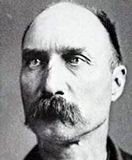
John Makin
Murderer Christopher Flannery
Murderer · Australia · 1979
Christopher Dale Flannery (1949 - missing and believed murdered ca. May 9, 1985…
12 victims
Christopher Flannery
Murderer · Australia · 1979
Christopher Dale Flannery (1949 - missing and believed murdered ca. May 9, 1985…
12 victims
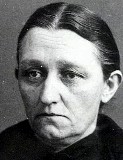 Sarah Makin
Murderer · Australia · 1892
Sarah Makin was also known as Sarah Jane Makin. John Makin (14 February 1845 –…
12 victims
Sarah Makin
Murderer · Australia · 1892
Sarah Makin was also known as Sarah Jane Makin. John Makin (14 February 1845 –…
12 victims
 Alexander Pearce
Murderer · Australia · 1822
1819 — Alexander Pearce was sentenced at Armagh in 1819 to penal transportation…
6 victims
Alexander Pearce
Murderer · Australia · 1822
1819 — Alexander Pearce was sentenced at Armagh in 1819 to penal transportation…
6 victims
 Ned Kelly
Murderer · Australia · 1878
Edward “Ned” Kelly (June 1854 or 1855 – 11 November 1880) was an Irish Australi…
6 victims
Ned Kelly
Murderer · Australia · 1878
Edward “Ned” Kelly (June 1854 or 1855 – 11 November 1880) was an Irish Australi…
6 victims
 Bevan Von Einem
Murderer · Australia · 1979
Bevan Spencer von Einem (born c.1945), also known as Bevan von Einem (with the…
5 victims
Bevan Von Einem
Murderer · Australia · 1979
Bevan Spencer von Einem (born c.1945), also known as Bevan von Einem (with the…
5 victims
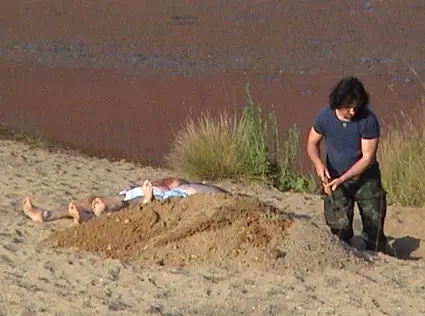 Joseph Schwab
Murderer · Australia · 1987
Joseph Schwab was a German man who murdered five tourists in the Northern Terri…
5 victims
Joseph Schwab
Murderer · Australia · 1987
Joseph Schwab was a German man who murdered five tourists in the Northern Terri…
5 victims
 Maurice Lamar Floyd
Murderer · USA · 1998
Maurice Lamar Floyd was born on 11/29/76. He was tried in the Seventh Judicial…
1 victim
Maurice Lamar Floyd
Murderer · USA · 1998
Maurice Lamar Floyd was born on 11/29/76. He was tried in the Seventh Judicial…
1 victim
 Jon Nödtveidt
Murderer · Sweden · 1997
Jon Andreas Nödtveidt (June 28, 1974 – August 16, 2006) was a lead guitarist an…
1 victim
Jon Nödtveidt
Murderer · Sweden · 1997
Jon Andreas Nödtveidt (June 28, 1974 – August 16, 2006) was a lead guitarist an…
1 victim
 Ali Ben Yanes
Murderer · Franc e · 1971
Ali Ben Yanes was executed by guillotine on May 12, 1973. He and his cousin Hoc…
1 victim
Ali Ben Yanes
Murderer · Franc e · 1971
Ali Ben Yanes was executed by guillotine on May 12, 1973. He and his cousin Hoc…
1 victim
 Miyoko Sumida
Serial killer · Japan · 2003
Miyoko Sumida was a Japanese serial killer who killed six people in a case invo…
6 victims
Miyoko Sumida
Serial killer · Japan · 2003
Miyoko Sumida was a Japanese serial killer who killed six people in a case invo…
6 victims
 Adolph Gil Hernandez
Murderer · USA · 1988
Adolph Gil Hernandez was executed by lethal injection in Texas on February 8, 2…
1 victim
Adolph Gil Hernandez
Murderer · USA · 1988
Adolph Gil Hernandez was executed by lethal injection in Texas on February 8, 2…
1 victim
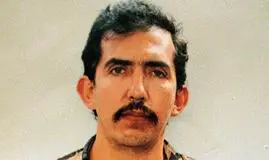 Luis Alfredo Garavito
Serial killer · Colombia/Ecuador · 1992
Luis Alfredo Garavito Cubillos, also known as "La Bestia" ("The Beast") or "Tri…
192 victims
Luis Alfredo Garavito
Serial killer · Colombia/Ecuador · 1992
Luis Alfredo Garavito Cubillos, also known as "La Bestia" ("The Beast") or "Tri…
192 victims
- Gender
- male
- Country
- Australia
- Location
- Australia
- Date of birth
- February 14, 1845
- Age at first offence
- 47
- Characteristics
- babysitter, murder for hire, convicted rapist
- Victim profile
- Illegitimate babies
- Method of murder
- Suffocation? (no evidence of violence or poison)
- Date(s) of murder
- ???? - 1892
- Years active
- 1892
- Date of arrest
- October 1892
- Status
-
Executed
Executed by hanging on August 15, 1893
Case record
John Makin (14 February 1845 – 15 August 1893) was an Australian baby farmer who was convicted in New South Wales of the murder of infant Horace Murray. John and Sarah Jane Makin were tried and found guilty in March 1893 and were sentenced to death by hanging. John was hanged on 15 August 1893 at Darlinghurst Gaol, and Sarah’s sentence was commuted to life imprisonment with hard labour at the State Reformatory for Women at Long Bay.
Timeline
- 11 October 1892 — Worker James Hanoney was clearing a clogged underground drain in the backyard of a home in Burren Street, Macdonaldtown, and found it blocked with the remains of two infant children.
- March 1893 — The Makins were tried for the murder of Horace Murray; both were found guilty.
- 15 August 1893 — John Makin was hanged at Darlinghurst Gaol.
- 29 April 1911 — Sarah Makin was paroled from the State Reformatory for Women at Long Bay in response to the petition of her daughters.
- 13 September 1918 — Sarah Makin died in Marrickville, New South Wales, and was buried in Rookwood Cemetery.
Background
John Makin was born on 14 February 1845 at Dapto, New South Wales, the fourth of eleven children of William Samuel Makin, farmer, and his wife Ellen Selena, née Bolton.
Sarah Jane Makin was born on 20 December 1845 in Sydney, the only daughter and elder child of former convict Emanuel Sutcliffe, miller, and his Irish-born wife Ellen, née Murphy. Sarah first married Charles Edwards, a mariner, in Sydney on 29 April 1865 with Presbyterian forms.
Sarah later married John Makin, described as a drayman for a brewery, on 27 August 1871 with Free Church of England rites. They were both literate and they had five sons and five daughters.
After John suffered an accident, the Makins made a meagre living by taking care of illegitimate babies. They turned to baby farming as a source of income after John was injured in an accident. In practice, they cared for illegitimate babies in exchange for payment.
The offence
The Makins were convicted of the murder of infant Horace Murray.
Prosecutors believed the Makins sought to profit by taking in babies for child care payments and that it was easier to kill the children and deceive the parents to continue receiving money. One of their victims was Horace Murray, whose clothing would be identified by his mother Amber Murray.
Investigation
On 11 October 1892, worker James Hanoney found remains of two infant children while clearing a clogged underground drain in the backyard of a home in Burren Street, Macdonaldtown. Investigators examined records to trace the Makins, who had moved again to Chippendale.
Police exhumed remains from the backyards of eleven homes that the Makins had occupied since 1890. A total of twelve dead infant bodies were recovered, though some sources count thirteen.
The Makins and four of their daughters were arrested, though only John and Sarah were charged.
Arrest
The Makins came to police attention on 11 October 1892.
Trial
In March 1893, the Makins’ own daughters testified against them.
- Clarice, 16 years old, stated that she recognized clothing recovered from one of the dead babies that had previously been in the custody of her mother.
- Daisy, 11 years old, recalled that two young girls followed them to Macdonaldtown, but not Horace.
Other evidence included testimony from another couple who had been paying the Makins 10 shillings per week for the temporary care of their illegitimate baby. That child died within days, after which the couple paid the Makins £2 to cover funeral costs, and the Makins did not attend the funeral.
The trial included a recommendation by the jury that Sarah Makin be spared the death penalty.
Both defendants did not take the stand. The trial judge’s address to the jury referenced a “healthy” infant dead within two days, and the jury found both defendants guilty of murdering an unknown infant but recommended mercy for Sarah.
Defense objections to wrongful admission of testimony from other mothers, which established the Makins’ reputation as “baby farmers,” were dismissed on the grounds that it was impossible to suppose that such testimony had any influence on the verdict of the jury.
An appeal to the Judicial Committee of the Privy Council also failed; the committee would not set aside a jury’s decision because the jury had the “advantage” of seeing and hearing witnesses.
Sentencing
Both Sarah and John Makin were sentenced to death by hanging by the Supreme Court of New South Wales at Sydney for the murder of Horace Murray.
Before sentencing, the judge spoke:
You took money from the mother of this child. You beguiled her with promises which you never meant to perform and which you never did perform having determined on the death of the child. You deceived her as to your address and you endeavoured to make it utterly fruitless that any search should be made and finally, in order to make detection impossible, as you thought, having bereft it of life, you buried this child in your yard as you would the carcase of a dog... No one who has heard the case but must believe that you were engaged in baby farming in its worst aspect. Three yards of houses in which you lived testify, with that ghastly evidence of these bodies, that you were carrying on this nefarious, this hellish business, of destroying the lives of these infants for the sake of gain. —Justice Matthew Henry Stephen
Appeals
After two appeals and a plea for clemency were denied, John Makin was hanged on 15 August 1893 at Darlinghurst Gaol.
John Makin signed a statement that the body was not Amber Murray’s son, claiming that it “was buried in the yard four to five weeks before we got her child”.
Outcome
John Makin was executed by hanging on 15 August 1893 at Darlinghurst Gaol.
Sarah Makin’s sentence was commuted to life imprisonment with hard labour at the State Reformatory for Women at Long Bay. She was later paroled on 29 April 1911 in response to the petition of her daughters, after serving 19 years in prison.
Aftermath
Sarah Makin died on 13 September 1918 in Marrickville, New South Wales, and was buried in Rookwood Cemetery.
Three sons and four daughters survived her.
According to court records, the Makins were not charged in any further criminal activity.
Other details
Horace Murray was born on 30 May 1892 to Amber Murray. Amber Murray placed an advertisement in the Sydney Morning Herald in search of a mother to adopt a baby boy, seeking to cover child support expenses. The Makins replied that they were willing to take care of Horace in exchange for 10 shillings per week.
Daughter Blanche Makin accepted an upfront payment of £3 and picked up the child. John Makin continued to collect child support payments from Amber Murray while responding with excuses to her requests to see Horace. When Murray visited an address near Sydney provided by the Makins, the family was not found. They had already moved to Macdonaldtown.
Another couple testified that they had also been paying the Makins 10 shillings per week for the temporary care of their illegitimate baby, and that the child died within days. The grieving parents then paid the Makins £2 toward funeral costs, and the Makins did not attend the funeral.
A coronial jury returned open verdicts in cases involving the deaths of infant children during November 1892, and later a coronial jury returned a verdict of murder in the case of Amber Murray’s child.
The case raised awareness of the institution of baby farming. It led the New South Wales Legislative Assembly to initiate the Children’s Protection Act of 1892, to bring the care of orphaned and destitute children under state control.
In media, the story of Amber Murray and the Makin family inspired the 2008 Australian theater production The Hatpin, which played in Sydney and in New York City. In 2009, it was nominated for three Sydney Theatre Awards and won one for best actress. In August 2009, the Makin story was televised in the Discovery Channel documentary series Deadly Women.
Spotted an error, or have more information about this case?