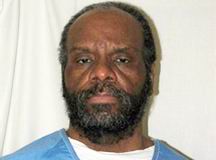
Albert G. Brown
Murderer Ervil LeBaron
Murderer · USA · 1972
Ervil Morrell LeBaron (1925 to August 16, 1981) was the leader of a polygamous…
35 victims
Ervil LeBaron
Murderer · USA · 1972
Ervil Morrell LeBaron (1925 to August 16, 1981) was the leader of a polygamous…
35 victims
 Brian Kevin Rosenfeld
Murderer · USA · 1985
Brian Kevin Rosenfeld Brian Kevin Rosenfeld was sentenced to three concurrent l…
23 victims
Brian Kevin Rosenfeld
Murderer · USA · 1985
Brian Kevin Rosenfeld Brian Kevin Rosenfeld was sentenced to three concurrent l…
23 victims
 Marvin Gray
Murderer · USA · 1975
Marvin Gray was convicted killer who claimed responsibility for 23 slayings and…
23 victims
Marvin Gray
Murderer · USA · 1975
Marvin Gray was convicted killer who claimed responsibility for 23 slayings and…
23 victims
 Yahweh ben Yahweh
Murderer · USA · 1980
Yahweh ben Yahweh was born and legally named Hulon Mitchell Jr. (October 27, 19…
23 victims
Yahweh ben Yahweh
Murderer · USA · 1980
Yahweh ben Yahweh was born and legally named Hulon Mitchell Jr. (October 27, 19…
23 victims
 Michael Skakel
Homicide · USA · 1975
Michael Skakel was the nephew of Ethel Skakel Kennedy, the widow of Senator Rob…
1 victim
Michael Skakel
Homicide · USA · 1975
Michael Skakel was the nephew of Ethel Skakel Kennedy, the widow of Senator Rob…
1 victim
 Linda Henning
Murderer · USA · 1999
Linda Henning was convicted of felony murder and kidnapping in connection with…
1 victim
Linda Henning
Murderer · USA · 1999
Linda Henning was convicted of felony murder and kidnapping in connection with…
1 victim
 Lee Doon
Murderer · United Kingdom · 1922
Sing Lee was 33-years-old. He owned a chain of laundries and lived over the pre…
1 victim
Lee Doon
Murderer · United Kingdom · 1922
Sing Lee was 33-years-old. He owned a chain of laundries and lived over the pre…
1 victim
 Robert Gattis
Murderer · USA · 1990
Robert Gattis (DOB: 11/18/1961) was a Black male. Gattis was convicted in Octob…
1 victim
Robert Gattis
Murderer · USA · 1990
Robert Gattis (DOB: 11/18/1961) was a Black male. Gattis was convicted in Octob…
1 victim
- Gender
- male
- Country
- USA
- Location
- Riverside, Riverside County, California, USA
- Date of birth
- August 18, 1954
- Age at first offence
- 26
- Characteristics
- convicted rapist
- Victim profile
- Susan Louise Jordan, 15
- Method of murder
- Strangulation with her own shoelace
- Date(s) of murder
- October 28, 1980
- Years active
- 1980
- Date of arrest
- November 6, 1980
- Status
-
Sentenced to death
Sentenced to death on February 19, 1982
Case record: Albert G. Brown
Name
Albert Greenwood Brown, Jr. (born August 18, 1954)
Background
Albert Greenwood Brown, Jr. grew up in Tulare, California with his father's family that reportedly saw to it that "every kid went to college". According to a Tulare Western High School yearbook, he was to be part of the class of 1972. He was expelled from school after he accidentally fired a gun that he had brought on campus and grazed another student in the head.
He joined the United States Marine Corps, but was brought to court-martial and discharged in 1975 for being absent without leave. He moved to Riverside, California to live with his divorced mother.
Brown was soon charged with molesting an 11-year-old girl. He pleaded guilty and was sentenced to two years probation.
The offence
1976 rape of a 14-year-old girl
On an early morning in 1976, Brown broke into a home in Riverside and hid in a closet until all of the residents had left. When a 14-year-old girl returned from a paper route to go to school, he choked her unconscious and raped her in her mother's room.
Brown pleaded guilty to charges of rape with force on May 4, 1978 and was sentenced to state prison. He was paroled on June 14, 1980 and found work cleaning and preparing new cars for sale at Rubidoux Motors in Riverside County.
Death of Susan Louise Jordan (adolescent)
On the morning of October 28, 1980, Brown abducted 15-year-old Susan Louise Jordan while she was on her way to Arlington High School in Riverside. He was posing as a jogger on the route. After dragging her to an orange grove, Brown raped her and strangled her to death with her own shoelace. He took her identification cards and school books.
Susan's mother, Angelina Jordan, went to the school to search for Susan after her younger sister Karen and younger brother James returned home without her. Brown had a connection to the search because Angelina Jordan had left her car to be serviced at Brown's workplace, Rubidoux Motors.
After finding the family's number in a phone book, Brown called Angelina Jordan from a payphone at around 7:30 p.m. to tell her where he left her daughter's body. The call included the statement: "Hello, Mrs. Jordan, Susie isn't home from school yet, is she? You will never see your daughter again. You can find her body on the corner of Victoria and Gibson."
Susan's body was found after Brown repeatedly made calls to the Riverside Police Department and the Jordan residence. One of Brown's subsequent calls was recorded by a police officer.
Investigation
Susan's disappearance led to police efforts. On the morning of October 28, 1980, about 7:30 a.m., 15-year-old Susan J. left her home on Victoria Avenue in Riverside to walk to school with her younger brother and sister. After the younger children left Susan to walk to their elementary school, she continued up Victoria Avenue toward Arlington High School. She never arrived, and efforts throughout the day to locate her were unsuccessful. Her parents telephoned the police.
Sometime between 7 and 7:30 that evening, the telephone at Susan's home rang, and Susan's mother answered it. The male-voiced caller said, "Hello, Mrs. J., Susie isn't home from school yet, is she?" Mrs. J. replied that she was not. The voice then declared, "You will never see your daughter again. You can find her body on the corner of Victoria and Gibson." At Mrs. J.'s request, the caller repeated the information, then hung up. Mrs. J. telephoned the police again.
Around 7:30, the Riverside Police Department received another call. A male voice said, "On the corner of Gibson and Victoria, fifth row, you will find a white Caucasian body of a young girl in the orange grove." Police officers were sent with a police dog to the orange grove at the corner of Gibson and Victoria; they found nothing initially.
Officer Taulli went to the J. residence to get an article of Susan's clothing to be used by the dog as a scent guide. Officer Taulli arrived at the J. home about 8:30; Police Chaplain Phillip Morgan arrived at the same time. While Taulli was still there, the telephone rang, and he answered it. A male voice asked if "this [is] the [J.] house or the [J.] residence?" Taulli advised that it was. The caller said, "You can find Sue's identification in a telephone booth at the Texaco station at Arlington and Indiana." Taulli told Morgan and Mrs. J. to record any further calls verbatim, then returned to the grove with an article of Susan's clothing. After sniffing the item brought by Taulli, the dog shortly found a pair of torn panties in the grove. The dog then led police down the next six rows of trees. There Susan's body was found lying face down, with dirt piled up on both sides of the head.
The body was nude below the waist, except for socks, and Susan's bra was partially pulled out from under her blouse. Several school notebooks and Susan's tennis shoes were found near the body, and her jeans were located elsewhere in the grove. A shoelace, apparently from one of her shoes, was wrapped tightly around her neck. Susan was holding a spark plug wire cap in her hand, and a spark plug wire was discovered nearby. Homicide investigators were called. They found signs of a struggle and indications that the body had been dragged for some distance. Shoeprints in a herringbone pattern were found around the body and photographed. Susan's blouse was stained, and swabs were taken from her vagina and abdomen.
That same night, officers were sent to the Texaco station at the corner of Arlington and Indiana. There, in a telephone booth, they discovered two Arlington High School identification cards belonging to Susan and a library pouch from a book. The pouch was stamped with the words "Arlington High School."
Chaplain Morgan obtained a tape recorder and hooked it up to the J.s' phone. About 9:30 p.m., the phone rang again. The same male voice said, "In the tenth row, you'll find the body."
The following early next morning, police set up roadblocks on the streets near the grove and questioned passersby. Several remembered seeing Susan the morning before, walking on a bike trail through the grove in the block of Victoria between Gibson and Van Buren Boulevard. Others had additionally seen a black man approaching Susan on the bike trail, standing in the grove as she walked by, or following her. The man was wearing jogging clothes; two witnesses more particularly described green running shorts and a green and white shirt. A number of people also recalled seeing a late-model brown or copper-colored Pontiac Trans-Am parked nearby; it bore a distinctive paper license plate with the words "Made in USA" or "Made in America." Peter Rodriguez saw a black man emerge from the grove and open the trunk of the Trans-Am; the man kept staring at Rodriguez. Margery Johnston also saw a black man in running clothes come out of the grove. He appeared startled and his legs were dusty or dirty.
The investigation included surveillance of Brown's Gertrude Street residence. On November 6, he drove up in a brown Trans-Am and was arrested when he drove away again. A warrant to search the residence was obtained and executed that evening. Behind a water heater in the garage, police found a crumpled-up paper license plate that read "Made in America." Inside the house, a telephone directory was turned back to the page containing the J.s' listing. There were newspaper articles about Susan's death under defendant's bed, and two of her missing schoolbooks were found in the den. The library pouch found in the telephone booth had come from one of the books.
Brown's locker at work was also searched. Police seized jogging clothes, including green running shorts and a green and white shirt. Undershorts found in the locker had semen stains. The locker also contained running shoes; the pattern of their soles closely matched the shoeprints found at the crime scene. Tests determined that Susan had died by strangulation sometime between 7 and 11 a.m. on October 28. Analyses of the stains and swabs obtained from the body revealed the presence of semen.
At trial, three witnesses positively identified Brown as the man they saw in the vicinity of the grove on the morning of October 28:
- Wiley Eng, a high school student, testified that he was riding his bicycle on the bike trail in the grove, overtook Susan traveling on foot in the same direction in the block between Van Buren and Gibson, and then passed the man walking toward him at a distance of two or three feet. Eng had some three seconds to see the man's face. He picked defendant from a photo lineup, stating then he was 60 to 70 percent sure it was the same man. He said his identification at the preliminary hearing and at trial were unequivocal, though he admitted newspaper photos of defendant had helped him decide.
- Julie Pim testified she was a passenger in her brother's truck stopped for a red light at Victoria and Van Buren on the way to school. She saw Susan, whom she knew from elementary school, pass close to a man she identified as defendant while crossing the intersection. She picked defendant from a photo lineup of eight black males, stating she was 60 percent certain and could tell better in person. She said she saw defendant's newspaper photo before the preliminary hearing, but denied it aided her positive identification at that proceeding. She also admitted she might have been influenced at the preliminary hearing by the fact that defendant was the only black person present.
- Margery Johnston positively identified defendant at trial. She had been unable to pick defendant from a photo lineup while under hypnosis; she testified that he appeared different in person than in the photos.
Henry Garcia and Peter Rodriguez testified that defendant looked like the man they had seen that morning, but neither could be certain. Several witnesses confirmed that photos of defendant's car produced at trial matched the automobile parked near the grove on the morning of October 28.
Over defendant's objection, Faye Springer and Rodney Andrus, criminalists from the California Department of Justice (CDJ), testified about comparisons of the victim's and defendant's blood, the blouse stains, and the vaginal and abdominal swabs, along with the semen stains on the undershorts from defendant's locker. They reported comparisons in four categories of inherited genetic characteristics. Springer testified that the stains and swabs matched defendant's genetic characteristics in several respects and that defendant's characteristics were shared by only a small percentage of the black population. William Anderson and Norm Gibson, acquaintances of defendant, identified the voice on the taped call to the J. residence as that of defendant.
Arrest
Brown was arrested on November 6, 1980 after three witnesses came forward to identify him and his Pontiac Trans Am with a Rubidoux Motors paper plate near the site of the murder. Susan's identification cards were found in a phone booth at a nearby Texaco service station.
Trial
Guilt trial
On February 4, 1982, a Riverside County jury convicted Brown of first-degree murder with the special circumstance of rape. At trial, Brown was convicted on one count of rape (Pen. Code, § 261, former subd. (3)) with the infliction of great bodily injury (§ 12022.8) (count I) and one count of first degree murder (§§ 187, 189) (count II). The jury made a special finding that the murder was premeditated. A special circumstance that the murder was committed in the course of a rape (§ 190.2, subd. (a)(17)(iii)) was found true. Brown admitted allegations that he had suffered a prior conviction and prison term for rape ( §§ 667.5, subd. (a), 667.6, subd. (a) ).
Acting under the 1978 death penalty initiative law (§§ 190.1-190.7), the jury fixed the punishment on count II as death. The court denied the automatic application for modification of judgment (§ 190.4, subd. (e)) and imposed a further sentence of thirteen years on count I (the upper term for rape, plus a consecutive five years for the great bodily injury) with a five-year enhancement for the prior prison term.
Brown presented an alibi defense. His mother testified she arrived home from work at 7:40 a.m. on October 28 and that Brown was at home. She testified that he left to buy milk and returned at 7:48, ate breakfast, and left for work at 8:14.
The surviving victim of the 1976 rape case testified against Brown.
During sentencing hearings, Brown's defense attorney argued Brown was remorseful and presented evidence of psychiatric problems, including sexual dysfunction. Brown claimed that he was physically abused by his aunt as a child and spanked by his mother. His mother denied abusing Brown but claimed her son was out buying milk at the time of the murder. The jury deliberated for less than three hours on February 19 and sentenced Brown to death.
Issues addressed on appeal (guilt and special circumstance phase)
Brown challenged the exclusion of expert testimony by Dr. Robert Shomer, a psychologist, regarding factors that may cause mistaken observations by eyewitnesses. The trial court refused to permit the testimony. On appeal, the conviction and special circumstance findings were affirmed, with the court concluding that the trial court did not abuse its discretion excluding expert testimony on eyewitness identification and that any error was harmless.
Brown also challenged testimony by Margery Johnston, including her in-court identification, based on prior hypnosis to enhance her recall. On appeal, the court concluded that any error admitting Johnston's testimony was clearly harmless due to other unequivocal identifications and corroborating circumstantial evidence.
Brown further challenged admissibility of forensic analysis of blood and semen stains. Over defendant's repeated objections, Faye Springer and Rodney Andrus compared genetic analyses of dried-fluid and stain samples with results of blood-grouping tests. The appellate decision concluded that the testimony regarding stain-test evidence should not have been admitted on that record, but it held that the error was harmless in light of overwhelming evidence against Brown and affirmed the convictions and the special circumstance finding.
The decision also addressed the statistical use of stain-typing evidence. It concluded that because the stain-test results were already concluded inadmissible on the record, it did not address the merits further; it determined that statistical evidence did not render the otherwise harmless error prejudicial.
Sentencing
On February 19, 1982, the jury deliberated for less than three hours and sentenced Brown to death.
On March 2, 1982, Brown was placed on death row at San Quentin State Prison in San Quentin, California.
A further sentence of thirteen years was imposed on count I, with a five-year enhancement for the prior prison term, as part of the judgment following conviction.
Appeals
In 1985, Brown's sentence was overturned by the California Supreme Court and reinstated by the U.S. Supreme Court in 1987.
Brown filed a motion of habeas corpus to the U.S. 9th Circuit Court of Appeals, arguing he received ineffective counsel at his trial and that his sentence was a cruel and unusual punishment that violated the 8th Amendment of the U.S. Constitution. On September 19, 2007, Judge Michael Daly Hawkins denied Brown's appeal and upheld lower court rulings.
The California Supreme Court issued an opinion reversing the penalty judgment while affirming the guilt and special circumstance findings. The opinion concluded that the penalty judgment must be reversed and that the judgment as to guilt and the finding of a special circumstance were affirmed. The court held that antisympathy instructions at the penalty phase were prejudicial and reversed the penalty judgment. The court also addressed constitutional challenges regarding asserted mandatory aspects of the 1978 death penalty law, concluding that the law was not invalid on those grounds.
Outcome
The judgment as to guilt, and the finding of a special circumstance, were affirmed. The penalty judgment was reversed by the California Supreme Court in the opinion described in the record.
Aftermath
Lifting of injunction and execution proceedings
On August 29, 2010, a California court lifted a statewide injunction against capital punishment with certification of new lethal injection procedures. The next day, Riverside County District Attorney Rod Pacheco sought a death warrant for Brown.
A Riverside County judge, Roger Luebs, initially set Brown's execution for 12:01 a.m. on September 29, 2010. On August 31, prison warden Vince Cullen personally walked to Brown's cell to read the death warrant to him.
Brown was scheduled to die by lethal injection at 9 p.m. on September 30, 2010 in California's first use of capital punishment after the lifting of a court-ordered moratorium. The use of lethal injection had been suspended in the state since February 2006 because of objections of cruel and unusual punishment due to shortcomings of the facilities and procedures previously in use at San Quentin State Prison.
Brown's execution was delayed because the prison's supply of sodium thiopental expired. The manufacturer stated that new supplies would not be available until 2011.
Judge Fogel halted the execution to permit time to review whether the new injection procedures addressed previous objections. On September 29, 2010, the Supreme Court of California unanimously denied an appeal by the state to proceed by the end of the month.
Claims, procedure details, and last meal
Brown refused to make a selection of an execution method. Defense attorney John Grele described Brown as "a simple man with obvious neuropsychological deficits" who is unprepared to make such a decision.
Fogel declined to issue a stay of execution and explained that a stay would have been considered if Brown selected a single injection and the prison refused to carry it out. In the absence of a decision, the prison defaulted to preparing the three-drug protocol.
Lt. Sam Robinson stated that the gas chamber is still fully functional and available if required. On September 27, Marin County judge Verna Adams denied a defense request to stop the execution. An appeal for clemency was forwarded to California governor Arnold Schwarzenegger. Prosecutor Rod Pacheco wrote to Schwarzenegger urging him not to intervene.
Brown ordered a last meal of steak and onion rings. The premises were wired with speakers so that his last words could be broadcast. Brown was examined by prison staff to check that his veins were healthy enough for the injection process.
The facility had undergone a $853,000 renovation that quadrupled its size, and it was described as being set up to utilize a protocol of a three-drug combination of sodium thiopental, pancuronium bromide, and potassium chloride, or a single injection of sodium thiopental in which the dose is increased from 3 to 5 grams to make it lethal by itself.
Drug supply and further dates
On October 6, 2010, the state attorney general's office notified Judge Fogel in a court filing that the state had obtained enough sodium thiopental for up to four more executions.
Scott Kernan of the California Department of Corrections and Rehabilitation called the Arizona Department of Corrections "life savers" for providing 12 grams of the drug after the Texas Department of Criminal Justice denied a similar request.
The state of California spent $36,415 to acquire an additional 521 grams of sodium thiopental from Archimedes Pharma of Great Britain to last through 2014.
Other details
Parole and work
Brown was paroled on June 14, 1980 and found work cleaning and preparing new cars for sale at Rubidoux Motors in Riverside County.
Connection of family to the workplace
Angelina Jordan left her car to be serviced at Brown's workplace, Rubidoux Motors, around the time of Susan's disappearance.
Additional victims and prior rape evidence presented at penalty phase
At the penalty phase, the prosecution presented evidence of defendant's 1977 rape of 14-year-old Kelly P. Brown pled guilty and was sentenced to state prison. He was released in June 1980 on one year's parole.
Quotes
Defense attorney John Grele described Brown as: "a simple man with obvious neuropsychological deficits" and said Brown is unprepared to make the execution-method decision.
Brown told Angelina Jordan: "Hello, Mrs.
Karen Jordan criticized delays with: "The appeals process in California has proven to be nothing more than a never-ending war of attrition against justice and the rights of victims and their families."
Scott Kernan called Arizona the: "life savers"
Jerry Brown was quoted as saying: "Albert Greenwood Brown Jr. deserves everything that he has coming to him in regards to due process. I have no doubt that his execution will be carried out fastidiously and in a timely manner."
Execution-related procedural statements and reported positions (as included in the record)
Brown's lawyers blamed the move to execute their client on the tight race between Jerry Brown and Meg Whitman for the 2010 California gubernatorial election to succeed retiring governor Schwarzenegger.
Republican nominee Meg Whitman claimed: "None of this squares with Jerry Brown's record."
The Democratic campaign of Jerry Brown, who pledged to "enforce the laws" of California, denied any connection between the case and the election.
Prosecutor Rod Pacheco said it would be unfair to accuse Jerry Brown of using the execution for political gain as they never discussed the case.
Spotted an error, or have more information about this case?