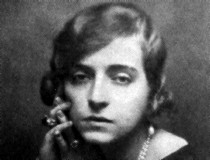
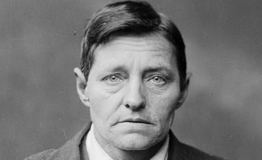
Marguerite Fahmy
Murderer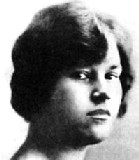 Edith Thompson
Murderer · United Kingdom · 1922
Edith Jessie Thompson (Edith Graydon; 25 December 1893 – 9 January 1923) was a…
1 victim
Edith Thompson
Murderer · United Kingdom · 1922
Edith Jessie Thompson (Edith Graydon; 25 December 1893 – 9 January 1923) was a…
1 victim
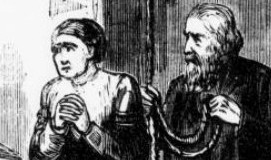 Margaret Waters
Murderer · United Kingdom · 1866
Margaret Waters was an English murderess who was hanged by executioner William…
19 victims
Margaret Waters
Murderer · United Kingdom · 1866
Margaret Waters was an English murderess who was hanged by executioner William…
19 victims
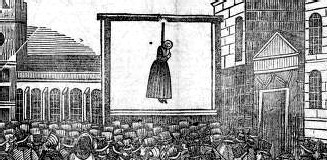 Catherine Wilson
Murderer · United Kingdom · 1854
Catherine Wilson was a British nurse who poisoned victims after befriending the…
7 victims
Catherine Wilson
Murderer · United Kingdom · 1854
Catherine Wilson was a British nurse who poisoned victims after befriending the…
7 victims
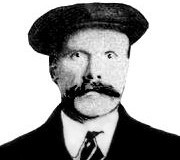 Albert Burrows
Murderer · United Kingdom · 1920
Albert Burrows (also named Albert Edward Burrows): married farm labourer who to…
4 victims
Albert Burrows
Murderer · United Kingdom · 1920
Albert Burrows (also named Albert Edward Burrows): married farm labourer who to…
4 victims
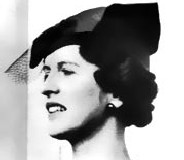 Florence Ransom
Murderer · United Kingdom · 1940
Florence Ransom was a middle-aged woman who was described as physically beautif…
3 victims
Florence Ransom
Murderer · United Kingdom · 1940
Florence Ransom was a middle-aged woman who was described as physically beautif…
3 victims
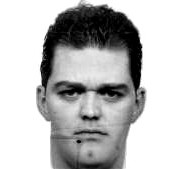 Jeffery Eugene Tucker
Murderer · USA · 1988
Jeffery Eugene Tucker was convicted of capital murder in connection with a robb…
1 victim
Jeffery Eugene Tucker
Murderer · USA · 1988
Jeffery Eugene Tucker was convicted of capital murder in connection with a robb…
1 victim
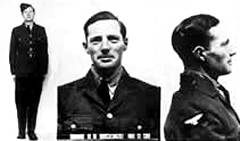 Gordon Cummins
Spree killer · United Kingdom · 1942
Gordon Frederick Cummins was called “The Count” due to his claims of noble birt…
4 victims
Gordon Cummins
Spree killer · United Kingdom · 1942
Gordon Frederick Cummins was called “The Count” due to his claims of noble birt…
4 victims
 Dewayne Michael Carey
Murderer · USA · 1995
Defendant: Dewayne Michael Carey, who was sentenced to death on December 16, 19…
1 victim
Dewayne Michael Carey
Murderer · USA · 1995
Defendant: Dewayne Michael Carey, who was sentenced to death on December 16, 19…
1 victim
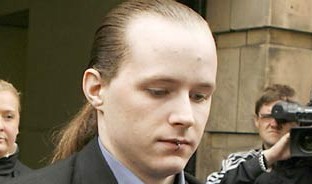 Luke Mitchell
Homicide · United Kingdom · 2003
Luke Muir Mitchell (born July 24th 1988) was a Scottish teenager convicted of m…
1 victim
Luke Mitchell
Homicide · United Kingdom · 2003
Luke Muir Mitchell (born July 24th 1988) was a Scottish teenager convicted of m…
1 victim
 James Dunham
Mass murderer · USA · 1896
James C. Dunham was a multiple murderer who killed his wife and members of his…
6 victims
James Dunham
Mass murderer · USA · 1896
James C. Dunham was a multiple murderer who killed his wife and members of his…
6 victims
- Gender
- female
- Country
- United Kingdom
- Location
- London, England, United Kingdom
- Date of birth
- December 1890
- Age at first offence
- 33
- Characteristics
- parricide
- Victim profile
- Ali Bey Kemel Fahmy, 22 (her husband)
- Method of murder
- Shooting ( Browning .32-caliber pistol)
- Date(s) of murder
- July 9, 1923
- Years active
- 1923
- Date of arrest
- Same day
- Status
-
Acquitted / overturned
Found not guilty by a jury on September 14, 1923.
Case details
Marguerite Fahmy faced a charge of murder in connection with the death of Ali Kamel Fahmy at the Savoy Hotel in London in 1923. She was tried at London’s Central Criminal Court and was found not guilty by a jury on September 14, 1923.
Background
Frenchwoman Marie-Marguerite Laurient began an affair with Egyptian Prince Ali Kamel Fahmy Bey in Paris in May 1922, following her divorce from her first husband. She was later referred to as Marguerite Fahmy and as Madame Fahmy.
The 23-year-old Prince Ali was attached to the French legation in Cairo. He was described as extravagant and allegedly having a sadistic bent. It was rumoured in Egypt that Ali was homosexual, but this was not in evidence when he pursued Laurient. Laurient was described as a brunette divorcee, ten years his senior, and she had earlier called herself Maggie Mellor.
Ali took Laurient back to Cairo and suggested they live together. When Laurient balked, Ali proposed marriage and Laurient accepted on conditions. A contract was drawn up that permitted Laurient to wear western-style clothing and to divorce Ali at any time. In return, she would convert to the Muslim faith to ensure Ali’s inheritance.
When the religious ceremony took place, Fahmy ordered the divorcee clause removed, allowing him to take three wives. Marguerite found Fahmy to be an abusive husband, and he frequently beat her. He also assigned a houseboy to follow her throughout her day, including when she undressed.
Timeline
- May 1922 — Marie-Marguerite Laurient began an affair in Paris with Egyptian Prince Ali Kamel Fahmy Bey after her divorce from her first husband.
- July 10, 1923 — The couple travelled to London and registered at the Savoy Hotel.
- September 10, 1923 — The murder trial of Marguerite Fahmy opened in London’s Central Criminal Court.
- September 14, 1923 — A jury returned a verdict of not guilty.
- January 2, 1971 — Marguerite Fahmy died in Paris.
- September 14, 1923 — The jury returned not guilty after only an hour’s deliberation.
The offence
On the night described as after their arrival at the Savoy Hotel in July 1923, Prince Ali and Marguerite quarreled bitterly in their suite regarding an operation Marguerite was scheduled to undergo. The prosecution and defence narratives centered on the circumstances leading to the shooting and the handling of the events within the hotel.
Investigation and incident at the Savoy Hotel
The couple retired to their suite at 1:30 a.m. A luggage porter passing their door saw Fahmy burst from the room in agitation, his face scratched, and heard him shout:
- “Look at my face!”
- “Look at what she has done!”
Seconds later, three shots rang out. The porter rushed to the room and found the prince lying on the floor of his suite.
Marguerite, tears running down her cheeks, stood next to the fallen husband and said:
- “Oh, sir, I have been married six months, which has been torture for me. I have suffered terribly.”
Fahmy was wounded and taken to a hospital, where he died a short time later.
In a separate description of the same episode, the night porter reported that he passed the suite door and heard a low whistle, saw Ali Fahmy bending down apparently whistling for Marguerite’s little dog, and then heard three shots fired in quick succession. The night porter said Marguerite threw down a black handgun and saw Ali slumped against a wall bleeding from a wound on his temple with splintering of bone and brain tissue protruding. The same passage also included Marguerite repeatedly saying:
- “Qu’est-ce que j’ai fait, mon cher?’ (what have I done, my dear?’
Arrest and charge
Marguerite Fahmy was charged with the murder of Ali Fahmy.
Trial
The “lurid trial” of Marguerite Fahmy opened in London’s Central Criminal Court on September 10, 1923, before 49-year-old Mr. Justice Rigby Swift.
The prosecution was headed by Percival Clarke.
Sir Edward Marshall Hall and Sir Henry Curtis-Bennett represented Marguerite.
Defence narrative and courtroom evidence
Hall portrayed Prince Ali as a stalking brute and argued that the prince tried to kill Marguerite, framing Marguerite as defending her life during an altercation involving the gun.
Hall obtained evidence from the prison medical officer at Holloway Prison, where Marguerite had been jailed following her arrest. The physician stated he had examined the woman at that time and found three abrasions on the back of her neck, apparently caused by a man’s hand.
A recreation was conducted using the actual murder weapon, described as a Browning .32-caliber pistol. Hall took the actual murder weapon and demonstrated the shooting for the jury. The demonstration involved Hall pointing the weapon at the jury, then dropping the gun to the floor. The narration included a statement that the lawyer later insisted that that part was an accident.
During the trial, Hall made statements and performed an imitation as Prince Ali. The record also included additional description of Hall’s defence approach depicting Ali in terms used in the narrative, including allegations about sexuality and conduct. Hall also addressed the jury directly.
Quotes attributed in court
Hall’s final speech included a quotation attributed to him by the narrative:
- “The only thing that I remember saying that might be misunderstood was that it was a mistake for Western woman to marry Eastern man, and his idea of his rights toward a wife were those of possession instead of mutual alliance.”
The narrative also recorded a direct quote attributed to Marshall Hall about women in the public gallery:
- “if women choose to come here to hear this case, they must take the consequences”.
It further recorded comments attributed to Hall:
- “Yes, he was only 23 years old,”
- “But he was given to a life of debauchery and was obsessed with his sexual prowess.”
- “He developed abnormal tendencies and he never treated Madame normally”
- “If the Labour Party comes to power, its government will do away with that system that conditions the defendants' chances of acquittal largely upon how much they can afford to spend on their defence.” (as quoted in later press commentary)
In the account of Marguerite taking the stand, Ali laughed and said:
- “He is nobody. He does not count. But he has the right to come here or anywhere you may go and tell me what you are doing."
The judge addressed the public gallery and delivered a caution. The record included a judge’s caution to the jury:
“The prosecution has demonstrated that the defendant killed Ali Fahmi Bek, in an act which the law considers deliberate murder, as long as the defence has not been able to prove otherwise. If the members of the jury doubt whether the defendant believed or did not believe that her act was a crime or anything less than murder, they must nevertheless resolve that she did indeed commit a deliberate act of murder. We must not allow hair-raising testimonies to distract us or affect our judgement. Do not let fear or loathing prevent you from using your mental faculties.”
The judge also made statements captured in the narrative:
“These things are horrible; they are disgusting. How anyone could listen to these things who is not bound to listen to them passes comprehension.”
During the proceedings, the judge stated upon the verdict:
- “Madame Fahmi, the jury has found you not guilty. You are acquitted of the charges that had been brought against you.”
Jury verdict
The jury deliberated for only an hour. The exchange recorded included the clerk and foreman:
- “Clerk of the court: Is Madame Fahmi guilty of deliberate murder?”
- “Foreman of the jury: Not guilty.”
- “Clerk of the court: Is the defendant guilty of manslaughter (murder committed without deliberation)?”
Outcome
After the verdict, Marguerite Fahmy was discharged and was described as a free woman. The trial included acquittal on both murder and manslaughter charges. The jury returned a verdict of not guilty after only an hour’s deliberation.
Aftermath
After the verdict, Marguerite soon left for Paris. She found she had no claim to her late husband’s fortune because he had left no will.
The narrative described a failed plot in which she pretended to have been pregnant and to have borne a son who would have been entitled to his father’s fortune. The narrative then described her becoming relatively a recluse and noted that she never remarried.
The narrative stated that Marguerite Fahmy died on 2 January 1971 in Paris.
Other details
The Savoy Hotel was described as hosting scandal in earlier years, including Oscar Wilde’s trial involving rent-boys and a judge’s quoted remark:
- “I know nothing about the Savoy, but I must say that in my view chicken and salad for two at sixteen shillings is very high. I am afraid I shall never supper there myself.”
The narrative also recorded that Al-Ahram published court transcripts and described reactions to the trial in multiple newspapers, including the quoting of a letter’s contents read in court:
“Pray permit a friend who has travelled extensively in many countries of the Orient and has studied the morals of Oriental people and knows their sinister ways to offer you some advice. Do not return to Egypt. It is better to risk your money than your life, for I fear an accident may befall you if you go!”
The narrative described the hotel context and theatre outing:
- On July 9, 1923, the couple went to Daly’s Theatre on Cranbourne Street off Leicester Square to see “The Merry Widow”, with performers described as Evelyn Laye and Carl Brisson.
- They returned to the Savoy after the theatre for a late supper, and the meal was disrupted by a large argument.
The narrative also recorded details about alleged domestic abuse and surveillance, including that Ali appeared in public with scratches on his face and Marguerite was seen with dark bruises on her face ill-disguised with powder and makeup. During a heated argument, Marguerite shouted in French:
- “You shut up or I’ll smash this over your head.” Ali replied:
- “If you do, I’ll do the same to you.”
The narrative also recorded the statement about Marguerite’s communication language in that she did not speak a word of English when speaking to the band leader:
- “I don’t want music,”
The narrative included a response attributed to the band leader:
- “I hope you will still be here tomorrow, Madame.”
Spotted an error, or have more information about this case?