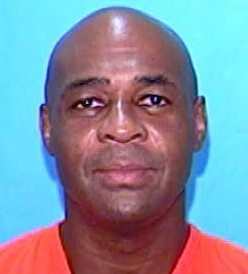
Douglas Ray Meeks
Murderer Ervil LeBaron
Murderer · USA · 1972
Ervil Morrell LeBaron (1925 to August 16, 1981) was the leader of a polygamous…
35 victims
Ervil LeBaron
Murderer · USA · 1972
Ervil Morrell LeBaron (1925 to August 16, 1981) was the leader of a polygamous…
35 victims
 Marvin Gray
Murderer · USA · 1975
Marvin Gray was convicted killer who claimed responsibility for 23 slayings and…
23 victims
Marvin Gray
Murderer · USA · 1975
Marvin Gray was convicted killer who claimed responsibility for 23 slayings and…
23 victims
 Yahweh ben Yahweh
Murderer · USA · 1980
Yahweh ben Yahweh was born and legally named Hulon Mitchell Jr. (October 27, 19…
23 victims
Yahweh ben Yahweh
Murderer · USA · 1980
Yahweh ben Yahweh was born and legally named Hulon Mitchell Jr. (October 27, 19…
23 victims
 Charles Manson
Murderer · USA · 1969
Charles Milles Manson (born November 12, 1934) was an American criminal and mus…
9 victims
Charles Manson
Murderer · USA · 1969
Charles Milles Manson (born November 12, 1934) was an American criminal and mus…
9 victims
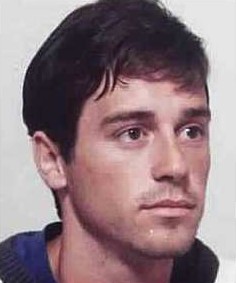 Robert Baltovich
Murderer? · Canada · 1990
Robert Baltovich was a Canadian man born July 17 1965. He was educated at the U…
1 victim
Robert Baltovich
Murderer? · Canada · 1990
Robert Baltovich was a Canadian man born July 17 1965. He was educated at the U…
1 victim
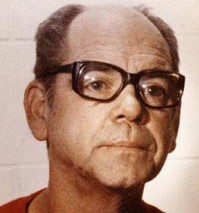 Gilbert Paul Jordan
Serial killer · Canada · 1965
Gilbert Paul Jordan (born December 12, 1931; died July 7, 2006) was known as th…
10 victims
Gilbert Paul Jordan
Serial killer · Canada · 1965
Gilbert Paul Jordan (born December 12, 1931; died July 7, 2006) was known as th…
10 victims
 Kim Dae-Han
Mass murderer · South Korea · 2003
Name: Kim Dae-Han · Age: 56 · Occupation/background: He was an unemployed forme…
198 victims
Kim Dae-Han
Mass murderer · South Korea · 2003
Name: Kim Dae-Han · Age: 56 · Occupation/background: He was an unemployed forme…
198 victims
 Amanda Wallace
Murderer · USA · 1993
Amanda Wallace — mother of Joseph R. Wallace; defendant in Joseph’s murder; old…
1 victim
Amanda Wallace
Murderer · USA · 1993
Amanda Wallace — mother of Joseph R. Wallace; defendant in Joseph’s murder; old…
1 victim
 John Albert Boltz
Murderer · USA · 1984
Name: John Albert Boltz · Status/Outcome: Executed by lethal injection in Oklah…
1 victim
John Albert Boltz
Murderer · USA · 1984
Name: John Albert Boltz · Status/Outcome: Executed by lethal injection in Oklah…
1 victim
- Gender
- male
- Country
- USA
- Location
- Taylor County, Florida, USA
- Date of birth
- J une 28, 1953
- Age at first offence
- 21
- Characteristics
- armed robbery, rape, rape?, robbery, torture
- Victim profile
- Chevis Thompson (female store manager) / Lloyd Walker (store customer)
- Method of murder
- St abbing with knife / Shooting
- Date(s) of murder
- October 24/November 6, 1974
- Years active
- 1974
- Date of arrest
- November 12, 1974
- Status
-
Sentenced to death
Sentenced to death on March 12, 1975; resentenced to death on 23 September 1977; Florida Supreme Court affirmed the convictions and sentence of death on 2 November 1978; United States Supreme Court denied certiorari on 27 November 1978; after federal habeas proceedings, the United States District Court denied habeas relief on 29 September 1998 and the United States Court of Appeals for the Eleventh Circuit affirmed the denial on 27 June 2000; FloridaCapitalCases.state.fl.us 963 F.2d 316 required remand and proceedings for evidentiary hearings, and the Eleventh Circuit later affirmed the denial of habeas relief
Case information
Douglas Ray Meeks was a Florida prison inmate. In two separate trials, Meeks was convicted of first degree murder and sentenced to death.
Meeks was born on 06/28/53. The case related to Taylor County, Florida. The Third Judicial Circuit was involved.
Victims and related individuals
Lloyd Walker
Lloyd Walker was a teenager in the Junior Food Store during the offenses described in the Walker case. Walker died from gunshot wounds and died six days after the shooting.
Diane Allen
Diane Allen was the store’s cashier at the Jr. Food Store. Allen was taken to the back of the store and told to lie face down on the floor of the bottle storage room. Meeks fired several shots, hitting Allen in the shoulder. Allen later recovered from her shoulder wound and testified for the State.
Homer Hardwick (codefendant)
Homer Hardwick was a codefendant in the Walker case. Hardwick was convicted of first-degree murder, armed robbery, and aggravated assault with no intent to kill. Hardwick received two life sentences for the first two offenses and 15 years of imprisonment for the third offense.
Chevis Thompson
Chevis Thompson was the store manager at the Majik Market. Meeks attempted to rob the store and stabbed Thompson. Thompson died of the knife wounds inflicted by Meeks.
Timeline
- 11/06/74 — Meeks and Homer Hardwick entered the Jr. Food Store of Perry, Florida; Meeks pulled a gun on cashier Diane Allen and Hardwick grabbed Lloyd Walker.
- 11/12/74 — Meeks was arrested.
- 11/19/74 — Meeks and Hardwick were indicted by a Taylor County grand jury for the Walker killing.
- 03/12/75 — Meeks was sentenced to death in the Walker case after a jury guilty verdict and a jury recommendation of death.
- 06/11/75 — Meeks filed a direct appeal to the Florida Supreme Court on the Walker case (CC# 74-299).
- 10/28/76 — The Florida Supreme Court affirmed the convictions and sentence of death in the Walker case.
- 05/06/77 — Florida Supreme Court issued an order requiring the trial judge, John Royce Agner, to respond to the decree made by the United States Supreme Court in Gardner v. Florida.
- 05/19/77 — Judge Agner filed a response regarding the Gardner question.
- 06/22/77 — Florida Supreme Court remanded Meeks’ case to the Circuit Court for an evidentiary hearing concerning resentencing pursuant to Gardner.
- 09/23/77 — Evidentiary hearing held in the Circuit Court before Judge Agner; Meeks was resentenced to death.
- 11/02/78 — The Florida Supreme Court affirmed the Circuit Court’s decision.
- 11/27/78 — The United States Supreme Court denied Meeks’ petition for a writ of certiorari (in the Walker matter).
- 02/08/80 — The Circuit Court denied Meeks’ 3.850 motion.
- 02/07/80 — Meeks filed an appeal in the Florida Supreme Court after the denial of his 3.850 motion.
- 06/17/82 — Florida Supreme Court affirmed the denial of relief.
- 01/17/83 — The United States Supreme Court denied Meeks’ petition for a writ of certiorari (after a petition filed on 11/13/82).
- 06/28/85 — The United States District Court, Northern District of Florida denied Meeks’ Petition for Writ of Habeas Corpus.
- 08/19/85 — Meeks filed an appeal in the United States Court of Appeals for the Eleventh Circuit.
- 05/29/92 — The United States Court of Appeals for the Eleventh Circuit remanded for an evidentiary hearing regarding Meeks’ claim of ineffective counsel at trial and on appeal.
- 06/22/89 — Florida Supreme Court remanded for an evidentiary hearing after granting Meeks’ Hitchcock-based petition, before withdrawing that decision in January 1991.
- 04/11/91 — The Florida Supreme Court remanded for an evidentiary hearing after a Hitchcock error grant and remand.
- 02/18/88 — Meeks filed a Petition for Writ of Habeas Corpus to the Florida Supreme Court challenging his death sentences under Hitchcock.
- 11/23/92 — The State filed a Petition for Writ of Certiorari to the United States Supreme Court.
- 02/22/93 — The United States Supreme Court denied certiorari.
- 09/29/98 — The United States District Court denied Meeks’ Petition for Writ of Habeas Corpus after an evidentiary hearing.
- 01/04/99 — Meeks filed an appeal in the United States Court of Appeals.
- 06/27/00 — The Court affirmed the denial of the Federal Habeas Petition.
- 12/04/00 — Meeks filed a petition for Writ of Certiorari to the United States Supreme Court.
- 02/20/01 — The United States Supreme Court denied the petition.
The offence
Walker killing (Jr. Food Store, Perry)
On the evening of 11/06/74, Douglas Ray Meeks and Homer Hardwick entered the Jr. Food Store of Perry, Florida. Meeks pulled a gun on the store’s cashier, Diane Allen, and Hardwick grabbed Lloyd Walker, a teenager in the store.
After giving Meeks about $35 from the cash register, Allen and Walker were taken to the back of the store and told to lie face down on the floor of the bottle storage room. Meeks fired several shots before he and Hardwick fled the scene.
Walker died from the gunshot wounds. Allen survived and later testified for the State.
A separate Eleventh Circuit account described that Meeks and Hardwick entered the Junior Food Store between 8:00 p.m. and 8:30 p.m. Hardwick walked up to the front of the cash register and put his arm around the neck of Lloyd Walker, a sixteen-year-old boy who was in the store to make a purchase. While Hardwick immobilized Walker, Meeks approached Diane Allen at gun point and demanded that Allen give him all the money in cash register. Allen complied and handed over between thirty and thirty-five dollars.
Meeks then instructed both Allen and Walker to walk to the back of the store and get in a storage closet. When they had done so, he told them to lie on their backs and then to roll over onto their stomachs. At that point, Meeks fired several shots, hitting Allen in the shoulder, and Walker in the head. Meeks and Hardwick left the store; Allen waited a few minutes and called the police. Allen was taken to a hospital and later recovered from her shoulder wound. Lloyd Walker died six days after the shooting.
Investigation
In the Walker case, the investigation included use of fingerprints left in the blood that had spattered on either side of the cash register.
Two fingerprints were left in the blood spattered on either side of the cash register. Jack Duncan, a Latent Fingerprint Examiner with the Florida Department of Criminal Law Enforcement, testified that Meeks’ prints matched the ones found at the scene.
In addition, at the Walker trial, Diane Allen testified as an eye-witness that it was Meeks, and not Hardwick, who did the shooting. Although Allen did not actually see Meeks shoot Walker because Meeks had instructed Allen to lie on her stomach while he killed Walker and attempted to kill her, she remembered that it was Meeks who had the gun when the pair entered the Junior Food Store, and that Hardwick carried no weapon. Allen also testified that seconds before the shots were fired (immediately preceding the time when Meeks ordered both her and Walker to roll onto their stomachs in the back area storage room) Meeks still had the gun in his hand.
Homer Hardwick testified that one week after the Thompson killing, Meeks told him that: "he went into the store and he was trying to get something out of the store and the lady caught him and she picked the phone up to call the police and he grabbed her and killed her, cut her, started cutting her."
Arrest
Meeks was arrested on 11/12/74.
Trial
Walker case: indictment, charges, verdicts, and sentence
On 11/19/74, Meeks and Hardwick were indicted by a Taylor County grand jury for the Walker killing. The indictment charged them with murder in the first degree, robbery, assault with intent to kill, and use of a firearm in the commission of a felony.
In the Walker trial, Meeks was represented by John Howard.
Meeks was tried first, and Diane Allen testified as an eye-witness that it was Meeks, not Hardwick, who did the shooting. Allen testified that she remembered it was Meeks who had the gun when the pair entered the Junior Food Store, and that Hardwick carried no weapon. Allen also testified that seconds before the shots were fired, Meeks still had the gun in his hand.
At the conclusion of the guilt phase of the trial, the jury found Meeks guilty on all counts.
A jury recommended death by a vote of 12-0 and the court sentenced him to death on 03/12/75.
The indictment counts were described as:
- Count I: First-Degree Murder
- Count II: Robbery
- Count III: Assault with Intent to Commit Murder
- Count IV: Possession of a Firearm/Commission of a Felony
Sentencing in the Walker case was described as:
- Count I: First-Degree Murder — Death
- Count II: Robbery — Life
- Count III: Assault with Intent to Commit Murder — 15 years to run consecutively with Count II
- Count IV: Possession of a Firearm/Commission of a Felony — 15 years to run consecutively with Count III
Walker case: procedural details and additional context
Meeks filed a direct appeal (CC# 74-299) to the Florida Supreme Court on 06/11/75. He argued that his conviction should be reversed because the State failed to prove corpus delecti. Meeks also claimed that the court erred during the penalty phase in failing to poll the jury individually and in its application of aggravating factors.
The Florida Supreme Court affirmed the convictions and sentence of death on 10/28/76.
The Florida Supreme Court later issued Gardner-related directives:
- On 05/06/77, the Florida Supreme Court required the trial judge, John Royce Agner, to respond to the decree made by the United States Supreme Court in Gardner v. Florida.
- On 05/19/77, Judge Agner filed a response regarding the Gardner question, stating that he considered Dr. Carrera’s examination of Meeks without furnishing a copy of the aforementioned report to Meeks’ defense counsel for explanation or refutation.
- On 06/22/77, the Florida Supreme Court remanded Meeks’ case to the Circuit Court for an evidentiary hearing concerning resentencing pursuant to Gardner.
On 09/23/77, an evidentiary hearing was held in the Circuit Court before Judge Agner, and Meeks was resentenced to death after evidence was considered under the guidelines set forth in Gardner. The Florida Supreme Court affirmed the Circuit Court’s decision on 11/02/78.
Walker case: Hardy/Meeks related procedural history
Meeks was indicted for a second, similar offense he committed two weeks prior to this offense (CC# 74-300).
Meeks previously had been arrested in the state of Mississippi and charged with fighting and trespassing; he served minor jail time for these offenses. Meeks had no previous incarceration history in the state of Florida prior to the instant murder convictions.
The Thompson case (Majik Market, Perry)
The offence and death of Chevis Thompson
On the morning of October 24, 1974, Meeks, a twenty-one-year-old African-American, entered the Majik Market convenience store in Perry, Florida. While attempting to rob the store, Meeks stabbed the store manager, Chevis Thompson.
Three high school students—James Southerland, Jeffrey McKee, and Thomas Hingson—saw Meeks exit the Majik Market as they drove into the store's parking lot. When the students went inside, they noticed that Thompson was lying behind the sales counter and that she was apparently injured.
Upon closer inspection, they saw blood flowing out of a knife wound in her neck. Thompson was gasping for air and waiving her hand wildly. There was also blood on the counter and on the sides of the cash register. The boys raced to their car and drove three blocks to the nearest hospital because they failed to find a telephone in the store.
Before leaving, they instructed two other students—Dennis Wilds and Michael Blanton—to stay with Thompson while they went for help. Hospital staff subsequently arrived at the Majik Market, but were unable to rescue Thompson.
Trial outcome in the Thompson case
Meeks was again convicted and sentenced to death in the Thompson case. The Florida Supreme Court later affirmed Meeks’ convictions and death sentences in the two cases, including the Thompson case.
Appeals
Florida Supreme Court appeals and certiorari
In the Walker case, after resentencing and affirmance, Meeks filed a Petition for Writ of Certiorari to the United States Supreme Court on 06/08/77, which was denied on 11/27/78.
Meeks also filed a direct appeal (CC# 74-300) to the Florida Supreme Court on 09/26/75, arguing that the trial court erred in failing to prove corpus delecti and in not individually polling the jury as to their advisory recommendations. The court affirmed the convictions and death sentence on 07/21/76.
3.850 motion and subsequent state proceedings
Meeks filed a 3.850 motion (CC# 74-299 & 74-300) to the Circuit Court. The court responded only to Meeks’ contention of ineffective counsel and racial discrimination in capital sentencing.
The Circuit Court denied Meeks’ 3.850 Motion on 02/08/80. After that denial, he filed an appeal in the Florida Supreme Court on 02/07/80.
The Florida Supreme Court issued an opinion that remanded to the Circuit Court for an evidentiary hearing to examine Meeks’ claim of ineffective counsel. After an evidentiary hearing, the motion was again denied and the Florida Supreme Court affirmed this decision on 06/17/82.
On 11/13/82, Meeks filed a Petition for Writ of Certiorari to the United States Supreme Court, which was denied on 01/17/83.
Federal habeas proceedings
On 11/08/82, Meeks filed a Petition for Writ of Habeas Corpus to the United States District Court, Northern District. In that petition, he raised 13 issues, but the court only addressed Meeks’ claim of ineffective counsel at trial and the racial discrimination of capital punishment. The District Court denied the petition on 06/28/85.
Meeks filed an appeal in the United States Court of Appeals for the Eleventh Circuit on 08/19/85.
While this appeal was pending, the United States Supreme Court rendered a decision in Hitchcock v. Dugger. The Eleventh Circuit ordered a remand for Meeks to present his Hitchcock claim to the Florida Supreme Court. Following the disposition of that action, the Eleventh Circuit remanded the case for an evidentiary hearing regarding Meeks’ claim of ineffective counsel at trial and on appeal on 05/29/92.
Meeks then filed a 02/18/88 Petition for Writ of Habeas Corpus to the Florida Supreme Court challenging his death sentences under Hitchcock. The Florida Supreme Court granted Meeks petition and remanded for an evidentiary hearing on 06/22/89 but withdrew that decision in January 1991. The court issued a new opinion, granted the petition, and remanded for an evidentiary hearing on 04/11/91. The State filed a Petition for Writ of Certiorari to the United States Supreme Court on 11/23/92, which was denied on 02/22/93.
After the Florida Supreme Court granted Meeks’ Petition for Writ of Habeas Corpus due to a Hitchcock error and remanded for an evidentiary hearing, the Circuit Court proceedings were held in abeyance until the resolution of Meeks’ Federal Habeas Appeal. After an evidentiary hearing on Meeks’ claim of ineffective counsel, following the Court of Appeals’ remand on 05/29/92, the United States District Court denied Meeks’ Petition for Writ of Habeas Corpus on 09/29/98.
Meeks then filed an appeal in the United States Court of Appeals on 01/04/99. The Court affirmed the denial of the Federal Habeas Petition on 06/27/00.
Other details
Majik Market trial: representation and witness identification details
Meeks was represented at Thompson by John Howard. The public defender in Perry had withdrawn from representing Meeks because his representation of Hardwick had created a conflict of interest, and so the trial judge appointed Howard as replacement counsel.
In the Thompson case, three high school students saw Meeks exit the Majik Market: Southerland, McKee, and Hingson. Southerland and McKee were unable to identify Meeks at a pretrial line-up, but they indicated before the jury that Meeks was the person they saw exiting the Majik Market. McKee stated that the only reason he did not identify Meeks during the line-up was that there was a ".1%" chance that the person he saw at the Majik Market was not Meeks. Hingson positively identified Meeks at the line-up and remembered that Meeks resembled a college football player who used to play for the University of Florida.
Hingson described his identification on cross-examination, including that he noticed about the way his hair was braided. The cross-examination excerpt included: Q: Okay, now you say you observed him for two to possibly three seconds and when you were asked to describe his general characteristics you said he was about five-eight? A: Yes sir. Q: What all, what other particular characteristics did you remember to help to identify him when he was in the lineup? A: He was fair skinned and I noticed when I came up there that I knew a football player that he kinda looked like, because whenever we drove up [into the Majik Market parking lot] I said he looks like so and so. Q: Who is so and so? A: Nat Moore, used to play for Florida. Q: And you made that remark? A: Yes sir. Q: Any other positive identifying characteristics? A: I noticed about the way his hair was braided. I was sure when I picked him out of the lineup. There is no doubt in my mind. Q: Absolutely no doubt? A: No sir.
Walker case line-up identification and Allen testimony excerpt
Allen was able to identify Meeks as the shooter because, in addition to recalling his face generally, she particularly remembered his eyes. When asked during trial how long it took her to identify Meeks during a line-up, Allen responded: A: As soon as they turned around I knew which one it was. Q: How was that? A: Because I remembered him, I remembered his face. Q: Was there any specific about his face that you recall? A: His eyes. Q: The eyes you looked at? A: Yes. Q: Were they the same? A: Yes, sir.
Pretrial publicity descriptions discussed in the Eleventh Circuit habeas appeal (newspaper articles)
In the Eleventh Circuit habeas decision, four newspaper articles were quoted in full in the discussion of pretrial publicity. The quoted articles were:
On November 7, 1974 under the headline "Two Suffer Wounds in Perry Holdup": "A Jr. Food Store clerk was shot in the shoulder and a customer in the neck here Wednesday in Perry's second armed robbery in two weeks. Diane Allen, 18, [illegible word] at the convenience store off Old Dixie Highway here, was waiting on Lloyd Walker, a Perry youth, when two men entered the store about 8:15 p.m. Sheriff Maurice [illegible word] said both the girl and boy were shot. The robbers cleaned out the cash register and fled. Both youths were rushed to Doctors Memorial hospital in Perry, then the more seriously injured Walker was transferred to Tallahassee Memorial Hospital where his condition is described as critical."
On November 13, 1974 under the headline "Two Charged With Murder Of Perry Boy": "Two Perry men have been charged with murder after a 16-year-old boy shot in an armed robbery last week died Tuesday. The case will be presented to the Taylor County Grand Jury later this week. The two charged are Homer Lee Hardwick, Jr., 18, and Douglas Ray Meek [sic], 21. Hardwick was arrested Friday and Meek [sic] Tuesday. The dead boy, Lloyd Walker, was shot three times during the robbery of a Perry convenience store last Wednesday. He died at Tallahassee Memorial Hospital. Investigator Buddy Murphys said the two men allegedly entered the store around 8:30 p.m., demanded money from the clerk, Diane Allen, then forced Miss Allen and the Walker youth into the storeroom where they were told to lie on the floor. Miss Allen was shot twice. Hardwick and Meek [sic] also have been charged with armed robbery. Investigators said about $32 was taken in the robbery. The investigation was conducted with the assistance of the Florida Department of Criminal Law Enforcement."
On November 20, 1974 under the headline "Indictments Issued In Perry Murders": "The Taylor Count Grand Jury Tuesday indicted two men on charges of robbery and murder at convenience stores here. Douglas Ray Meeks, formerly of Mississippi, was indicted on two counts of murder. One is for the death of Lloyd Walker, 16, who died of gunshot wounds received during a robbery at a store on Nov. 6. The second charge is for the fatal stabbing of Mrs. Chevis Thompson on Oct. 25 at the Majik Market in Perry. Charged with Meeks in the Walker murder is 18-year-old Homer Lee Hardwick, Jr. of Perry. Both were also indicted and charged with robbery, assault with intent to murder and possessing of firearms during the commission of a felony. Arraignment and trial dates are expected to be set shortly."
On November 24, 1974 under the headline "Perry Bitter Over Slaying": "The rest of Florida may have only a passing interest in Trooper Cambell's funeral today, but not Perry where there have been two local robbery killings in the last three weeks. "With no death penalty, early parole and free lawyers, the criminals find it safer to kill the witnesses," said [Officer] Young. He said that was "surely the motive" in the execution of Lloyd Walker, 16, in a Jr. Food Store hold up in Perry Nov. 6. Walker and the store attendant, Diane Allen, 19, were shot after they were told to lie down in a backroom at the store. He died from three wounds. She survived two shots. Mrs. Chevis Thompson, 54, was stabbed to death in a holdup at Majik Market here Oct. 24 for what Young believes was the same motive. "They have nothing to lose," he said. "It's getting as bad as it was around here 100 years ago when there was no law." Taylor County is former Gov. Claude Kirk country. He is the only Florida governor in recent years willing to sign the death penalty. This, along with some identical affidavits stating that the murders were a topic of public conversation, is the sum total of the evidence of pretrial publicity that Meeks presented to the district court."
Trial dates and Hardwick trial timing
The Walker trial took place on March 11-12, 1975. On April 14, 1975, two months before Meeks stood trial for the Thompson killing, Hardwick was tried and convicted separately for his participation in the Walker killing. Meeks testified for the State at Hardwick's trial.
Federal appellate disposition in 2000
In the June 27, 2000 decision by the Eleventh Circuit (Douglas Ray Meeks v. Michael W. Moore), the court affirmed the district court’s denial of Meeks’ consolidated petition for a writ of habeas corpus. The analysis addressed ineffective assistance of counsel claims relating to failure to move for change of venue, failure to object to line-up identifications, and failure to object to attempted robbery instructions in the Thompson case.
Status within the record
Meeks’ case included multiple death-sentence phases, a Gardner-related resentencing, multiple direct and collateral appeals, and federal habeas review culminating in the Eleventh Circuit affirmance of the denial of habeas relief on 27 June 2000.
Spotted an error, or have more information about this case?