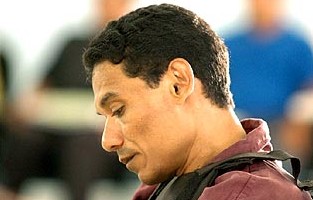
Francisco Das Chagas
Serial killer Luis Alfredo Garavito
Serial killer · Colombia/Ecuador · 1992
Luis Alfredo Garavito Cubillos, also known as "La Bestia" ("The Beast") or "Tri…
192 victims
Luis Alfredo Garavito
Serial killer · Colombia/Ecuador · 1992
Luis Alfredo Garavito Cubillos, also known as "La Bestia" ("The Beast") or "Tri…
192 victims
 Edson Isidoro Guimaraes
Serial killer · Brazil · 1999
Edson Isidoro Guimarães was a Brazilian nursing assistant and nurse’s aide at S…
131 victims
Edson Isidoro Guimaraes
Serial killer · Brazil · 1999
Edson Isidoro Guimarães was a Brazilian nursing assistant and nurse’s aide at S…
131 victims
 Javed Iqbal
Serial killer · Pakistan · 1998
Javed Iqbal (born 1956 in Lahore, Punjab, Pakistan; died October 8, 2001, in La…
100 victims
Javed Iqbal
Serial killer · Pakistan · 1998
Javed Iqbal (born 1956 in Lahore, Punjab, Pakistan; died October 8, 2001, in La…
100 victims
 Serhiy Tkach
Serial killer · Ukraine · 1980
Serhiy Tkach (Russian: Серге́й Фёдорович Ткач, born 12 September 1952 in Kisely…
100 victims
Serhiy Tkach
Serial killer · Ukraine · 1980
Serhiy Tkach (Russian: Серге́й Фёдорович Ткач, born 12 September 1952 in Kisely…
100 victims
 Glen Edward Rogers
Serial killer · USA · 1993
Glen Edward Rogers was a spree killer whose cross-country rampage in 1994-95 le…
70 victims
Glen Edward Rogers
Serial killer · USA · 1993
Glen Edward Rogers was a spree killer whose cross-country rampage in 1994-95 le…
70 victims
 Michael Swango
Serial killer · USA · 1981
Michael Swango (Joseph Michael Swango) was a physician and American serial kill…
60 victims
Michael Swango
Serial killer · USA · 1981
Michael Swango (Joseph Michael Swango) was a physician and American serial kill…
60 victims
 Juan Edward Castillo
Murderer · USA · 2003
Juan Edward Castillo (TDCJ Number 999502) was convicted of capital murder and s…
1 victim
Juan Edward Castillo
Murderer · USA · 2003
Juan Edward Castillo (TDCJ Number 999502) was convicted of capital murder and s…
1 victim
 Emmett Nave
Murderer · USA · 1983
Emmett Clifton Nave was executed by lethal injection in Missouri on July 31, 19…
1 victim
Emmett Nave
Murderer · USA · 1983
Emmett Clifton Nave was executed by lethal injection in Missouri on July 31, 19…
1 victim
 Dion Smallwood
Murderer · USA · 1992
Dion Athanasius Smallwood was convicted of murdering Lois Frederick, 68, and th…
1 victim
Dion Smallwood
Murderer · USA · 1992
Dion Athanasius Smallwood was convicted of murdering Lois Frederick, 68, and th…
1 victim
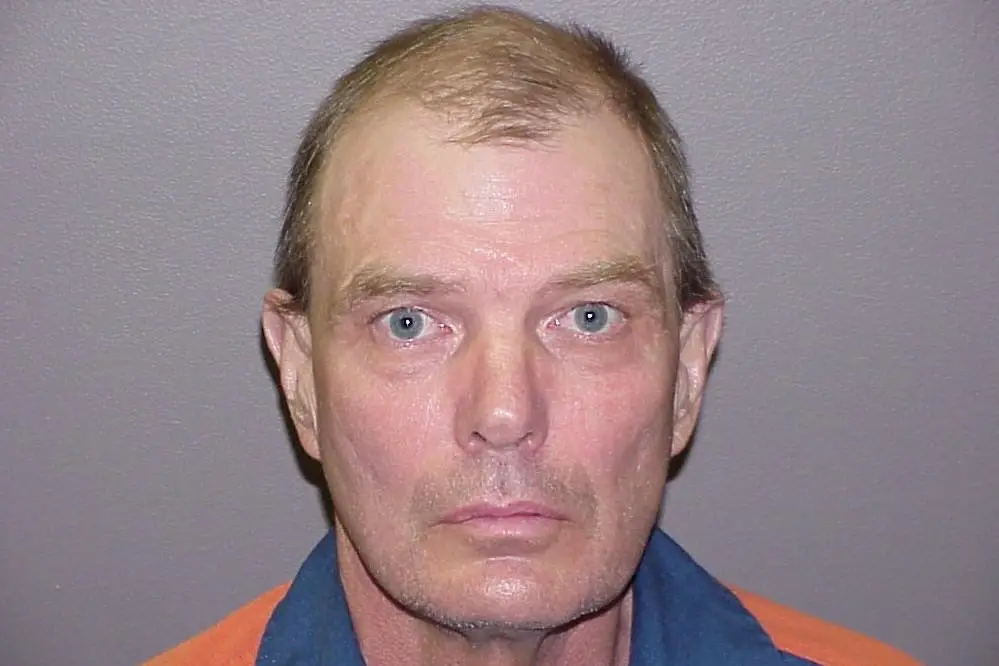 Richard Allen Jensen
Murderer · USA · 1990
Name: Richard Allen Jensen Sex: M Race: W Type: T Richard Allen Jensen was sent…
3 victims
Richard Allen Jensen
Murderer · USA · 1990
Name: Richard Allen Jensen Sex: M Race: W Type: T Richard Allen Jensen was sent…
3 victims
 Roger Leroy Johnson
Mass murderer · USA · 2001
Roger Leroy Johnson was a 48-year-old California man suspected of killing a gra…
4 victims
Roger Leroy Johnson
Mass murderer · USA · 2001
Roger Leroy Johnson was a 48-year-old California man suspected of killing a gra…
4 victims
- Gender
- male
- Country
- Brasil
- Location
- Maranhao/Para, Brasil
- Date of birth
- 1965
- Age at first offence
- 24
- Characteristics
- rape, sexual mutilation
- Victim profile
- Boys aged between 4 to 15 years
- Method of murder
- Strangulation - Stabbing with knife
- Date(s) of murder
- 1989 - 2003
- Years active
- 1989–2003
- Date of arrest
- December 2003
- Status
-
Imprisoned
Sentenced to 20 years in prison in one count in October 2006; sentenced to 217 years in prison
Background
Francisco das Chagas was a bicycle mechanic in Brazil. He confessed to killing at least 17 boys since 1991 and was arrested in the north-eastern city of Sao Luis de Maranhao in December 2004 in connection with a string of murders. Police found two bodies buried beneath the floor of his house.
At the time of later reporting, he was described as a self-confessed serial killer and was said to have murdered 41 boys and teenagers starting in 1989 in the states of Maranhao and Para in northern Brazil. Reports said all of the victims were castrated.
Human rights groups pursued legal action, including a complaint filed with the Inter-American Commission on Human Rights in Washington that alleged Maranhao state authorities were negligent in investigating the killings.
The offence
Police said Francisco das Chagas killed his victims with blows to the head.
He was accused of murdering boys and teenagers and was linked to the mutilation of their bodies. Police believed he sexually abused the boys, and in some cases cut off their genitals, before decapitating them and burying the bodies. He was also suspected of participating in black magic rites before killing some of the victims.
The victims included:
- Jonathan Silva Vieira, who was described as a 15-year-old boy who disappeared in December 2003.
- Daniel, described as a four-year-old boy whose skeleton was found during an excavation.
- Diego, described as a child whom Francisco das Chagas said was called Diego.
Police said officers found three bodies buried beneath or near the location of his home, including three bodies buried on a rural plot where his home once stood. Police said ten of the bodies were found in fields near his home.
Investigation
After investigators found two bodies buried beneath the floor of Francisco das Chagas’ house, police said he was gradually confessing to the crimes. Investigator Joao Carlos Amorim Diniz told Reuters news agency:
"He started confessing... and is still telling us details,"
Diniz also said Francisco das Chagas said he had lost track of the murders and might have killed over 30 boys:
"He said he had lost track of the murders and might have killed over 30 boys,"
Police later said he was suspected of having killed at least 23 boys.
Detective Joao Carlos Diniz showed a rural plot where Chagas’ home once stood and said officers found three bodies buried there. Diniz said:
"What happened here is what I call the 'chameleon effect',"
He added:
"Chagas was clever - he blended into the scenery. And from the outside, it was almost impossible to spot him."
Investigators said in Maranhao alone there were 30 murders before he was caught. Police said ten bodies were found in fields near his home.
Arrest
Francisco das Chagas was arrested in December 2004 in the north-eastern city of Sao Luis de Maranhao in connection with a string of murders.
He was also described as being arrested in April 2004 after police found the remains of two minors buried in his yard.
In one account, police said he was arrested after neighbours complained of a stench coming from his ramshackle house in Sao Luis. Officers dug up the dirt floor and found two skeletons, one of a four-year-old boy named Daniel and the other of a child Brito said was called Diego.
Trial
The trial for the murder of Jonathan Silva Vieira began on October 23, 2006, and was expected to last two days, then described as expected to last three days.
Charges and evidence
Prosecutors said they charged Jonathan Silva Vieira’s murder first because it was the case in which they had the most evidence.
Prosecutors charged him in connection with one killing, that of Jonatham Silva Vieira, described as the one for which they had the most evidence.
If convicted by the jury of four men and three women, he could be sentenced to up to 30 years in prison for aggravated homicide.
At the trial’s opening, Francisco das Chagas confessed to killing Jonathan Silva Vieira in December 2003, saying sexual abuse he suffered as a child drove him to kill.
Defence and disputed matters
In court, he told judge Marcio Castro Brandao that he didn’t remember details. Court spokeswoman Andrea Collis said:
"He said he knows he killed him but didn't remember anything and that he was acting in revenge for when he was sexually abused when he was 6,"
A later account stated he told the court he had strangled Jonathan but denied hitting him, raping him, mutilating his body or using his blood.
A further account said he also denied remembering castrating the dead bodies or attacking the boys because his memory went at the moment of the killing, but he offered another version in the trial. He and other witnesses, including his sister, testified that he had been abused as a child by his grandmother and a man named Carlito.
During one account he said:
"I was seeing Carlito in front of me,"
and described the murders as stemming from a pent-up rage stemming from those juvenile experiences. It also reported he had confessed and then retracted his confession to killings of 30 boys in Maranhao state and 12 others in neighboring Para state between 1991 and 2003.
During reporting about the opening testimony, it was said he reportedly told the judge he had killed 30 boys, not the 42 police said he had confessed to.
Witness testimony and victim family
The victim’s mother, Rita Cassia Viera (also referred to as Rita de Cassia Vieira in other passages), testified in court.
During the trial, she told the court her son had said he was going to pick fruit with Chagas on the day he was killed. She testified Tuesday:
"The monster tried to help out the mothers of the children he killed because he was looking for victims,"
She also said she showed Chagas a picture of her son after he disappeared and that he laughed and told her he hadn’t seen him:
"It seemed like he was laughing at my suffering,"
In a televised interview with Globo TV, the victim’s mother said:
"Even if he is convicted, that won't heal anything, because I lost a son and he will never return,"
Court logistics and setting
The trial was held in the auditorium of a local club in Sao Jose do Ribamar because the courtroom wasn’t big enough to hold the hundreds of victims’ relatives. It was described as some 2,250 kilometers (1,400 miles) northeast of Rio de Janeiro and elsewhere described as some 1,400 miles northeast of Rio de Janeiro, including 1,400 miles north-east of Rio de Janeiro.
The court spokeswoman Andrea Collis said the trial was held in the auditorium of a local club because the courtroom was not big enough to hold the hundreds of victims’ relatives.
Sentencing
Francisco das Chagas was sentenced to 20 years in jail for murdering 15-year-old Jonathan Silva Vieira. He pleaded guilty to the charge.
Another account described the sentencing details as 19 years for homicide and 1 year and eight months for hiding the body of the 15-year-old victim, with the court issuing a statement.
The sentencing was handed down following a trial that lasted just over two days.
A judge, Marcio Castro Brandao, took account of testimony from psychologists that the defendant suffered from a mental disorder and was not completely in control of his actions, and it said that the sentence could have been up to 30 years in prison for killing Jonathan Silva Vieira but was reduced based on that testimony.
In addition to the one count sentence, one status statement indicated he was sentenced to 217 years in prison.
Appeals
No appeals were described in the provided material.
Outcome
Francisco das Chagas was found guilty of killing Jonathan Silva Vieira and was sentenced to 20 years and eight months in jail in one account, or sentenced to 20 years in another account. He then faced trial for other murders.
Prosecutors and courts expected future prosecutions for other murders committed between 1991 and 2003 in Maranhao and Para.
No date was set for future prosecutions and next trials.
Aftermath
It was stated that to date five men were serving prison sentences for murders which Francisco das Chagas said he committed, with four of them in the state of Para where Chagas lived before moving to Maranhao.
It was also stated that in 2003 four members of an alleged satanic group were convicted in Para state in connection with some of the same murders. The group’s leader was acquitted amid charges of jury rigging, and it was not immediately clear whether those convicted had since been released.
The Organisation of American States launched a campaign to pressure local authorities into more rigorously investigating the cases, and several foreign and Brazilian human rights groups petitioned the federal government to intervene in the investigation.
"Sometimes I'm revolted by what I did," he says, "but you must understand that something was using me to do this. Good people will understand that."
Other details
Chagas was described as 39 years old in one account and 41 years old in multiple accounts.
One account said he was wearing a green polo shirt, jeans and handcuffs during a BBC interview at a police station in Sao Luis. In that interview, he said:
"I did this because something was guiding me, directing me,"
"It was like a voice in my head. And it was that thing - the voice - that determined what happened."
In the interview he also said:
"I'm not confused, and I am telling the truth,"
"and you're hearing it from me personally."
In the BBC account, when asked if he was telling the truth, the reported exchange included:
"I asked whether he was telling the truth about these crimes. Could he possibly be confused?"
"I'm not confused, and I am telling the truth," came the reply, "and you're hearing it from me personally."
A human rights advocate Rita da Silva, whose 15-year-old son Jonathan was described as the last of the victims, said:
"Chagas should have been caught after one or two murders,"
She also said:
"But for 30 boys to die here - it means the police didn't do their job. Why? Because the victims were all poor."
The material compared him with Marcelo Costa de Andrade, known as the Niteroi Vampire, who was convicted in 1991 of killing 14 children in a city near Rio de Janeiro.
Police reports said the series of killings shocked even Brazil, where violence is common and the murder rate is one of the world’s highest.
Spotted an error, or have more information about this case?