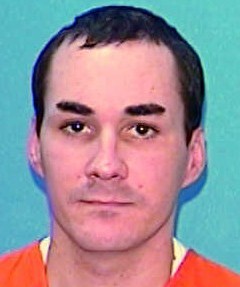
John Chamberlain
Murderer Michael Zabawa
Murderer
Michael Zabawa was a Minnesota man who lived in Matawan, and he worked at a hog…
2007 victims
Michael Zabawa
Murderer
Michael Zabawa was a Minnesota man who lived in Matawan, and he worked at a hog…
2007 victims
 Clinton Lee Young
Murderer · USA
Clinton Lee Young (born July 19, 1983) was convicted of murdering two men in No…
2001 victims
Clinton Lee Young
Murderer · USA
Clinton Lee Young (born July 19, 1983) was convicted of murdering two men in No…
2001 victims
 Ivan Abner Cantu
Murderer · USA
Name: Ivan Abner Cantu · TDCJ number: 999399 · Date of birth: 06/14/1973 · Age…
2000 victims
Ivan Abner Cantu
Murderer · USA
Name: Ivan Abner Cantu · TDCJ number: 999399 · Date of birth: 06/14/1973 · Age…
2000 victims
 Michael John Yowell
Murderer · USA
Name: Michael John Yowell · TDCJ number: 999334 · Date of birth: 01/25/1970 · P…
1998 victims
Michael John Yowell
Murderer · USA
Name: Michael John Yowell · TDCJ number: 999334 · Date of birth: 01/25/1970 · P…
1998 victims
 Michael Duane Zack
Murderer · USA
Michael Duane Zack was convicted and sentenced to death for the 06/13/96 murder…
1996 victims
Michael Duane Zack
Murderer · USA
Michael Duane Zack was convicted and sentenced to death for the 06/13/96 murder…
1996 victims
 Jerry Wayne Conner
Murderer
Jerry Wayne Conner — defendant. In April 1991, Jerry Wayne Conner was convicted…
1990 victims
Jerry Wayne Conner
Murderer
Jerry Wayne Conner — defendant. In April 1991, Jerry Wayne Conner was convicted…
1990 victims
 John Sterling Gardner
Murderer · USA · 1982
December 17, 1982 — Gardner shot and killed Rowan County retiree Ray T. Shaver…
3 victims
John Sterling Gardner
Murderer · USA · 1982
December 17, 1982 — Gardner shot and killed Rowan County retiree Ray T. Shaver…
3 victims
 Christopher Jay Swift
Murderer · USA · 2003
Christopher Jay Swift was a white male who was born in Dallas County, Texas. He…
2 victims
Christopher Jay Swift
Murderer · USA · 2003
Christopher Jay Swift was a white male who was born in Dallas County, Texas. He…
2 victims
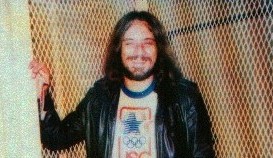 John Plath
Murderer · USA · 1978
John Plath John Plath was executed by lethal injection in South Carolina on Jul…
1 victim
John Plath
Murderer · USA · 1978
John Plath John Plath was executed by lethal injection in South Carolina on Jul…
1 victim
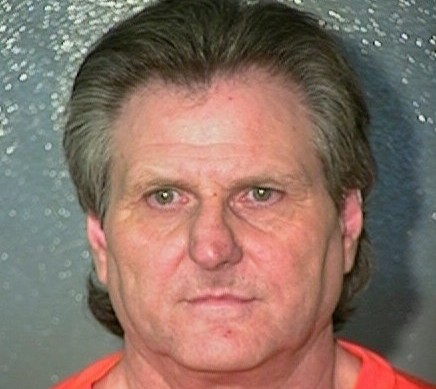 David Lamar Anthony
Murderer · USA · 2001
David Lamar Anthony (born 1948), better known as David Anthony, was convicted o…
3 victims
David Lamar Anthony
Murderer · USA · 2001
David Lamar Anthony (born 1948), better known as David Anthony, was convicted o…
3 victims
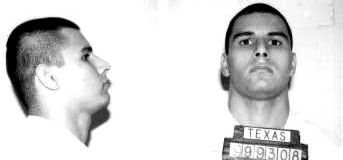 Ruben Gutierrez
Murderer · USA · 1998
Ruben Gutierrez (TDCJ Number 999308) was born on 06/10/1977. He was Hispanic, m…
1 victim
Ruben Gutierrez
Murderer · USA · 1998
Ruben Gutierrez (TDCJ Number 999308) was born on 06/10/1977. He was Hispanic, m…
1 victim
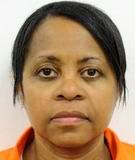 Willa Blanc
Murderer · USA · 2009
Willa Blanc was convicted after pleading guilty in a case involving the kidnapp…
1 victim
Willa Blanc
Murderer · USA · 2009
Willa Blanc was convicted after pleading guilty in a case involving the kidnapp…
1 victim
- Gender
- male
- Country
- —
- Location
- —
- Date of birth
- January 17, 1978
- Characteristics
- drugs
- Victim profile
- Charlotte Kenyon, 26, Bryan Harrison, 21, and Daniel Ketchum, 27
- Method of murder
- Shooting Loca tion : Palm Beach County, Florida, USA
- Date(s) of murder
- —
- Years active
- —
- Date of arrest
- —
- Status
-
Life imprisonment
Sentenced to death on May 10, 2002; commuted to life in prison on April 15, 2008
Case information
John Chamberlain was sentenced in Florida in connection with a triple murder at a house in West Palm Beach.
- Florida Supreme Court opinion: SC02-1150
- DC number: 478755
- Date of birth: 01/17/78
- Judicial circuit: Fifteenth Judicial Circuit, Palm Beach County
- Case number: 98-12923
- Sentencing judge: The Honorable Marvin Mounts
- Trial attorney: Gregg Lerman – Private Attorney
- Direct appeal attorney: Gregg Lerman – Private Attorney
- Collateral appeals: Suzanne Keffer – CCRC-S
Timeline
- 11/26/98 — The events involving Amanda Ingman, Thomas Thibault, Bryan Harrison, Charlotte Kenyan, Daniel Ketchum, John Chamberlain, and Jason Dascott occurred.
- 05/10/02 — Chamberlain was sentenced.
- 05/21/02 — Chamberlain filed a direct appeal with the Florida Supreme Court.
- 06/17/04 — The convictions and sentences were affirmed.
- 01/21/05 — Chamberlain filed a Petition for Writ of Certiorari with the U.S. Supreme Court.
- 03/21/05 — The U.S. Supreme Court denied Chamberlain’s petition.
- 04/14/08 — Chamberlain’s sentence was scheduled to be modified to life in prison at a court hearing on Tuesday (described as Tuesday in the narrative).
- 04/15/08 — Chamberlain’s death sentence was vacated and he was resentenced to life in prison.
Background
In October and November of 1998, Amanda Ingman began trying to locate her drug supplier and “occasional pimp,” Thomas Thibault, to purchase some cocaine.
Thibault contacted Ingman at a house where she was living with her boyfriend, Bryan Harrison, and his roommates, Charlotte Kenyan and Daniel Ketchum.
Harrison became upset when he found out that Thibault called Ingman.
The offence
In the early morning hours of 11/26/98, Thibault enlisted the help of John Chamberlain and Jason Dascott to deliver cocaine to Ingman and resolve the argument with Harrison.
Thibault told Chamberlain that there might be a confrontation.
Chamberlain drove his father’s car and picked up Thibault and Dascott. While stopped at a gas station, Chamberlain showed Thibault a .45 caliber handgun and ammunition stored in the trunk of the car.
After the argument between Thibault and Harrison was resolved, Chamberlain, Thibault, Dascott, Ingman, and Harrison snorted cocaine in Ingman’s bedroom.
The group then went out to get more cocaine. Upon returning to the house:
- Harrison and Ingman went inside.
- Chamberlain, Thibault, and Dascott remained outside and discussed a plan to rob the residents of the house and steal electronic equipment from the house.
Either Ingman or Dascott persuaded Ketchum to open a safe in the living room.
Thibault then pulled out the .45 caliber handgun and ordered Ketchum and Harrison into the bathroom.
Chamberlain helped by striking Ketchum in the leg with an asp, an extendable police baton.
Thibault held Ketchum and Harrison in the bathroom, while Ingman, Dascott, and Chamberlain removed electronic equipment from the house and put them in Chamberlain’s car.
While in the bathroom, Ketchum attempted to overpower Thibault, but Thibault shot and killed Ketchum in the struggle.
Thibault left the bathroom and told the others that he had killed Ketchum.
According to Thibault and Ingman, Chamberlain then said “no more witnesses” and encouraged Thibault to kill Harrison or else they were “all going to die” and were “all going to the electric chair.”
Ingman and Thibault awakened Charlotte Kenyan, who had been sleeping in a back bedroom, and placed her in the bathroom with Harrison.
Thibault then “emptied the gun” into Harrison and Kenyan while Chamberlain stood by his side.
Harrison was not dead, so Thibault and Chamberlain went to the car, retrieved more bullets, reloaded the gun, and Thibault again “emptied the gun” into Harrison and Kenyan.
After going back to Chamberlain’s parent’s house, Ingman later went to the house of Harrison’s father and told him of the murders.
Police were alerted to Chamberlain’s involvement by Ingman.
People and roles
- Amanda Ingman: cocaine purchaser; testified against Chamberlain; later told Harrison’s father of the murders; police were alerted to Chamberlain’s involvement by Ingman.
- Thomas Thibault: co-defendant; “occasional pimp”; enlisted Chamberlain and Dascott; shooter in the struggle where Ketchum was killed; testified against Chamberlain.
- Bryan Harrison: boyfriend of Ingman; one of the victims.
- Charlotte Kenyan: roommate; awakened and placed in the bathroom; one of the victims.
- Daniel Ketchum: roommate; opened the safe; one of the victims.
- Jason Dascott: co-defendant; assisted with cocaine delivery and later testified against Chamberlain; pled guilty to second-degree murder.
- John Chamberlain: defendant; drove his father’s car; supplied the gun and the car used; struck Ketchum in the leg with an extendable police baton; encouraged Thibault to kill Harrison.
Codefendant outcomes
- Thomas Thibault pled guilty to three counts of First-Degree Murder and was sentenced to death.
- Jason Dascott pled guilty to three counts of Second-Degree Murder and was sentenced to a prison sentence of 10 years and a probation sentence of 5 years.
- Amanda Ingman was not charged with a crime.
Investigation and involvement
Thibault, Dascott, and Ingman testified against Chamberlain.
Trial
Counts and verdicts
Chamberlain was indicted as follows:
Count I: First-Degree Murder – Ketchum
Count II: First-Degree Murder – Harrison
Count III: First-Degree Murder – Kenyan
Count IV: Armed Burglary with Assault
Count V: Armed Robbery
05/30/00 — Indictment described above.
11/21/00 — Jury recommendation waived.
02/16/01 — Jury returned guilty verdicts on Counts I, II, III, and V.
05/10/02 — Judgment of Acquittal ordered on Count IV.
Sentencing
On 05/10/02, Chamberlain was sentenced as follows:
- Count I: First-Degree Murder – Ketchum — Death
- Count II: First-Degree Murder – Harrison — Death
- Count III: First-Degree Murder – Kenyan — Death
- Count V: Armed Robbery — Life Imprisonment
Appeals
Chamberlain filed a direct appeal with the Florida Supreme Court on 05/21/02, citing the following errors:
- death qualification of the jury;
- denying a motion to disqualify the judge;
- allowing improper comments on Chamberlain’s credibility;
- allowing out-of-court identification of Chamberlain;
- violating the rule of sequestration;
- using prior consistent statements;
- using a demonstrative aid;
- constitutionality of the felony-murder jury instruction;
- failing to have sufficient evidence of First-Degree Murder;
- constitutionality of the murder in the course of a felony aggravator;
- failing to have sufficient evidence to support aggravating factors and rejecting mitigating factors.
On 06/17/04, the convictions and sentences were affirmed.
Chamberlain filed a Petition for Writ of Certiorari with the U.S. Supreme Court on 01/21/05. The petition was denied on 03/21/05.
Outcome
On 04/15/08, Circuit Judge Lucy Chernow Brown vacated the death penalty previously imposed on John Chamberlain and resentenced him to life in prison.
The hearing included commentary from family members of two of Chamberlain’s victims watching.
At the court hearing, Judge Lucy Chernow Brown told Chamberlain:
“I now vacate the death penalty that was previously imposed on you”
Relatives and comments in the proceeding included the following:
“It just doesn't seem like justice,” said Anita Charest of Palm Springs, whose daughter, Charlotte Kenyon, was awakened from her bed, taken to a bathroom and executed.
“He killed my daughter. His parents can visit him. He gets three meals a day now and we pay for it.
“He should fry, and I would be right there in front.”
In argument about resentencing, Chamberlain’s attorney argued that he should receive the same sentence as Thibault, especially since it was Thibault who shot all three victims.
Prosecutor Terri Skiles described the disagreement as follows:
“We all agreed the case law says you can't have disproportionate sentences,” said prosecutor Terri Skiles.
Prosecutor Terri Skiles successfully argued that Judge Brown should impose consecutive, not concurrent, life sentences on Chamberlain, with the explanation that:
“Since life carries no possibility of parole, there is no practical distinction.”
Skiles also said:
“But it does carry a symbolic value, Skiles suggested.”
And:
“It makes each life that was taken accounted for by the defendant,” she said.
Other details
- Chamberlain and Thomas Thibault were convicted of first-degree murder in separate trials.
- Chamberlain and Thomas Thibault were sentenced to death for the slayings of Charlotte Kenyon (26), Bryan Harrison (21), and Daniel Ketchum (27) in the West Palm Beach house they shared on Thanksgiving 1998.
- A third defendant, Jason Dascott, pleaded guilty to second-degree murder and was sentenced to 10 years in prison; he was described as released last month and on probation in Monroe County for the next five years.
- Thibault’s death sentence was reduced to life in September 2005 after a procedural technicality, and Thibault was described as serving his sentence at Glades Correctional Institution in Belle Glade.
- The narrative stated that Thibault’s death sentence was reversed in 2005 on a procedural technicality, with Thibault receiving life in prison.
- The narrative stated that Thibault was resentenced to life in September 2005 because nobody, including Mounts, had ever asked him if he waived his right to a jury during the sentencing phase of his case.
- Suzanne Keffer, Chamberlain’s appellate lawyer, filed a motion to vacate Chamberlain’s sentence and cited other cases involving disproportionality.
- Judge Brown agreed with Chamberlain’s argument in light of cited principles that “Defendants should not be treated differently upon the same or similar facts.”
- The narrative quoted a justification attributed to justices in a 1975 Florida Supreme Court ruling about disproportionality:
“We pride ourselves in a system of justice that requires equality before the law," the justices said.
"Defendants should not be treated differently upon the same or similar facts.”
- The narrative included that Thibault was charged with first-degree murder and sentenced in 2001 by Circuit Judge Marvin Mounts, and Chamberlain’s trial was next, with Mounts also sentencing Chamberlain to die.
- The narrative included the statement: “Ingman was never charged.”
- The narrative included that the triple murders were set in motion when Thibault went to the house at 6507 Norton Ave. to sell cocaine to Amanda Ingman, who lived there with the victims, and that he was accompanied by Chamberlain and another man, Jason Dascott.
- The narrative stated that Thibault held Bryan Harrison, 21, and Daniel Ketchum, 27, at gunpoint in the bathroom while cohorts stole items, and that Ketchum rushed him and Thibault shot him dead in the ensuing struggle, according to court testimony and records.
- The narrative stated that Ingman testified that Chamberlain said “no more witnesses” and urged Thibault to kill Harrison.
- The narrative stated that Thibault claimed he left the decision up to Ingman.
- The narrative stated that Ingman and Thibault awakened Charlotte Kenyon, 26, sleeping in another room, placed her in the bathroom with Harrison, and that Thibault later testified that he “emptied the gun” into Kenyon and Harrison with Chamberlain at his side.
- The narrative stated that the three victims were shot 10 times altogether.
- The narrative included that Dascott was released a day before his 29th birthday and was living in the Florida Keys on probation for the next five years.
- The narrative mentioned that at the time of Chamberlain’s resentencing, Florida’s Death Row population included 389 men and one woman, according to the Florida Department of Corrections.
- The narrative stated that Chamberlain was one of 10 men whose Palm Beach County crimes landed them there.
- The narrative stated that the last execution for a Palm Beach County murder was in 1992, when Nollie Lee Martin was electrocuted, for killing a college student working a summer job at a Delray Beach convenience store.
Spotted an error, or have more information about this case?