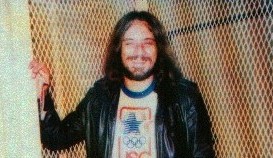
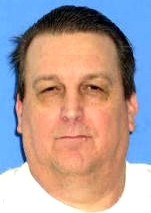
John Plath
Murderer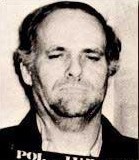 Ervil LeBaron
Murderer · USA · 1972
Ervil Morrell LeBaron (1925 to August 16, 1981) was the leader of a polygamous…
35 victims
Ervil LeBaron
Murderer · USA · 1972
Ervil Morrell LeBaron (1925 to August 16, 1981) was the leader of a polygamous…
35 victims
 Brian Kevin Rosenfeld
Murderer · USA · 1985
Brian Kevin Rosenfeld Brian Kevin Rosenfeld was sentenced to three concurrent l…
23 victims
Brian Kevin Rosenfeld
Murderer · USA · 1985
Brian Kevin Rosenfeld Brian Kevin Rosenfeld was sentenced to three concurrent l…
23 victims
 Marvin Gray
Murderer · USA · 1975
Marvin Gray was convicted killer who claimed responsibility for 23 slayings and…
23 victims
Marvin Gray
Murderer · USA · 1975
Marvin Gray was convicted killer who claimed responsibility for 23 slayings and…
23 victims
 Yahweh ben Yahweh
Murderer · USA · 1980
Yahweh ben Yahweh was born and legally named Hulon Mitchell Jr. (October 27, 19…
23 victims
Yahweh ben Yahweh
Murderer · USA · 1980
Yahweh ben Yahweh was born and legally named Hulon Mitchell Jr. (October 27, 19…
23 victims
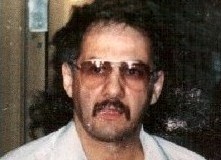 Allan Legere
Murderer · Canada · 1986
Name: Allan Legere · Citation: R. v. Legere (1988), 89 N.B.R. (2d) 361 · Other…
5 victims
Allan Legere
Murderer · Canada · 1986
Name: Allan Legere · Citation: R. v. Legere (1988), 89 N.B.R. (2d) 361 · Other…
5 victims
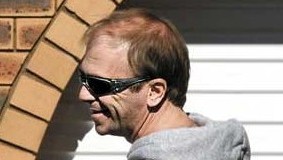 Graham Stafford
Murderer? · Australia · 1991
Graham Stuart Stafford was convicted in 1992 of the murder of twelve-year-old L…
1 victim
Graham Stafford
Murderer? · Australia · 1991
Graham Stuart Stafford was convicted in 1992 of the murder of twelve-year-old L…
1 victim
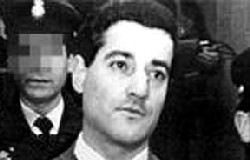 José Antonio Rodríguez Vega
Serial killer · Spain · 1987
José Antonio Rodríguez Vega was a Spanish serial killer nicknamed El Mataviejas…
16 victims
José Antonio Rodríguez Vega
Serial killer · Spain · 1987
José Antonio Rodríguez Vega was a Spanish serial killer nicknamed El Mataviejas…
16 victims
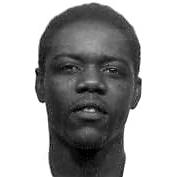 William Kendrick Burns
Murderer · USA · 1980
William Kendrick Burns was executed by lethal injection in Texas on April 11, 2…
2 victims
William Kendrick Burns
Murderer · USA · 1980
William Kendrick Burns was executed by lethal injection in Texas on April 11, 2…
2 victims
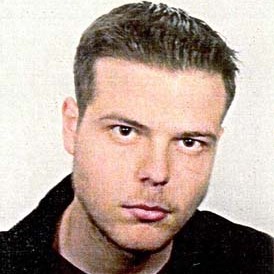 Mijailo Mijailovic
Murderer · Sweden · 2003
Mijailo Mijailović was sentenced to life imprisonment on December 2, 2004. Mija…
1 victim
Mijailo Mijailovic
Murderer · Sweden · 2003
Mijailo Mijailović was sentenced to life imprisonment on December 2, 2004. Mija…
1 victim
- Gender
- male
- Country
- USA
- Location
- Beauford County, South Carolina, USA
- Date of birth
- 1955
- Age at first offence
- 23
- Characteristics
- rape, torture, hitchhiking
- Victim profile
- Betty Gardner (female, 33)
- Method of murder
- Strangulation with a piece of garden hose
- Date(s) of murder
- April 12, 1978
- Years active
- 1978
- Date of arrest
- —
- Status
-
Executed
Executed by lethal injection in South Carolina on July 10, 1998
Case name
John Plath
Status
John Plath was executed by lethal injection in South Carolina on July 10, 1998.
Timeline
- July 10, 1998 — John Plath was executed by lethal injection in South Carolina.
- July 11, 1998 — A report stated that Plath was pronounced dead at 6:22 P.M. at the Broad River Correctional Institution.
- March 1998 — John Arnold was executed in connection with the same crimes.
- November 24, 1997 — The U.S. Court of Appeals for the Fourth Circuit decided that Plath presented no valid grounds for habeas relief and affirmed the denial.
- September 29, 1997 — The appeal was argued.
- May 14, 1997 — The Fourth Circuit ruled on Arnold’s habeas appeal.
- September 3, 1996 — The U.S. District Court for the District of South Carolina denied habeas relief.
- January 30, 1997 — The district court denied petitioner’s motion to alter or amend his order.
- October 17, 1994 — A U.S. Magistrate issued a report recommending denial of habeas corpus relief.
- October 8, 1993 — The State made a motion for summary judgment.
- February 22, 1993 — The U.S. Supreme Court denied Certiorari.
- March 5, 1990 — A third amended PCR application was denied.
- May 12, 1986 — The Court of General Sessions dismissed Plath’s PCR application.
- 1981 — Plath’s and Arnold’s convictions were overturned due to errors made by the prosecution.
- 1984 — Plath applied for Post-Conviction Relief (“PCR”).
- 1985 — Plath amended his PCR application twice.
- May 14, 1997 — The Fourth Circuit ruled in Arnold v. Evatt.
- 1991 — Donald “Pee Wee” Gaskins died in 1991 for killing a black man while in prison.
- 1991 — Plath would be identified as the 3rd killer of a black person executed in South Carolina since the death penalty was reinstated.
- April 12, 1978 — Betty Gardner was hitchhiking, picked up by John Plath and others, and later sexually assaulted, stabbed, and strangled.
- Early morning hours of April 12, 1978 — The Fourth Circuit described the couples borrowing a friend’s car, encountering Betty Gardner, and taking her to a remote wooded area near a garbage dump.
Parties and people
- John Plath — defendant; from York, Penn.; co-defendant of John D. Arnold.
- John D. Arnold (“Arnold”) — co-defendant; executed earlier in 1998.
- Betty Gardner (33) — victim; hitchhiking to her father’s home; later sexually assaulted, stabbed, and strangled.
- Donald “Pee Wee” Gaskins — identified as the first prior execution of a black person after death penalty reinstatement (died in 1991 while in prison).
- David Voisin — attorney for Plath who read Plath’s final statement.
- David Beasley — South Carolina Gov.; turned down Plath’s request for clemency Thursday.
- Michael W. Moore — Director of the South Carolina Department of Corrections; named as respondent-appellee in habeas appeal.
- Charles M. Condon — Attorney General, State of South Carolina; named as respondent-appellee in habeas appeal.
- Russell — Circuit Judge.
- Cindy Sheets — one of the girlfriends described in the Fourth Circuit summary; trial witness for the State; testified at trial.
- Carol Ullman — one of the girlfriends described in the Fourth Circuit summary.
- Elizabeth Binder — not called as a witness at Plath’s sentencing retrial; Plath claimed its absence deprived him of effective assistance of counsel.
- Sheets — referenced in the Fourth Circuit opinion as a key witness.
Background
Relatives of the victim, Betty Gardner, released a statement in part about “Tonight's execution” occurring “some 20 years after Betty's murder.” The statement also referenced “the recent execution of John Arnold.”
It was stated that Plath, 43, was the cousin of Arnold, who was executed in March in connection with the same crimes. Plath was described as having maintained his innocence and claimed he was not present when Gardner died, but was merely an accessory to the murder. Arnold also maintained his innocence up until his death.
The offence
Betty Gardner, 33, was hitchhiking to visit her father when she was picked up by John Plath and his cousin John Arnold, along with an adult woman and a 12-year-old girl. Plath, Arnold, an adult woman, and a 12-year-old girl later sexually assaulted, stabbed, and strangled Gardner. Arnold carved “KKK,” a symbol of the white supremacist Ku Klux Klan, on her body.
The Fourth Circuit described the sequence of events in early morning hours of April 12, 1978: cousins John Arnold and John Plath, “in their early twenties,” along with their respective eleven-year-old and seventeen-year-old girlfriends, borrowed a friend’s car and went looking for wild mushrooms. They encountered farm worker Betty Gardner as she walked along the side of the road. Gardner hitchhiked a ride with the two couples, who took her to her brother’s home. Gardner asked if the group would take her to work, but they refused and drove off. They then went back, picked Gardner up, and took her to a remote wooded area near a garbage dump. There, the Fourth Circuit summary said Plath, Arnold, and their girlfriends subjected Gardner to acts of “extreme cruelty and perversion.” It described Arnold knocking Gardner to the ground and Arnold and Plath beginning to kick her. It further described Plath ordering Gardner to undress and forcing her to perform oral sex upon himself and Cindy Sheets. While Gardner performed oral sex upon Sheets, the summary described Plath beating Gardner with a leather belt and urinating in Gardner’s mouth, forcing her to swallow the urine. It described Plath and Arnold attempting to strangle Gardner with a piece of garden hose they found on the dump site, then Plath repeatedly stomping on Gardner’s neck while commenting that “niggers are sure hard to kill.” It described Plath stabbing Gardner “some ten times in the chest,” Arnold dragging Gardner by the neck into adjacent woods using the garden hose, Arnold returning to say Gardner did not seem to be dead, and Plath telling Sheets to take a broken bottle and cut Gardner’s throat. The summary stated that Sheets and Arnold finally strangled Gardner with the hose, and that Arnold carved “KKK” into Gardner’s body to mislead police. Nearly six weeks later, the summary stated that Sheets led authorities to Gardner’s badly decomposed body.
Investigation and trial
Plath and Arnold were convicted of the 1978 kidnapping, rape, and murder of Betty Gardner and were sentenced to death. After the first trials, the South Carolina Supreme Court affirmed convictions but reversed the death sentences and remanded for resentencing. A resentencing trial imposed the death penalty again on both defendants.
In the habeas proceedings, it was stated that Plath was indicted alleging that Plath killed Gardner “in Beaufort County on or about the 12th day of April 1978.”
Arrest
The provided material did not include facts about an arrest.
Sentencing
Both Plath and Arnold were sentenced to death following resentencing. Their death sentences were affirmed by the South Carolina Supreme Court after resentencing.
Appeals
U.S. Court of Appeals for the Fourth Circuit (habeas corpus)
John H. Plath (Plath) appealed the denial of a writ of habeas corpus by the District Court for the District of South Carolina to the U.S. Court of Appeals for the Fourth Circuit. The appeal was decided on November 24, 1997, with argument on September 29, 1997.
The Fourth Circuit stated that Plath appealed the denial of habeas relief and that it found no valid grounds for habeas relief, affirming the district court.
The Fourth Circuit opinion included the procedural history: it stated that the South Carolina Court of General Sessions convicted both Plath and Arnold of the 1978 kidnapping, rape, and murder of Betty Gardner and sentenced both to death; that Plath’s convictions were overturned in 1981 due to errors made by the prosecution; and that they were again sentenced to die in the second trial.
It also described post-conviction procedural steps: Plath applied for Post-Conviction Relief in November 1984, amended twice in 1985, and after an evidentiary hearing the Court of General Sessions dismissed the PCR application on May 12, 1986. It then stated that Plath was granted certiorari to the United States Supreme Court and that the U.S. Supreme Court remanded for reconsideration in light of Yates v. Aiken, and that the issue was whether an implied malice instruction given at Plath’s original trial violated his due process rights under the 14th Amendment and whether any violation was reversible error. It stated that the Court of General Sessions found no violation under Yates v. Aiken, or if a violation occurred, it was harmless beyond a reasonable doubt. It then stated that Plath’s third amended PCR application was denied on March 5, 1990, and that the South Carolina Supreme Court affirmed, holding that although the implied malice instruction violated Yates v. Aiken, it was harmless beyond a reasonable doubt under Yates v. Evatt. It further stated that on February 22, 1993, the U.S. Supreme Court denied certiorari, and that Plath then sought federal habeas relief.
The Fourth Circuit addressed six grounds:
- It held that the jury instruction on implied malice from the use of a deadly weapon was harmless error, and declined to grant habeas relief on that ground.
- It addressed improper arguments by the State, referring to procedural default rules and also stating that alleged improper arguments from resentencing had been considered in Arnold and did not meet Darden v. Wainwright’s requirement that they “so infected the trial with unfairness as to make the resulting conviction a denial of due process.”
- It held that the jurisdictional claim that the site was not within Beaufort County or South Carolina but instead part of “The Territorial Sea” was “meritless,” and discussed Townsend v. Sain regarding the availability of an evidentiary hearing.
- It held that several ineffective assistance of counsel claims failed, including:
- failure to object to introduction and reference to an immunity agreement between the State and Cindy Sheets alluding to Sheets’s submission to a polygraph test; the district court found no prejudice because no polygraph results were presented and the jury assessed Sheets’s credibility at length.
- failure to lay the proper foundation for x-rays of Plath’s leg broken prior to the murder; the Fourth Circuit discussed counsel’s strategic decision to use an orthopedic surgeon’s testimony instead.
- failure to present additional mitigating evidence; it addressed procedural bar and prejudice.
- failure to call Elizabeth Binder as a witness at sentencing retrial; it addressed procedural bar and stated it had strategic value due to questions about Binder’s credibility.
- It held that the lack of mental competence issue during resentencing trial was procedurally barred, and also stated it would fail under requirements discussed in Lawson v. Dixon and was not entitled to an evidentiary hearing.
- It held that the absence of counsel from a jury view of the site was harmless, citing that it was similarly treated in Arnold and stating that “all of the elements of a perfect trial . . . are not required in order to have a fair trial.”
The Fourth Circuit conclusion stated:
“For the foregoing reasons, we affirm the judgement of the district court denying the writ of habeas corpus.”
“AFFIRMED.”
Supreme Court clemency and stay requests
South Carolina Gov. David Beasley turned down Plath’s request for clemency Thursday. The state Supreme Court denied Plath’s attorney’s request for a stay. An appeal to the U.S. Supreme Court was also turned down.
Outcome
Plath was executed by lethal injection in South Carolina on July 10, 1998, and was pronounced dead at 6:22 P.M. The Fourth Circuit had previously affirmed the denial of his federal habeas corpus petition.
It was stated that the case included two convictions and death sentences, later overturned in 1981 due to errors made by the prosecution, with death sentences reimposed after resentencing, and that the convictions were again overturned by the state court only for sentencing in the intermediate appellate step.
Other details
Plath’s final statement
In a final statement read by his attorney David Voisin, Plath said:
“I did not kill the woman.... Killing me offends the peace and dignity of God. God's wrath will be on those who kill me.”
Victim details and death penalty context
The report described Plath as “the 3rd killer of a black person to be executed in South Carolina since the death penalty was reinstated.” It identified Donald “Pee Wee” Gaskins as the first, who died in 1991 for killing a black man while in prison.
Witness credibility and polygraph reference
The habeas opinion discussed an immunity agreement between the State and Cindy Sheets that alluded to Sheets’s submission to a polygraph test. It also noted that “no evidence of the results of any polygraph test were presented to the jury and the jury had ample opportunity to assess Sheets' credibility during her lengthy appearance on the witness stand.”
Procedural posture of jurisdictional claim
The Fourth Circuit discussed that the indictment alleged Plath killed Gardner “in Beaufort County on or about the 12th day of April 1978,” and said that the jury convicted Plath based on this indictment, describing it as an “express” finding of fact.
Court case caption
The habeas appeal was captioned:
- “UNITED STATES COURT OF APPEALS FOR THE FOURTH CIRCUIT JOHN H. PLATH, Petitioner - Appellant, v. MICHAEL W. MOORE, Director of the South Carolina Department of Corrections, in his official capacity; CHARLES M. CONDON, Attorney General, State of South Carolina, in his official capacity, Respondents - Appellees.”
The opinion’s headings included:
- “No. 97-7”
- “Argued: September 29, 1997”
- “Decided: November 24, 1997”
Spotted an error, or have more information about this case?