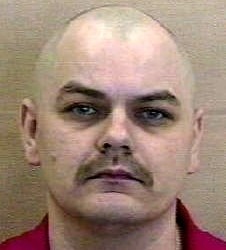
Jerry Wayne Conner
Murderer Michael Zabawa
Murderer
Michael Zabawa was a Minnesota man who lived in Matawan, and he worked at a hog…
2007 victims
Michael Zabawa
Murderer
Michael Zabawa was a Minnesota man who lived in Matawan, and he worked at a hog…
2007 victims
 Clinton Lee Young
Murderer · USA
Clinton Lee Young (born July 19, 1983) was convicted of murdering two men in No…
2001 victims
Clinton Lee Young
Murderer · USA
Clinton Lee Young (born July 19, 1983) was convicted of murdering two men in No…
2001 victims
 Ivan Abner Cantu
Murderer · USA
Name: Ivan Abner Cantu · TDCJ number: 999399 · Date of birth: 06/14/1973 · Age…
2000 victims
Ivan Abner Cantu
Murderer · USA
Name: Ivan Abner Cantu · TDCJ number: 999399 · Date of birth: 06/14/1973 · Age…
2000 victims
 John Chamberlain
Murderer
John Chamberlain was sentenced in Florida in connection with a triple murder at…
1998 victims
John Chamberlain
Murderer
John Chamberlain was sentenced in Florida in connection with a triple murder at…
1998 victims
 Michael John Yowell
Murderer · USA
Name: Michael John Yowell · TDCJ number: 999334 · Date of birth: 01/25/1970 · P…
1998 victims
Michael John Yowell
Murderer · USA
Name: Michael John Yowell · TDCJ number: 999334 · Date of birth: 01/25/1970 · P…
1998 victims
 Michael Duane Zack
Murderer · USA
Michael Duane Zack was convicted and sentenced to death for the 06/13/96 murder…
1996 victims
Michael Duane Zack
Murderer · USA
Michael Duane Zack was convicted and sentenced to death for the 06/13/96 murder…
1996 victims
 David Spanbauer
Serial killer · USA · 1992
David Spanbauer was convicted in 1994 of kidnapping and murdering two children,…
3 victims
David Spanbauer
Serial killer · USA · 1992
David Spanbauer was convicted in 1994 of kidnapping and murdering two children,…
3 victims
 Kristine Bunch
Murderer? · USA · 1995
Kristine Bunch was the defendant in a case involving the 1996 arson and murder…
1 victim
Kristine Bunch
Murderer? · USA · 1995
Kristine Bunch was the defendant in a case involving the 1996 arson and murder…
1 victim
 Adam Leroy Lane
Murderer · USA · 2007
Adam Leroy Lane was a former trucker who committed knife attacks on women in Ne…
2 victims
Adam Leroy Lane
Murderer · USA · 2007
Adam Leroy Lane was a former trucker who committed knife attacks on women in Ne…
2 victims
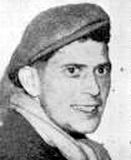 Thomas Harries
Murderer · United Kingdom · 1953
Thomas Ronald Lewis Harries was executed by hanging at Swansea Prison on April…
2 victims
Thomas Harries
Murderer · United Kingdom · 1953
Thomas Ronald Lewis Harries was executed by hanging at Swansea Prison on April…
2 victims
- Gender
- male
- Country
- —
- Location
- —
- Date of birth
- March 3, 1966
- Characteristics
- rape
- Victim profile
- Minh Linda Luong Rogers and her daughter, Linda Rogers, 16
- Method of murder
- Shooting Loca tion : Gates County, North Carolina, USA
- Date(s) of murder
- —
- Years active
- —
- Date of arrest
- August 31, 1990
- Status
-
Sentenced to death
Sentenced to death on January 31, 1995
Case record
Parties
- Jerry Wayne Conner — defendant.
The offence
In April 1991, Jerry Wayne Conner was convicted by a jury in the Superior Court of Gates County, North Carolina, for the first-degree murders of Minh Rogers and Linda Rogers, as well as the related crimes of first-degree rape and robbery with a firearm.
The State’s evidence at trial tended to show that on the evening of 18 August 1990, Harold Lowe, his girlfriend Kathy Winslow, and Chris Bailey stopped at Rogers’ Grocery outside Gatesville, North Carolina, at approximately 9:30 p.m. They parked in the lot under a streetlight facing the highway waiting for a friend, Will Harrell, to arrive. After a few minutes, Harold Lowe saw Minh Rogers and an unknown white male leave the store. Minh and the man talked for a few minutes and then Minh Rogers reentered the building.
Chris Bailey testified that he first noticed the white male walking from the store toward a white car parked in the lot. A few moments later, that same white male was carrying a shotgun and walking toward the vehicle in which Bailey was sitting. Harold Lowe testified he was startled when that same man appeared at the passenger window of his truck holding “some kind of identification with a picture.” The man stated he was an agent with DEA and that undercover officers were preparing to execute a drug bust in the immediate vicinity in an effort to seize over $1.5 million worth of cocaine. He further informed Lowe that if he did not want to be an accessory to the crime, he and his friends should leave the premises immediately. Lowe, Bailey, and Wilson each positively identified Conner at trial as the man who approached their car and warned them to leave the parking lot.
Will Harrell testified that he stopped by Rogers’ Grocery at approximately 9:50 p.m. on the evening of 18 August 1990. As he entered the store, he recognized the owner talking to a white male he did not know. Harrell testified that the white male was of medium build, approximately five-feet ten inches tall, wearing a plaid shirt and a baseball cap. Harrell positively identified Conner as the man he saw in Rogers’ Grocery on the night of 18 August 1990.
SBI [State Bureau of Investigation] Agent Eric A. Hooks testified to statements made by Daniel Oliver Croy in a series of interviews beginning on the morning of 19 August 1990. Croy told investigating officers that he stopped by Rogers’ Grocery on the evening of 18 August 1990 after dinner. He “drank some beer, sat around, and talked with Linda [sic] Rogers, [and] her daughter.” During this time, a white stocky male of medium height, thirty to thirty-five years of age, entered the store, made purchases, chatted for a while with Minh, and then left. Croy noted the individual had a moustache and was wearing a baseball cap. Croy left the grocery store around 8:45 p.m.; as he was backing out of his parking space, the same man drove up beside him on the driver’s side of the car. The man told Croy he was an “SBI agent working with DEA on a big drug deal that was going down in the area.” At one point during the conversation, the man asked Croy if he would like to see his credentials. He then held up a pump shotgun and said “there’s my credentials.” Croy left shortly thereafter but recalled that the lights in the store were on and the store was apparently still open.
John Lambert, a part-time employee of Rogers’ Grocery, testified that on the morning of 19 August 1990, he arrived at the store at 9:00 a.m. only to find he had left his key at home. After retracing his steps, he returned to the store with the key and noted the door lock didn’t make the usual clicking sound. He realized the door had apparently been left open overnight. When he entered the store, Lambert found the bodies of Minh and Linda Rogers.
Deputy George M. Ryan of the Gates County Sheriff’s Department described the crime scene. The nude body of Linda Rogers was lying on her back in a large pool of blood concentrated around her neck, shoulders, and abdomen. Ryan noted a gaping gunshot wound in her upper chest and that the teeth in her mouth were “just shattered.” Minh Rogers’ body was found on a lounge chair behind the counter. Although she was fully clothed, her pullover sweater had been pulled up just below her breasts and her shorts had been unzipped and pulled down. She was covered in blood. After securing the scene, Ryan notified the SBI.
Dr. Page Hudson, former Chief Medical Examiner for the State of North Carolina, performed the autopsies on 20 August 1990. He stated that the cause of death for Minh Rogers was a gunshot wound to the head causing massive destruction of the skull and brain. Hudson opined that the shot was fired from a very short distance—“two to four feet.” Spermatozoa were present in the vaginal cavity of Linda Rogers indicating she had been sexually active just prior to her death. The younger woman died from a “shotgun wound to the under surface of chin and neck.”
On the morning of 31 August 1990, SBI Special Agent Malcolm McLeod, Gates County Deputy Sheriff George Ryan, and Hertford County Deputy Sheriff Ronnie Stallings questioned Conner concerning the murders at Rogers’ Grocery on the night of 18 August 1990. After an initial attempt to mislead the officers, Conner related the following sequence of events.
On the day Conner was fired from his job as a truck driver with Rose Brothers (either the thirteenth or fourteenth of August 1990), he stopped at the Fast Fare in Murfreesboro. He engaged in an extensive conversation with a black male whom Conner did not know personally but had seen on numerous occasions. The man was approximately six-feet tall, weighed 240 pounds, and was in his thirties with slightly graying hair. The conversation centered upon whether Conner was interested in making some quick, “illegal money.” Even after being offered $7000 to kill a “Japanese woman who ran a store in Gates County,” Conner informed the man he was not interested and left. However, as financial problems began to arise, Conner drove back to Murfreesboro to locate the black male. When he was unable to find him, Conner decided to kill the woman and try to collect the money afterwards.
Conner told police that on Saturday, 18 August, he drove to Gates County, located Rogers’ Grocery, and went inside. He left shortly thereafter since there were several customers inside. On the next several times he drove by, there were vehicles in the parking lot. When he finally found the lot relatively empty, Conner parked his car and entered the store carrying his 12-gauge pump, sawed-off shotgun with pistol grips. When he walked in, Conner told Minh Rogers he was going to shoot her. She laughed. Conner forced her to lie down upon a lounge chair behind the counter. When she attempted to rise, he shot her in the upper chest area from a distance of approximately eight (8) inches. Upon being startled by the victim’s teenage daughter entering the main room of the store, Conner held her at gunpoint. After searching her for a weapon, he ordered her to take off her clothes. He then raped Linda Rogers and shot her in the upper chest.
Conner remembered talking with some people in the parking lot of Rogers’ Grocery but did not recall identifying himself as a law enforcement officer. Before fleeing the scene, Conner picked up a dark colored briefcase, a bank bag, and the money from the cash register.
Conner modified this version of his confession to state that on 18 August 1990, he had stopped at Rogers’ Grocery to get something to drink. An older white male and the woman who owned the store started to tease him—calling him “cowgirl” or “cowboy.” He became angry, left the store, and went to Alvin Riddick’s home where he stayed until after dark. While drinking two bottles of George Dickel whiskey, Conner became more and more upset about his treatment at the store earlier in the day. He returned to the store finding only Minh Rogers and the white male present. As he entered the store, the white male called Conner a “dickhead.” Conner suggested the two men go outside and fight. Outside, however, the unidentified white male indicated he was not interested in fighting and left. Conner then proceeded to kill the two women as he previously indicated.
The State produced extensive physical evidence through numerous witnesses including SBI agents, FBI agents, and deputies of the Gates and Hertford County Sheriff’s Departments which corroborated the testimony of the prosecution witnesses and the main elements of Conner’s confession.
At the conclusion of the guilt phase of Conner’s first trial, the jury convicted him on all charges—two counts of first-degree murder and one count each of first-degree rape and robbery with a firearm. After the separate sentencing phase of the proceeding, the jury recommended Conner receive two death sentences on the murder convictions. The presiding judge imposed two death sentences.
Timeline
- 18 August 1990 — Harold Lowe, Kathy Winslow, and Chris Bailey stopped at Rogers’ Grocery outside Gatesville, North Carolina, at approximately 9:30 p.m.; Will Harrell stopped at Rogers’ Grocery at approximately 9:50 p.m.; Minh Rogers and Linda Rogers were killed at Rogers’ Grocery.
- 19 August 1990 — Daniel Oliver Croy gave statements in interviews beginning on the morning of 19 August 1990; John Lambert arrived at the store at 9:00 a.m. and found the bodies of Minh and Linda Rogers.
- 20 August 1990 — Dr. Page Hudson performed autopsies.
- 31 August 1990 — SBI Special Agent Malcolm McLeod, Gates County Deputy Sheriff George Ryan, and Hertford County Deputy Sheriff Ronnie Stallings questioned Conner concerning the murders.
- 4/30/1991 — Jerry Wayne Conner was sentenced to death in Gates County Superior Court for the first-degree murders of Minh Rogers and Linda Rogers.
- 1990 — Conner was sentenced to die for the murder and rape of Minh Rogers and her 16-year-old daughter, Linda (as stated in the case summary).
- 3/4/1994 — North Carolina Supreme Court found no error in the guilt phase of Conner’s trial for first-degree murder, vacated the death sentences, and remanded for a new capital sentencing proceeding.
- 1/31/1995 — Defendant Conner was again sentenced to death for the first-degree murders of Minh Rogers and Linda Rogers.
- 2/10/1997 — North Carolina Supreme Court affirmed defendant Conner’s sentences of death.
- 2/27/2006 — US Supreme Court denied defendant Conner’s petition for writ of certiorari.
- 3/21/2006 — Correction Secretary Theodis Beck set May 12, 2006, as the execution date for Jerry Wayne Conner; the execution was scheduled for 2:00 a.m. at Central Prison (as stated in the case summary).
- 5/10/2006 — Execution stayed by NC Supreme Court to allow for additional DNA testing.
Trial
First trial (capital convictions and sentence)
In April 1991, Conner was convicted by a jury in the Superior Court of Gates County, North Carolina, for the first-degree murders of Minh Rogers and Linda Rogers, and the related crimes of first-degree rape and robbery with a firearm. The jury recommended that Conner be sentenced to death, and the presiding judge imposed two death sentences.
On direct appeal, the Supreme Court of North Carolina affirmed Conner’s convictions but vacated his death sentences and awarded a new capital sentencing proceeding (State v. Conner, 335 N.C. 618, 440 S.E.2d 826 (1994) (“Conner I”)). The vacatur occurred because the trial court improperly restricted voir dire on whether prospective jurors would automatically impose the death penalty in contravention of Morgan v. Illinois.
Second capital sentencing proceeding
At Conner’s second sentencing proceeding conducted pursuant to N.C. Gen.Stat. § 15A-2000, the jury found two aggravating factors for each murder:
- that they were committed during the commission of a felony; and
- that each was part of a course of conduct by the defendant which included crimes of violence against another person.
The jury found two statutory and three non-statutory mitigating factors but concluded the mitigating circumstances were insufficient to outweigh the aggravating circumstances. The jury recommended that Conner be sentenced to death on each murder conviction, and the trial judge imposed two death sentences.
On direct appeal of the second sentencing proceeding, the Supreme Court of North Carolina upheld Conner’s death sentences (State v. Conner, 345 N.C. 319, 480 S.E.2d 626, 627 (1997) (“Conner II”)). The Supreme Court denied certiorari.
Sentencing
- 4/30/1991 — Conner was sentenced to death for the first-degree murders of Minh Rogers and Linda Rogers.
- 1/31/1995 — Conner was again sentenced to death for the first-degree murders of Minh Rogers and Linda Rogers.
- The case summary also stated that Conner was sentenced to life imprisonment for rape and 40 years imprisonment for robbery with a firearm.
- The North Carolina Supreme Court later vacated the death sentences.
Appeals
- 3/4/1994 — North Carolina Supreme Court found no error meriting reversal of Conner’s convictions; it vacated the death sentences and remanded for a new capital sentencing proceeding.
- 2/10/1997 — North Carolina Supreme Court affirmed Conner’s sentences of death.
- cert. denied — The Supreme Court denied Conner’s petition for certiorari after his direct appeal of the death sentences (as reflected in the procedural description).
Outcome
Conner’s habeas corpus appeal was decided by the United States Court of Appeals. The judgment was AFFIRMED.
The appeal was presented as 407 F.3d 198 and involved Jerry Wayne Conner, Petitioner-Appellant, v. Marvin Polk, Warden, Central Prison, Raleigh, North Carolina, Respondent-Appellee. The opinion described that Judge KING wrote the majority opinion in which Judge SHEDD joined, and Judge LUTTIG wrote a dissenting opinion.
Dissent
Judge LUTTIG dissented. The dissent asserted that Conner was entitled to an evidentiary hearing and described that the state court relied exclusively on McDonough Power Equipment, Inc. v. Greenwood without addressing Sixth Amendment actual-bias cases such as Smith v. Phillips.
Majority disposition
The majority rejected Conner’s contentions that juror Helene Knight was biased and rejected the request for an evidentiary hearing, and it affirmed the district court’s denial of habeas corpus relief.
Aftermath
The case summary stated that:
- 5/10/2006 — Execution was stayed by NC Supreme Court to allow for additional DNA testing.
- 3/21/2006 — Correction Secretary Theodis Beck set May 12, 2006, as the execution date for Jerry Wayne Conner, with the execution scheduled for 2:00 a.m. at Central Prison.
Other details
Juror-bias claim in federal habeas proceedings
Conner contended he was denied his constitutional right to due process and to a fair and impartial jury because juror Helene Knight was biased. Conner’s argument was twofold:
- that Knight was biased because she failed to answer honestly a material question at voir dire, in contravention of McDonough Power Equipment, Inc. v. Greenwood; and
- that Knight was necessarily biased because she had covered the first trial extensively as a reporter and had outside information about the case, under the principles in Smith v. Phillips.
Conner asserted he was entitled to an evidentiary hearing on juror bias. The majority rejected the contentions.
Voir dire question and denial of communication with firsthand sources
Conner argued that Knight failed to answer honestly a material question during voir dire in the second sentencing proceeding. The question from the trial court was:
“And have you heard this case discussed by any person who indicated direct or firsthand knowledge of the facts about the case other than the witnesses that you heard?”
The record reflected the following answer:
“No, sir.”
The majority discussed affidavits submitted by Conner in the MAR proceeding alleging Knight admitted she communicated with and obtained information regarding the murders of Linda and Minh, which was not available to the public, from Gates County Sheriff Elmo Benton and Deputy Sheriff George Ryan, who testified at Conner’s first trial.
The MAR court determined that a fair and reasonable reading of the voir dire proceeding was that Knight did not consider police or investigative personnel “persons with firsthand knowledge of the facts about the case.” The MAR court concluded Knight interpreted the inquiry to refer to witnesses who had observed Conner at the murder scene on the night of the crime or who had discovered the bodies. The majority stated it could not find the MAR court’s determination to be unreasonable.
The majority also stated that Conner offered no evidence to show Knight communicated with persons with firsthand knowledge as interpreted by the MAR court.
Attempt to mislead during questioning and confession details
During questioning on 31 August 1990, after an initial attempt to mislead the officers, Conner related a sequence of events including an offer to kill a “Japanese woman who ran a store in Gates County,” the shooting of Minh Rogers in the upper chest area from a distance of approximately eight (8) inches, and the rape and shooting of Linda Rogers after she entered the main room. The confession included picking up a dark colored briefcase, a bank bag, and money from the cash register before fleeing. Conner later modified the confession, describing a dispute at the store involving teasing him as “cowgirl” or “cowboy,” later drinking two bottles of George Dickel whiskey, returning to the store, and being called a “dickhead” by an unidentified white male.
Convictions and recommendations at first trial
The jury convicted Conner on two counts of first-degree murder and one count each of first-degree rape and robbery with a firearm. After the sentencing phase of the first trial, the jury recommended two death sentences on the murder convictions, and the presiding judge imposed two death sentences.
Spotted an error, or have more information about this case?