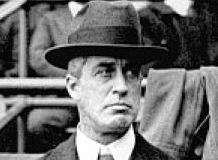
Charles Chapin
Murderer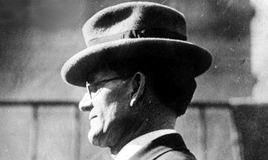 William Hale
Murderer · USA · 1921
Name: William Hale · Known as: the so-called "King of the Osage Hills" · Occupa…
24 victims
William Hale
Murderer · USA · 1921
Name: William Hale · Known as: the so-called "King of the Osage Hills" · Occupa…
24 victims
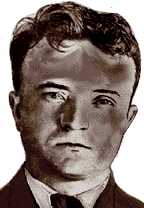 Paul Jaworski
Murderer · USA · 1926
Paul Jaworski was born in Poland as Paul Poluszynski in 1900. He later immigrat…
20 victims
Paul Jaworski
Murderer · USA · 1926
Paul Jaworski was born in Poland as Paul Poluszynski in 1900. He later immigrat…
20 victims
 John S. Williams
Murderer · USA · 1910
John S. Williams was convicted of murder and sentenced to life imprisonment on…
18 victims
John S. Williams
Murderer · USA · 1910
John S. Williams was convicted of murder and sentenced to life imprisonment on…
18 victims
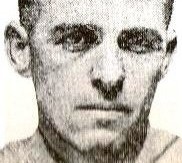 Edward Adams
Murderer · USA · 1920
Edward J. "Eddie" Adams was born in 1887 on a farm in Hutchinson, Kansas as W.J…
7 victims
Edward Adams
Murderer · USA · 1920
Edward J. "Eddie" Adams was born in 1887 on a farm in Hutchinson, Kansas as W.J…
7 victims
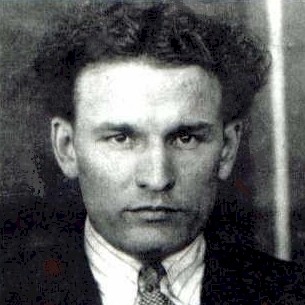 William Kenneth Wagner
Murderer · USA · 1924
William Kenneth (Kinnie) Wagner (born February 18, 1903 in Scott County, VA) wa…
6 victims
William Kenneth Wagner
Murderer · USA · 1924
William Kenneth (Kinnie) Wagner (born February 18, 1903 in Scott County, VA) wa…
6 victims
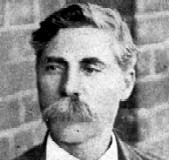 Floyd Allen
Murderer · USA · 1912
Floyd Allen (July 5, 1856 – March 28, 1913) was an American landowner and patri…
5 victims
Floyd Allen
Murderer · USA · 1912
Floyd Allen (July 5, 1856 – March 28, 1913) was an American landowner and patri…
5 victims
 Tracie Andrews
Murderer · United Kingdom · 1996
Tracie Marguerite Andrews (born 1969) was an English woman who murdered her fia…
1 victim
Tracie Andrews
Murderer · United Kingdom · 1996
Tracie Marguerite Andrews (born 1969) was an English woman who murdered her fia…
1 victim
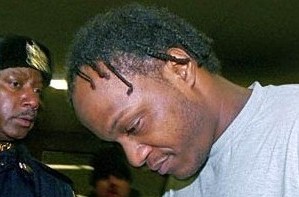 Raymont Hopewell
Serial killer · USA · 1999
Raymont Hopewell was a 35-year-old defendant who was accused of killing five pe…
5 victims
Raymont Hopewell
Serial killer · USA · 1999
Raymont Hopewell was a 35-year-old defendant who was accused of killing five pe…
5 victims
 John Barlow
Murderer · New Zealand · 1994
16 February 1994 — Financial dealers Eugene and Gene Thomas, father and son, we…
2 victims
John Barlow
Murderer · New Zealand · 1994
16 February 1994 — Financial dealers Eugene and Gene Thomas, father and son, we…
2 victims
 Ronald Wayne Frye
Murderer · USA · 1993
Ronald Wayne Frye was convicted on November 15, 1993 of first-degree murder and…
1 victim
Ronald Wayne Frye
Murderer · USA · 1993
Ronald Wayne Frye was convicted on November 15, 1993 of first-degree murder and…
1 victim
 Christopher Dankovich
Homicide · USA · 2005
Christopher Dankovich — defendant; 15-year-old Rochester Hills teenager when he…
1 victim
Christopher Dankovich
Homicide · USA · 2005
Christopher Dankovich — defendant; 15-year-old Rochester Hills teenager when he…
1 victim
- Gender
- male
- Country
- USA
- Location
- New York City, New York, USA
- Date of birth
- October 19, 1858
- Age at first offence
- 60
- Characteristics
- parricide
- Victim profile
- Nellie Chapin (his wife)
- Method of murder
- Shooting
- Date(s) of murder
- September 16, 1918
- Years active
- 1918
- Date of arrest
- Same day
- Status
-
Died in custody
Sentenced to a 20-year-to-life term in 1919; died in Sing Sing prison on December 13, 1930
Overview
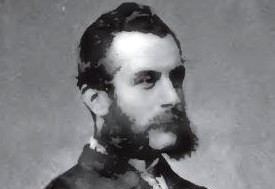
Charles Chapin (October 19, 1858 – December 13, 1930) was a New York newspaper editor. He was convicted of the murder of his wife and sentenced to a 20-year-to-life term in Sing Sing prison.
Timeline
- September 16, 1918 — Chapin shot and killed his wife while she was sleeping at the Cumberland Hotel.
- 1919 — Chapin was sentenced to a 20-year-to-life term.
- December 13, 1930 — Chapin died in Sing Sing prison.
Background
Chapin was born in upstate Watertown, New York. He began his career on a Kansas newspaper at age 14, and he later moved to Chicago to work for the Tribune, where he gained renown as a crime reporter. In 1898, he was hired by the World, a New York daily run by the Pulitzer family, which enjoyed one of the largest circulations in the country. Chapin became editor of the evening edition of the World and was renowned as a hard taskmaster.
During his tenure at the World, Chapin was said to have fired a total of 108 journalists. One of the dismissals was for daring to use the new-fangled word “questionnaire”. Among those victims was his own publisher’s son.
Opinions of Chapin differed. To many newspapermen, he was “the greatest city editor who ever lived”. Those who worked for him often hated him. When Irvin S. Cobb, a World reporter, heard that Chapin was sick, he was said to have looked up from his work and remarked, “I hope it’s nothing trivial.”
Andy Logan described Chapin as “terrible tempered” and said that, in the opinion of many of his staff, he had “a legendary imperviousness to human suffering, especially theirs.”
Notable journalism event
One of Chapin’s celebrated coups involved the publication of a photograph captured by an Evening World photographer showing the moment when New York mayor William Jay Gaynor was shot by a would-be assassin. William Warnecke, the photographer, had been lining up a portrait of the mayor and snapped the shutter just as Gaynor crumpled to the ground. When the developed photo arrived on Chapin’s desk, Chapin’s response was: “Blood all over him! And exclusive, too!”
Marriage and financial circumstances
Chapin’s wife was Nellie. The childless Chapins had enjoyed a long marriage. They wed at age 21, months after they met in Chicago. Nellie quit an acting career to follow her husband from one newspaper gig to the next.
Chapin was reported to have expected to inherit a fortune from his great-uncle, Russell Sage. Russell Sage died in 1906, leaving Chapin just $50,000 of his $70 million estate. Chapin had borrowed for years against his expected inheritance, and the will brought financial ruin to him.
Chapin sold his yacht, stiffed the Plaza for $2,000, and moved Nellie to the Cumberland Hotel, at 54th and Broadway. He lost the last of his equity when the commodities market tanked during World War I. By 1918, he was flat broke. He wrote that he was “Worse than that, I was ruined and dishonored”. He also wrote: “Suicide, the last resort of a moral coward, I decided, was preferable to never-ending disgrace, so I went about preparing for it.”
The offence
Chapin shot and killed his spouse while she was sleeping.
On Sept. 16, 1918, Chapin borrowed a revolver from a former police commissioner and shot his wife as she slept at the Cumberland on Sept. 16, 1918. He left two self-serving suicide notes:
“I have tried to think out what is best to do,” he wrote, “and cannot bear the thought of leaving my wife to face the world alone, so I have resolved to take her with me.”
After the shooting, Chapin rode the subway to Brooklyn, planning to shoot himself there. He got cold feet and surrendered to cops.
Investigation and legal position
Chapin claimed insanity. A number of reporters agreed that he may have been crazy all along. A lunacy commission cleared him for trial, and he was allowed to plead guilty to second-degree murder, which spared his life.
Sentencing
Chapin was sentenced to a 20-year-to-life term in 1919. He was sent to Sing Sing prison for a term of 20 years to life.
Aftermath in prison
Chapin wrote a memoir in prison and became renowned for the rose garden he cultivated in the grounds, acquiring the nickname “The Rose Man.” He edited the prison newspaper at Sing Sing for a short time.
Warden Lewis Lawes allowed Chapin to create a flower garden in a desolate prison yard. The garden was said to have inspired the inmates’ troubled souls. Someone said it inspired the inmates’ troubled souls.
Chapin died of pneumonia at Sing Sing in 1930.
Other details
Chapin explained:
“Gathering the news of a great city is a carefully thought-out and systematized piece of human machinery that operates under the personal supervision of the city editor.”
He was described as supervising with a cudgel.
Chapin bragged that he fired 108 newsmen in his career—one for using the new-fangled word “questionnaire” in a story and another for failing to show a telltale limp after he missed work due to a supposed foot injury.
Rewriteman Cobb described Chapin’s attitude toward money:
“He dearly loved money, not for the sake of hoarding it, but for what it could bring him in luxury and display,” said rewriteman Cobb.
Chapin was quoted about his wife:
“She was the sweetest, the truest, the most lovable woman I have ever known — full of fun and joy of living,” Chapin said of his wife. “All who knew her loved her.”
Andy Logan wrote:
“They had known he would be involved in a murder some day,” Logan writes, “but had always assumed he would be the victim.”
Chapin died on December 13, 1930. He had been born on October 19, 1858.
Spotted an error, or have more information about this case?