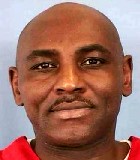
Ricky Chase
Murderer Brian Kevin Rosenfeld
Murderer · USA · 1985
Brian Kevin Rosenfeld Brian Kevin Rosenfeld was sentenced to three concurrent l…
23 victims
Brian Kevin Rosenfeld
Murderer · USA · 1985
Brian Kevin Rosenfeld Brian Kevin Rosenfeld was sentenced to three concurrent l…
23 victims
 Yahweh ben Yahweh
Murderer · USA · 1980
Yahweh ben Yahweh was born and legally named Hulon Mitchell Jr. (October 27, 19…
23 victims
Yahweh ben Yahweh
Murderer · USA · 1980
Yahweh ben Yahweh was born and legally named Hulon Mitchell Jr. (October 27, 19…
23 victims
 Russell Ellwood
Murderer · USA · 1991
Russell Ellwood was a former taxi driver. Authorities suspected him of killing…
20 victims
Russell Ellwood
Murderer · USA · 1991
Russell Ellwood was a former taxi driver. Authorities suspected him of killing…
20 victims
 Robert Martines Perez
Murderer · USA · 1994
Name: Robert Martines Perez · Other name used in proceedings: Robert Martinez P…
15 victims
Robert Martines Perez
Murderer · USA · 1994
Name: Robert Martines Perez · Other name used in proceedings: Robert Martinez P…
15 victims
 Tasha Bates
Murderer · USA · 2012
Tasha Bates was the mother of two boys, Leland Bates (5) and River Bates (3). T…
2 victims
Tasha Bates
Murderer · USA · 2012
Tasha Bates was the mother of two boys, Leland Bates (5) and River Bates (3). T…
2 victims
 William Choyce
Serial killer · USA · 1988
William Jennings Choyce was raised in Oakland and worked as a trash hauler from…
3 victims
William Choyce
Serial killer · USA · 1988
William Jennings Choyce was raised in Oakland and worked as a trash hauler from…
3 victims
 Sailson Jose das Graças
Serial killer · Brazil · 2005
Sailson Jose das Graças was a 26-year-old Brazilian man in prison awaiting tria…
43 victims
Sailson Jose das Graças
Serial killer · Brazil · 2005
Sailson Jose das Graças was a 26-year-old Brazilian man in prison awaiting tria…
43 victims
 James Edward Swann
Serial killer · USA · 1993
James Edward Swann, Jr., also known as “The Shotgun Stalker,” was an American s…
4 victims
James Edward Swann
Serial killer · USA · 1993
James Edward Swann, Jr., also known as “The Shotgun Stalker,” was an American s…
4 victims
- Gender
- male
- Country
- USA
- Location
- Copiah County, Mississippi , USA
- Date of birth
- February 8, 1969
- Age at first offence
- 20
- Characteristics
- robbery
- Victim profile
- Elmer Hart
- Method of murder
- Shooting
- Date(s) of murder
- August 14, 1989
- Years active
- 1989
- Date of arrest
- —
- Status
-
Sentenced to death
Sentenced to death in February 1990
Case overview
Ricky Chase was convicted in February 1990 of capital murder for the robbery and murder of Elmer Hart outside Hazelhurst in Copiah County, Mississippi. His conviction and death sentence were affirmed by the Supreme Court of Mississippi in Chase v. State, 645 So.2d 829 (Miss.1994), and the judgment was affirmed again in a later procedural posture by the Mississippi Supreme Court in the post-conviction proceedings described in No. 96-DP-00750-SCT.
Timeline
- February 1990 — Ricky Chase was convicted of capital murder for the robbery and murder of Elmer Hart outside Hazelhurst in Copiah County, Mississippi; he was sentenced to death.
- August 07, 1997 — The Mississippi Supreme Court decided the en banc application referenced as No. 96-DP-00750-SCT.
- February 24, 1994 — The Supreme Court decision in Chase v. State, 645 So.2d 829 (Miss.1994) was issued.
- July 15, 1996 — Ricky Chase filed his Application for Leave to File Motion to Vacate Judgment and Death Sentence in the Fifth Circuit.
- November 20, 1989 — A suppression hearing was held.
- December 8, 1989 — The circuit court ordered an examination of Chase by Dr. John W. Perry, Jr. to determine sanity at the time of the murder and competence to stand trial.
- December 11, 1989 — Dr. Perry’s report was dated.
- January 16, 1990 — The circuit court issued an order for an examination by Dr. S. Ray Pate.
- March 12, 1990 — Chase filed his motion for new trial.
- February 28, 1990 — The trial concluded in February 28, 1990.
- April 19, 1994 — J.E.B. v. Alabama was decided.
- 1995 — Chase v. Mississippi resulted in certiorari being denied, referenced as 515 U.S. 1123, 115 S.Ct. 2279, 132 L.Ed.2d 282 (1995).
- 1996 — The application for post-conviction relief described as Application for Leave to File Motion to Vacate Judgment and Death Sentence was filed in 1996.
The offence
Ricky Chase and Robert Washington were involved in the robbery of an elderly couple, Doris and Elmer Hart, at their home outside Hazlehurst on August 14, 1989.
It was admitted that the two overpowered Mrs. Hart and then took certain items, mostly guns and money, from the home. Chase and Washington each stated that the other was the mastermind of the robbery and each named the other as the one who actually shot and killed Elmer Hart, who came home during the robbery.
People
- Ricky Chase — defendant.
- Robert Washington — co-defendant; pled guilty and testified against Chase.
- Elmer Hart — victim; was shot and killed.
- Doris Hart — victim; overpowered during the robbery.
- Dr. John W. Perry, Jr. — psychologist; examined Chase and produced a report used in the sentencing/post-conviction discussion.
- Dr. S. Ray Pate — psychiatrist; examined Chase and produced a letter to defense counsel.
- Jeffrey Varas — trial counsel (referred to in connection with allegations of ineffective assistance).
- M.A. Bass — trial counsel (referred to in connection with allegations of ineffective assistance).
- Cynthia A. Stewart — counsel listed for appellant.
- Thomas E. Royals & Associates — listed as associated address for appellant counsel.
- Michael C. Moore — Atty. Gen., listed for appellee.
- Leslie S. Lee — Special Asst. Attys. Gen., listed for appellee.
- Marvin L. White, Jr. — Special Asst. Attys. Gen., listed for appellee.
- Lynn Beall — elementary school principal; testified during sentencing.
- Leslie Ridlehoover Brown — described as attached affidavit to the motion for new trial.
- Mary Givens — juror in Chase’s trial; wife of Toxie Givens.
- Toxie Givens — testified consistently with Mary Givens regarding communications during the trial.
- Freddie Jackson — potential juror excused due to conscientious scruples against death penalty.
- Nellie Tillman — potential juror excused for cause.
- Dena Hall — potential juror excused due to age under Miss.Code Ann. § 13-5-1 (1972); 19 years old.
- Mary Welch — potential juror challenged for cause; did not receive removal for cause.
- Karen L. Boone — next person in the venire accepted after the challenge for cause to Welch.
- Rosemary Cesario — referenced in the discussion of peremptory strikes; described as apparently a white female.
- Jackie Alton — defense witness called during sentencing who testified about attending church with Chase.
- Bob Clower — Copiah County Sheriff’s Deputy; referenced in the discussion of other evidence and testimony.
- Patrick Wojtkiewicz — Director of DNA Research at the North Louisiana Criminalistics Laboratory in Shreveport; provided an affidavit.
- J.E.B. v. Alabama; Strickland v. Washington; etc. — legal authorities cited within the decision (not case participants).
Investigation and arrest
The case discussion described that police obtained multiple statements or admissions from Chase. It was held on direct appeal that, from a totality of the circumstances, the admission of Chase’s statement was admissible and not the product of improper inducement, and that Chase made an intelligent and knowing waiver of rights.
Chase referenced his own statement that: “I would have told the truth anyway.”
Trial
Suppression-related matters and statements
On direct appeal, the Court held that the trial court did not err in admitting Chase’s statement into evidence in violation of the Fifth and Fourteenth Amendments to the Constitution of the United States as well as Article Three, Sections 14 and 26 of the Mississippi Constitution. The Court held that Chase’s waiver of rights was intelligent and knowing, and that law enforcement officers and Chase’s testimony showed he was advised of his constitutional rights, understood them, and gave several statements or admissions voluntarily without inducement.
Chase’s post-conviction claims included that his trial counsel should have introduced evidence of retardation to explain particular vulnerability to police coercion.
The circuit court found Chase appeared to be of average intelligence and had no trouble reading the rights forms in question. The circuit court also noted Chase had refused to allow police to search the car he was driving at the time of his arrest because it did not belong to him.
Jury selection and juror excusals
The post-conviction claims included multiple allegations connected to jury selection and excusals.
On direct appeal, the Court rejected a claim that the State intentionally struck African-Americans and women from the jury in violation of the Sixth and Fourteenth Amendments and state law, emphasizing lack of contemporaneous objection and lack of supporting proof. It also discussed that the reasons given for peremptory challenges were race neutral and gender neutral, and that the jury ultimately consisted of a majority of women.
In the context of challenges for cause:
- Freddie Jackson was excused due to conscientious scruples against the infliction of the death penalty; the record included: “I don't think I could vote for the death penalty under the circumstances․”
- Nellie Tillman knew Chase but stated she could be impartial; she was diabetic and had high blood pressure, had read and heard about the case, and worked with Chase’s sister-in-law; she had a ten year old daughter, the child’s father worked as a truck driver, and there was nobody to take care of the child.
- Dena Hall was excused pursuant to Miss.Code Ann. § 13-5-1 (1972) and was nineteen years old; Chase argued this violated constitutional provisions.
- Mary Welch: trial counsel challenged her for cause; the circuit court made no explicit ruling but did not excuse her, and counsel accepted her with a peremptory challenge for the next person in the venire.
The post-conviction claims also asserted ineffective assistance based on failure to object to excusals of prospective jurors outside the presence of the defendant.
Sentencing
During sentencing, mitigation evidence discussions included testimony from Lynn Beall, an elementary school principal, who testified that Chase was a “follower” and “would be influenced.”
The record described mitigation evidence presented to the jury included “whether Ricky Chase was dominated by and under duress from Robert Washington.”
The post-conviction claims included allegations of ineffective assistance relating to mitigation evidence concerning mental retardation and failure to present Dr. Perry’s findings at guilt and sentencing phases.
The post-conviction discussion also included claims regarding photographs, closing argument, and instructions about aggravating circumstances and mitigation.
Appeals and post-conviction proceedings
Chase’s conviction and death sentence were affirmed in Chase v. State, 645 So.2d 829 (Miss.1994).
Chase filed his Application for Leave to File Motion to Vacate Judgment and Death Sentence in this court on July 15, 1996. The application raised issues of ineffective assistance of trial counsel, including:
- failure to present mitigation evidence concerning Chase’s mental retardation;
- failure to introduce evidence of retardation at the suppression hearing or at trial to explain vulnerability to police coercion;
- failure to request funds for a blood splatter expert;
- failure to subpoena Leslie Brown or seek a continuance in the hearing on the motion for new trial;
- failure to object to prosecutorial strikes against females and related juror-challenge matters;
- failure to object to excusals of prospective jurors outside the presence of the jury;
- failure to object to evidence of other crimes, including eliciting such evidence;
- failure to object to irrelevant evidence concerning the victim and arguments concerning the jury’s duty to return a death sentence;
- failure to object to vouching by the prosecution;
- failure to object to matters outside the record;
- failure to object to the elicitation of evidence concerning religion by the prosecution;
- ineffective assistance for arguing that Chase was guilty;
- failure to object to submission of the “avoiding arrest” aggravating circumstance;
- failure to object to the submission of the “pecuniary gain” aggravating circumstance and lack of an instruction defining “capital murder for pecuniary gain” at trial and on appeal;
- ineffective assistance for submission of an instruction on mitigating evidence;
- ineffective assistance regarding language in the lesser included offense instruction;
- and the court’s alleged failure to conduct statutorily required sentencing review.
The Mississippi Supreme Court reviewed these issues and held that the application should be denied, concluding that Chase had failed to present a substantial showing of the denial of a state or federal right in his application for post-conviction relief.
Other details
Mitigation-related expert examinations
Defense counsel sought funding for an investigator and a clinical psychiatrist/expert. The circuit court granted the motion as to the psychiatrist.
Chase was examined by:
- Dr. John W. Perry, Jr. (psychologist) pursuant to a suggestion of insanity and the circuit court’s order of December 8, 1989;
- Dr. S. Ray Pate (psychiatrist) pursuant to the circuit court’s order of January 16, 1990.
Dr. Perry’s report included the following under “Test Results and Interpretation”:
The WMS was administered first, and the defendant seemed to be performing at his best at this point in the session. He attained an MQ of 99, which is in the average range and indicates that he is not experiencing any problems with recent recall. He did not perform as well on the WAIS-R, but it was my impression that he was not concentrating as well and perhaps just did not feel like putting forth his best effort. This was particularly evident on the Performance items, where he sat back in his chair and perhaps did not get the best view of the test material. His Full Scale IQ of 71 is in the borderline range. The verbal IQ of 77 is also in the borderline range. The Performance IQ of 64 is in the mildly retarded range, but he did not seem to be performing at his best on these particular tests. There were no indications of a thought disorder of any type in the qualitative aspects of his test responses. The WRAT-R indicates that the defendant has reading recognition skills at the tenth grade level and spelling skills at the seventh grade level. His arithmetic skills are also at the seventh grade level. These scores are consistent with his educational history and indicate that he is literate. ․ It is my professional opinion that the defendant is competent to stand trial and that at the time of the alleged offense he was capable of distinguishing right from wrong. I do not see a need for further evaluation or treatment of any mental disorder.
Dr. Pate’s letter ended:
In summary, this is a man who is charged with extremely serious crimes, and I was asked to do a psychiatric evaluation. Insofar as I can determine at this time he does not have any mental illness and does not give history compatible with having a mental illness at any time in his life. He seems to clearly understand what his charges are, he seems to be able to cooperate well with his attorney, and he seems to understand that the actions that he is charged with were serious crimes.
Chase did not call either doctor or attempt to introduce either of these reports in the guilt or sentencing phase of his trial.
Motion for new trial and affidavit
Chase filed his motion for new trial on March 12, 1990 and attached an affidavit from Leslie Ridlehoover Brown. Brown’s affidavit stated in part:
Givens announced that he had not had any home cooking in three days because his wife was presently sitting on the jury of a capital murder case in Copiah County. He said the defendant was “going to get fried.” I stated that it sounded as though he knew the guy were guilty. He replied that the guy was guilty and then reiterated that the guy was going to fry-his wife was going to make sure of it if she got the chance. He stated to the effect that they had talked about it and that they both knew he was guilty and “she's gonna fry him if she gets the chance.”
During the hearing on the motion for new trial:
- Mary Givens denied that she communicated with her husband during the trial;
- Mary Givens denied that she had discussed the case with her husband prior to the beginning of the trial;
- Mary Givens denied she had fixed opinions about imposing the death penalty before the trial;
- Toxie Givens’s testimony was consistent with that of his wife;
- Brown did not testify at the motion for new trial;
- and the trial court found that the allegations in Brown’s affidavit were meritless and denied this part of the motion for new trial.
Blood splatter expert affidavit
Chase attached an affidavit from Patrick Wojtkiewicz stating:
Assuming the jeans worn by Mr. Chase have not deteriorated to a significant degree, an examination of the blood on the jeans may reveal how the blood got on the jeans, i.e. whether the blood is typical of blood spray from standing within a few feet of the wound when it was made or whether the blood was merely transferred to the jeans by a blood object (including a body, skin or hands) after the gunshot wound was inflicted.
The post-conviction discussion included that Chase argued at trial that the jeans in question were not his and that he had not worn them the day of the shooting.
Other-crimes-related testimony
The post-conviction discussion referenced multiple instances where evidence of other matters was admitted or discussed, including:
- During cross-examination of Robert Washington by Jeffrey Varas, Varas questioned Washington about whether he had burglarized the homes of other neighbors, and Washington stated: “[T]he man up the road from me, me and Ricky went in his house. Lady across the street from me.”
- During examination of witness Bob Clower, Clower stated:
- “After that we rode around and Ricky was going to take us and show us where Robert threw out a cash register. That was off 51 Highway over there on Damascus Road.”
- and Clower stated it “was just something he said that Robert went in a place of business here in Hazlehurst, and we picked it up on the way back to the Sheriff's Office.”
- During the State’s cross-examination of Chase, the State pointed out that Chase had received information about burglaries he had not revealed to authorities.
Victim photographs and testimony
The Court described photographs of Elmer Hart showing the position of his body on the bedroom floor with his pants pockets pulled out, and it found the photographs did not show the fatal head wound, unusually large amounts of blood, or anything approaching gruesomeness. It also described blood splattered on the wall as relevant regarding blood stains found on blue jeans belonging to Chase.
Regarding Doris Hart, the Court noted she was a material witness to the events of August 14 and also a victim of physical abuse by Chase and Washington, and it stated there was no objection raised to testimony or photographs of Doris Hart.
Religion-related testimony
At sentencing, Jackie Alton testified that she went to church with Ricky Chase, that he attended regularly “ ‘till he go [sic] on up in age,” that “[a]s far as I know he's a nice young man,” and that he grew up in the teachings of the church.
On cross-examination, the prosecution showed Ms. Alton a photograph of Elmer Hart’s body, and Alton agreed that the person responsible was an evil person under the teachings of her church and if Chase had done it, then she might not have known him as well as she had thought.
Counsel’s guilt-phase closing argument
The post-conviction decision included the following statements by defense counsel during closing argument in the guilt phase:
Ricky Chase is here to face his punishment and he's expecting to be punished, but I don't think he should be put to death, and I don't want him to be put to death because I don't believe that he's the one that killed Mr. Hart. ․ As I stated, a lot of this physical evidence is undisputed, but there's none of it-none of it puts Mr. Chase as the murderer. I am not really arguing that this man is an innocent man here today. I think as far as his guilt, I think you won't have much problem with determining that hey, he is guilty, but the extent of his guilt. Is he as guilty as Robert Washington. Is he the murderer. And until you can say he is the murderer, I don't think he should be facing the death penalty, and I don't think there is sufficient evidence here today to show that he is the murderer.
Trial testimony from Ricky Chase
The decision described Ricky Chase’s testimony that he:
- helped tie up Mrs. Hart;
- helped Robert Washington pull over a sofa looking for guns and/or money;
- helped Robert Washington take a rifle out of a case;
- hid in the bathroom with Robert Washington when Elmer Hart entered the bedroom in question;
- after Elmer Hart was shot, took the car keys and went and got Washington’s car; and
- helped Washington load the stolen guns into the car.
Outcome
The application for post-conviction relief was denied.
Spotted an error, or have more information about this case?