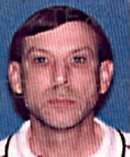
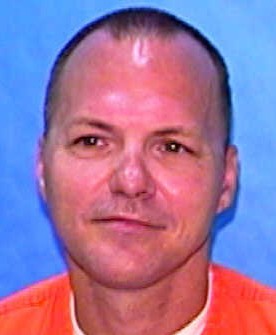
Larry Gene Ashbrook
Mass murderer Gameel Al-Batouti
Mass murderer · USA · 1999
Gameel Al-Batouti (also rendered “Gamil ElBatouty” or “El Batouty” in U.S. offi…
216 victims
Gameel Al-Batouti
Mass murderer · USA · 1999
Gameel Al-Batouti (also rendered “Gamil ElBatouty” or “El Batouty” in U.S. offi…
216 victims
 Timothy McVeigh
Mass murderer · USA · 1995
Timothy James McVeigh (April 23, 1968 – June 11, 2001) was a United States Army…
168 victims
Timothy McVeigh
Mass murderer · USA · 1995
Timothy James McVeigh (April 23, 1968 – June 11, 2001) was a United States Army…
168 victims
 Julio Gonzalez
Mass murderer · USA · 1990
Julio Gonzalez was sentenced to 174 twenty-five-year sentences (a total of 4,35…
87 victims
Julio Gonzalez
Mass murderer · USA · 1990
Julio Gonzalez was sentenced to 174 twenty-five-year sentences (a total of 4,35…
87 victims
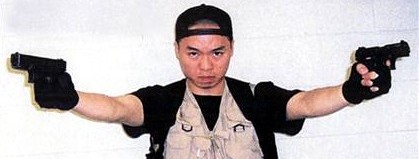 Seung-Hui Cho
Mass murderer · USA · 2007
Seung-Hui Cho was a mass murderer who shot and killed 32 people and wounded man…
32 victims
Seung-Hui Cho
Mass murderer · USA · 2007
Seung-Hui Cho was a mass murderer who shot and killed 32 people and wounded man…
32 victims
 George Jo Hennard
Mass murderer · USA · 1991
George Jo Hennard carried out a mass killing at a Luby’s Cafeteria in Killeen,…
23 victims
George Jo Hennard
Mass murderer · USA · 1991
George Jo Hennard carried out a mass killing at a Luby’s Cafeteria in Killeen,…
23 victims
 Eric Harris
Mass murderer · USA · 1999
Eric Harris committed suicide by gunshot to the roof of the mouth on April 20,…
13 victims
Eric Harris
Mass murderer · USA · 1999
Eric Harris committed suicide by gunshot to the roof of the mouth on April 20,…
13 victims
 Michael Wayne Hall
Murderer · USA · 1998
Michael Wayne Hall was tried in Texas state court for the murder of Amy Robinso…
1 victim
Michael Wayne Hall
Murderer · USA · 1998
Michael Wayne Hall was tried in Texas state court for the murder of Amy Robinso…
1 victim
 Ronald Dominique
Serial killer · USA · 1997
Ronald Joseph Dominique (born 1964) was an American serial killer from the Bayo…
23 victims
Ronald Dominique
Serial killer · USA · 1997
Ronald Joseph Dominique (born 1964) was an American serial killer from the Bayo…
23 victims
 McArthur Breedlove
Murderer · 1974
McArthur Breedlove was sentenced to death for the murder of Frank Budnick on 11…
2 victims
McArthur Breedlove
Murderer · 1974
McArthur Breedlove was sentenced to death for the murder of Frank Budnick on 11…
2 victims
 Velaphi Ndlangamandla
Serial killer · South Africa · 1998
Velaphi Ndlangamandla, known as the “saloon killer”, was convicted in connectio…
19 victims
Velaphi Ndlangamandla
Serial killer · South Africa · 1998
Velaphi Ndlangamandla, known as the “saloon killer”, was convicted in connectio…
19 victims
 Terry Washington
Murderer · USA · 1987
Terry Washington was executed by lethal injection in Texas on May 6, 1997. Terr…
1 victim
Terry Washington
Murderer · USA · 1987
Terry Washington was executed by lethal injection in Texas on May 6, 1997. Terr…
1 victim
 Shahidul Ahmed
Murderer · United Kingdom · 2000
Shahidul Ahmed, 41, from Bletchley, was convicted of the murder of Rachel Manni…
1 victim
Shahidul Ahmed
Murderer · United Kingdom · 2000
Shahidul Ahmed, 41, from Bletchley, was convicted of the murder of Rachel Manni…
1 victim
- Gender
- male
- Country
- USA
- Location
- Fort Worth, Texas, USA
- Date of birth
- 1952
- Age at first offence
- 47
- Characteristics
- spree killer, mentally ill
- Victim profile
- Three adults and four teen-agers
- Method of murder
- Shooting ( 9mm semiautomatic handgun and a .380-caliber handgun)
- Date(s) of murder
- September 15, 1999
- Years active
- 1999
- Date of arrest
- —
- Status
-
Died in custody
Committed suicide the same day
Case record: Larry Gene Ashbrook
Status
Larry Gene Ashbrook committed suicide the same day.
Background
Larry Gene Ashbrook (1952 – September 16, 1999) was an American spree killer.
Nine years before the shooting, Ashbrook’s mother died. This reportedly sent him into a cycle of erratic and frightening behavior. Ashbrook lived for many years with his father, Jack D. Ashbrook. Neighbors said they saw Ashbrook treat his father violently but were afraid to report it.
City newspaper-editor Stephen Kaye, whom Ashbrook had visited days before the shooting, described him as being "the opposite of someone who'd be concerned about", saying he "couldn't have been any nicer". However, other neighbors described Ashbrook as strange and violent. Investigators found that Ashbrook had virtually destroyed the interior of his house and remarked that he seemed very troubled.
Police investigating the shooting could find no solid motive for the crime.
In the months before the shooting, people who knew Ashbrook said he became increasingly paranoid, certain that he was being framed for serial murder and other crimes that he did not commit. He also feared that the CIA were targeting him, and he reported psychological warfare, assaults by co-workers and being drugged by the police. Just days before the shooting he voiced these concerns to a newspaper, saying "I want someone to tell my story, no one will listen to me; no one will believe me."
Ashbrook never married or had children. He lived with his father until the father died two months before the shooting at age 85. Some neighbors described him as a jobless loner who exposed himself, screamed obscenities and kicked doors during fits of rage, and said he was often seen carrying a blue gym bag. An elderly neighbor said residents would retreat into their homes when Ashbrook walked down the street, intimidated by his menacing appearance. He invariably opened and closed doors to houses and cars with violent kicks. He became more erratic after his mother died nine years ago.
Investigators at Ashbrook’s home found bomb-making equipment and described him as a very emotionally disturbed person. Old journals indicated Ashbrook had been upset about his inability to keep a job. Investigators reported a pipe, end caps to enclose the pipe, gunpowder and a fuse at Ashbrook’s home.
A pipe bomb Ashbrook threw into the church exploded vertically and did not injure anyone.
The offence
On September 15, 1999, Ashbrook murdered seven people and injured a further seven at a concert by Christian Rock group Forty Days at Wedgwood Baptist Church in Fort Worth, Texas. The victims were attending a concert by Forty Days as part of an annual "See You at the Pole" prayer event organized by local schools.
Ashbrook entered the teen prayer rally at Wedgwood Baptist Church and spouted anti-Baptist rhetoric before opening fire. He used a 9mm semiautomatic handgun and a .380-caliber handgun. He reloaded several times during the shooting, and three empty magazines were found at the scene. Police estimated there were 30 spent 9mm shell casings inside the church.
Seven people were killed, including four teenagers: a 14 year old boy, two 14 year old girls and a 17 year old boy. Three people sustained major injuries and four others received relatively minor injuries. Minutes after the rampage, Ashbrook sat in a pew towards the back of the church and blew his brains out.
In the church lobby, Ashbrook confronted his first victims with a question: "What's the program?" Then he shot a janitor who approached him and killed two more people before walking into the crowded sanctuary. Some 150 teenagers initially thought the killer was part of a skit as he began cursing and spouting anti-Baptist rhetoric. Witnesses scrambled for cover as Ashbrook opened fire, pausing at least twice to reload.
Ashbrook shot at least 10 more times during the rampage after firing one shot that opened the door during choir practice. Chris Applegate, a seventh grader, said:
"We were singing a song and then in the middle of the song this guy opened the door and fired one shot," he said. "He just kept telling us to stay still."
Chris Applegate also said:
"We all just jumped under the benches and he fired about 10 more shots. ... Somebody said, 'Run, run,' and we all started running," Chris said.
Dax Hughes, Wedgwood Baptist Church's college minister, said:
"He hits the door real hard to make his presence known and he just immediately started firing,"
He also described what Ashbrook did after the gunfire:
Hughes said, the man "sat in the back pew and put a gun (to his head) and shot himself and fell over."
Witness Christy Martin said:
"He was very calm and looked normal and was smoking a cigarette," witness Christy Martin told KDFW-TV.
After Ashbrook lit and rolled a homemade pipe bomb down an aisle at one point, it exploded but did not harm anyone. Police said a bomb squad was inspecting suspicious packages found at the church.
Two additional people in the congregation were taping the youth concert and service when Ashbrook opened fire. Police and friends said videotapes showed people diving beneath pews as Ashbrook paced, reloads, and fired "shot after shot after shot". Acting Police Chief Ralph Mendoza said:
"What I saw on the film was one handgun firing. He ejected a magazine, loaded it and continued firing. It was not rapid. It was slow, methodical, picking [his targets], aiming and shooting. "He did not seem to be worried. He did not seem to be panicked. ... He took his time. ... He randomly stood there and fired shot after shot after shot."
Mendoza said both videotapes suddenly go black, and neither captures any blood or anyone being shot.
Investigation
Police found few hints of a motive in Ashbrook’s trashed home and old journals. FBI special agent in charge Robert Garrity said:
"This has the appearance of being a very troubled man who ... sought to quiet whatever demons that bothered him,"
Police also reported no explanation for why Ashbrook walked into the Wedgwood Baptist Church and began shooting.
Authorities said Ashbrook carried two weapons, a 9mm Ruger semiautomatic handgun and a .380-caliber AMT handgun. Officials were researching the purchase of the 9mm. Officials still were researching the purchase of the 9mm and whether the .380 was fired inside the church. Investigators found six loaded 9mm clips in his jacket pocket but were unsure if the .380 was fired inside the church.
Acting police chief Ralph Mendoza said Ashbrook's only known police record was a 1971 arrest for marijuana possession.
Gunman’s rampage caught on videotape: at dusk on Thursday, Acting Police Chief Ralph Mendoza and two other officers stood in front of a TV screen viewing videotapes. They saw that at least two people with video cameras had filmed the attack. Mendoza peered at the screen studying Ashbrook's face and listening intently, trying to count the gunshots.
Investigators also pursued leads to explain why Ashbrook picked the neighborhood church. Deputy Chief Don Gerland said the investigation was "at a loose end", and described it as frustrating to be unable to establish a "clear-cut connection" linking Ashbrook to the church. Gerland said:
"It's frustrating to be unable to establish a "clear-cut connection" linking Ashbrook to the church, he said. The church "had to be picked," he said. "He would have to know where he was going. You don't come across this church by accident; you have to know where it is."
A report described an earlier visit to a nondenominational Flower Mound church by a man matching Ashbrook’s description who inquired whether the church performed exorcisms. Melody Kolbensvik, 40, said:
"The picture bore a striking resemblance to a bizarre-acting man who visited Shiloh Church early last month, complaining that people were preventing him from finding a friend." She added: "He said he was looking for a person who'd been a member at the church in 1984," Kolbensvik also said: "He later asked if the church performs exorcisms, and when the women looked at him in silence for a minute, he quickly said it wasn't for him, Kolbensvik said." She described the feeling after he left: "When he left, I sensed there was something that was just not right about him," she said. Kolbensvik stated: "It was like he was casing the church, the way he was looking around."
Sharon Putman, the church secretary, said:
"When he came in, I just started backing away from him, and I don't do that,"
Police seized a gray Pontiac sedan from the church parking lot. Police said the visitor’s car description differed slightly in color from Ashbrook's sedan. Police planned to investigate whether the visitor was Ashbrook, and if so, this could indicate checking churches and planning an attack for some time. Police said if Ashbrook was the visitor, the development could indicate he may have been checking churches and planning his attack for some time.
Police acknowledged they may never know the motive for the mass killing. Lt. David Ellis said:
"We know who did it, and we may never know why," and: "It's just one of those things that we may never know why he chose that church, that community."
He also stated:
"The person who knows why he did it is dead. Obviously he's disturbed. Sometimes it's very difficult to determine a motive or the thought process for a person who is mentally unstable. People with problems like that don't think like you and I or normal citizens do."
Evidence at the scene and at Ashbrook’s home
Investigators found several items at Ashbrook’s home: a pipe, end caps to enclose the pipe, gunpowder and a fuse; bomb-making tools including files, pipes, fuses and gunpowder; and old journals.
At the church scene, three empty magazines were found and police found spent shell casings. Police also said three empty gun clips were found at the crime scene in one account and estimated there were 30 spent 9mm shell casings inside the church. Officials stated there were 30 spent 9mm shell casings inside the church.
A pipe bomb exploded vertically on a balcony inside the sanctuary shortly after the 7 p.m. shooting, but police did not know of any injuries from it. Dax Hughes said:
Medical details (injured)
Galey, bleeding from a gunshot wound in his chest, stepped between Ashbrook and two women and took another bullet in his pelvis. Galey said:
"When he dropped the clip, I knew it was a gun. I know what a paintball gun looks like,"
Galey added:
"Then he dropped his clip, he reached down and found another clip for his gun, reloaded and fired the gun . . . He opened the door (of the sanctuary) and started firing at the kids."
Galey said:
"Ashbrook also fired at Galey's head, but missed, Galey said."
Media communications and quotations
Ashbrook wrote two letters to the editor of the Fort Worth Star-Telegram. He visited city editor Stephen Kaye days before the shooting and described Ashbrook as "the opposite of someone you'd be concerned about... He couldn't have been any nicer." Ashbrook’s repeated concerns to the newspaper and his telephone call to FW Weekly included statements about targeting and lack of belief.
Ashbrook told a newspaper:
"I want someone to tell my story, no one will listen to me; no one will believe me."
Letter dated July 31, 1999 (to City editor Stephen Kaye, Fort Worth Star-Telegram)
Sir: I am interested in relating to you some events I have experienced. If these events are true, then they would indicate a serious injustice against me. Specifically: the denial of due process for me in the investigation of me as a suspected serial murderer. I use the term -investigation- loosely. It was not so much an investigation as it was a continuous intereference in my life and employment for a period of possibly twenty years. Three operative terms apply to this situation: First; rumor control, this was one method by which those investigating me used to create problems for me: Second: Psychological warfare, this was the general mode of of operation: Third: Plausible deniability, the ideas those involved would proffer in order to divert blame from themselves. The first experience I had which became a clue to my future problems occured in July of -79.- Soon after reporting to a deployment site with the U.S. Navy squadron, I attended a social event. While there I was pulled aside by a young man who was in that squadron and he asked me some odd questions. The questions involved the murder of someone I had no knowledge of. The tone of his questions became almost accusatory. This was the first of three similar events which occured during my active duty with the Navy from -79- to -83.- What I eventually began to wonder was if there were any reason for me to be a suspect in any murder. As I now know, there were several abductions or murders of young women in Fort Worth and Arlington during the -70s- when I lived in the area. After I moved back to Fort Worth in -84- the odd events became a major problem in my life and occurred both on and off the job. The seriousness of the events and the humiliation I sufered made it impossible for me to keep a job. The most pronounced situation began soon after I began work at the Photo-Etch Company in 1986. Shortly after I was hired as a machinist I was put on the evening shift with another employee who was hired about a week after me. We were the only workers at the company during that shift. At some point around September of that year in the evening I was taking a break when the other employee walked up to me and made a somewhat veiled indirect threat. It went like this: -I have a lot of friends on the police force, in fact I know a woman police officer who can kick your (deleted) all over the place.- This was the beginning of continuous troubles on the job at that company. When I attempted to remedy the problems through the proper channels I got no where. The troubles included minor physical abuse and general disrespect by another employee. Eventually after about six months of the situation I was visited by the owners son. He identified himself as the one who oversees the machine shop (even though I had never met him) and he called me a liar concerning what was happening on the job. It was obvious then that there was nothing I could do to remedy the situation and I quit to look for another job. During the period of unemployment that ensued the most blatant event occurred. At that time in my life I was not dating, socializing or spending much time with others. One evening I decided to go out for a beer and I ended up at a nightclub on East Lancaster. After I had been there for a few minutes a man came and sat next to me at the bar. All that I recall of him is that he talked about he had been in the U.S. Army special forces. During the time we talked I began to feel slightly sick so I went to the restroom. After a short time I felt better; however as I returned to my seat I became very dizzy and passed out. Never before had I experienced such an event. I was partically concious and was aware that I as dragged out to the back of the bar by several men. Eventually I told them that I believed that I had been durgged and would they call the police. -We are the police- was one man's reply. I was held against the wall with one mans hand around my throat for several minutes. During that time I described for them the man who had been sitting next to me. If they did search for him they didn't find him. After a while I felt better and left. Had I been at the east Fort Worth bar that Linda Taylor was abducted from by Farryion Wardrip two years earlier? I have other reasons for suspecting this. The next job I had I was fired from, for no valid reason, one week after the abduction of Wendy Robinson from Lake Weatherford. I believe there was a connection. In 1987, around the late summer, I began to seek the audience of the Federal Bureau of Investigation. I certainly had reason to believe I was being targeted by some investigative group. I was unable to get an agent over the phone as the young woman who was answering the phones would not connect me with one for reasons I've never understood. By June -88- I decide to pay a visit to the FBI office in person. I went to the down town Fort Worth Federal Court House third floor office of the FBI and asked to speak with an agent. An agent, I will not list his name here, invited me to sit in his office and he would hear what I had to say. The problem, though, is that he listened for about one minute then stood-up and told me that I would be -contacted.- I did not believe him though. I shook his hand and left. Within about ten days I began to be visited by a person from the neighborhood whom I had only been slightly acquainted with years earlier. During the course of our initial, short, conversations he asked me if I would be a -designated- driver for him and his brother some time. I told him that I was uninterested. He continued to come around for several weeks with the same request until my interest was piqued and I consented to be his designated driver so that he and his brother could visit a bar. Beginning in late June I went to his house to pick him up and take him to the bar he wanted to go to. We started out with him directing me to go toward west Fort Worth on Loop 820. When we got all the way around to the west side of -820- he began discussing with his brother which bar to go to. Evenutally they settled on a bar on Highway 180 even though we already exited on to Route 199. After turning around and getting to -80- my passengers decided they didn't want to go there either. I then took them home. To make a long story short: in the foolowing year up to April of -89- I continued to go over to this persons house after he would call me. There were two recurrent phrases that continued to come up in various conversations with him. The first was that he -was going to do a cemetary job.- Initially when I asked what he meant he said that he did lawn maintenance at a cemetary. Then he would cite this quote which he said went back to someone else: -Live by cancer, die by cancer.- All he meant by this, he would say, ws that he was of the zodiac sign of the cancer and that so was I. This relationship continued until the day of Rick Green's arrest for the murders of several people in west Fort Worth. When I called him up several times after Green's arrest I was told by someone else that he was at -another location.-He did not contact me again. The possible connection is this: Ricky Green abducted two women from a bar on -199.- Wendy Robinson was abducted from Lake Weatherford which is near -180.- Was the drive my acquiantances took me on supposed to be a test of some sort? I believe it was. After Ricky Greens arrest I realized the reasons for my troubles. There was no doubt. However; I could not forsee, at that time, that there was another serial murderer, Faryion Waldrip, who fit the same physical description of both Green and myself. What could I have done about it? I tried for months to find a lawyer who might make a case for me. After a year or so it was evident no lawyers were going to be interested. Then I began making contact with the media. I contacted three newspapers: The Dallas Morning News, The Dallas Times Herald and The Fort Worth Star-Telegram. All with no result. I contacted each of the network TV station affiliate news rooms. None were interested. During one conversation with a TV news anchor he asked me an odd question: -Didn't you recently get out of the military.-Certainly that struck me as a very strange or evne suspicious question for him to ask. Why would he possibly think that I had been in the military? I have sought the assistance of many different people. I could relate many more events that indicate that I was targeted as a suspected serial murderer. There are many names of people whom I could identify as being a party to the events. If just one individual admitted, for there part what I allege, then I believe the others would begin to be proven. What I am asking is for you to investigate and tell my story. Sincerely, Larry Ashbrook City Editor Stephen Kaye The Fort Worth Star-Telegram 400 W. Seventh St. Fort Worth, Texas 76102 August 10, 1999 Sir This communication is an addendum to the July 31 letter. It is obvious that you are uninterested in my story. Therefore, I find it necessary to amplify certain aspects of it. Consider one of three situations I experienced where people I had never met volunteered that they were either former Central Intelligence Agency employees or were laision with the CIA while they were in the military. In 1987, after being fired from the company I worked for in July, as I related earlier, I got a job with a forging company in Fort Worth. On the morning I reported to that company I aws to be indoctrinated into the opearations of the machine shop by the shop foreman. Unfortunately, it was not so much an indocrination as it was a recounting of the mans exploits in Viet Nam. Particularly his story was about how he worked laision with the CIA and his exploits included special forces operations which entailed assissination of enemy political units. This lecture lasted the entire morning. From eight until lunchtime. If this were the only time I had ever encountered someone who voluntered such a story I would think nothing of it. However, since it is one of three encounters and since it falls within the time period that I am certain that I was being targeted as a suspected serial murderer, then I must consider it a relevant part of my situation. My employment at this company eventually became impossible and I quit. Not because I could not work with them but because they did not want to work with me. Without belaboring the point with my experiences, I will call to your attention two stories that have come out of the news in the last decade. The first involved the Tarrant County Sheriffs Department. I believe the year was 1991; and in that year there was a situation which came to light in which it was found that reserve deputies with the sheriffs department, who were full time U.S. Airforce personel, were also discovered to be affiliated with the Ku Klux Klan. What I particularly recall is that when one of those involved personel was interviewed on TV (KXAS Channel 5, NBC affiliate) he directly stated that they were involved in -going after child abductors.- Amy Robinson's abductor perhaps? The second also involved the sheriff's department. The year was, I believe, -95- or -96.- The story that came out disclosed that an individual or individuals within the department had had, for some time, a web site that contained the dossier's of suspects in a criminal investigation. These files were being made available to civilians so as to enable them to aid in the -criminal- investigations. The implication of this should be obvious with regard to my allegations. What I must wonder about is the reason that no news reporting agency, particularly yours, is interested in this story. Is it because you think it implausible or unimportant? Is it because the general political climate in Fort Worth is not conducive to such a story? Or is there a clue in the words of John Chriswell, then news anchor for the CBS affiliate, when he asked me, as I was attempting to explain my situation: -Didn't you just get out of the military?- It is apparent to me that the suspicions against me have been widely disseminated. I believe that there are a few individuals who would realize no damage to themselves if they admitted to the truth regarding my allegations. With all due respect, Larry Ashbrook
Death
Ashbrook killed himself in a rear pew shortly after killing seven people and after the shooting.
Outcome
Ashbrook’s rampage ended with his suicide in the church. No charges, trial, or court outcome were described.
Spotted an error, or have more information about this case?