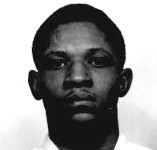
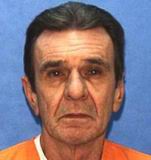
Terry Washington
Murderer Brian Kevin Rosenfeld
Murderer · USA · 1985
Brian Kevin Rosenfeld Brian Kevin Rosenfeld was sentenced to three concurrent l…
23 victims
Brian Kevin Rosenfeld
Murderer · USA · 1985
Brian Kevin Rosenfeld Brian Kevin Rosenfeld was sentenced to three concurrent l…
23 victims
 Yahweh ben Yahweh
Murderer · USA · 1980
Yahweh ben Yahweh was born and legally named Hulon Mitchell Jr. (October 27, 19…
23 victims
Yahweh ben Yahweh
Murderer · USA · 1980
Yahweh ben Yahweh was born and legally named Hulon Mitchell Jr. (October 27, 19…
23 victims
 Russell Ellwood
Murderer · USA · 1991
Russell Ellwood was a former taxi driver. Authorities suspected him of killing…
20 victims
Russell Ellwood
Murderer · USA · 1991
Russell Ellwood was a former taxi driver. Authorities suspected him of killing…
20 victims
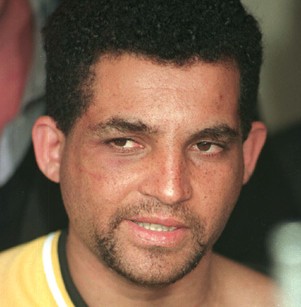 Francisco de Assis Pereira
Serial killer · Brazil · 1997
Francisco de Assis Pereira was a motorcycle courier who became known as the “pa…
11 victims
Francisco de Assis Pereira
Serial killer · Brazil · 1997
Francisco de Assis Pereira was a motorcycle courier who became known as the “pa…
11 victims
 Cesar Barone
Serial killer · USA · 1991
Cesar Barone was pronounced “Roh-dee.” During his childhood in Fort Lauderdale,…
4 victims
Cesar Barone
Serial killer · USA · 1991
Cesar Barone was pronounced “Roh-dee.” During his childhood in Fort Lauderdale,…
4 victims
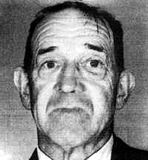 Walter James Bolton
Murderer · New Zealand · 1956
Walter James Bolton (13 August 1888 - 18 February 1957) was a New Zealand farme…
1 victim
Walter James Bolton
Murderer · New Zealand · 1956
Walter James Bolton (13 August 1888 - 18 February 1957) was a New Zealand farme…
1 victim
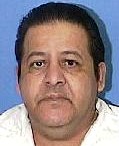 Rodolpho Hernandez
Murderer · USA · 1985
Rodolfo Baiza Hernandez was convicted and sentenced to death for the capital mu…
1 victim
Rodolpho Hernandez
Murderer · USA · 1985
Rodolfo Baiza Hernandez was convicted and sentenced to death for the capital mu…
1 victim
- Gender
- male
- Country
- USA
- Location
- Walker County, Texas, USA
- Date of birth
- September 12, 1963
- Age at first offence
- 24
- Characteristics
- robbery, mentally ill
- Victim profile
- Beatrice Louise Huling, 29 (manager restaurant)
- Method of murder
- St abbing with knife 85 times
- Date(s) of murder
- January 15, 1987
- Years active
- 1987
- Date of arrest
- February 25, 1987
- Status
-
Executed
Executed by lethal injection in Texas on May 6, 1997
Case record: Terry Washington
Status
Terry Washington was executed by lethal injection in Texas on May 6, 1997.
The offence
Terry Washington worked at Julie's Place, a restaurant in College Station, Texas, where Beatrice Huling worked as the restaurant's night manager and where Washington worked as a dishwasher. During the evening of January 14, 1987, Huling, Tuan Nguyen, Kim Tarr, and Washington were working together at Julie's Place. When Nguyen and Tarr left the restaurant at 1:00 a.m., Huling had completed her duties and was waiting for Washington to finish. Tarr recalled that Huling locked the back door behind them as they left the restaurant.
At 2:30 a.m. that same morning, Michael Jennings was in the parking lot next to Julie's Place. Jennings heard an object hit the ground and went to investigate. Jennings found a purse and immediately called the police. The police arrived shortly thereafter and found Beatrice Huling's name and address in the purse and her car in the parking lot. The restaurant was closed and locked.
The police ultimately entered the restaurant and discovered Huling's dead body ten to fifteen feet from the back door, lying in a pool of blood, with her head next to the base of the office safe. She had multiple stab wounds. The investigation of the crime scene and the autopsy showed that Huling's hands had been tied with apron strings and that she had suffered eighty-five stab wounds, seven of which were fatal. The medical examiner testified at trial that the murder weapon had a five-and-a-half inch blade and that he believed it took Huling ten to fifteen minutes to die.
The investigation found no signs of forced entry into the restaurant, and that $628.00 had been stolen.
The jury found Washington guilty of the capital offense of intentional murder during the course of a robbery. Following a separate punishment hearing, the jury affirmatively answered two special issues submitted pursuant to the Texas Criminal Code. In accordance with Texas law, the trial court imposed a death sentence.
Investigation
Evidence linking Washington to the murder included that the State produced evidence linking Washington's boots to an impression made in a pool of Huling's blood.
Witnesses described Washington around the time of the killing. Willie Hemphill, Washington's neighbor, testified that on January 15 he went with Washington to buy some beer and noticed Washington had a lot of money. Hemphill also saw Washington with a hunting knife which had a blade consistent with the type of wounds inflicted upon Huling.
Maud Swanson also saw Washington on January 15 and testified that he had a lot of money in his billfold when he took it out, and that when she asked him about the murder at the restaurant, Washington said "to hell with Bea, or something like that."
Scott Milton, the manager of the restaurant, testified that when Washington picked up his paycheck on the day of the murder he told Milton, "The police are hassling me about this, but I'm too smart for them."
Billy and Mary Sandles testified that they heard Washington say, "I killed the bitch."
A teller at a local bank testified that sometime within a week of the murder, Washington changed $450.00 of small bills and coins for larger bills. An employee of J&J Bail Bond testified that shortly after the murder, Washington paid $468.00 in cash for a bond relating to traffic citations, paying with three hundred dollar bills and the rest in twenties and change.
Background
After Washington's sentence, tests administered on him indicated that he had a mental age of six. In two intelligence quotient (IQ) tests, Washington scored 58 and 69, below the threshold for significant mental retardation (the average for a person of normal intelligence is 100).
On appeal, a federal court agreed that Washington suffered from organic brain damage attributed to fetal alcoholic syndrome, which was exacerbated by years of appalling poverty, physical abuse and constant seizures. Washington's jury knew none of these facts because his defence failed to present any mitigating evidence.
Washington's trial attorney made no attempt to explore Washington's mental capabilities or his background. The trial attorney later conceded that he was unaware of a United States Supreme Court decision that allows funding for defence attorneys to hire mental health experts for conducting pre-trial examinations.
Medical evaluations conducted after Washington's trial concluded that Washington would have been unable to assist in his own defence and that he was totally unaware of his surroundings during his trial.
The overwhelming evidence that Washington was mentally incompetent to stand trial was presented by new lawyers for the first time during his "habeas corpus" appeal, filed on 14 June 1993.
At the punishment phase, Washington had family background and mental capacity evidence characterized as mitigating, and the later federal habeas discussion involved whether trial counsel investigated Washington's mental health and developed evidence of Washington's mental condition and family background at the punishment phase.
Trial
Washington was convicted of capital murder and sentenced to death for the murder of Beatrice Huling.
Washington's conviction was affirmed by the Texas Court of Criminal Appeals. Washington v. State, No. 69,937 (Tex. Crim. App. Dec. 23, 1992), cert. denied, Washington v. Texas, 508 U.S. 927, 113 S. Ct. 2388 (1993).
The trial court issued a warrant scheduling Washington's execution for June 17, 1993.
During the proceedings, Washington's defence did not present mitigating evidence regarding his mental condition and background.
Sentencing
A separate punishment hearing was held. The jury affirmatively answered two special issues submitted pursuant to the Texas Criminal Code.
Appeals
Direct review and state habeas
With all direct appeals and collateral state reviews exhausted, Washington sought federal habeas relief.
On May 28, 1993, Washington sought a stay of execution to allow time to prepare a state application for writ of habeas corpus. The motion to stay the execution was denied on June 8, 1993.
On June 14, 1993, Washington filed his state application for writ of habeas corpus. The State filed its answer the following day. On June 15, 1993, an evidentiary hearing was held before the same judge which presided at Washington's trial to consider the merits of Washington's habeas claims. The trial court entered findings of fact and conclusions of law early the next morning recommending that the relief sought be denied. Ex Parte Washington, No. 17,726-361 (361st Dist. Ct., Brazos County, Tex., June 16, 1993).
Based on these findings and conclusions, the Texas Court of Criminal Appeals denied Washington's application for a writ of habeas corpus. Ex Parte Washington, No. 24,922-01 (Tex. Crim. App. June 16, 1993).
Federal habeas corpus and certificate of probable cause
Following the decision of the Texas Court of Criminal Appeals, Washington filed a motion for stay of execution and an application for habeas relief in federal district court. The district court entered a stay and referred the case to a magistrate judge. The magistrate judge issued a memorandum opinion recommending that the relief sought be denied.
The district court found that material facts had not been adequately developed at the state habeas proceedings as to three of Washington's thirteen claims. The court ordered an evidentiary hearing as to these claims concerning Washington's competency to stand trial, the trial court's failure to order a competency hearing, and ineffective assistance of counsel. For the remaining claims, the district court concluded they were without merit and would be dismissed at the time of final judgment.
Based on the evidentiary hearing, the district court entered findings of fact and conclusions of law, denied relief on the three claims not adjudicated in its previous order, entered final judgment denying Washington's habeas petition, and denied a certificate of probable cause and vacated the stay of execution. Washington v. Scott, No. H-93-1792 (S.D. Tex. July 25, 1995); Washington v. Scott, No. H-93-1792 (S.D. Tex. Aug. 10, 1995).
Washington sought in the United States Court of Appeals for the Fifth Circuit a certificate of probable cause. Amnesty International was referenced in the context of the appeal listing.
The federal appellate proceedings identified the issues raised by Washington: mental competency, ineffective assistance of trial counsel, a Batson claim regarding jury selection, and claims of purposeful racial discrimination, plus a contention about the prosecutor's peremptory challenge and challenges regarding hearing and evidentiary development.
The Fifth Circuit concluded that a certificate of probable cause would be granted based on the substantial showing with respect to ineffectiveness, but then concluded all claims lacked merit. The appellate decision stated that the district court's denial of federal habeas relief was affirmed.
Court: United States Court of Appeals For the Fifth Circuit, No. 95-20720. Terry Washington, Petitioner-Appellant, versus Gary Johnson, Director, Texas Department of Criminal Justice, Institutional Division, Respondent-Appellee. Appeal from the United States District Court for the Southern District of Texas. Date of the appeal opinion: July 25, 1996. Judges listed: GARWOOD, JONES, EMILIO M. GARZA, Circuit Judges; EDITH H. JONES, Circuit Judge.
Federal habeas discussion of competency
The legal discussion included that due process prohibits prosecution of a defendant who is not competent to stand trial, and it identified the competency test from Dusky v. United States.
Washington challenged how the district court evaluated the mental competency claim, arguing that the district court confused a threshold burden with a preponderance standard. The appellate decision disagreed and described the district court as applying the relevant standards and concluding: ". . . Petitioner was competent to stand trial in 1987."
Verbatim quote included within the appellate discussion:
The federal evidentiary hearing involved competing expert testimony. Washington called five witnesses: Dr. Philip Murphy, a neuropsychologist; Dr. Denis Keyes, a specialist in mental retardation; Leona Maxey, Washington's mother; Tyler Moore, Washington's trial counsel; and Edward Mallet, a criminal defense attorney. The State called Dr. George Parker, a psychologist; and Rita Watkins and Larry Johnson, police officers who participated in interrogations of Washington.
Dr. Murphy and Dr. Keyes testified that Washington was incompetent to stand trial. The appellate discussion contrasted their testimony with Dr. Parker, which found Washington competent. Trial counsel and two police officers testified to Washington's ability to answer questions and assist with his defense, including providing information for an alibi defense.
The appellate conclusion stated that Washington failed to establish incompetency by a preponderance of the evidence.
Federal habeas discussion of ineffective assistance
Washington contended that trial counsel's failure to investigate his mental health and failure to develop evidence of his mental condition and family background at the punishment phase constituted ineffective assistance. Both the state and district courts rejected the claim, and the appellate decision rejected it as well.
The appellate discussion referenced Strickland v. Washington and concluded that Washington showed neither deficient performance nor prejudice. It described trial counsel Moore's decisions as strategic, including a fear that evidence might backfire and result in repeated emphasis of past violence.
The discussion included examples of violence Washington's counsel feared might be emphasized, including "his sexual assault on his younger brother" and incidents in which Washington "buried his younger brother in a grave, cut off the heads of puppies with a lawnmower, and treated his family violently."
The appellate discussion stated that the evidence presented to the jury and at the punishment hearing did not support a reasonable probability that the outcome would have been different.
Federal habeas discussion of Batson
Washington contended the State improperly exercised a peremptory challenge to exclude veniremember Martha Patman, a black woman, in violation of Batson v. Kentucky.
The appellate discussion described the prosecutor's stated reason for the peremptory challenge. Verbatim quote included:
"Your Honor, the controlling reason was not necessarily the words that she said, but the way she carried herself, the way in -- the manner in which she answered those questions. That is what I perceive to be a very strict, a very, almost to the point of obstinate in the deliberateness of her carriage, which I believe would be contrary to what the State is looking for in a juror, that is someone that can deliberate with the other eleven toward reaching a verdict. I found her independence to be a little too far on the strong side of independent and rigidity in her opinions. And sometimes I thought those opinions were expressed in a manner of almost being, as I said earlier, obstinate or angry in defense of her feelings and thoughts. And it's based on that attitude that we felt like she will not fit into our perception of what the jury we're looking for should consist of. That is the overwhelming concern the State has. Tr. 3060-61."
The appellate decision stated that the prosecutor's response was race-neutral and that Washington failed to show purposeful discrimination. It also stated that the record fairly supported the trial court's finding of no discrimination.
Federal habeas discussion of purposeful racial discrimination
Washington contended that his conviction and death sentence were obtained as a result of purposeful racial discrimination, and also contended he was not given a full and fair hearing in state habeas and that the district court erred in not holding an evidentiary hearing.
The appellate discussion described that Washington's state habeas petition raised purposeful racial discrimination and that the State responded with an affidavit of Bill Turner, the Brazos County district attorney, affirming that race did not play a role in charging decisions and describing the basis for pursuing capital murder and the death penalty. The affidavit also set forth capital murder cases Turner had been involved in and the sentences imposed.
Washington declined to cross-examine Turner at the state habeas hearing on the contents of the affidavit.
Washington also submitted an affidavit of Kent Tedin, a professor at the University of Houston, concluding based on statistical probabilities that it was unlikely that a small number of blacks in the jury pool occurred by chance.
The state court concluded that "The decision to charge Applicant with capital murder, and the decision to seek the death penalty were not racially motivated." It also concluded: "There is no evidence that race is a factor upon which the Brazos County District Attorney's office bases the decision to seek or not to seek the death penalty, or any other decision in the prosecution of any criminal case. To the contrary, race is not a factor that is considered by the Brazos County District Attorney's Office when making any decision on how to proceed in a case."
Verbatim quotes included:
"The decision to charge Applicant with capital murder, and the decision to seek the death penalty were not racially motivated."
"There is no evidence that race is a factor upon which the Brazos County District Attorney's office bases the decision to seek or not to seek the death penalty, or any other decision in the prosecution of any criminal case. To the contrary, race is not a factor that is considered by the Brazos County District Attorney's Office when making any decision on how to proceed in a case."
The appellate decision stated that Washington failed to establish a claim of purposeful racial discrimination.
Outcome of federal appeal
For the foregoing reasons, the appellate decision affirmed the district court's denial of federal habeas relief.
Timeline
- 14 January 1987 — During the evening, Huling, Tuan Nguyen, Kim Tarr, and Washington worked at Julie's Place; Nguyen and Tarr left at 1:00 a.m.; Huling locked the back door behind them.
- 2:30 a.m. — Michael Jennings heard an object hit the ground, found a purse, called the police, and police later found Huling's name and address in the purse and her car in the parking lot.
- January 15 — Willie Hemphill went with Washington to buy beer and noticed Washington had a lot of money; Hemphill saw Washington with a hunting knife; Maud Swanson also saw Washington with a lot of money and Washington responded about the murder.
- 1987 — Washington was convicted of capital murder and sentenced to death for the murder of Beatrice Huling.
- December 23, 1992 — Texas Court of Criminal Appeals affirmed Washington's conviction and sentence of death (Washington v. State, No. 69,937).
- May 28, 1993 — Washington sought a stay of execution to allow time to prepare a state application for writ of habeas corpus.
- June 8, 1993 — Motion to stay execution was denied.
- June 14, 1993 — Washington filed his state application for writ of habeas corpus.
- June 15, 1993 — Evidentiary hearing held before the same judge who had presided at Washington's trial.
- June 16, 1993 — Trial court entered findings and recommended denying relief; Texas Court of Criminal Appeals denied Washington's application for a writ of habeas corpus (Ex Parte Washington).
- July 25, 1995 — District court denied federal habeas relief on the three claims not adjudicated in its previous order and related rulings were made (Washington v. Scott, No. H-93-1792).
- August 10, 1995 — District court additional related ruling on the habeas petition (Washington v. Scott, No. H-93-1792).
- July 25, 1996 — Fifth Circuit appeal decision dated; certificate of probable cause granted but all claims lacked merit and the denial was affirmed.
- May 6, 1997 — Washington was executed by lethal injection in Texas.
Outcome
The Fifth Circuit affirmed the district court's denial of federal habeas relief.
Other details
Washington's execution warrant had scheduled the execution for June 17, 1993 after the Texas Court of Criminal Appeals affirmed his conviction and sentence of death.
The appellate decision included procedural points about jurisdiction and the need for a certificate of probable cause before hearing the appeal, and it discussed standards for competency and ineffective assistance.
Statements attributed to witnesses included:
- Washington said, "to hell with Bea, or something like that."
- Washington told Scott Milton, "The police are hassling me about this, but I'm too smart for them."
- Billy and Mary Sandles testified that Washington said, "I killed the bitch."
- The prison-related competency discussion included that one characterization of Washington by prison guards was that he was "a little slow" and "low-key," and also social and competent.
The appellate discussion included that Washington was mildly retarded, suffered from organic brain damage, and had an abused childhood, and it described testimony that he was verbal, cooperative, and able to concentrate for periods without difficulty, and that at the time of trial he knew he had been accused of murder and understood the roles of the district attorney, defence counsel, and the jury.
Spotted an error, or have more information about this case?