
Daryl Atkins
Murderer Russell Ellwood
Murderer · USA · 1991
Russell Ellwood was a former taxi driver. Authorities suspected him of killing…
20 victims
Russell Ellwood
Murderer · USA · 1991
Russell Ellwood was a former taxi driver. Authorities suspected him of killing…
20 victims
 Robert Martines Perez
Murderer · USA · 1994
Name: Robert Martines Perez · Other name used in proceedings: Robert Martinez P…
15 victims
Robert Martines Perez
Murderer · USA · 1994
Name: Robert Martines Perez · Other name used in proceedings: Robert Martinez P…
15 victims
 Billy Frank Vickers
Murderer · USA · 1993
Billy Frank Vickers Vickers was executed by lethal injection in Texas on Januar…
14 victims
Billy Frank Vickers
Murderer · USA · 1993
Billy Frank Vickers Vickers was executed by lethal injection in Texas on Januar…
14 victims
 Jimmie Ray Slaughter
Murderer · USA · 1991
Jimmie Ray Slaughter was executed by lethal injection in Oklahoma on March 15,…
2 victims
Jimmie Ray Slaughter
Murderer · USA · 1991
Jimmie Ray Slaughter was executed by lethal injection in Oklahoma on March 15,…
2 victims
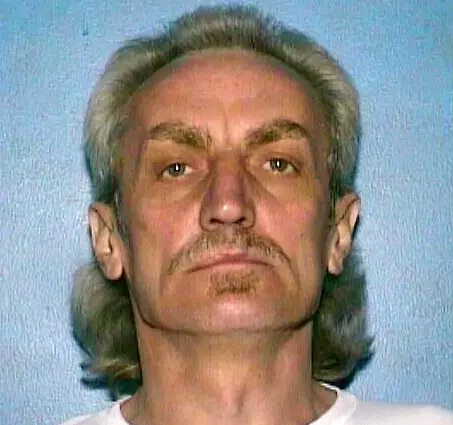 Gregory Madej
Murderer · USA · 1981
Gregory Madej was sentenced to death in 1982. On January 10, 2003, the Governor…
1 victim
Gregory Madej
Murderer · USA · 1981
Gregory Madej was sentenced to death in 1982. On January 10, 2003, the Governor…
1 victim
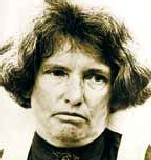 Daisy De Melker
Serial killer · South Africa · 1923
Daisy Louisa De Melker (née Hancorn-Smith) was born on 1 June 1886 and was exec…
3 victims
Daisy De Melker
Serial killer · South Africa · 1923
Daisy Louisa De Melker (née Hancorn-Smith) was born on 1 June 1886 and was exec…
3 victims
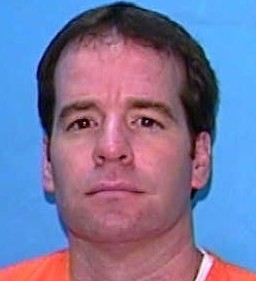 Mark Allen Geralds
Murderer · USA · 1989
Mark Allen Geralds was a carpenter who helped remodel the Pettibone home prior…
1 victim
Mark Allen Geralds
Murderer · USA · 1989
Mark Allen Geralds was a carpenter who helped remodel the Pettibone home prior…
1 victim
 Donald Ray Wallace
Mass murderer · USA · 1980
Donald Ray Wallace Jr. was executed by lethal injection in Indiana on March 10,…
4 victims
Donald Ray Wallace
Mass murderer · USA · 1980
Donald Ray Wallace Jr. was executed by lethal injection in Indiana on March 10,…
4 victims
- Gender
- male
- Country
- USA
- Location
- York County, Virginia, USA
- Date of birth
- November 6, 1977
- Age at first offence
- 19
- Characteristics
- drug addict, abduction, rape, drugs, kidnapping, murder for hire
- Victim profile
- Eric Nesbitt, 21
- Method of murder
- Shooting
- Date(s) of murder
- August 16, 1996
- Years active
- 1996
- Date of arrest
- —
- Status
-
Life imprisonment
Sentenced to death on February 14, 1998; execution was stayed and the sentence was commuted to life in prison in January 2008 due to evidence of prosecutorial misconduct in the original case.
Case details
Daryl Atkins was convicted of capital murder for the Aug. 16, 1996 murder of Eric Nesbitt and was sentenced to death on February 14, 1998.
Atkins and his accomplice, William Jones, drove to a convenience store where they abducted Eric Nesbitt, an airman from nearby Langley Air Force Base. The case described that Atkins and Jones were dissatisfied with the $60 they found in Nesbitt's wallet. They drove Nesbitt in his own vehicle to a nearby ATM and forced him to withdraw a further $200. Despite Nesbitt's pleas, Atkins and Jones drove him to an isolated location where he was shot eight times, killing him.
The offence
On August 16, 1996, Daryl Atkins and William Jones spent a day together drinking alcohol and smoking marijuana before driving to a convenience store. At about 2 in the morning on August 16, 1996, Atkins and Jones abducted Eric Nesbitt.
The case stated that footage of Atkins and Jones in the vehicle with Nesbitt was captured on the ATM's CCTV camera. Further forensic evidence implicating the two was found in Nesbitt's abandoned vehicle.
The two suspects were tracked down and arrested. In custody, each man claimed that the other had pulled the trigger. Atkins's version of the events was described as containing inconsistencies. A cell-mate claimed that Atkins had confessed to him that he had shot Nesbitt.
A deal of life imprisonment was negotiated with Jones in return for his full testimony against Atkins. The jury decided that Jones's version of events was more coherent and credible, and convicted Atkins of capital murder.
Investigation and arrest
During the investigation, Atkins made a statement to police where he claimed that Jones was the triggerman. At trial, the jury found Atkins guilty of capital murder.
Trial
A jury convicted and recommended that Daryl Atkins be executed for the Aug. 16, 1996 murder of Eric Nesbitt.
Atkins and his friend, William Jones, were described as drinking and smoking crack at Atkins's home. They decided to walk to a nearby store to buy more beer. In the parking lot of the store, Atkins told Jones that he did not have enough money and would panhandle to get the money for the beer; instead, Atkins and Jones abducted Eric Nesbitt and drove him to a field where Atkins allegedly shot and killed him.
In the penalty phase, the jury found both the future dangerousness and the vileness aggravating factors.
During the penalty phase trial, the defense presented Atkins's school records and the results of an IQ test carried out by clinical psychologist Dr. Evan Nelson, placing his score at 59. On this basis, the defense proposed that he was "mildly mentally retarded". Atkins was nevertheless sentenced to death.
The case stated that prosecutors proved two aggravating factors under Virginia law: that Atkins posed a risk of "future dangerousness," based on a string of previous violent convictions, and that the offense was committed in a vile manner.
The state's witness, Dr Stanton Samenow, countered the defense's arguments that Atkins was mentally retarded by stating that Atkins's vocabulary, general knowledge and behavior suggested that he possessed at least average intelligence.
The jury decided that Jones's version of events was the more coherent and credible, and convicted Atkins of capital murder.
Sentencing
Atkins was sentenced to death on February 14, 1998.
During direct appeal to the Supreme Court of Virginia, counsel for Atkins raised nineteen claims. Although the court found most of the claims were procedurally defaulted or without merit, on Feb. 26, 1999, the court held that the use of an incorrect jury verdict form constituted reversible error with respect to the imposition of the death penalty.
The court affirmed Atkins's capital murder conviction, but overturned the death sentence and remanded the case to the trial court for a new penalty proceeding.
At retrial, prosecutors erred during jury instructions at the penalty phase when they failed to disclose on the instruction form that absence of aggravating circumstances (future dangerousness AND vileness) required that the jury sentence Atkins to life in prison without parole.
After a three-day sentencing hearing, a different jury re-sentenced Atkins to death in August, 1999.
The Supreme Court of Virginia upheld Atkins' conviction after a 2-1 decision, and the defense argued that the circuit court erred by denying Atkins the right to present his mental retardation as mitigating evidence during the second penalty phase trial.
In the case described as Atkins v. Virginia, 536 U.S. 304 (2002), the Supreme Court of the United States remanded the case, ruling that executing mentally retarded felons was unconstitutional. The Supreme Court heard oral arguments in the case on February 20, 2002. The ruling described that unless it could be shown that executing the mentally retarded promoted the goals of retribution and deterrence, doing so was cruel and unusual punishment that the Eighth Amendment should forbid.
The Supreme Court stated that executing the mentally retarded violated the Eighth Amendment's ban on cruel and unusual punishments. In dissent, Justices Antonin Scalia, Clarence Thomas and Chief Justice William Rehnquist argued that there was no clear national consensus and that even given such a consensus there was no basis in the Eighth Amendment for using such measures of opinion to determine what is "cruel and unusual". Antonin Scalia commented in his dissent that "seldom has an opinion of this court rested so obviously upon nothing but the personal views of its members". Chief Justice Rehnquist criticized the Court's decision to place weight on foreign laws.
Pursuant to the high court’s decision, the Supreme Court of Virginia ruled in June 2003 that a new jury would decide Atkins' fate. On Aug. 5, 2005, jurors in York County decided that Atkins was not mentally retarded.
Virginia law defines mental retardation as someone with a score below 70 on standardized IQ tests before age 18. Atkins was not tested before 18 and registered subsequent scores of 59, 74 and 76.
On June 8, 2005, the Supreme Court of Virginia threw out Atkins's death sentence and ordered a new competency trial. The jurors who ruled that Atkins was not mentally retarded at the second trial had been told that Atkins had earlier been sentenced to death.
The case described that a jury in July 2005 decided Atkins was intelligent enough to be executed because Atkins's constant contact with his lawyers had stimulated him and raised his IQ above 70, making him competent to be put to death under Virginia law. The prosecution argued that his poor school performance was caused by his use of alcohol and drugs and that his lower scores in earlier IQ tests were tainted.
Atkins's execution date was set for December 2, 2005 but was later stayed. The sentence was commuted to life in prison in January 2008 due to evidence of prosecutorial misconduct in the original case.
Appeals
On Feb. 26, 1999, the Supreme Court of Virginia overturned the death sentence and remanded the case for a new penalty proceeding due to the use of an incorrect jury verdict form.
After a three-day sentencing hearing, a different jury re-sentenced Atkins to death in August, 1999, and the Supreme Court of Virginia upheld the sentence in a 2-1 decision after addressing the argument that the circuit court denied Atkins the right to present his mental retardation as mitigating evidence during the second penalty phase trial.
In March 2000, Atkins' lawyers petitioned the U.S. Supreme Court to hear the case based on pretrial intelligence tests showing Atkins was retarded. In a 6-3 ruling, the Supreme Court remanded the case to the circuit court and ruled that executing mentally retarded felons was unconstitutional.
In February 20, 2002, oral arguments were heard in Atkins' case. The ruling described the Eighth Amendment standards and referenced prior decisions Coker v. Georgia, 433 U.S. 584 (1977) and Enmund v. Florida, 458 U.S. 782 (1982). The Supreme Court's reasoning included "evolving standards of decency that mark the progress of a maturing society."
Subsequent developments included a January 2008 commutation to life in prison due to evidence of prosecutorial misconduct in the original case.
Outcome
The death sentence was overturned and remanded for a new penalty proceeding. After further proceedings, another jury resentenced Atkins to death in August, 1999. Later, the Supreme Court of Virginia threw out Atkins's death sentence on June 8, 2005 and ordered a new competency trial. In January 2008, Atkins's death sentence was commuted to life in prison.
Other details
Daryl Atkins was listed as an inmate in Virginia DOC Inmate Number 255956.
The case stated that Atkins's accomplice, William Jones, received a deal of life imprisonment in return for his full testimony against Atkins.
Spotted an error, or have more information about this case?