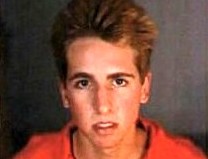
Frederick Benjamin Atkins
Murderer Dr. Wouter Basson
Murderer · 1992
Wouter Basson (born July 6, 1950) was a South African cardiologist and the form…
230 victims
Dr. Wouter Basson
Murderer · 1992
Wouter Basson (born July 6, 1950) was a South African cardiologist and the form…
230 victims
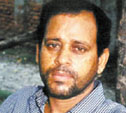 Ershad Sikder
Murderer · Bangladesh · 1990
Ershad Sikder was an influential political figure in the south-western city of…
30 victims
Ershad Sikder
Murderer · Bangladesh · 1990
Ershad Sikder was an influential political figure in the south-western city of…
30 victims
 Russell Ellwood
Murderer · USA · 1991
Russell Ellwood was a former taxi driver. Authorities suspected him of killing…
20 victims
Russell Ellwood
Murderer · USA · 1991
Russell Ellwood was a former taxi driver. Authorities suspected him of killing…
20 victims
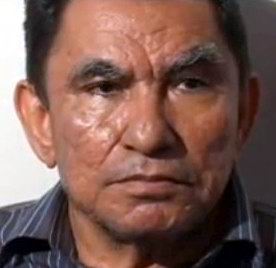 Anisio Ferreira de Sousa
Murderer · Brazil · 1989
September 4, 2003 — Anísio Ferreira de Sousa was sentenced to 77 years in priso…
19 victims
Anisio Ferreira de Sousa
Murderer · Brazil · 1989
September 4, 2003 — Anísio Ferreira de Sousa was sentenced to 77 years in priso…
19 victims
 Umesh Reddy
Murderer · India · 1998
Umesh Reddy was sentenced to death on October 27, 2006. The Karnataka High Cour…
18 victims
Umesh Reddy
Murderer · India · 1998
Umesh Reddy was sentenced to death on October 27, 2006. The Karnataka High Cour…
18 victims
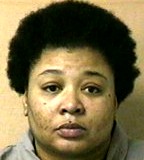 Carlette Parker
Murderer · USA · 1998
Carlette Elizabeth Parker was indicted in connection with the death of Alice Co…
1 victim
Carlette Parker
Murderer · USA · 1998
Carlette Elizabeth Parker was indicted in connection with the death of Alice Co…
1 victim
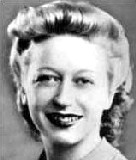 Elizabeth Jones
Murderer · United Kingdom · 1944
Elizabeth Jones was born in Neath, Wales, in 1926. At the age of thirteen, she…
1 victim
Elizabeth Jones
Murderer · United Kingdom · 1944
Elizabeth Jones was born in Neath, Wales, in 1926. At the age of thirteen, she…
1 victim
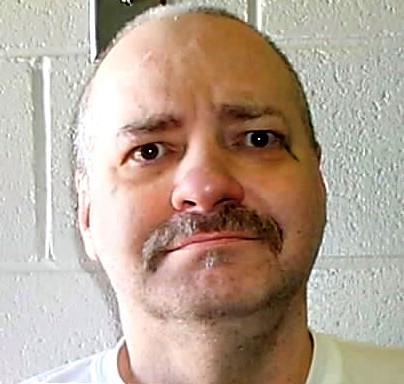 Thomas Creech
Serial killer · USA · 1967
Defendant: Thomas Creech (also referred to as Thomas Eugene Creech) Jurisdictio…
10 victims
Thomas Creech
Serial killer · USA · 1967
Defendant: Thomas Creech (also referred to as Thomas Eugene Creech) Jurisdictio…
10 victims
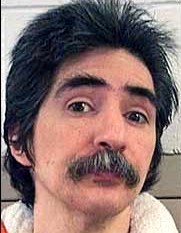 Roberto Arguelles
Serial killer · USA · 1992
Roberto Arguelles was serving a sentence for child molestation when he confesse…
4 victims
Roberto Arguelles
Serial killer · USA · 1992
Roberto Arguelles was serving a sentence for child molestation when he confesse…
4 victims
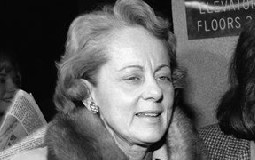 Jean Harris
Murderer · USA · 1980
Jean S. Harris was born Jean Struven in 1923 in Cleveland, USA. Her mother, Mil…
1 victim
Jean Harris
Murderer · USA · 1980
Jean S. Harris was born Jean Struven in 1923 in Cleveland, USA. Her mother, Mil…
1 victim
 George Putt
Spree killer · USA · 1969
George Putt was born in New Orleans, Louisiana in the mid-1940s. His parents we…
5 victims
George Putt
Spree killer · USA · 1969
George Putt was born in New Orleans, Louisiana in the mid-1940s. His parents we…
5 victims
- Gender
- male
- Country
- Barbados
- Location
- Barbados
- Date of birth
- 1979
- Age at first offence
- 19
- Characteristics
- —
- Victim profile
- Sharmaine Hurley, 20
- Method of murder
- St abbing with knife
- Date(s) of murder
- October 10, 1998
- Years active
- 1998
- Date of arrest
- 5 days after
- Status
-
Sentenced to death
Sentenced to death in July 2000; execution warrant issued in June 2002 and stayed by the Judicial Committee of the Privy Council; execution planned after another death warrant issued on 9 February 2005 for 14 February, and the Barbados High Court agreed to stay the execution; Atkins died in prison in 2005; in December 2007 the Inter-American Court on Human Rights ruled that Atkins's mandatory sentence and the mandatory sentence provisions of the Barbados murder statute violated the right to life guarantees of the American Convention on Human Rights.
Case identification
Frederick Benjamin Atkins died in prison in 2005. He appealed against his conviction and sentence in Barbados in connection with the murder of Sharmaine Hurley.
Timeline
- October 10, 1998 — Sharmaine Hurley left her home at Clapham and went to the South coast with her friend David King; after visiting two fast food restaurants, she boarded a minivan headed towards Bridgetown, and at the van terminal in Bridgetown she boarded another minivan ZR62 routed east to Silver Hill via Rendezvous.
- October 13, 1998 — Station Sergeant Eversley saw Atkins driving the minivan ZR62 along Golf Club Road; the police commenced investigations into Hurley’s disappearance; Hurley’s decomposed body was found in a cart road at Bannatyne in the parish of Christ Church some 5 days after October 10.
- October 14, 1998 — Atkins made a voluntary statement under Rule 1 of the Judges’ Rules that was admitted into evidence without objection.
- October 15, 1998 — Station Sergeant Eversley obtained a written statement from Atkins after cautioning him under Rule 2 of the Judges’ Rules; Atkins made statements later described as a confession.
- October 16, 1998 — Search warrant was executed at Atkins’s residence; officers received jewellery and clothing from Atkins and he directed them to a cart road at Bannatyne; Constable Catlyn searched the minivan and found two knives and a gold ring with the initials “SH” under the driver’s seat; Atkins was eventually charged about 6.00 p.m.
- November 3, 1998 — Hurley’s other daughter Sheldene showed her a ring with a diamond; it was adduced that Sheldene saw Shenelle Rowe in the large departmental store Cave Shepherd and Co, accosted her, snatched the ring, and handed it over to the police.
- July 21, 2000 — Atkins was convicted for the murder of Sharmaine Hurley committed some time between October 10 and 13, 1998 and was sentenced to death.
- January 30, 2002 — The Court of Appeal’s records show the appeal first came on for hearing.
- June 2002 — Atkins received an execution warrant, but it was stayed by the Judicial Committee of the Privy Council.
- January 30, 2002 — The appeal was re-listed for hearing and additional grounds were filed by leave to amend; the appeal was heard next on February 18, 2002.
- February 18, 2002 — The appeal hearing proceeded on the next date after January 30, 2002.
- September 3, 2004 — Atkins and three other death row inmates in Barbados appealed their sentences to the Inter-American Commission on Human Rights.
- February 9, 2005 — Barbados issued another death warrant for Atkins, informing him that he was scheduled to be executed by hanging on 14 February.
- 2005 — Atkins died in prison of an illness.
- December 2007 — The Inter-American Court on Human Rights ruled that Atkins’s mandatory sentence and the mandatory sentence provisions of the Barbados murder statute violated the right to life guarantees of the American Convention on Human Rights.
Background
Frederick Benjamin Atkins was a bus driver prior to his murder trial. He was convicted of the murder of 20-year-old Sharmaine Hurley (the deceased). The murder was said to have been committed some time between October 10 and October 13, 1998. He was convicted on July 21, 2000 and sentenced to death.
The offence
Sharmaine Hurley (“the deceased”) did not return home on October 10, 1998. Her decomposed body was found in a cart road at Bannatyne in the parish of Christ Church some 5 days later by Station Sergeant Forte and other police officers. There were two stab wounds to the chest inflicted with a knife in the expert opinion of Dr. Stephen Jones, Consultant Pathologist attached to the Queen Elizabeth Hospital.
Investigation
The Crown’s case was constructed largely upon circumstantial evidence and certain statements of Atkins given to the police. The police commenced investigations into Hurley’s disappearance.
Station Sergeant Eversley testified that he saw Atkins driving the minivan ZR62 along Golf Club Road around 5.58 p.m. on October 13, 1998. He spoke to Atkins and told him he was conducting investigations into a matter, asked him to accompany him to Worthing Police Station, and Atkins allegedly told him: “drop off the people first” and then go to the station.
Later, Atkins drove the minivan to the station, removed valuables from it, and locked it. Station Sergeant Eversley took possession of the keys.
Station Sergeant Eversley testified that in the presence of Sergeant Lynch he told Atkins he was investigating a report by the deceased’s mother that she was missing and wanted to interview him. Atkins said: “I recall seeing a girl on my van when I made the last trip but I put her off by the Newton Roundabout.”
Station Sergeant Eversley said Atkins’s words were: “I put the girl off here and she get in a Starlet belonging to my boss and Michael was driving it.”
Statement of October 14th, 1998: Station Sergeant Eversley said that on October 14th Atkins made a voluntary statement under Rule 1 of the Judges’ Rules and changed one word in the statement from “weekly” to “daily”. This statement was made without caution and was admitted into evidence without objection. The statement recounted Atkins’s whereabouts after 9.00 p.m. on October 10, 1998, including that he “took her straight to work,” put off passengers, and later described dropping off a young lady identified in his statement as Sharmaine Hurley.
Station Sergeant Eversley explained the reason for absence of a caution as “gathering information.”
About 7.30 p.m., Eversley said he told Atkins that he had checked the story and it was not consistent. Atkins replied: “You talk to Michael? I was lying on he. I just drop her off by Newton Roundabout.”
Dispute over the Statement of October 15th, 1998: On October 15th Eversley was with Station Sergeant Forte when Hurley’s body was found at Bannatyne. After Eversley left Bannatyne, he returned to Worthing Police Station, placed a black garbage bag over the driver’s seat and operational pedals of the minivan ZR62, and sent the van to Central Police Station. Around 6.40 p.m. that day, Eversley again spoke to Atkins in the presence of Sergeant Lynch. Eversley told Atkins that Hurley’s body had been found and he had reason to believe Atkins could assist; he cautioned Atkins under Rule 2 of the Judges’ Rules. Atkins said: “I talk to my lawyer Mr. Worrell and he tell me to be honest with myself so I going tell you the truth.”
The caution was described in evidence as: “You are not obliged to say anything unless you wish to do so but what you say will be taken down in writing and given in evidence.”
Arrest
Atkins was seen driving minivan ZR62 by Station Sergeant Eversley on October 13, 1998 and was taken to Worthing Police Station after Eversley asked him to accompany him. Later Atkins drove the minivan to the station, removed valuables, locked it, and Eversley took the keys.
Atkins’s execution by hanging was later scheduled for February 14 after a death warrant in 2005, but the execution was stayed by the Barbados High Court following appeals. Atkins died in prison in 2005 of an illness.
Trial
Court
The appeal was in the Barbados Supreme Court of Judicature, Court of Appeal, Criminal Appeal No. 21 of 2000. The appellant was Frederick Benjamin Atkins and the respondent was the Queen. The panel included the Hon. Sir David Simmons K.A., B.C.H., Chief Justice, the Hon. Errol DaC. Chase, Justice of Appeal, and the Hon. Colin A. Williams, Justice of Appeal.
The written reasons included “JUDGMENT SIMMONS CJ”.
The Prosecution Case
The prosecution case described that on the evening of October 10, 1998 at about 8.30 p.m. Hurley left her home at Clapham and went to the South coast with her friend David King. After visiting two fast food restaurants, she left King and boarded a minivan headed towards Bridgetown, some time around 11.00 p.m.
At the van terminal in Bridgetown, Hurley boarded minivan ZR62 routed east to Silver Hill via Rendezvous. This minivan was driven by Atkins. Passengers who gave evidence included Joel Bryant, Everton and Esther Trotman and Yolande Thomas. These four persons got off the van near Gall Hill and left Hurley in the van. Hurley changed seats and sat in a seat towards the front of the van.
David King testified that sometime around midnight he was standing by the roadside near his home at Gall Hill, Christ Church. He said that a minivan ZR69 passed him heading in the direction of Newton Industrial Park. King said Hurley was in the van and shouted for him, and that there were about 3 other persons in the van.
The prosecution evidence was that Hurley never returned home on October 10, 1998. The decomposed body was found 5 days later.
Evidence about statements and counsel exchange
An exchange occurred between counsel and the trial judge relating to a direction about written statements. The following transcript fragments appeared:
A: “I told the accused you are not obliged to say anything unless you wish to do so but what you say will be taken down in writing and given in evidence. He replied - -” Q: “Just a minute. Mr. Kissoon, you are objecting to this?” MR. KISSOON: “Yes. Yes. Question of fact, My Lord.” THE COURT: “I take it that your objections apply - -” MR. KISSOON: “Yes. Yes. THE COURT: - - to all of these statements?” MR. KISSOON: “Yes. Yes, it is a question of fact.” THE COURT: “It is a matter of fact. The jury will determine whether he did or not. So you may proceed and give us all these orals.”
Later counsel objected to admission of the written statement of October 15th. Further verbatim transcript fragments appeared:
MR. KISSOON: “At this stage we are objecting to the admission of that statement, My Lord.” THE COURT: “On what grounds?” MR. KISSOON: “On the ground that the accused never made that statement. That the accused gave a voluntary seven page statement and - -” MR. LEACOCK: “I don’t know if my learned friend wishes to do this in the presence of the Jury.” THE COURT: “Well, he will have to do that eventually if he says he didn’t make it. In any event, the call is his as to whether he invokes this Jury or not.” MR. KISSOON: “I understand, My Lord.” MR. KISSOON: “The accused gave a voluntary seven-page statement, as he said, then was asked to sign the pages of the statement. Having signed, he was invited to sign a certificate saying that he had given a statement but did not sign the certificate. The accused was of the opinion that he was writing the certificate to the voluntary statement he gave. So my instructions are the statement was incomplete when he signed it and he said the first time he ever knew of that statement, My Lord, the one done by the police, was when he appeared in Magistrate’s Court. It is to this that I am objecting.”
THE COURT: “That’s the only objection?” MR. KISSOON: “That’s the only objection, My Lord.” THE COURT: “That he did not make the statement?” MR. KISSOON: “That he did not make the statement.”
MR. LEACOCK: “My Lord, I am not inclined to interpret what other people have said but if I am to understand the nature of my learned friend’s objection, he is really saying here, as I understand it, subject to correction from him, that he’s really saying that that document that we are seeking to produce here is basically a forgery because this man has signed some other statement, which we will be producing, the statement under Rule 1 in a minute, but he was asked to sign the certificate, this is how I understand his objection with the greatest of respect, and that he signed the certificate on this document, which I am now seeking to produce, and says he doesn’t know anything about the document that I am seeking to produce and as such it is a forgery. If that is what he is saying - - And as such he would never have made the document which I am seeking to produce. If that is what he is saying, as I understand the law, in Ajodha (1981) 1 All England, 193, at page 202, paragraph h it states the fourth proposition which says that if you are saying that the Prosecution’s statement is a forgery, it does not raise the question of admissibility, it is a matter of fact for the jury. And if that is my learned friend’s objection, subject to my understanding him correctly, it does not, with the greatest of respect, raise the matter that troubles you, sir. THE COURT: “It does not trouble me at all, Mr. Director.”
MR. KISSOON: “And that is exactly what I am saying except Ajodha - - but as a fact it is not a forgery because he said he signed. So it is not forgery, it is his signature. But his signature - -” THE COURT: “You are saying that the statement was fabricated.” MR. KISSOON: “Yes.” THE COURT: “At its lowest you’re saying it is a fabrication.” MR. KISSOON: “Yes, Mr. Lord.” MR. LEACOCK: “Because if a man says he signed something when in fact he thought he was signing something else, it isn’t a forgery. The fact that he signed. He is not admitting ownership of the contents of that statement. And if that is my learned friend’s objection I will admit it does not trouble you, sir.” MR. KISSOON: “My Lord, I agree with that, My Lord.” MR. LEACOCK: “If I am correct in my understanding, sir, since it does not trouble you, it does not raise the question of admissibility. I will proceed.”
The issue was resolved according to the judgment. The Director of Public Prosecutions sought admission since it would then be purely a matter of fact for the jury, and the judge asked counsel if the objection was a matter of fact. The judge then said: “For the jury. Thank you. Statement admitted”.
The actual statement of October 15th, 1998 (confession)
The judgment set out the full confession statement, signed by Atkins and read verbatim. It was described as follows:
“Last Saturday night I see a girl name Sharmaine in the River van stand just after 11 o’clock. I did not see any Silver Hill van in and I was driving a route 9 van. I shout for Silver Hill and people as well as Sharmaine get in the van. She sit down behind me. I left the van stand after the van get full and went to Rendezvous first and then by the Life of Barbados roundabout up to the Silver Hill route. I drop off all the passengers and the only person in the van was Sharmaine. I put out the last four persons by the road leading to Newton Park and Sharmaine get in the front seat next to me ’cause I did not have a conductor. I stop and talk to Sharmaine for a little while and I ask her where she was going and she tell me home. I ask her if we could talk for a little bit and she say yes. I drive up by Newton roundabout and went down the highway. I turn right on the road that would go to St. David’s and went in a cart road on the right and stop the van. Sharmaine jump out the van and start to run and I ran behind her and hold her. She start to fight with me. She get away again and run and I run and hold her and bring her back. She start to fight with me. I pull out a knife from my pocket and stab her. She fell down and get back up fighting. I start to beat her up with the hand I had the knife in. She fall down and I felt her and she felt like she was not breathing. She had already take off a chain from her neck and rings and give me because I ask she for them. I hold her by her feet and drag her through the grass on the edge near the hedgerow. I got frighten and got in the van and drive back on the highway and went down the road. I pelt the knife outside the van while I was driving down the highway. I carry home the jewellery and put them in a chair. I did not tell anyone what happened. Signed Frederick Atkins. I have read the above statement and I have been told that I can correct, alter or add anything I wish. This statement is true. I have made it of my own free will. Signed Frederick Atkins, L. Eversley Station Sergeant 904, R. Lynch 914.”
Circumstantial evidence
Station Sergeant Eversley testified that after the statement of October 15th he told Atkins the statement mentioned a cart road, jewellery, and a knife and he would like Atkins to show him the cart road and hand over the jewellery and knife. Atkins agreed to show everything.
Search warrant was secured on the night of October 15th and Atkins was taken with other officers to his residence. Atkins went to a settee, held up the cushion, and handed over a quantity of jewellery: one gold chain, one gold bracelet, one heart-shaped gold pendant, one pair of earrings, one heart-shaped gold ring, a plain gold ring and another gold ring inscribed “LOVE”. Atkins was alleged to have said “I tek them from she.” He also handed over a pants and shirt said to have been worn on the night of October 10th. Atkins directed officers to a cart road at Bannatyne and pointed out an area where he said he dragged the deceased.
Constable Catlyn searched the minivan on October 16th and found two knives in the compartment of a door and a gold ring with the initials “SH” under the driver’s seat.
The deceased’s mother, Ruth Hurley, testified about the jewellery Hurley wore on October 10th, including a chain with two hearts, a ring with her initials “SH,” another ring with “LOVE” inscribed on it, and 3 other rings, including one with a heart, one with a leaf, and one with a little diamond.
On November 3, 1998, Hurley’s other daughter Sheldene showed her a ring with a diamond. The ring was her ring but Hurley had been wearing it on the evening of October 10th.
Sheldene was shopping at Cave Shepherd and Co and saw Shenelle Rowe wearing the ring. She accosted Rowe, snatched the ring, and handed it over to the police.
The prosecution called Shenelle Rowe to contradict the alibi. Rowe testified that in October 1998 Atkins was her boyfriend and they shared an apartment in Regency Park. She said he took her to work at about 10.30 p.m. on the evening of October 10th. She said she saw him on October 15th at Worthing Police Station when she spoke to him. She asked what happened and he told her “basic things like he and the young lady talked and stuff like that!” Rowe confirmed the incident with Sheldene at Cave Shepherd’s and explained having the ring, stating that while she was taking up clothes in the apartment, she heard something hit the ground and saw it was a ring; she took it up and put it on her finger. She said it was a white gold ring with a stone on it.
Defence case
Atkins gave sworn evidence. He denied killing Hurley but admitted driving the van on October 10th. He admitted giving one statement to police, said Eversley asked him whether he would give a statement in relation to what he did on the Saturday night and he dictated it to Eversley, and claimed two pages were altered. He said he was put in a cell after that was on October 14th. He said he saw Attorney-at-Law Randall Worrell after giving the statement and Worrell asked the officers who was ‘the girl they were charging me for?’ which he said was the first time he knew the name of the deceased. He denied giving the statement of October 15th though his signature appeared on it, and said he signed and wrote a certificate under the impression he was completing the statement of October 14th.
The defence case included a position that the statement of October 14th was true and certain insertions were made by Eversley without authorisation, while the statement of October 15th was not Atkins’s statement though he signed it and wrote the certificate.
Atkins’s attorney Mr. Kissoon asked to admit the statement of October 14th as an exhibit; he said the long statement was true and voluntary.
Verdict and outcome of trial
The judgment affirmed conviction and sentence and stated that the appeal was dismissed.
Sentencing
Atkins was convicted on July 21, 2000 for the murder of Sharmaine Hurley committed some time between October 10 and 13, 1998 and was sentenced to death.
An execution warrant was issued in June 2002 but it was stayed by the Judicial Committee of the Privy Council. In February 2005, Barbados issued another death warrant for Atkins, informing him he was scheduled to be executed by hanging on 14 February. Appeals to the government by Amnesty International and the Special Rapporteur of the United Nations Commission on Human Rights were made, and the Barbados High Court agreed to stay the execution.
Appeals
Appeal to the Court of Appeal (Barbados)
At least six grounds of appeal were discussed. The Court of Appeal dismissed the appeal and affirmed conviction and sentence.
Ground 1: Complaint was made that the trial judge erred in directing the jury as to how they should consider the written statement attributed to Atkins. The judge’s direction on that statement was quoted verbatim. The direction required the jury to decide two issues: whether Atkins made the written statement and, if so, whether they were sure it was true, considering circumstances including whether it was made freely and voluntarily or as a result of force, threats, promises, or inducements, or whether police misled him into believing he was continuing a statement from October 14th. The judgment discussed section 71 of the Evidence Act and the procedure for confessional statements, and found that no issue of admissibility arose requiring the trial judge’s ruling. It concluded that the trial judge’s directions were not open to criticism and that Ground 1 failed.
Ground 2: Complaint was made that the judge directed the jury that the written statement attributed to Atkins “was direct evidence connecting the appellant with the charge.” The judgment quoted the relevant portion and rejected the argument that it necessarily required quashing. It found the summation not to be a serious misdirection or miscarriage of justice.
Grounds 3(a) and (b): Complaints alleged error in failing to conduct a trial within a trial and in admitting written statements. The Court said it was unnecessary to examine these further for the reasons related to Ground 1, and noted counsel treated the issue as a matter of fact for the jury.
Grounds 4 and 5: These were not pursued with any vigour and were rejected. One involved alleged error in directions about reaching a verdict of manslaughter; the other involved alleged failure to direct on self-defence.
Ground 6: Complaint that the verdict was against the weight of evidence. The Court discussed testimony of Senior Forensic Scientist Lorraine Alleyne, stating she found no evidence in her tests to link Atkins to items tested, including two knives, a shirt, a pair of trousers, and a pair of shoes. The judgment also addressed the judge’s intervention and concluded there was no real substance in this ground and that the verdict was not against the weight of evidence.
Delay in hearing the appeal
The judgment commented on considerable delay. It stated that the appeal first came on for hearing on February 1, 2001, was adjourned to March 10, 2001 at the request of Atkins, and then was re-listed for hearing on April 9, 2001; May 30, 2001; July 10, 2001; September 24, 2001; and January 30, 2002. On every occasion between February 1, 2001 and January 30, 2002, a request for adjournment was made by Atkins. It discussed the involvement of Legal Aid Certificate issuance and letters written by attorneys including Michael Lashley, Keith Simmons, and later Angela Mitchell-Gittens, and described that Atkins dispensed with Lashley’s services, with a handwritten letter from Atkins dated August 10, 2001.
The judgment also stated that the fault for delay lay squarely with the appellant, and that the Court formed the impression that Atkins had “played fast and loose” with various Counsel assigned at the expense of the State.
The judgment also remarked on the system having no fault in the long delay and emphasized the need for expeditious murder appeals in the light of cases beginning with Pratt and Morgan v. Attorney General of Jamaica.
Inter-American Commission and Inter-American Court of Human Rights
Atkins and three other death row inmates in Barbados appealed their sentences to the Inter-American Commission on Human Rights on 3 September 2004.
After further developments, in December 2007 the Inter-American Court on Human Rights ruled that Atkins’s mandatory sentence and the mandatory sentence provisions of the Barbados murder statute violated the right to life guarantees of the American Convention on Human Rights.
Outcome
The Barbados Court of Appeal dismissed the appeal and affirmed conviction and sentence. Atkins’s execution warrant issued in June 2002 was stayed by the Judicial Committee of the Privy Council. A death warrant in February 2005 scheduled an execution by hanging on 14 February, but the Barbados High Court agreed to stay the execution. In December 2007, the Inter-American Court on Human Rights ruled that the mandatory sentence imposed on Atkins and the mandatory sentence provisions of the Barbados murder statute violated the right to life guarantees of the American Convention on Human Rights.
Other details
Atkins was described in the proceedings as the appellant, and the case materials included references to Counsel for the appellant, Mr. Ralph Thorne with Mr. Stephen Conliffe for the appellant, and Prosecuting counsel including Mr. Charles Leacock Q.C., Director of Public Prosecutions, and Ms. Donna Babb for the respondent.
Spotted an error, or have more information about this case?