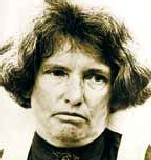
Daisy De Melker
Serial killer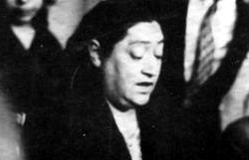 Felicitas Sanchez Aguillon
Serial killer · Mexico · 1930
Felícitas Sánchez Aguillón or Sánchez Neyra (1890 - June 16, 1941) was a Mexica…
50 victims
Felicitas Sanchez Aguillon
Serial killer · Mexico · 1930
Felícitas Sánchez Aguillón or Sánchez Neyra (1890 - June 16, 1941) was a Mexica…
50 victims
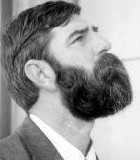 Louis Van Schoor
Serial killer · South Africa · 1986
Louis van Schoor was a security guard and an ex-policeman who was convicted and…
39 victims
Louis Van Schoor
Serial killer · South Africa · 1986
Louis van Schoor was a security guard and an ex-policeman who was convicted and…
39 victims
 Moses Sithole
Serial killer · South Africa · 1994
Moses Sithole (November 17, 1964) was a serial rapist and serial killer in Sout…
38 victims
Moses Sithole
Serial killer · South Africa · 1994
Moses Sithole (November 17, 1964) was a serial rapist and serial killer in Sout…
38 victims
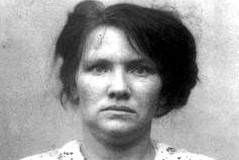 Dagmar Overbye
Serial killer · Denmark · 1913
Dagmar Johanne Amalie Overbye (April 23, 1887 – May 6, 1929) was a Danish seria…
25 victims
Dagmar Overbye
Serial killer · Denmark · 1913
Dagmar Johanne Amalie Overbye (April 23, 1887 – May 6, 1929) was a Danish seria…
25 victims
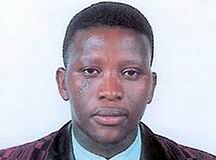 Norman Afzal Simons
Serial killer · South Africa · 1986
Norman Afzal Simons was a former teacher. He later converted to Islam in 1993,…
22 victims
Norman Afzal Simons
Serial killer · South Africa · 1986
Norman Afzal Simons was a former teacher. He later converted to Islam in 1993,…
22 victims
 Parramore Sanborn
Murderer · USA · 1983
Parramore Lee Sanborn was born 8-3-45. The case involved the kidnapping, rape,…
1 victim
Parramore Sanborn
Murderer · USA · 1983
Parramore Lee Sanborn was born 8-3-45. The case involved the kidnapping, rape,…
1 victim
 Ronnie Johns
Murderer · USA · 1991
Ronnie Johns was male. Ronnie Johns was associated with robberies. The motive w…
4 victims
Ronnie Johns
Murderer · USA · 1991
Ronnie Johns was male. Ronnie Johns was associated with robberies. The motive w…
4 victims
 Jodi Arias
Murderer · USA · 2008
Jodi Arias (born July 9, 1980, in Salinas, California) and Travis Alexander wer…
1 victim
Jodi Arias
Murderer · USA · 2008
Jodi Arias (born July 9, 1980, in Salinas, California) and Travis Alexander wer…
1 victim
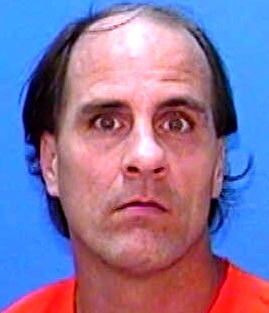 David Eugene Johnston
Murderer · USA
Name: David Eugene Johnston · Date of birth: 03/11/57 · Jurisdiction: Ninth Jud…
1 victim
David Eugene Johnston
Murderer · USA
Name: David Eugene Johnston · Date of birth: 03/11/57 · Jurisdiction: Ninth Jud…
1 victim
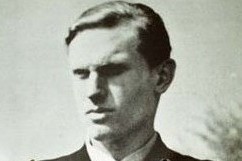 Walter Seifert
Mass murderer · Germany · 1964
Committed suicide by poisoning himself with cyanide the same day; died next day…
10 victims
Walter Seifert
Mass murderer · Germany · 1964
Committed suicide by poisoning himself with cyanide the same day; died next day…
10 victims
 Joseph Savino
Murderer · USA · 1988
Joseph Savino was sentenced to death and was executed by lethal injection in Vi…
1 victim
Joseph Savino
Murderer · USA · 1988
Joseph Savino was sentenced to death and was executed by lethal injection in Vi…
1 victim
- Gender
- female
- Country
- South Africa
- Location
- Germiston, Gauteng, South Africa
- Date of birth
- June 1, 1886
- Age at first offence
- 37
- Characteristics
- poisoner, parricide, to collect insurance money
- Victim profile
- William Alfred Cowle, 50 (her husband) / Robert Sproat, 44 (her second husband) / Rhodes Cecil Cowle, 20 (her son)
- Method of murder
- Poisoning ( strychnine - arsenic)
- Date(s) of murder
- 1923 / 1927 / 1932
- Years active
- 1923–1932
- Date of arrest
- April 1932
- Status
-
Executed
Executed by hanging at Pretoria Central Prison on December 30, 1932
Overview
Daisy Louisa De Melker (née Hancorn-Smith) was born on 1 June 1886 and was executed by hanging at Pretoria Central Prison on December 30, 1932. She faced three murder charges involving poisoning: the deaths of her husband William Alfred Cowle, her second husband Robert Sproat, and her son Rhodes Cecil Cowle. The public interest in her case attracted almost unprecedented attention during the trial.
Timeline
- 1 June 1886 — Daisy Louisa De Melker (née Hancorn-Smith) was born at Seven Fountains near Grahamstown.
- 1907 — Daisy Hancorn-Smith planned to marry Bert Fuller in October 1907; Fuller died of black-water fever on the planned wedding day.
- March 1909 — Daisy Hancorn-Smith married William Alfred Cowle in Johannesburg.
- 11 January 1923 — William Cowle became ill after taking Epsom salts prepared by his wife; he died soon after.
- 6 November 1927 — Robert Sproat died following a second fatal attack after drinking beer.
- 21 January 1931 — Daisy Sproat married for the third time; her husband was Sydney Clarence De Melker.
- 2 March 1932 — Rhodes took ill after drinking coffee from a thermos flask prepared by his mother.
- 15 April 1932 — Police obtained a court order permitting the exhumation of the bodies of Rhodes Cowle, Robert Sproat and William Cowle.
- 30 December 1932 — Daisy de Melker was executed by hanging at Pretoria Central Prison.
- December 30, 1932 — The execution occurred on this date.
Background
Daisy De Melker was one of eleven children. When she was twelve, she went to Bulawayo to live with her father and two of her brothers. Three years later, she became a boarder at the Good Hope Seminary School in Cape Town. She returned to Rhodesia in 1903, but later returned to South Africa and enrolled at the Berea Nursing Home in Durban.
On one of her holidays in Rhodesia, she met and fell in love with Bert Fuller, a civil servant in the Native Affairs Department at Broken Hill. They planned to marry in October 1907. Fuller contracted black-water fever and died with Daisy at his bedside on the day they had planned to marry. Fuller left a will bequeathing £100 to his fiancé.
In March 1909, about eighteen months after the death of Bert Fuller, Daisy Hancorn-Smith married William Alfred Cowle, a plumber, in Johannesburg. She was 23; he was 36. The couple had five children, four of whom died: twins who died in infancy, a third child who died of an abscess on the liver, and a fourth child who suffered convulsions and bowel trouble and died at the age of 15 months. Their last and only surviving child, Rhodes Cecil, was born in June 1911.
At the age of thirty-six, and three years to the day after the death of her first husband, Daisy Cowle married another plumber, Robert Sproat, who was ten years her senior.
On 21 January 1931, Daisy Sproat married for the third time to Sydney Clarence De Melker, a widower and a plumber.
By the time of Rhodes’s death, Rhodes was 19. Rhodes’s sister-in-law, Eileen De Melker, thought Rhodes was lazy and remarked that he was often unwilling to get up for work in the morning. Another witness at Daisy De Melker’s trial described Rhodes as “bright and conscientious”. A girl who met Rhodes at a party a few weeks before his death maintained that he was a real gentleman. The evidence conflicted, and it did not explain why Daisy De Melker decided to kill Rhodes.
The offence
Daisy De Melker faced three charges:
- On or about 11 January 1923, and at or near Bertrams in the district of Johannesburg, she was charged with murdering her husband, William Alfred Cowle, by poisoning him with strychnine.
- On about 6 November 1927, in the same district, she was charged with murdering her second husband, Robert Sproat, by poisoning him with strychnine.
- On or about 5 March 1932, in the district of Germiston, she was charged with murdering her son, Rhodes Cecil Cowle, by administering him poison, namely arsenic.
William Alfred Cowle (first husband)
Early on the morning of 11 January 1923, William Cowle became ill soon after taking Epsom salts prepared by his wife. The first doctor who attended him did not consider his condition serious and prescribed a bromide mixture. His condition deteriorated rapidly. After the first doctor had left, Cowle took a turn for the worse. Daisy Cowle summoned neighbours to help and called for another doctor. When the second doctor arrived, Cowle was in excruciating pain, foamed at the mouth, was blue in the face, and screamed in agony if anyone touched him until he died.
The second doctor suspected strychnine poisoning and refused to sign the death certificate. A postmortem was performed by the acting District Surgeon, Dr Fergus. The cause of death was certified to be chronic nephritis and cerebral haemorrhage.
Daisy Cowle was the sole beneficiary of her husband’s will and inherited £1795.
Robert Sproat (second husband)
Robert Sproat became violently ill in October 1927. He suffered severe muscle spasms similar to those experienced by William Cowle, and he recovered. A few weeks later, he suffered a second fatal attack after drinking beer in the company of his wife and stepson, Rhodes. He died on 6 November 1927.
The attending physician, Dr Mallinick, certified that the cause of death was arteriosclerosis and cerebral haemorrhage. No autopsy was performed.
Following Robert Sproat’s death, his widow inherited over £4000, plus a further £560 paid by his pension fund.
Rhodes Cecil Cowle (son)
Late in February 1932, Mrs de Melker travelled many kilometres from Germiston to Turffontein to obtain a quantity of arsenic from a chemist there. She used her former name, Sproat, and claimed she required the poison to destroy a sick cat.
Less than a week later, on Wednesday, 2 March 1927, Rhodes took ill at work after drinking coffee from a thermos flask prepared by his mother. Fellow worker James Webster also became violently sick after drinking the coffee; Webster had drunk very little and recovered within a few days. Rhodes died at home at midday on the following Saturday. A post-mortem followed and the cause of death was given as cerebral malaria. Rhodes was buried at New Brixton cemetery the following day.
On 1 April, Mrs de Melker received £100 from Rhodes life insurance policy.
Investigation
By this time, William Sproat, Robert Sproat’s brother and Daisy de Melker’s second dead husband’s brother, had become suspicious, and these suspicions were conveyed to the authorities. On 15 April 1932, police obtained a court order permitting them to exhume the bodies of Rhodes Cowle, Robert Sproat and William Cowle.
The first body removed was that of Rhodes Cowle. The corpse was found to be in an unusually good state of preservation, which was characteristic of the presence of arsenic in large quantities. The government analyst isolated traces of arsenic in the viscera, backbone and hair.
Although the bodies of William Cowle and Robert Sproat were largely decomposed, traces of strychnine were found in the vertebrae of each man. Their bones also had a pinkish discolouration, suggesting that the men had taken pink strychnine. Traces of arsenic were also found in the hair and fingernails of James Webster, Rhodes’s colleague.
A week later, the police arrested Mrs de Melker and charged her with the murder of all three men.
The Turffontein chemist from whom she had obtained the arsenic recognized De Melker from a newspaper photograph as being Mrs D.L. Sproat, who had signed the poisons register, and went to the police.
Arrest
A week after the exhumations, the police arrested Mrs de Melker and charged her with the murder of all three men.
Trial
The trial began at Johannesburg High Court on 17 October 1932. Daisy Louisa de Melker was charged with the murder of two husbands and her twenty year-old son, Rhodes.
The case attracted almost unprecedented public interest. Queues of spectators lined up for hours each day before the proceedings began. On the final day of the trial, some spectators who had waited overnight to ensure a place in the court sold their seats for up to 30 shillings each (or up to 30 dollars each, as described). Under South African law at that time, murder trials were normally conducted before a judge and jury, although the law allowed the option of being tried by a judge and two assessors. Since public opinion weighed heavily against Mrs de Melker, she opted, on the advice of her legal counsel, for the latter.
The proceedings were opened before Mr Justice Greenberg and two senior magistrates, Mr J.M. Graham and Mr A.A. Stanford. Mrs De Melker faced three charges: the strychnine poisoning of William Alfred Cowle, the strychnine poisoning of Robert Sproat, and the arsenic poisoning of Rhodes Cecil Cowle.
The trial lasted thirty days. Sixty witnesses were called for the Crown and less than half this number for the defence. To present forensic evidence, the Crown employed the services of Dr J.M. Watt, an expert toxicologist and Professor of Pharmacology at the Witwatersrand University.
During summing up, before giving his verdict, the judge pointed out that the State had been unable to prove conclusively that Cowle and Sproat had died of strychnine poisoning. He said:
“It does not convince me, nor does it convict the accused,”
On the third count, however, he reached an “inescapable conclusion” that Mrs De Melker had murdered her son. This was evident because:
- Rhodes Cowle had died of arsenic poisoning.
- The coffee flask held traces of arsenic.
- The accused had put the arsenic into the flask. The judge said:
“I can see no escape from the conclusion that the accused put arsenic into the flask..,”
- The defence of suicide was untenable.
When the judge passed sentence, Daisy De Melker protested:
“I am not guilty of poisoning my son.”
The exchange recorded in court included:
“You have been found guilty of the murder of your son, Rhodes Cecil Cowle. Do you have anything to say before 1 pass sentence of death on you?”
and the judge responded:
“There is only one sentence I can pass,” responded the judge, and, so saying, he condemned her to death by hanging.
Sentencing
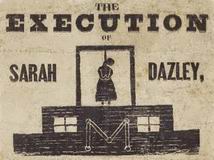
Daisy De Melker was condemned to death by hanging.
Appeals
No appeal information was included.
Outcome
On the morning of 30 December 1932, Daisy de Melker was hanged at Pretoria Central Prison.
Aftermath
A civil dispute concerning William Sproat’s entitlement to Robert Sproat’s will ran concurrently with the murder trial. William Sproat won the civil case regarding the will and was awarded costs. Daisy withdrew on the date Justice Greenberg sentenced her. Daisy had to hock all her assets to pay legal costs, and she was declared insolvent. She was eventually buried in a prison pauper’s grave.
In popular culture, sayings attributed to De Melker included:
- “it was the ghost of Daisy de Melker” if a door blew shut in the wind.
- “you look like Daisy de Melker” if a child’s hair was unkempt and wild.
Rumour stated that De Melker’s spirit haunted Ward 7 of the Transvaal Children’s Hospital (now the Florence Transition Home) in Braamfontein, where she had worked as a nurse and learnt about poisons.
In 1993, a television mini-series was made about Daisy de Melker, with Susan Coetzer in the title role.
In September 2005, a drag musical titled Daisy's Well Hung, starring Robert Coleman as “Daisy”, was staged at the Women’s Jail on Constitution Hill in Johannesburg, where De Melker was imprisoned prior to being hanged. The show attempted to transform the figure of De Melker into a poltergeist of a husband-killing femme fatale.
Other details
Daisy De Melker had trained as a nurse and lived in Germiston in the central Transvaal (now Gauteng).
Strychnine was described as a colourless, crystalline powder with an exceptionally bitter taste. It was obtained from Strychos nux vomica and other plants. About one and a half grains (100 milligrams) constituted a fatal dose. The text also stated that 15 mg of the poison had proved fatal and toxic symptoms could result from a dose as small as 5 mg.
Strychnine poisoning was described as causing muscle spasms of the back that led to convulsions so intense that the body ached violently, with a symptom called opisthotonus that could last up to two minutes while the victim was conscious and in extreme pain. It also described risus sardonicus and that death could follow within an hour from respiratory failure or exhaustion. The text stated strychnine had been used as rat poison and that it was available in strychnine-based “tonics” prescribed to invalids and people recovering from long illnesses, and that accidental deaths and suicides from strychnine could occur if the bottle had not been shaken properly and the patient took a dose of concentrated strychnine liquid.
Spotted an error, or have more information about this case?