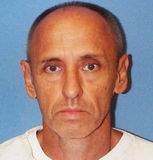
Thomas Whisenhant
Serial killer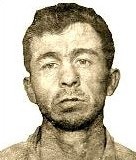 Donald Henry Gaskins
Serial killer · USA · 1969
Donald Henry Gaskins, also known as Donald “Pee Wee” Gaskins, was a serial kill…
200 victims
Donald Henry Gaskins
Serial killer · USA · 1969
Donald Henry Gaskins, also known as Donald “Pee Wee” Gaskins, was a serial kill…
200 victims
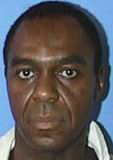 Carl Eugene Watts
Serial killer · USA · 1974
Carl Eugene Watts (born November 7, 1953; died September 21, 2007), also known…
100 victims
Carl Eugene Watts
Serial killer · USA · 1974
Carl Eugene Watts (born November 7, 1953; died September 21, 2007), also known…
100 victims
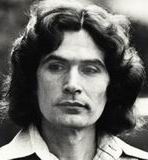 Rodney Alcala
Serial killer · USA · 1977
Rodney James Alcala (born August 23, 1943) was also known as Rodrigo Jacques Al…
100 victims
Rodney Alcala
Serial killer · USA · 1977
Rodney James Alcala (born August 23, 1943) was also known as Rodrigo Jacques Al…
100 victims
 Donald Harvey
Serial killer · USA · 1970
Donald Harvey was known as an American serial killer and a self-professed “Ange…
87 victims
Donald Harvey
Serial killer · USA · 1970
Donald Harvey was known as an American serial killer and a self-professed “Ange…
87 victims
 Donald Leroy Evans
Serial killer · USA · 1975
Donald Leroy Evans (born July 5, 1957) was an American serial killer who murder…
60 victims
Donald Leroy Evans
Serial killer · USA · 1975
Donald Leroy Evans (born July 5, 1957) was an American serial killer who murder…
60 victims
 Michael Swango
Serial killer · USA · 1981
Michael Swango (Joseph Michael Swango) was a physician and American serial kill…
60 victims
Michael Swango
Serial killer · USA · 1981
Michael Swango (Joseph Michael Swango) was a physician and American serial kill…
60 victims
 Gary Richard Whitton
Murderer · USA · 1990
Gary Richard Whitton was born on 02/04/59. He was tried in the First Judicial C…
1 victim
Gary Richard Whitton
Murderer · USA · 1990
Gary Richard Whitton was born on 02/04/59. He was tried in the First Judicial C…
1 victim
 Keith Faure
Murderer · Australia · 1976
Keith George Faure was born in June 1951. He was an Australian career criminal…
4 victims
Keith Faure
Murderer · Australia · 1976
Keith George Faure was born in June 1951. He was an Australian career criminal…
4 victims
 Morris Bolber
Serial killer · USA · 1932
Morris Bolber was prosecuted as part of a Philadelphia poison-murder ring invol…
50 victims
Morris Bolber
Serial killer · USA · 1932
Morris Bolber was prosecuted as part of a Philadelphia poison-murder ring invol…
50 victims
 Richard James Wilkerson
Mass murderer · USA · 1983
Richard James Wilkerson (#756) Richard James Wilkerson was executed by lethal i…
4 victims
Richard James Wilkerson
Mass murderer · USA · 1983
Richard James Wilkerson (#756) Richard James Wilkerson was executed by lethal i…
4 victims
 David Hebbert Hard
Homicide · USA · 1984
Dorothy Biggs was a resident of the tiny Lincoln County community of Eddyville.…
1 victim
David Hebbert Hard
Homicide · USA · 1984
Dorothy Biggs was a resident of the tiny Lincoln County community of Eddyville.…
1 victim
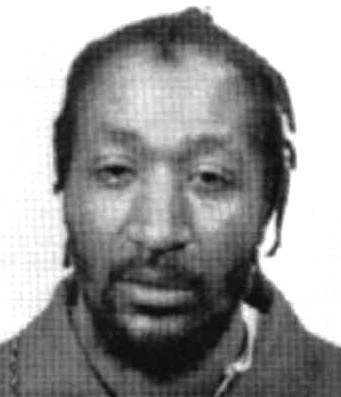 Gary Burris
Murderer · USA · 1980
Gary Burris was convicted of felony murder and was sentenced to death in Marion…
1 victim
Gary Burris
Murderer · USA · 1980
Gary Burris was convicted of felony murder and was sentenced to death in Marion…
1 victim
- Gender
- male
- Country
- USA
- Location
- Mobile County, Alabama, USA
- Date of birth
- January 29, 1947
- Age at first offence
- 28
- Characteristics
- kidnapping, rape, mutilation
- Victim profile
- Venora Hyatt / Patricia Hitt / Cheryl Lynn Payton, 22
- Method of murder
- Shooting (.32 caliber pistol)
- Date(s) of murder
- 1975 - 1976
- Years active
- 1975–1976
- Date of arrest
- October 17, 1976
- Status
-
Executed
Executed by lethal injection in Alabama on May 27, 2010
Case details
Name: Thomas Warren Whisenhant Gender: M Race: W DOB: 1/29/1947 Inmate: WHISENHANT, THOMAS WARREN DOC#: Z355 Prison: Holman Prison received: 5/31/1978 County: Mobile
STATUS and disposition
Thomas Warren Whisenhant was executed by lethal injection in Alabama on May 27, 2010. He declined to provide last words. The execution occurred after a three-drug cocktail of lethal drugs began flowing through intravenous tubes at 6 p.m., and a doctor pronounced him dead at 6:20 p.m.
Timeline
- Oct. 16, 1976 — Whisenhant abducted Cheryl Lynn Payton from a convenience store where she worked as a clerk. He drove her to a secluded wooded area in rural Mobile County, raped her on the front seat of his pickup truck, and shot her in the head one time with the .32 pistol he used in the abduction. The murder took place in a field near the truck. He then dragged her body into the wooded area and left the scene.
- Oct. 17, 1976 — Whisenhant returned to Payton’s body, cut off a large section of her breast, and slit her abdomen. He was observed near the crime scene and was captured shortly thereafter following a chase.
- Oct. 18, 1976 — A farmer reported seeing Whisenhant after he had returned to the woods where he had left Payton’s body, and Whisenhant tried to escape in his pickup, abandoned his truck, and ran into the woods.
- April 1976 — Officers found a wristwatch removed from a mutilated body and described as having been removed in April 1976 and given to Whisenhant’s wife as a present.
- Nov. 28, 1973 — Whisenhant had been paroled, referenced in the trial court’s findings for an aggravating circumstance.
- Mar. 14, 1966 — Whisenhant received a 20-year federal sentence of imprisonment for assault with intent to murder, referenced in the trial court’s findings for an aggravating circumstance.
- Oct. 16, 1976 — Oct. 17, 1976 (previously described as “during the previous 18 months”) — Whisenhant confessed to killing and mutilating two other women in Mobile County: Venora Hyatt and Patricia Hitt.
- 1975 — Patricia Hitt was found shot in the forehead and killed (Driggers testified he found her body in November 1975).
- 1976 (month referenced as almost six months to the day before Oct. 16, 1976) — Venora Hyatt’s murder occurred almost six months to the day before Payton was killed.
- 1981 — Whisenhant pleaded guilty in 1981 to the first-degree murders of Venora Hyatt and Patricia Hitt and received a sentence of life without parole for each offense.
- 1977 — Whisenhant’s first capital murder trial for the rape and murder of Cheryl Lynn Payton resulted in a conviction and a death sentence; the jury rejected the insanity defense.
- 1979 — Whisenhant v. State, 370 So.2d 1080 (Ala.Cr.App. 1979) occurred as a direct appeal.
- 1982 — Whisenhant v. State, 482 So.2d 1225 (Ala.Cr.App. 1982) occurred as a direct appeal after remand.
- 1989 — Ex parte Whisenhant, 555 So.2d 235 (Ala. 1989) occurred as a direct appeal after second remand.
- 2009 — Whisenhant v. Allen, 556 F.3d 1198 (11th Cir. 2009) occurred on habeas review.
- May 27, 2010 — Execution by lethal injection in Alabama. The three-drug cocktail began at 6 p.m. and he was pronounced dead at 6:20 p.m.
The offence
Offence against Cheryl Lynn Payton
On Oct. 16, 1976, Whisenhant abducted 23-year-old Cheryl Lynn Payton from a convenience store where she worked as a clerk. He drove her to a secluded wooded area in rural Mobile County. He raped her on the front seat of his pickup truck and then shot her in the head one time with a .32 pistol he used in the abduction.
On Oct. 17, 1976, Whisenhant returned to her body and cut off a large section of her breast and slit her abdomen.
According to testimony adopted into the habeas background, Whisenhant abducted 24-year-old Cheryl Lynn Payton at gunpoint from a convenience store in Theodore, Alabama, where she was working alone, drove her to a remote area, raped her in his truck, took her into the woods, and shot her in the head, killing her. The narrative also states that he later returned twice to the woods and mutilated Payton’s body with his knife.
Details of forensic findings and the weapon
A state toxicologist testified about physical findings. A large circular wound over the left breast showed that the nipple had been removed, with a four-inch cut at the base of the left breast, a cut on the right abdomen, and cuts on the right thigh, upper pubic region, and inside the external genitalia. Small lacerations on the back of the skull were described as caused by a blunt instrument before or immediately surrounding the time of being shot. A quarter-inch penetrating wound in the top of the head was determined to be an entrance wound from gunshot. The left nipple was not found at the scene. Swabs were taken from the victim’s vagina, mouth, anus, and stains on the leg and chest area. Tests resulted in positive results of seminal stains on swabs taken from the vagina, with spermatozoa immobile, indicating they had been deposited for at least ten hours. The expert stated that Payton had been penetrated.
Blood was found in the crotch area of the jeans and panties and on the sanitary napkin, which were found in Whisenhant’s truck. A bullet recovered from the brain was determined through ballistics tests to have been fired from a .32 pistol, Smith & Wesson. The trial court described Payton’s death as caused by the pistol and caused by Whisenhant. A knife found in the pickup truck had no blood or tissue on it, and no fingerprints could be raised from the beer carton near Payton’s head.
Offences against other women (confessed killings and plea)
After the apprehension of Whisenhant, he freely gave a detailed confession admitting killing and mutilating two other women in Mobile County: Venora Hyatt and Patricia Hitt. Whisenhant later pleaded guilty to killing both women.
The habeas background describes Venora Hyatt and Patricia Hitt as female convenience store clerks and states that Whisenhant confessed to killing and mutilating one of them and the other, and that he received life without parole sentences for each offense following a guilty plea in 1981.
Abduction and movements described by witnesses
A witness described that on Oct. 16, 1976, Tris Lowe lived on Two Mile Road in Irvington, Alabama, in Mobile County, and stopped at the Compact Store on Sweedtown Road, where he bought two cold drinks and saw Mrs. Payton, a clerk. Another witness testified about observing a man standing slightly off the roadside near Ed Trippe’s land on October 17, and identifying Whisenhant in a lineup the next Monday.
Charles Edwin Trippe, Sr. testified that he farmed about five thousand acres of land in Irvington and discovered Payton’s body after it had been found in a thicket covered with boards. Trippe described drag marks leading away from the first spot. He testified about seeing a white pickup truck and a driver with long, curly-like, reddish brown hair and a “Fu Manchu” moustache.
Richard Lee Bryars, a Deputy Sheriff, testified about organizing a search party and following Trippe to a field where Payton’s body was discovered, and about observing a pool of blood in the spot where Trippe said he had first seen the body.
Larry Tillman, a Detective Sergeant with the Mobile County Sheriff's Office, testified about organizing a search party to locate Cheryl Lynn Payton, receiving a call from Chief Investigator Driggers, meeting Ed Trippe, locating the body, observing a pickup truck, and pursuing it at speeds from eighty to one hundred miles per hour until it crashed through an electrical fence and wrecked in a clump of woods. Tillman testified that the driver jumped out and ran into the woods. The area was surrounded by twenty police vehicles, and Chief Investigator Driggers took charge. Tillman described an identification check showing the truck was registered to Whisenhant and described calling his wife to ask Whisenhant to come out using a public address system in a police car. Whisenhant shouted: “Baby, I have done everything they said I did.”
Tillman, Driggers, and Whisenhant’s wife walked into the woods, finding Whisenhant standing unarmed among the trees. Whisenhant told Tillman: “You S.O.B.‘s, I am going to make you kill me.” Tillman testified that he handcuffed Whisenhant and led him out of the woods and placed him in a police car. Tillman testified that about an hour after apprehension, District Attorney Graddick and a Mr. Baker began interrogating Whisenhant, after which Whisenhant admitted killing Venora Hyatt, who he had also abducted from a small convenience store.
Search and arrest described
A narrative in the executive accounts described Whisenhant as on death row for 32 years, 8 months and 20 days at the time of execution. It also described that he did not offer last words and that he appeared to pray briefly beside Brian Eskelinen, chaplain at nearby Fountain Correctional Institution.
The accounts described Whisenhant filed no requests for a stay.
Investigation
Apprehension after discovery of Payton’s body
The arrest was described as following the discovery of Payton’s body and observing a pickup truck stopping near North Gulf Boulevard and then turning around. Police pursued and surrounded the area with twenty police vehicles after the truck crashed. The identification check showed that the truck was registered to Whisenhant. Whisenhant’s wife encouraged him to surrender using a loudspeaker.
Confessions after apprehension
After apprehension, Whisenhant was given Miranda rights and warnings and responded that he understood. The narrative describes two question-and-answer sessions covering more than forty pages in the transcript, both introduced into evidence by Whisenhant’s counsel and read to the jury. The court stated it served no useful purpose to set out the statements fully, and instead quoted the brief of appellant’s counsel describing the October 16 and October 17 events and the details of the confession to killing and mutilating Mrs. Payton and also killing and mutilating Venora Hyatt and Patricia Hitt.
Confession summary quoted by the court
The court quoted from appellant’s counsel, including the following passage:
“On October 16, 1976, the defendant, Thomas Whisenhant, abducted Cheryl Lynn Payton from a Compact Store in Mobile County where she worked as a Clerk. He drove her to a secluded wooded area in rural Mobile County, raped her on the front seat of his pickup truck, and then shot her in the head one time with the 32 pistol he used in the abduction. The murder took place in a field near the truck. He then dragged her body into the wooded area and left the scene.
“On October 17, 1976, he returned to her body, cut off a large section of her breast and slit her abdomen. He was observed near the crime scene and was captured shortly thereafter following a chase.
“Once captured, the defendant freely gave a detailed confession wherein he not only admitted killing and mutilating Mrs. Payton but also killing and mutilating two other women in Mobile County during the previous 18 months. With evidence obtained from the defendant, law enforcement authorities verified the defendant's multiple-mutilation confession. All three, however, involved extensive sadistic mutilation of dead bodies. All three victims were unknown to the defendant. ”
The court also included a discussion about a footnote that “There was no mutilation on the body of one of the previous victims” and described that victim as being shot and killed and not returned to the murder scene.
Arrest and custody
Whisenhant was captured shortly after an escape attempt following the chase. Police described the chase continuing at speeds from eighty to one hundred miles per hour until the pickup crashed through an electrical fence and wrecked in a clump of woods. Whisenhant ran into the woods. He was handcuffed and placed into a police car after being found unarmed among the trees.
After capture and interrogation, he admitted killing Venora Hyatt and abducting her from a small convenience store. The interrogation included Miranda warnings and involved two sets of question-and-answer sessions introduced by defense counsel and read to the jury.
Trial
Capital murder trial for Cheryl Lynn Payton
Whisenhant was convicted and sentenced to death for the rape and murder of Cheryl Lynn Payton in Mobile County after a change of venue was granted and the case was moved to Jefferson County for the first trial.
The first trial included an insanity defense. The jury rejected the insanity defense, and Whisenhant was convicted and sentenced to death.
The Alabama Court of Criminal Appeals reversed the conviction based on improper argument by the prosecutor and a fatal variance between the indictment charging rape and intentional killing and the judgment finding capital murder.
Retrial and further sentencing proceedings
A second trial occurred in 1981 in Mobile County. Whisenhant was convicted and sentenced to death again. The Court of Criminal Appeals affirmed the conviction but reversed the sentence because of the prosecutor’s opening statement at the sentencing phase referring to other crimes allegedly committed by Whisenhant that were not introduced at trial. The Alabama Supreme Court held the error was not harmless and remanded for a new sentencing trial.
After remand, a third penalty phase proceeding occurred in 1987. Whisenhant again presented evidence of mental illness, and a jury unanimously voted to sentence him to death. The Court of Criminal Appeals affirmed and the Alabama Supreme Court affirmed.
Judicial issues and statements during the third sentencing trial
In the opinion describing the third sentencing appeal, the court discussed a motion to recuse based on comments made by Circuit Judge Ferrill McRae. The opinion included the judge’s statement in response to a motion in limine:
“THE COURT: Yeah, you know, Mr. Dees, you and I both have tried this case a number of times. I think it would be putting a stranglehold on the State that I shouldn't do and I think it even goes back to your insanity question. The victim in this case, as I recall the evidence, was abducted with Entebbe precision and he certainly has to-you know, which an irrational person I do not believe could have formed. But he is-he's in the position-you're asking me to put the State in the position of not telling the jury the entire story. So, I can't do that. So, I deny that motion.”
The court also described the questioning of prospective jurors and included the statement by Judge McRae about media exposure:
“Has any member of this jury seen anything about this case on television, read anything about this case in the newspaper or seen or heard anything about this case on television and, if so, please stand. All right. “.... “Is there any member of this jury who thinks because of the recollection that you have about this case, whether it be from the radio, television or newspaper, that it would be impossible for you to sit as a fair and impartial juror in this penalty stage of this particular case? That is, what you have read, what you have seen or seen and heard on television, would that in any way bias or affect you in any way from rendering a fair and impartial verdict in this case? If you feel that it would, simply raise your hand.”
Prosecutor’s closing argument and objection
In one sentencing opinion, the court quoted the defendant’s claimed improper closing argument and the prosecutor’s remarks at issue. The prosecutor’s closing argument included the following language:
“They told you he helped law enforcement and you saw the F.B.I. agent on there, a Mr. Boyle. What did he actually tell you? He actually told you that he gets-all this about this center starting because of Tommy Whisenhant. He actually told you he got a letter from up there at F.B.I. headquarters, find us somebody, and what was the criteria? The criteria is he's got four murders and his appeals are exhausted. Well, his appeals aren't exhausted. He talks to Mr. Dees and he talks to Tommy Whisenhant. Mr. Dees said, Whisenhant made the decision, made it himself, but he did make the decision, and he says he couldn't have anything to gain. He didn't have anything to gain? He's in this courtroom right now trying to get you to consider that, and he was aware this hearing was coming up. That means Tommy Whisenhant himself knows he had something to gain and he had something to gain by doing it and he, with good common sense, decided to do it. Now, Mr. Boyle told you after they filled out that questionnaire they sent it off and he's never heard from it again. He didn't tell you this big foundation was started because of that. He didn't tell you some center was started because of that, but he did tell you something that was significant as to why Tom Whisenhant would appear and answer that questionnaire and also give a deposition in court in that civil case. He enjoyed the attention. He hadn't talked to anybody for a while. He liked folks making a fuss over him.”
In the related habeas background, the prosecutor’s closing argument at the 1981 guilt phase trial included the following statement:
“If these three fine criminal defense lawyers had found any doctor, any friend, any co-worker, anyone that knew the Defendant and they said he was insane, don't you think you would have heard from them? You haven't heard a word, and these three lawyers are very very good. Nobody has come in here and said that Tommy ran around eating dirt, did they, running naked and jumping on women at bus stops and that he was insane. No. The reason is simply this, they couldn't find anybody to say it.”
The trial judge ruled on an objection:
“THE COURT: He has a right to argue his inferences.”
Sentencing
Aggravating circumstances found (third sentencing trial appeal)
The court’s opinion recited the aggravating circumstances found under Code 1975, §§ 13-11-6 (as set out in the opinion). The trial court found four aggravating circumstances existed:
- Section 13-11-6(1): the trial court found the defendant was still under a twenty-year federal sentence of imprisonment received on March 14, 1966, for assault with intent to murder, with parole referenced as November 28, 1973 but still “under sentence of imprisonment” for purposes of the aggravating circumstance.
- Section 13-11-6(2): the trial court found prior convictions for three crimes involving violence to the person, with those including a 1966 conviction for assault with intent to murder and, in 1981, guilty pleas resulting in convictions for first degree murders: Patricia Hitt (1975 murder) and Venora Hyatt (1976 murder).
- Section 13-11-6(4): the capital offense involved rape; the trial court found he murdered Cheryl Lynn Payton after raping her.
- Section 13-11-6(8): the trial court found the offense involved abduction, rape, and killing with especially heinous, atrocious, and cruel circumstances.
The court also stated that no statutory mitigating circumstances existed, but it found nonstatutory mitigating circumstances including:
- the defendant was under some mental or emotional disturbance at the time of the crime, but it was not extreme;
- he was schizoid, detached;
- he was paranoid, with persecutorial delusions;
- he had necro-sadistic tendencies, liking to cut up or abuse dead bodies, which the court found he displayed when he returned to Payton’s body the day after he murdered her and cut on it with a knife.
The court described that the rape and murder of Payton was not caused by the schizoid personality, paranoid tendencies, or necro-sadistic desire, and stated the personality disorders were considered as nonstatutory mitigating circumstances and given weight as deserved.
After weighing aggravating and mitigating circumstances, the court concluded that aggravating circumstances far outweighed mitigating circumstances.
Third sentencing trial sentence
The trial court accepted the jury’s recommendation and sentenced Whisenhant for the third time to death by electrocution. The Court of Criminal Appeals affirmed the sentence, and the state supreme court affirmed the judgment.
Appeals and habeas
Direct appeals and remands (as cited)
- Whisenhant v. State, 370 So.2d 1080 (Ala.Cr.App. 1979) — direct appeal.
- Whisenhant v. State, 482 So.2d 1225 (Ala.Cr.App. 1982) — direct appeal after remand.
- Ex parte Whisenhant, 555 So.2d 235 (Ala. 1989) — direct appeal after second remand.
- Whisenhant v. Allen, 556 F.3d 1198 (11th Cir. 2009) — federal habeas.
United States Court of Appeals for the Eleventh Circuit (habeas) holding
In the federal habeas appeal, the Court of Appeals held and affirmed denial of relief:
- trial counsel’s failure to present evidence of insanity at the guilt phase trial was reasonable trial strategy and not deficient;
- FBI reports made after the murder of prior murder victim and statement by a co-worker describing Whisenhant as “weird” were not Brady material;
- prosecutor’s closing argument about no co-worker testifying Whisenhant was insane did not misstate evidence and properly responded to defense closing argument;
- state courts’ rejection of judicial bias claim based on appearance of impropriety from trial judge’s alleged ex parte communication with prosecutor was not contrary to, or an unreasonable application of, federal law.
Other details
Last meal and final actions
Whisenhant requested a final meal of:
- chicken leg quarters
- french fries
- American cheese
- orange drink
- coffee
- chocolate pudding
He declined breakfast on Thursday. Before the prison officials began administering the drugs, Whisenhant’s supporters waved to him. He raised his immobilized left hand as far as he could and smiled several times.
Confessions and additional admissions described
At trial, opening statements and later recountings described the defendant’s acknowledgement that he committed the three murder-mutilations and that he had killed an elderly woman at age thirteen, and that he had been previously tried and convicted of the brutal beating of a woman while in the Air Force.
Family and childhood testimony included in proceedings
Testimony described Whisenhant’s sister Evelyn Stevens testifying that Whisenhant slept in the same bed with his mother until nearly age seven, continued to sleep in his mother’s bedroom until sixteen in a separate bed, and that family money was turned over to the mother. Psychiatrist testimony described marked abnormalities in his childhood, including overprotection by his mother and fear dynamics.
The proceedings included testimony by psychiatrists and other witnesses, including psychiatrist Claude Brown, who diagnosed a “severe schizoid personality with marked paranoid traits” and described necrosadism. The court’s narrative also included testimony by other mental health and correctional observers.
Victims mentioned by name
Victims named in the proceedings and executive accounts included:
- Cheryl Lynn Payton
- Venora Hyatt
- Patricia Hitt
Execution-related witnesses and communications
At execution, Warden Tony Patterson read the execution order and asked Whisenhant if he had anything to say; Whisenhant declined. Chaplain Brian Eskelinen prayed while Whisenhant was strapped to a bed in the execution chamber. Corrections officers drew curtains after he chest stopped moving and a doctor pronounced him dead at 6:20 p.m.
Whisenhant’s attorney was Richard Cohen in the accounts describing the execution day. Corrections spokesman Brian Corbett was described in the accounts as explaining possessions and last day requests. Visitors included Mara Tillman and death penalty opponent Bill Hodel. Larry Tillman was described as an uncle of Mara Tillman who arrested Whisenhant in 1976.
Quotes from the case material
Whisenhant’s statements during apprehension:
- “Baby, I have done everything they said I did.”
- “You S.O.B.‘s, I am going to make you kill me.”
- In the chase account: “I've done everything they said I did,” attributed to court records.
Attorney general press conference comments (described in the sentencing appeal opinion):
- “make this retrial the last one for Thomas Whisenhant.”
- “there are some crimes that are so outrageous and offend the moral standards of society to such an extent that capital punishment is an appropriate penalty. This is clearly such a case.”
Victim family and witness statements quoted in accounts of the execution:
- “He had no remorse -- none,” said her widower, Douglas Payton.
- “He died a much easier death than my wife.”
- Added the victim's brother, Edward Gazzier: “There really wasn't justice served today. We watched a him die an easy death.”
- Susanna Payton’s prepared statement said: “Through many trials, retrials, appeals and excuses, our family has endured an enormous heartache and severe suffering,” (read to reporters after the execution).
- Vivian Gazzier: “He showed no remorse. He wouldn't even look at us,” (held a picture of Sheryl during the news conference).
- Ken Curry: “There comes a time when everybody says it's over, but it's never over,” (son of Venora Hyatt).
Defense and judicial discussions in quoted material:
- A psychiatrist described in testimony: “Tommy resented his mother,” psychiatrist William Rudder testified in court.
- In the Brown testimony summary, the diagnosis language included: “temporary insanity” when he killed and mutilated, and other expert statements were described without additional verbatim quotes.
Co-worker statement quoted within habeas discussion (as paraphrased content in the decision):
- Sandra Heverly stated that Whisenhant “wiggle[d] his feet when watching television and giggle[d] even though nothing was funny”; his eyes would sometimes get “glassy looking”; he would watch her drive and “grin up a storm”; he was “weird”; and “all the people who used to work with him at the ship yard 'knew how weird he was.'”
Spotted an error, or have more information about this case?