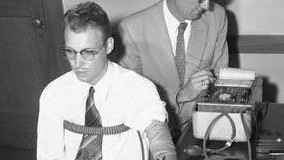
Burton Abbott
Murderer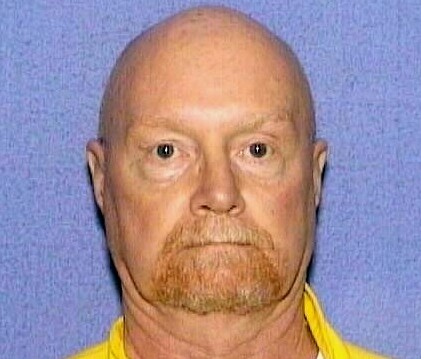 Gary Duane Rardon
Murderer · USA · 1962
Gary Duane Rardon killed a man in 1962 and later served 4 years for manslaughte…
4 victims
Gary Duane Rardon
Murderer · USA · 1962
Gary Duane Rardon killed a man in 1962 and later served 4 years for manslaughte…
4 victims
 Charles Howard Schmid
Murderer · USA · 1964
Charles Howard Schmid was born on 8 July 1942 and was adopted by Charles and Ka…
3 victims
Charles Howard Schmid
Murderer · USA · 1964
Charles Howard Schmid was born on 8 July 1942 and was adopted by Charles and Ka…
3 victims
 Sirhan Bishara Sirhan
Murderer · USA · 1968
Sirhan Bishara Sirhan was convicted of the murder of United States Senator Robe…
1 victim
Sirhan Bishara Sirhan
Murderer · USA · 1968
Sirhan Bishara Sirhan was convicted of the murder of United States Senator Robe…
1 victim
 Brian Keith Lord
Homicide/Murderer · USA · 1974
Name: Brian Keith Lord Birth year: 1961 Nationality: American In 1974, at the a…
2 victims
Brian Keith Lord
Homicide/Murderer · USA · 1974
Name: Brian Keith Lord Birth year: 1961 Nationality: American In 1974, at the a…
2 victims
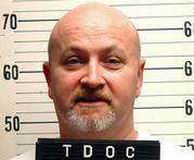 Terry Lynn King
Murderer · USA · 1983
Terry Lynn King was convicted of murder in the first degree while in the perpet…
1 victim
Terry Lynn King
Murderer · USA · 1983
Terry Lynn King was convicted of murder in the first degree while in the perpet…
1 victim
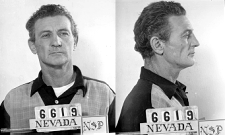 Frank Pedrini
Murderer · USA · 1953
July 15, 1954 — Frank A. Pedrini and Leroy L. Linden were executed together at…
1 victim
Frank Pedrini
Murderer · USA · 1953
July 15, 1954 — Frank A. Pedrini and Leroy L. Linden were executed together at…
1 victim
 Joseph Prystash
Murderer · USA · 1994
Joseph Andrew Prystash was charged with capital murder in connection with the h…
1 victim
Joseph Prystash
Murderer · USA · 1994
Joseph Andrew Prystash was charged with capital murder in connection with the h…
1 victim
- Gender
- male
- Country
- USA
- Location
- Alameda County, California, USA
- Date of birth
- February 8, 1928
- Age at first offence
- 27
- Characteristics
- kidnapping, rape
- Victim profile
- Stephanie Bryan (female, 14)
- Method of murder
- Beating
- Date(s) of murder
- April 28, 1955
- Years active
- 1955
- Date of arrest
- July 16, 1955
- Status
-
Executed
Executed by asphyxiation-gas on March 15, 1957
Timeline
- 28 April 1955 — Stephanie Bryan, a 14-year-old girl, did not come home from school; she was last seen on the way home from school taking her usual short cut through the parking lot of the Claremont Hotel.
- 15 July 1955 — Police received a phone call from Mrs. Georgia Abbott saying she had been in her basement looking for something and found personal items belonging to Stephanie Bryan.
- 15 July 1955 — Police conducted a search of the Abbott house after the call and found school books, a pair of glasses, and a brassiere.
- (no exact date given) — The police decided to search the Abbotts’ weekend cabin about 300 miles away in the Trinity mountains.
- (no exact date given) — In a shallow grave close to the cabin the police found the badly decomposed body of Stephanie Bryan; she had been bludgeoned to death.
- (date described as in November of 1955) — Burton W. Abbott was tried for the rape and murder of 14-year-old Stephanie Bryan.
- (jury returned verdict described as after 7 days) — The jury took seven days to return a verdict of guilty.
- (no exact date given) — The judge imposed the death sentence.
- March 15, 1957 — Abbott was incarcerated at San Quentin to await execution; his lawyers worked to commute his sentence for over a year.
- March 15, 1957 (9:02 a.m.) — Governor Goodwin J. Knight granted one hour’s stay by telephone.
- March 15, 1957 (10:42 a.m.) — A writ of habeas corpus petition was denied by the Supreme Court of California.
- March 15, 1957 (10:50 a.m.) — Judge Louis E. Goodman refused a further postponement.
- March 15, 1957 (11:12 a.m.) — Governor Knight was reached again and agreed to another stay.
- March 15, 1957 (11:15 a.m.) — Abbott was led to the gas chamber, strapped in the chair while the governor was contacting the warden by telephone; the warden and other officials left the chamber and bolted the door.
- March 15, 1957 (three minutes later) — The executioner pulled the lever; 16 pellets of sodium cyanide dropped into sulfuric acid; Abbott died as the governor hung up the telephone.
- May 02, 2004 — Elsie Abbott died at her home on the East Coast at age 100, according to the San Francisco Chronicle article dated May 02, 2004.
- (no exact date given) — After Abbott died, his wife Georgia moved out of California, changed her name, and took her 4-year-old son Chris; Chris was not told what happened to his father until years later.
Background
Burton W. Abbott (February 8, 1928 – March 15, 1957) was a 27 year old University of California at Berkeley accounting student living in Oakland, California who was tried for the rape and murder of 14-year old Stephanie Bryan.
Stephanie Bryan, 14 years old, was last seen on April 28, 1955 on the way home from school taking her usual short cut through the parking lot of the Claremont Hotel.
The Abbott family had a weekend cabin about 300 miles away in the Trinity mountains.
Stephanie Bryan’s decomposed body was eventually found in a shallow grave a few hundred feet from the Abbott family cabin; the cabin belonged to the Abbott family.
Elsie Abbott was mentioned as Burton Abbott’s mother, and she was also described as “his mother, Elsie Abbott.” She was at the center of the case and believed her son was murdered by the state of California when he was executed in San Quentin’s gas chamber 47 years ago.
Georgia Abbott, Burton Abbott’s wife, reported on July 15, 1955 that she had found personal effects belonging to the girl in her basement.
The offence
Stephanie Bryan was kidnapped and murdered, and she was killed by bludgeoning.
The prosecution hypotheses was that Abbott had attempted to rape the victim and killed her when she resisted.
Abbott was charged with kidnapping and murdering Stephanie Bryan.
The prosecution established that he was a sexual deviant, according to the case summary.
Investigation
On April 28, 1955, after Stephanie Bryan did not come home from school, police were alerted and a search was carried out but nothing was found except a school textbook which was found in a field.
On July 15, 1955, police received a phone call from Mrs. Georgia Abbott to say that she had been in her basement looking for something when she had found some personal items belonging to Stephanie Bryan.
Georgia Abbott was described as having found the purse and an identification card belonging to Stephanie in the basement.
Police went to the house and conducted a search which revealed some school books and a pair of glasses and a brassiere.
No other traces could be found in the house.
In interviewing the Abbotts, it was stated that Elsie Abbott had found the purse earlier but did not connect it with the case.
Police subsequently dug up Stephanie’s glasses, a brassiere and other evidence.
The case record states that the Abbott’s personal effects came to be in the basement, and that “No one in the family could account for how the victim's personal effects came to be in the basement.”
Abbott stated he was driving to the family's cabin 285 miles away when Stephanie disappeared.
Police searched the weekend cabin in the Trinity mountains.
In a shallow grave close to the cabin they found the badly decomposed body of Stephanie Bryan; she had been bludgeoned to death.
The main evidence which helped to convict him were hairs and fibres found on Abbott's car that matched those from the girls head and clothing.
Arrest / Charges
Burton Abbott was arrested and charged with kidnapping and murdering Stephanie Bryan.
Burton Abbott was also described as being charged with her rape and murder.
Trial
Burton W. Abbott was put on trial in Oakland.
It is stated that although the evidence against him was entirely circumstantial, he was convicted and sentenced to death in California's gas chamber.
The jury took seven days to return a verdict of guilty.
Abbott pled not guilty.
The trial is described as “one of the mostly highly publicized in California history.”
The prosecution used emotion to overcome the lack of direct evidence by such strategies as showing the jury the rotten clothes from the victim's body and waving her brassiere and panties, making implications he could not prove.
Abbott explained that in May the basement of the house had been used as a polling site with many people having access.
Although the prosecution charged attempted rape, the pathologist testified that the body was too decomposed to evaluate it for evidence of sexual assault.
Abbott took the stand and testified for four days, testifying in a calm and poised manner.
Abbott said it was all a “monstrous frame-up”.
The jury was out seven days before it returned a verdict of guilty of first degree murder.
The judge imposed the death sentence.
It is also stated that Alameda County District Attorney J. Frank Coakley told the jury that Abbott was “a sexual psychopath” who had dropped clues like “a trail of corn” that led to his arrest.
The trial took 47 days, a near record for the times.
The jury deliberated 51 hours and 56 minutes.
The verdict: guilty.
The sentence: death.
The San Francisco Examiner even hired Earle Stanley Gardner, described as “the famed detective story writer and well-known crime expert,” to offer “his thoughtful comments” on Abbott's trial.
Appeals
As provided by California law, there was an automatic appeal to the Supreme Court of California.
In detailed opinion describing the facts of the case and reciting the evidence that had been presented at trial, the court affirmed the conviction and sentence of death.
The case was cited as “People v. Abbott, 47 Cal. 2d 362, 303 P.2d 730 (1956).”
On March 15, 1957, the day of the execution which was scheduled for 11:00 pm, his attorney appealed to the United States Court of Appeals, which was denied.
A writ of habeas corpus was presented to the Supreme Court of California within six minutes of Governor Knight granting one hour’s stay; the petition was denied at 10:42 am.
The attorney tried again with an appeal to the Federal District Court but the court refused a further postponement at 10:50 am.
At 11:12 am Governor Knight was reached again and agreed to another stay, but at 11:15 Abbott was led to the gas chamber.
The case record states that the outcome of this case raised questions whether the state has the right to execute a person based on circumstantial evidence alone.
The case record further states that the federal law allows an attorney 90 days to file for a writ of certiorari after a State Supreme Court's refusal of a rehearing, but that the State Court set the date for Abbott's execution for two weeks before the 90-day limit; “Thus, Abbott was executed with the writ still on file and, therefore, the possibility still existed that Abbott might have won a new trial.”
Sentencing / Execution
Abbott was executed for kidnapping and murdering the 14 year old schoolgirl.
He was incarcerated at San Quentin to await execution.
Execution was scheduled for 11:00 pm on March 15, 1957, and the attorney’s attempts to secure stays occurred on the same day.
On March 15, 1957, his attorney arranged with a TV station to broadcast a plea to the governor.
At 9:02 Governor Knight granted one hour's stay by telephone.
Within six minutes a writ of habeas corpus was presented to the Supreme Court of California but at 10:42 am the petition was denied.
At 11:12 am Governor Knight was reached again and agreed to another stay.
At 11:15 am Abbott was led to the gas chamber and strapped in the chair while the governor was contacting the warden by telephone.
The executioner pulled the lever three minutes later and 16 pellets of sodium cyanide dropped into the sulfuric acid as Governor Knight reached the prison warden to stay the execution.
The warden told the governor it was too late, and Abbott died at the age of 29 as the governor hung up the telephone.
A quotation from the execution account includes: “Has It Started?”
Another quotation includes the radiotelephone exchange:
Babich: Has the execution started? Warden: Yes, sir, it has. Babich: Can you stop it? Warden: No, sir, it's too late.
Another quotation includes from the gas chamber account attributed to the warden Harley Teets:
“He asked whether we had started,” said warden Harley Teets. “I said, 'Yes.' He asked whether or not we could stop it. I said, 'No.' ”
A quotation attributed to Warden Harley O. Teets during the execution account includes:
Warden Harley O. Teets shook hands with Abbott, murmured "God bless you."
A quotation attributed to Abbott is:
Replied the prisoner calmly: "Thank you."
A quotation attributed to Governor Knight in the account is:
“I did everything possible to give Mr. Davis every opportunity to develop anything new in the case. This he could not do. In return he staged a dramatic stunt—with no legal ground to stand on—by waiting until the very last minute and then appealing for still another stay."
The Chronicle account quotes an eyewitness:
“There was complete silence” in the gas chamber, wrote The Chronicle's George Draper, who was an eyewitness. “... the silence was broken by the mechanical clank of the device that drops the fatal pellets. Abbott took a deep breath before the pellets dropped and held it as long as he could. The next breath he took killed him.”
An additional quotation in the Chronicle narrative includes:
“God Bless You.”
Outcome
Abbott was executed by asphyxiation-gas on March 15, 1957.
The jury verdict was guilty of first degree murder.
The Supreme Court of California affirmed the conviction and sentence of death in “People v. Abbott, 47 Cal. 2d 362, 303 P.2d 730 (1956).”
In the record narrative, the case was described as significant for highlighting confused legal procedures regarding appeals and debate over the death penalty, especially when it is based on circumstantial evidence alone.
Aftermath
It was stated that Abbott’s lawyers worked to commute his sentence for over a year and that his lawyers tried multiple times during the execution day.
After Abbott’s death, Elsie Abbott believed her son was innocent and remained convinced her son could not possibly be guilty of kidnap and murder.
The largest posse in Bay Area history searched the hills of Contra Costa and Alameda counties in the initial search.
The worst had happened and Stephanie had been kidnapped and murdered.
Elsie Abbott was described as believing “the real killer was still at large” and theorizing that her own brother had set up her son.
After Abbott's death, his wife Georgia moved out of California and told neighbors in Alameda that she would change her name.
Georgia took the couple’s 4-year-old son, Chris, with her.
Chris was not told what happened to his father until years later, when he was a grown man.
Before Abbott died, Elsie bought a newspaper ad offering a reward for evidence of Burton Abbott's innocence.
After he died, Elsie gathered up what she said was new evidence that proved Abbott could not have killed Stephanie; it was stated that she had witnesses whose testimony was blocked by the prosecution at the trial.
Elsie presented her evidence years later to the Alameda County Grand Jury, and “The jury would not consider it.”
Elsie Abbott even had a theory about the real murderer; Walker said she was sure it was her own brother, Wilbur Moore, a truck driver who lived in San Leandro.
It was stated that the district attorney said “a trail of corn” led to Burton, and Walker wondered: “Did he leave that trail?” and “Or did someone else leave that trail of corn?”
Walker concluded after years of study that Elsie Abbott was right and that her son was innocent.
The Chronicle narrative includes multiple quotes from Elsie Abbott:
“We believe in him,” Elsie said of Abbott's family, “because we know him.” “None of this is real. I can't believe this is happening to me -- to my son,” “He is innocent!” “We are never going to stop until we prove that Burton was innocent,” she said on the day he died. “She just wore out,” Walker said.
Walker kept track of the family for his 1995 book, “A Trail of Corn.”
It is stated that Georgia died some time ago; Mark Abbott died in 1968.
It is stated that Moore, the truck driver whom Elsie suspected of being the real murderer, is dead, too.
Elsie Abbott died Monday at her own home on the East Coast, and the article states she died at age 100.
The record states that she left four grandchildren, five great-grandchildren and two great-great-grandchildren.
A quotation in the record includes: “A Trail of Corn” as the title of Walker’s book.
Other details
Abbott was described as having tuberculosis and having only half a lung.
The Chronicle narrative describes Abbott as “a slight man” and as a “former accounting student” described as being charged with murder after his wife found the murder victim's purse in the Abbott cellar.
It is stated that the jury verdict and sentencing were based on circumstantial evidence and that nothing directly connected Abbott with Stephanie Bryan's death.
The case record includes mention of “Race in the Death House” and “Tragedy's Calendar” as labels in the scraped text.
A record includes an image caption about a July 19, 1955 voluntary test: “July 19, 1955 - Berkeley, California: Voluntary Test. Burton W. Abbott, (L), shown as he voluntarily submitted to lie detector test today, 7/19, in an effort to prove he knows nothing of the disappearance of Stephanie Bryan. At right, conducting the test is A. E. Riedel, the Bay area's leading polygraph expert. (Bettmann/CORBIS)”
The case record includes a statement about Governor Goodwin J. Knight preparing to inspect the Navy's aircraft carrier Hancock in San Francisco Bay and being out of reach of the telephone.
The case record includes mention of attorney George T. Davis and references to him waiting for the U.S. Court of Appeals and then trying to contact the governor.
The federal district court judge is identified as Louis E. Goodman.
Joseph Babich is mentioned as connected to a call to the governor.
Warden Harley O. Teets is mentioned in the execution account.
An additional quoted phrase in the scraped text includes:
“God Bless You.”
Spotted an error, or have more information about this case?