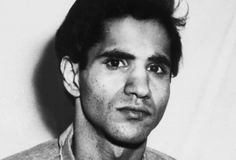
Sirhan Bishara Sirhan
Murderer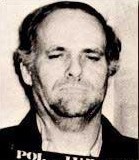 Ervil LeBaron
Murderer · USA · 1972
Ervil Morrell LeBaron (1925 to August 16, 1981) was the leader of a polygamous…
35 victims
Ervil LeBaron
Murderer · USA · 1972
Ervil Morrell LeBaron (1925 to August 16, 1981) was the leader of a polygamous…
35 victims
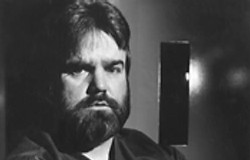 Marvin Gray
Murderer · USA · 1975
Marvin Gray was convicted killer who claimed responsibility for 23 slayings and…
23 victims
Marvin Gray
Murderer · USA · 1975
Marvin Gray was convicted killer who claimed responsibility for 23 slayings and…
23 victims
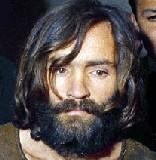 Charles Manson
Murderer · USA · 1969
Charles Milles Manson (born November 12, 1934) was an American criminal and mus…
9 victims
Charles Manson
Murderer · USA · 1969
Charles Milles Manson (born November 12, 1934) was an American criminal and mus…
9 victims
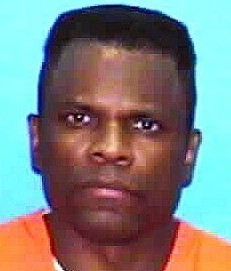 John Errol Ferguson
Murderer · USA · 1977
John Errol Ferguson was sentenced to death and was executed by lethal injection…
8 victims
John Errol Ferguson
Murderer · USA · 1977
John Errol Ferguson was sentenced to death and was executed by lethal injection…
8 victims
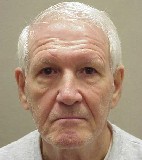 Robert Reldan
Murderer · USA · 1974
Name: Robert Reldan Robert Reldan was sentenced to life in prison on two counts…
8 victims
Robert Reldan
Murderer · USA · 1974
Name: Robert Reldan Robert Reldan was sentenced to life in prison on two counts…
8 victims
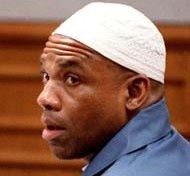 Leo Alexander Jones
Murderer · USA · 1981
Leo Alexander Jones (April 13, 1950 – March 24, 1998) was sentenced to death an…
1 victim
Leo Alexander Jones
Murderer · USA · 1981
Leo Alexander Jones (April 13, 1950 – March 24, 1998) was sentenced to death an…
1 victim
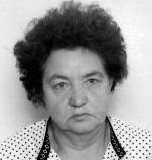 Maria Velten
Serial killer · Germany · 1963
Maria Velten was described as a classic “black widow” who killed her loved ones…
5 victims
Maria Velten
Serial killer · Germany · 1963
Maria Velten was described as a classic “black widow” who killed her loved ones…
5 victims
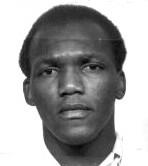 Carl Eugene Kelly
Murderer · USA · 1980
Carl Eugene Kelly Carl Eugene Kelly was a high school dropout. He had a drug pr…
2 victims
Carl Eugene Kelly
Murderer · USA · 1980
Carl Eugene Kelly Carl Eugene Kelly was a high school dropout. He had a drug pr…
2 victims
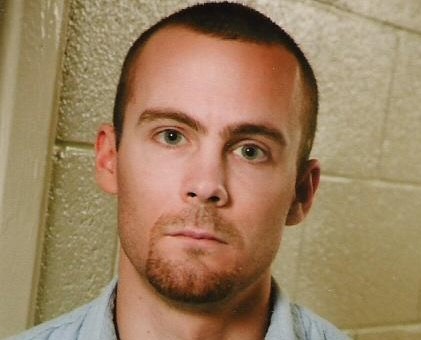 Jacob Lee Davis
Murderer · USA · 1998
Jacob Lee Davis · May 19, 1998 — Robert "Nick" Creson was shot in a parking lot…
1 victim
Jacob Lee Davis
Murderer · USA · 1998
Jacob Lee Davis · May 19, 1998 — Robert "Nick" Creson was shot in a parking lot…
1 victim
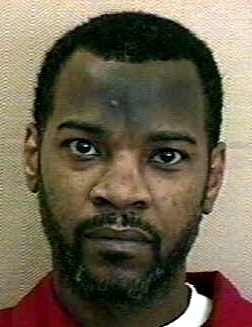 Perrie Dyon Simpson
Murderer · USA · 1984
Perrie Dyon Simpson Perrie Dyon Simpson was executed by lethal injection in Nor…
1 victim
Perrie Dyon Simpson
Murderer · USA · 1984
Perrie Dyon Simpson Perrie Dyon Simpson was executed by lethal injection in Nor…
1 victim
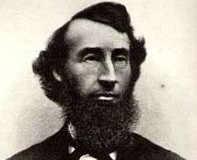 Nathaniel Gordon
Homicide · USA · 1860
Nathaniel Gordon (c.1834 – February 21, 1862) was the first and only American s…
29 victims
Nathaniel Gordon
Homicide · USA · 1860
Nathaniel Gordon (c.1834 – February 21, 1862) was the first and only American s…
29 victims
- Gender
- male
- Country
- USA
- Location
- Los Angeles, California, USA
- Date of birth
- March 19, 1944
- Age at first offence
- 24
- Characteristics
- former mental patient, history of mental illness, mentally ill, motive unknown
- Victim profile
- United States Senator Robert F. “Bobby” Kennedy, 42
- Method of murder
- Shooting ( .22 caliber Iver Johnson revolver)
- Date(s) of murder
- June 5, 1968
- Years active
- 1968
- Date of arrest
- Same day
- Status
-
Life imprisonment
Sentenced to death on April 23, 1969; commuted to life in prison in 1972
Case overview
Sirhan Bishara Sirhan was convicted of the murder of United States Senator Robert F. “Bobby” Kennedy. He was serving a life sentence at the state penitentiary in Corcoran, California.
Background
Sirhan was born to Palestinian Christian parents in Jerusalem and was raised a Maronite Catholic. In his adult years he frequently changed his religious thoughts, including Baptist, Seventh-day Adventist, and Rosicrucianism.
Kennedy had focused on issues of social reform and increasingly came to identify with the poor and disenfranchised. He reached out to members of minority groups and formed relationships with many of them.
As United States Senator for New York, Kennedy had been United States Attorney General from January 1961 until September 3, 1964, when he resigned to run for election to the United States Senate. He took office as Senator from New York on January 3, 1965.
Kennedy was addressed campaign supporters after winning the June 4, 1968 Democratic Presidential primaries in South Dakota and California, boosting his chances for the Democratic nomination for President during the 1968 presidential election.
Kennedy entered the race for the Democratic Party's nomination for president on March 16, 1968. He had won the California primary election for the Democratic nomination for President of the United States. In the California primary, following the polls closing, Kennedy claimed victory and held 393 delegates compared to Humphrey's 561.
The offence
On June 5, 1968, Sirhan fired a .22 caliber Iver Johnson revolver into the crowd surrounding Senator Kennedy in the kitchen pantry of the Ambassador Hotel in Los Angeles. The shooting occurred shortly after Kennedy had finished addressing supporters in the hotel's main ballroom.
Shortly after midnight on June 5, 1968, Kennedy was walking through the kitchen of the Ambassador Hotel and was fatally wounded by a gunshot in Los Angeles, California at approximately 12:15 a.m. Kennedy died 26 hours later.
Sirhan, aged 24, stepped in front of Kennedy, and allegedly shouted "Kennedy, you son of a bitch!" before firing an eight shot, .22 caliber Iver-Johnson Cadet revolver toward Kennedy and his entourage.
Kennedy's entourage moved through the kitchen pantry area, shaking hands with well-wishers and hotel staff. Sirhan rushed past maître d'hôtel Karl Uecker and repeatedly fired the revolver toward Kennedy and his entourage. Maître d'hôtel Karl Uecker, writer George Plimpton, Olympic gold medalist decathlete Rafer Johnson and professional football player Rosey Grier helped detain Sirhan. Rosey Grier jamming his thumb behind the hammer of the revolver prevented further shots from being fired.
Five other persons in the pantry were shot, and all five recovered: Paul Schrade, head of the United Automobile Workers union; William Weisel, an ABC TV unit manager; Ira Goldstein, a Continental News Service reporter; Elizabeth Evans, a friend of Kennedy's press secretary Pierre Salinger; and Irwin Stroll, a teenaged Kennedy volunteer.
The jury deliberated for three months.
Kennedy was shot three times, with a fourth bullet passing through his jacket. Kennedy asked Romero, "Is everybody safe, OK?" and Romero responded, "Yes, yes, everything is going to be OK".
Kennedy's injuries were described as: Kennedy was shot twice in his back and once behind his right ear at very close range, and a fourth shot grazed Kennedy's clothing. One bullet, fired at a range of about 1 inch (2.54 cm), entered behind his right ear, dispersing fragments throughout his brain. Two others entered at the rear of his right armpit; one exited from his chest and the other lodged in the back of his neck.
Although not physically wounded, singer Rosemary Clooney was present and suffered a nervous breakdown shortly afterwards.
Shots and bullet recovery
Sirhan's .22 revolver held eight cartridges. The official conclusion was that Sirhan fired all his cartridges, and all eight projectiles were recovered.
Others suggested there were more than eight shots fired. A police officer observed police criminalists dig two bullets out of a door frame in the pantry area, bringing the total number of shots fired during the attack to 10. FBI documents described holes depicted in the pantry door frame as "bullet holes", and William Bailey, the first FBI agent on the scene, stated that he saw a bullet in one such hole. An AP photograph showed a bullet lodged in a door frame.
Most of the witnesses in the pantry thought the gun looked and sounded like it was firing blanks. Rafer Johnson said it looked like a cap gun throwing off residue.
Investigation and evidence disputes
Autopsy findings
Los Angeles coroner Dr. Thomas Noguchi performed the autopsy on Kennedy and found powder burns on Kennedy's ear and gunpowder residue in his hair. Noguchi said this indicated Kennedy was shot from a distance of, at most, 1.5 inches (37 millimeters.). Noguchi's conclusions led to speculation that Sirhan was too far from Kennedy and in the wrong position to have administered the fatal shot and that a second shooter must have been present.
Noguchi later wrote in his book "Coroner", published in 1983, that he was first made aware of the possibility of residue-soot findings when an Los Angeles Police Department (LAPD) criminologist came to his office the day after the autopsy saying they had found gunpowder residue and soot in the hair shavings taken from Kennedy's head prior to surgery. Thus, the gun must have been only inches away. The angle was also wrong.
Noguchi's own book "Coroner", published in 1983, included a belief that twelve shots were fired that night: three bullets hit Kennedy, one passed through his jacket, five hit the other victims, and three were found in the ceiling.
LAPD destroyed all the wood paneling it had collected from the hotel pantry, which affected doorframe evidence.
Photographic evidence
Photographic evidence was described as existing of at least five additional shots.
Philip H. Melanson's "The Robert F. Kennedy Assassination" included two photos: one showed Dr. Noguchi pointing out two "bullet holes" (as identified by the FBI) in a doorframe; the other showed LAPD criminologist DeWayne Wolfer pointing to a ricochet mark.
Another photo in Dan E. Moldea's "The Killing of Robert F. Kennedy" showed Noguchi pointing to two different bullet holes from those featured in the Melanson book's photo.
Disputed participation of a second shooter
There was contention about whether there was another gunman at the scene and whether Sirhan fired bullets or blanks. Witnesses in the kitchen pantry placed Sirhan in front of Senator Kennedy with a distance no closer than approximately 3 feet, and most placed the tip of his gun no closer than a foot to Kennedy's head.
As part of the disputes, the location of Kennedy's wounds suggested that his assailant had stood behind him, while some witnesses said Sirhan faced west as Kennedy moved through the pantry facing east.
Dr. Noguchi stated that the fatal shot was behind Kennedy's right ear and had been fired at a distance of approximately one inch.
In a re-examination of the case in 1975, the Los Angeles Superior Court ordered expert examination of the possibility of a second gun, and the conclusion of the experts was that there was little or no evidence to support this theory.
In 2007, analysis of an audio tape recording made by freelance reporter Stanislaw Pruszynski appeared to indicate, according to forensic expert Philip Van Praag, that thirteen shots were fired, even though Sirhan's gun held only eight rounds. Van Praag stated that the recording also revealed at least two cases where the timing between shots was shorter than physically possible. The presence of more than eight shots on the tape was corroborated by forensic audio specialists Wes Dooley and Paul Pegas of Audio Engineering Associates in Pasadena, California, forensic audio and ballistics expert Eddy B. Brixen in Copenhagen, Denmark, and audio specialist Phil Spencer Whitehead of the Georgia Institute of Technology in Atlanta, Georgia. Some acoustic experts stated that no more than eight shots were recorded on the audio tape.
Witness statements about blank firing and video/audio capture
It was described that the shooting was not broadcast live, but resultant scuffle was recorded on audio tape by reporter Andrew West of KRKD, a Mutual radio affiliate.
West had asked Kennedy a brief question about overcoming Vice President Hubert Humphrey's lead in delegates to the Democratic National Convention, and West turned his tape recorder back on after hearing shouts that Kennedy had been shot. CBS continued feeding live pictures of the Ambassador Hotel's Embassy Room ballroom after Kennedy had left the ballroom's podium, including footage of the dispersing crowd.
As CBS's audio feed switched, supporters in the Ambassador Room were reacting to the shooting, with service doors seen swinging open while screaming and chaos could be heard. CBS News correspondent Terry Drinkwater asked someone what happened, and an unidentified man answered: "Somebody said he's been shot". Drinkwater advised his CBS colleagues to "make sure we are rolling videotape". Reporters captured the struggle with Sirhan by audio and cameras.
Andrew West shouted at Rafer Johnson: "Get the gun, Rafer, get the gun!" West also told others: "get a hold of [Sirhan's] thumb and break it, if you have to! Get his thumb! We don't want another Oswald!"
Kennedy was pronounced dead the next day.
Evidence-sealing, diary content, and alleged forgery
On March 3, 1969, Sirhan claimed that he had killed Kennedy "with 20 years of malice aforethought," although he had maintained since being arrested that he had no memory of the crime. The judge did not accept this confession and it was later withdrawn.
There were disputes and contentions about the validity of the official story that cast Sirhan in the role of "lone gunman".
Sirhan's journals and diaries were discovered after his arrest. Most entries were incoherent and repetitive, with a single entry obsessed over a desire to kill Kennedy. When confronted with this entry, Sirhan expressed bafflement.
In the 1990s, Sirhan proposed the theory that he had been brainwashed.
A diary police found at Sirhan's home stated: "My determination to eliminate RFK is becoming more and more [sic] of an unshakable obsession. RFK must die. RFK must be killed. Robert F. Kennedy must be assassinated. .... Robert F. Kennedy must be assassinated before 5 June 1968."
Many documents, among them a movie by Ted Charach, were described as showing that this diary was a forgery, with inconsistencies. The handwriting on these pages, it was stated, differed greatly from Sirhan's handwriting.
Arrest
Sirhan was booked by police, and they found in his pocket a newspaper article that discussed Kennedy's support for Israel. At trial, Sirhan testified that he began to hate Kennedy after learning of this support.
Trial
Legal representation and motion to plead
Sirhan's lawyers made a motion on February 10, 1969 to enter a plea of guilty to first degree murder in exchange for life imprisonment rather than the death penalty. The motion was made in chambers and denied. The court judge Herbert V. Walker ordered that the record pertaining to the motion be sealed.
The lead prosecutor in the case was Lynn "Buck" Compton. Sirhan's lawyer Grant Cooper attempted to remove the case to Fresno, where Sirhan claimed he could be given a fair trial, but the attempt failed.
During the three-month-long trial, the defense based their case on expert testimony of Bernard L. Diamond M.D., described as a professor of law and psychiatry at University of California, Berkeley, who testified that Sirhan was suffering from diminished capacity at the time of the murder.
Sirhan was convicted on April 17, 1969.
Sirhan attempted to confess to the crime and change his plea to guilty on several occasions.
Confession and withdrawal
On March 3, 1969, in a Los Angeles courtroom, Sirhan claimed that he had killed Kennedy "with 20 years of malice aforethought," although he had maintained since being arrested that he had no memory of the crime.
Sentencing
Sirhan was sentenced to death six days after his conviction.
Sirhan's sentence was commuted to life in prison in 1972 after the California Supreme Court, in its decision in California v. Anderson 64 Cal.2d 633, 414 P.2d 366, (Cal. 1972), resulted in the invalidation of all pending death sentences imposed in California prior to 1972.
Sirhan was sentenced to death on April 23, 1969, and the sentence was commuted to life in prison in 1972.
Appeals
The source described the sentence commutation as arising from California Supreme Court decision California v. 1972).
Lawrence Teeter, Sirhan's most recent lawyer, maintained that Grant Cooper was compromised by a conflict of interest and was grossly negligent in defense of Sirhan, which Teeter said led to a gross miscarriage of justice.
Outcome and current status
Sirhan was serving a life sentence at the state penitentiary in Corcoran, California.
Applications for parole were described as routine eligibility with parole denied 13 times as of 2007. Sirhan was confined at the California State Prison in Corcoran.
Sirhan's attorney Lawrence Teeter died on July 31, 2005, in Mexico.
Sirhan was refused parole on March 15, 2006. He did not attend the hearing and did not appoint a new attorney to represent him. His next possible chance for parole would be in 2011.
On May 10, 1982, Sirhan told a parole board: "If Robert Kennedy were alive today, he would not countenance singling me out for this kind of treatment."
In 2011, Sirhan was denied parole for the fourteenth time and was described as currently confined at the Pleasant Valley State Prison in Coalinga, California.
Aftermath
Kennedy's body lay in repose at St. Patrick's Cathedral in New York for two days before a funeral mass held on June 8. His body was interred near his brother John at Arlington National Cemetery. His death prompted the protection of presidential candidates by the United States Secret Service.
The remaining candidates were immediately protected under an executive order issued by Lyndon Johnson, putting a strain on the poorly resourced Secret Service.
Ted Kennedy eulogized Robert Kennedy, saying:
My brother need not be idealized, or enlarged in death beyond what he was in life; to be remembered simply as a good and decent man, who saw wrong and tried to right it, saw suffering and tried to heal it, saw war and tried to stop it.
Those of us who loved him and who take him to his rest today, pray that what he was to us and what he wished for others will some day come to pass for all the world.
As he said many times, in many parts of this nation, to those he touched and who sought to touch him: 'Some men see things as they are and say why. I dream things that never were and say why not.'
Additional people and roles mentioned
People injured in the incident
William Weisel of ABC News (30); Paul Schrade of the United Auto Workers (43); Elizabeth Evans (43); Ira Goldstein (19-year-old radio reporter); and Irwin Stroll (17-year-old Kennedy volunteer).
People who subdued Sirhan
Rosey Grier; George Plimpton; Rafer Johnson; and others including maître d'hôtel Karl Uecker and Edward Minasian were described as forcing Sirhan against the steam table and disarming him.
Other named individuals
Andrew West of KRKD; Terry Drinkwater; Hubert Humphrey; Pierre Salinger; Steven Smith (with wife Jean Kennedy Smith at his side); Frank Mankiewicz; Juan Romero; Ethel Kennedy; Bill Eppridge; Boris Yaro; William Barry; Fred Dutton; Karl Uecker; Edward Minasian; Andrew West; Lynn Mangan and Ted Charach; Sandy Serrano; James Scott Enyart; Lisa Urso; Thane Eugene Cesar; Paul Sharaga; Theodore Charach; David Rabern; Shane O'Sullivan; Shane O'Sullivan again; Robert Walton; Robert Walton again.
Further evidence disputes, additional theories, and related allegations
Conspiracy theories and alleged suppression
The source described continued questions about the validity of the official story that cast Sirhan as a lone gunman.
James Scott Enyart contended he was actively photographing the inside of the Ambassador Hotel kitchen pantry at the moment of the shooting. He said his three, 36-exposure rolls were confiscated by the LAPD and sealed by court-order for 20 years and never returned in full, resulting in a court battle from 1989 to 1996. He also alleged that the most important piece of photographic evidence was confined in 10 pictures found to be missing from the third negative. Enyart said he won the trial against the city of Los Angeles and the LAPD and was granted a financial settlement of $450,000. The source also stated that Sandy Serrano said that during questioning, she was intimidated by police and forced to change her story.
It stated that police reportedly destroyed or concealed considerable amounts of evidence from the crime scene, including photographs, ceiling panels, and door frames. It also stated charges that authorities withheld potentially exculpatory evidence from Sirhan's lawyer by keeping Noguchi's autopsy report sealed until after the trial had begun.
Allegations involving a separate revolver and claim of not firing
A part-time armed security guard escorting Kennedy named Thane Eugene Cesar was described as having admitted on tape that he removed his revolver from his holster during the shooting in the pantry but insisted he never fired it. Cesar admitted he owned a .22-caliber revolver similar to Sirhan's, but claimed he had sold the weapon in February 1968, a claim later proven false because it was discovered that Cesar sold the gun three months after the assassination. The buyer later reported it stolen. The revolver Cesar turned over to the LAPD was not test-fired by police because it was .38 caliber and all slugs recovered were .22 caliber. Skeptics stated Cesar was never considered a serious suspect because no eyewitnesses saw Cesar shoot Kennedy, and it was stated that Dan Moldea gave Cesar a polygraph test that Moldea said exonerated Cesar.
Allegations involving a young Hispanic man and a young Caucasian woman
Los Angeles police sergeant Paul Sharaga and a young Kennedy campaign worker named Sandy Serrano claimed that a young Hispanic man and a young Caucasian woman with blonde hair (wearing a "polka dot" dress) burst out of a rear service exit of the Ambassador Hotel's kitchen moments after the shooting exclaiming, "We shot him." When asked "who?", the young woman responded, "Senator Kennedy!" Sharaga was made aware by a middle-aged married couple who flagged him down shortly after he pulled his squad car into one of the hotel's parking lots, and Sharaga issued an all points bulletin which was soon canceled without explanation. Serrano was later coerced by police into changing her story.
CIA involvement allegations
On November 20, 2006, BBC's Newsnight presented research by Shane O'Sullivan alleging that several CIA agents were present on the night of the assassination. The CIA had no domestic jurisdiction and some officers were based in Southeast Asia at the time. Three accused included former senior officers who had worked together in 1963 at JMWAVE in Miami: David Morales, Gordon Campbell, and George Joannides. They were identified by former acquaintances in photographs taken at the Ambassador Hotel, Los Angeles on June 5th, 1968. Congressional investigator Ed Lopez worked with Joannides while Joannides was serving as CIA liaison to the Congressional investigation into the assassination of John F. Kennedy. O'Sullivan quoted Morales saying: "I was in Dallas when we got the son of a bitch and I was in Los Angeles when we got the little bastard." The CIA denied the officers were present and declined to comment further.
O'Sullivan interviewed David Rabern, described as a freelance mercenary and private investigator contracted by the CIA to participate in the Bay of Pigs invasion in 1961. Rabern had been in the ballroom of the Ambassador Hotel on the night in 1968 and noticed Morales and Campbell talking to each other in the hotel lobby prior to the assassination, and noticed Campbell in and around several police stations on U.S. soil that the CIA had no jurisdiction over.
Timeline
- January 1961 — Kennedy served as United States Attorney General.
- September 3, 1964 — Kennedy resigned to run for election to the United States Senate.
- January 3, 1965 — Kennedy took office as Senator from New York.
- June 4, 1968 — Kennedy won the Democratic Presidential primaries in South Dakota and California.
- June 5, 1968 — Sirhan fired a .22 caliber Iver Johnson revolver into the crowd in the kitchen pantry of the Ambassador Hotel; Kennedy died 26 hours later.
- February 10, 1969 — Sirhan’s lawyers made a motion to enter a plea of guilty to first degree murder in exchange for life imprisonment; the motion was denied.
- March 3, 1969 — Sirhan claimed that he had killed Kennedy "with 20 years of malice aforethought"; the judge did not accept the confession and it was later withdrawn.
- April 17, 1969 — Sirhan was convicted.
- April 23, 1969 — Sirhan was sentenced to death.
- 1972 — The death sentence was commuted to life in prison in 1972 following California v. Anderson.
- May 10, 1982 — Sirhan told a parole board: "If Robert Kennedy were alive today, he would not countenance singling me out for this kind of treatment."
- July 31, 2005 — Lawrence Teeter died in Mexico.
- March 15, 2006 — Sirhan was refused parole.
- 2011 — Sirhan was denied parole for the fourteenth time.
Other details
Sirhan was described as strongly anti-Zionist in the narrative.
The source also stated that during his trial, Sirhan's lawyers attempted to use a defense of diminished responsibility.
It stated that the shooting was recorded on audio tape by reporter Andrew West of KRKD. It also described ABC, CBS, and NBC coverage and preemptions of regular programming.
Various critics were described as claiming the official account of Robert Kennedy's death was inconsistent and incomplete.
References were listed for works including Moldea, Dan E.: The Killing of Robert F. Kennedy; Turner, William V., and Jonn Christian: The Assassination of Robert F. Kennedy: The Conspiracy and Cover-up; "GUIDE TO THE LOS ANGELES POLICE DEPARTMENT RECORDS OF THE ROBERT F. KENNEDY ASSASSINATION INVESTIGATION."; and further readings including Jansen, Godfrey; Kaiser, Robert Blair; Melanson, Philip H.; and Turner and John G. Christian.
Spotted an error, or have more information about this case?