
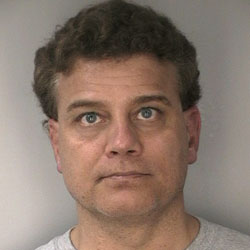
Brian Keith Lord
Homicide/Murderer Earl Clanton
Homicide/Murderer · USA · 1972
Earl Clanton Jr. was executed in the electric chair. He was 33 years old when h…
2 victims
Earl Clanton
Homicide/Murderer · USA · 1972
Earl Clanton Jr. was executed in the electric chair. He was 33 years old when h…
2 victims
 Richard L. Odom
Homicide/Murderer · USA · 1978
May 4, 1978 — Richard L. Odom killed Mary Rebecca Roberts in Pearl, Mississippi…
2 victims
Richard L. Odom
Homicide/Murderer · USA · 1978
May 4, 1978 — Richard L. Odom killed Mary Rebecca Roberts in Pearl, Mississippi…
2 victims
 Donald Henry Gaskins
Serial killer · USA · 1969
Donald Henry Gaskins, also known as Donald “Pee Wee” Gaskins, was a serial kill…
200 victims
Donald Henry Gaskins
Serial killer · USA · 1969
Donald Henry Gaskins, also known as Donald “Pee Wee” Gaskins, was a serial kill…
200 victims
 Carl Eugene Watts
Serial killer · USA · 1974
Carl Eugene Watts (born November 7, 1953; died September 21, 2007), also known…
100 victims
Carl Eugene Watts
Serial killer · USA · 1974
Carl Eugene Watts (born November 7, 1953; died September 21, 2007), also known…
100 victims
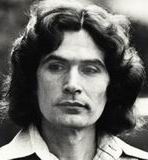 Rodney Alcala
Serial killer · USA · 1977
Rodney James Alcala (born August 23, 1943) was also known as Rodrigo Jacques Al…
100 victims
Rodney Alcala
Serial killer · USA · 1977
Rodney James Alcala (born August 23, 1943) was also known as Rodrigo Jacques Al…
100 victims
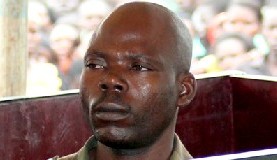 Patrick Okot
Mass murderer · Uganda · 2013
March 5, 2013 — Gunmen attacked Mbuya barracks to steal arms. · February 4, 201…
10 victims
Patrick Okot
Mass murderer · Uganda · 2013
March 5, 2013 — Gunmen attacked Mbuya barracks to steal arms. · February 4, 201…
10 victims
 Gu Kailai
Murderer · China · 2011
Gu Kailai (born 15 November 1958) was a Chinese lawyer and businesswoman. She w…
1 victim
Gu Kailai
Murderer · China · 2011
Gu Kailai (born 15 November 1958) was a Chinese lawyer and businesswoman. She w…
1 victim
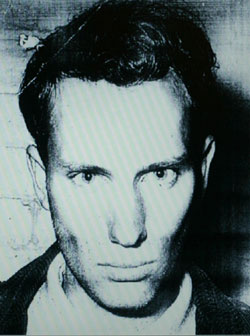 Derek Percy
Murderer · Australia · 1965
Derek Ernest Percy was declared not guilty by reason of insanity in April 1970…
1 victim
Derek Percy
Murderer · Australia · 1965
Derek Ernest Percy was declared not guilty by reason of insanity in April 1970…
1 victim
 Natasha Cornett
Murderer · USA · 1997
Natasha Wallen Cornett was born on January 26, 1979 in rural eastern Kentucky.…
3 victims
Natasha Cornett
Murderer · USA · 1997
Natasha Wallen Cornett was born on January 26, 1979 in rural eastern Kentucky.…
3 victims
- Gender
- male
- Country
- USA
- Location
- Kitsap County, Washington, USA
- Date of birth
- 1961
- Age at first offence
- 13
- Characteristics
- juvenile (13), rape, torture
- Victim profile
- H is friend's mother / Tracy Parker, 16
- Method of murder
- Shooting / Blows to the head with a blunt object
- Date(s) of murder
- 1974 / September 16, 1986
- Years active
- 1974–1986
- Date of arrest
- September 30, 1986
- Status
-
Released
Sentenced to life imprisonment; conviction overturned in 1999; death sentence voided in 1997; sentenced to death on August 18, 1987, overturned in 1999; served only six months in a juvenile detention facility and was released in 1974
Case information
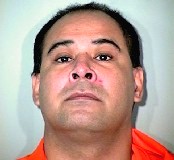
Name: Brian Keith Lord Birth year: 1961 Nationality: American
The offence
In 1974, at the age of 13, Brian Keith Lord murdered his friend's mother by shooting her in the back as she hung clothes on a clothesline.
In 1986, at age 25, he was hired as a carpenter at the home of the neighbors of 16-year-old Tracy Parker, Wayne and Sharon Frye. Lord subsequently became acquainted with Tracy Parker, who often rode horses owned by the Fryes.
On the night of September 16, 1986, Lord persuaded Tracy Parker to get into his truck under the guise of giving her a ride home while he was alone with her. He drove to his brother's workshop, coerced her into going inside, and raped and murdered her.
During the trial, he leveled threats at the Parker family.
Victims
Tracy Parker (16-year-old) — raped and murdered in 1986.
Lord’s friend’s mother — murdered in 1974 by shooting her in the back as she hung clothes on a clothesline.
Investigation
Investigation into Tracy Parker’s disappearance initially focused on the Fryes.
Her last discernible interaction was a telephone call made by her to her friend from their residence. A manhunt took place.
Some of Tracy Parker’s blood-soaked clothes were found in a wooded area on the weekend of September 20. Her semi-nude body was found on September 30.
Investigators began considering Brian Keith Lord as a suspect after it was discovered that he called his family roughly ten minutes prior to Tracy from the same phone that Tracy called her friend on.
Lord denied any involvement and informed police that he had traveled to his brother's workshop that night. The workshop was investigated as a possible murder location which led to the discovery of a large blood spot on the floor, and samples of material from the workshop were collected.
A green paint chip found on Tracy Parker’s body was matched to a dismantled fence that Lord had hauled in his truck, thus incriminating him.
During the initial investigation, a search group found the victim's jacket, red sweatshirt, jeans, underpants, and shoes near Island Lake. Nearby they discovered a bath towel like the towel used as a curtain in the Frye's garage, the last location where Ms. Parker was seen alive. Another search party found an orange U-Haul blanket near Ms. Parker's clothes. It appeared to have blood stains and was singed. Ms. Parker's body was ultimately found a short distance from the Island Lake site.
Arrest
Brian Keith Lord was arrested.
Trial
Lord was tried and convicted in connection with the 1986 rape and murder of Tracy Parker and was sentenced to death in 1987.
During the 1987 trial, Lord’s death sentence was voided in 1997, his conviction was overturned in 1999, and after much delay he was given a new trial in 2003.
2003 trial
A man whose 1987 murder conviction in the slaying of a 16-year-old Poulsbo teen was overturned by an appeals court was found guilty of the murder a second time yesterday in Kitsap County Superior Court.
Brian Keith Lord was convicted of aggravated first-degree murder in the 1986 rape and murder of Tracy Parker. Soon after the verdict was read, Lord was sentenced to life in prison without release.
Deputy prosecutor Ione George said: "It was a just and right result," and "I know Tracy's family is very pleased and relieved."
The prosecution theory in the second trial remained that on September 16, 1986, Ms. Parker went to the residence of Wayne and Sharon Frye for her usual horse ride; Lord abducted Ms. Parker and took her to his brother's nearby residence where he had a workshop; he raped and killed Ms. Parker in the workshop and then drove to Clear Creek Road to deposit the body; he then returned to his brother's home.
Evidence described in the second trial
In the new trial, the State introduced newly available DNA analysis. Since the initial investigation in 1986, forensic technology had progressed, and several different laboratories were able to test the blood and hair samples from the crime.
In the new trial, State experts applied more advanced DNA technology to the original evidence further implicating Lord. Mitotyping Technologies tested a hair from the bath towel found at Island Lake for mitochondrial DNA, and the results matched Lord, excluding 99.94 percent of the population.
LabCorp tested a hair from the orange U-Haul blanket found near Ms. Parker's clothes, and the DNA matched Lord, excluding 99.94 percent of the population.
LabCorp tested a blood splatter found in Lord's workshop where the victim was allegedly killed, and the test produced a complete DNA genetic profile consistent with Ms. Parker's blood and excluded Lord as the source.
During the first three days of the trial, many spectators wore buttons with a picture of the victim.
The buttons were approximately two and one-half inches in diameter and bore an in-life photograph of victim Tracy Parker. They were picture buttons only and had no message or writing of any kind.
Defense counsel objected and moved the judge to remove the buttons from the courtroom. The trial court denied the motion, allowing the buttons to remain for the first three days of trial. Lord did not move for mistrial nor later request a curative jury instruction.
On the third day, the trial court noted on the record that the jury could see the buttons worn by spectators and expressed concern that the buttons might invoke undue sympathy from the jury. On the morning of the fourth day, the court excluded the buttons from the courtroom for the remainder of the 31 day trial.
As a separate issue, Lord argued that the State failed to disclose police notes of a call from a dog handler who had attempted to locate the victim shortly after her disappearance. Before Lord's first trial, the State disclosed a police report indicating that the victim's family had engaged a handler and bloodhounds to search for Ms. Parker.
Before the second trial, defense investigators were told by the dog handler, Mr. Anderson, that his dog had tracked Tracy Parker's scent from the Frye barn through the woods and out to the road. Anderson also said a woman in a motor home had told him that she saw someone who looked like Ms. Parker get into a black car.
The handler had called a detective at the Kitsap County Sheriff's department to report his dog track efforts.
Both the trial and appellate courts ruled that the State's disclosure of the handler's existence was sufficient, holding that the State divulged all of the information it possessed and did not suppress any material evidence.
Lord argued that the dog handler's testimony would rebut the State's theory that Lord abducted Ms. Parker from the stable. The trial court held that the evidence was not relevant because it did not alter the State's theory of the crime.
The Washington Supreme Court later addressed the appeal and affirmed the trial and appellate court decisions, holding:
- Silent spectator buttons showing a picture of the victim did not alone automatically deprive Lord of a fair trial.
- Dog handler evidence was properly excluded as irrelevant.
In the Washington Supreme Court decision, the court recited procedural history including the first trial conviction, the Ninth Circuit reversal based on failure to present three witnesses who thought they saw the victim alive after the day prosecutors said she had been killed, and the second trial where disputed witnesses and additional DNA analysis were included. The jury found Lord guilty and the court sentenced him to life imprisonment without the possibility of parole, and the Washington Court of Appeals affirmed. The Washington Supreme Court affirmed.
Death sentence and overturned conviction
Lord was convicted for the first-degree murder of Tracy Parker and sentenced to death on August 18, 1987.
On appeal, the conviction and sentence were affirmed.
On habeas review, the Ninth Circuit Court of Appeals reversed Lord's conviction on the grounds his trial counsel failed to present three witnesses who would have testified they thought they saw the victim alive after Lord was supposed to have killed her.
The case was remanded, and the second trial included disputed three witnesses and additional DNA analysis; the jury found Lord guilty and he was sentenced to life imprisonment without the possibility of parole.
The Washington Court of Appeals affirmed, and Lord then appealed again to the Washington Supreme Court.
Sentencing
- In 1974, Lord served only six months in a juvenile detention facility and was released.
- Brian Keith Lord was sentenced to death on August 18, 1987.
- Lord’s death sentence was voided in 1997.
- Lord’s conviction was overturned in 1999.
- Lord was sentenced to life in prison in 2003.
In the second trial, after the verdict, Lord was sentenced to life in prison without release.
Appeals
The death sentence and conviction were overturned by the federal 9th Circuit Court of Appeals, which said Lord's attorneys wrongly excluded the testimony of witnesses who thought they might have seen Parker alive after the day prosecutors said she had been killed.
In the Washington Supreme Court decision, the court affirmed the trial and appellate court decisions on:
- Spectator button issue, holding there was no inherent prejudice requiring reversal.
- Dog handler evidence exclusion issue, holding there was no abuse of discretion.
Other details
1974 case
In 1974, at the age of 13, Lord murdered his friend's mother by shooting her in the back as she hung clothes on a clothesline, and served only six months in a juvenile detention facility before being released.
Procedural caption and cited authorities
The Washington Supreme Court decision included:
- STATE v. LORD
- STATE of Washington, Petitioner, v. Brian Keith LORD, Respondent. No. 77472-2.
- Argued Oct. 26, 2006.
- -- August 30, 2007
Counsel listed included:
- Catherine E. Glinski, Attorney at Law, Manchester, WA, for Petitioner.
- Randall Avery Sutton, Kitsap Co. Prosecutor's Office, Port Orchard, WA, for Respondent.
The Washington Supreme Court decision discussed issues including courtroom conduct and dog handler evidence exclusion.
The court concluded:
- "We conclude, as did the courts below, there was no inherent prejudice and affirm the conviction."
- "We also hold dog handler evidence was not impermissibly denied in the trial and uphold Lord's conviction."
The Washington Supreme Court quoted: " ‘an unacceptable risk ․ of impermissible factors coming into play.’ "
The Washington Supreme Court noted: "Here, Lord was not denied a fair trial or the constitutionally guaranteed presumption of innocence."
Dissenting views recorded in the decision
A dissenting opinion argued that exclusion of the dog handler’s testimony was error and also discussed harmless error. It stated: "Brian Lord was convicted of murdering Tracy Parker." It asserted: "A judge has no discretion to exclude evidence clearly relevant to a defense, and because the dog handler's testimony would have directly contradicted the State's theory, this error cannot be harmless." It concluded: "I dissent."
A separate concurrence noted agreement with the majority on the jury taint issue and wrote separately to set forth reasons.
The dissent and concurrence included extended discussion of spectator conduct, courtroom fairness, and harmless error standards.
Spotted an error, or have more information about this case?