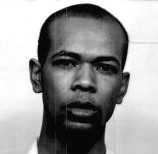
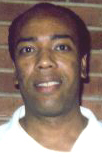
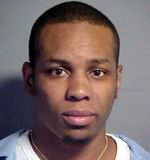
Ronald Keith Allridge
Murderer Ervil LeBaron
Murderer · USA · 1972
Ervil Morrell LeBaron (1925 to August 16, 1981) was the leader of a polygamous…
35 victims
Ervil LeBaron
Murderer · USA · 1972
Ervil Morrell LeBaron (1925 to August 16, 1981) was the leader of a polygamous…
35 victims
 Brian Kevin Rosenfeld
Murderer · USA · 1985
Brian Kevin Rosenfeld Brian Kevin Rosenfeld was sentenced to three concurrent l…
23 victims
Brian Kevin Rosenfeld
Murderer · USA · 1985
Brian Kevin Rosenfeld Brian Kevin Rosenfeld was sentenced to three concurrent l…
23 victims
 Marvin Gray
Murderer · USA · 1975
Marvin Gray was convicted killer who claimed responsibility for 23 slayings and…
23 victims
Marvin Gray
Murderer · USA · 1975
Marvin Gray was convicted killer who claimed responsibility for 23 slayings and…
23 victims
 Yahweh ben Yahweh
Murderer · USA · 1980
Yahweh ben Yahweh was born and legally named Hulon Mitchell Jr. (October 27, 19…
23 victims
Yahweh ben Yahweh
Murderer · USA · 1980
Yahweh ben Yahweh was born and legally named Hulon Mitchell Jr. (October 27, 19…
23 victims
 Hiroaki Hidaka
Serial killer · Japan · 1996
Hiroaki Hidaka (日高 広明; Hidaka Hiroaki; April 1962 – December 25, 2006) was a Ja…
4 victims
Hiroaki Hidaka
Serial killer · Japan · 1996
Hiroaki Hidaka (日高 広明; Hidaka Hiroaki; April 1962 – December 25, 2006) was a Ja…
4 victims
 Toronto Patterson
Homicide · USA · 1995
1994 — Patterson was charged as a juvenile for unlawful weapon possession; the…
3 victims
Toronto Patterson
Homicide · USA · 1995
1994 — Patterson was charged as a juvenile for unlawful weapon possession; the…
3 victims
 James Granvil Wallace
Murderer · USA · 1984
James Granvil Wallace lived with Susan Insalaco and her two children, 16-year-o…
3 victims
James Granvil Wallace
Murderer · USA · 1984
James Granvil Wallace lived with Susan Insalaco and her two children, 16-year-o…
3 victims
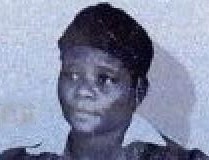 Ruby McCollum
Murderer · USA · 1952
Ruby McCollum (August 31, 1909–May 23, 1992) was the subject of a notorious mur…
1 victim
Ruby McCollum
Murderer · USA · 1952
Ruby McCollum (August 31, 1909–May 23, 1992) was the subject of a notorious mur…
1 victim
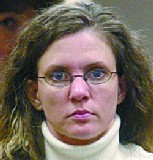 Michelle Reynolds
Murderer · USA · 2004
Michelle Reynolds — defendant; pleaded guilty to voluntary manslaughter and bur…
1 victim
Michelle Reynolds
Murderer · USA · 2004
Michelle Reynolds — defendant; pleaded guilty to voluntary manslaughter and bur…
1 victim
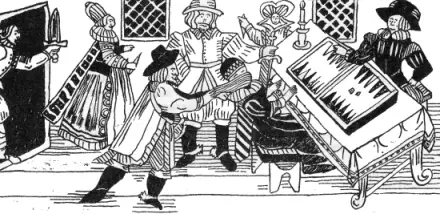 Alice Arden
Murderer · United Kingdom · 1551
Alice Arden (1516–1551) was the daughter of John Brigantine and Alice Squire. S…
1 victim
Alice Arden
Murderer · United Kingdom · 1551
Alice Arden (1516–1551) was the daughter of John Brigantine and Alice Squire. S…
1 victim
- Gender
- male
- Country
- USA
- Location
- Tarrant County, Texas, USA
- Date of birth
- September 27, 1960
- Age at first offence
- 15
- Characteristics
- armed robbery, drug addict
- Victim profile
- 3 male and 1 female, 19
- Method of murder
- Shooting ( 16-gauge shotgun)
- Date(s) of murder
- 1975 / 1984 - 1985
- Years active
- 1975–1985
- Date of arrest
- March 25, 1985
- Status
-
Executed
Executed by lethal injection in Texas on June 8, 1995
Case overview
Ronald Keith Allridge was convicted by a jury of capital murder and sentenced to death. He was executed by lethal injection in Texas on June 8, 1995.
Timeline
- March 25, 1985 — At approximately 12:30 a.m., Ronald Keith Allridge, Milton Ray Jarmon, and a third accomplice committed armed robbery at a “Whataburger” restaurant in Fort Worth, Texas. During the robbery, Allridge shot and killed Carla McMillen Otto.
- March 28, 1985 — Allridge was charged and was placed under a $1.1 million bond after being arrested only hours after the murder.
- September 1985 — Texas indicted and tried Allridge for the capital murder of Otto.
- November 1985 — The jury returned a capital murder verdict; after the separate sentencing proceeding, the jury unanimously answered two special issues affirmatively, and the trial court sentenced Allridge to death.
- February 1989 — The United States Supreme Court finalized Allridge’s conviction and sentence when it denied his writ of certiorari in Allridge v. Texas.
- May 1988 — The Texas Court of Criminal Appeals affirmed Allridge’s conviction and sentence.
- May 15 — Allridge’s execution reprieve and clemency process was discussed as being denied on May 15.
- December 15, 1994 — The United States Court of Appeals for the Fifth Circuit affirmed the district court’s denial of Allridge’s petition for a writ of habeas corpus.
- June 8, 1995 — Allridge was executed by lethal injection in Texas.
Background
On the night of March 25, 1985, Ronald Allridge, 24, along with three other accomplices stepped into the Whataburger on 125 Sycamore School Road in Fort Worth to commit armed robbery. Carla McMillen, 19, was eating a sandwich with Lisa Jenkins, a close friend, when they were confronted by Allridge. As he approached them, he threw a black bag on the table and said, “Fill it up with all you have.” In an attempt to raise her hands to show him that she had nothing, Allridge shot her in the chest with a 16-gauge shotgun, and she died instantly.
Allridge was arrested only hours after the murder. After being charged on March 28, 1985, he was placed under a $1.1 million bond. The other three accomplices were later charged and identified as Ronald’s brother, James Allridge, 22; Milton Jarmon, 18; and Clarence Jarmon, 19.
The account also stated that Ronald and his brother had evidently been responsible for a string of robberies and murders between 1984 and 1985. It stated that Allridge’s first murder victim was Lorenzo Kneeland, a student he gunned down in high school at the age of 15, and that he served less than a seven-year sentence. It further stated that he later confessed to killing Buddy Joe Webster Jr., his boss and manager of Crusty’s Pizza in Wedgewood.
The offence
At approximately 12:30 a.m. on March 25, 1985, Ronald Keith Allridge, Milton Ray Jarmon, and a third accomplice committed armed robbery at a “Whataburger” restaurant in Fort Worth, Texas. Allridge carried a shotgun while his accomplices each carried a handgun.
The sequence of events during the robbery was described as follows:
- Immediately upon entering the restaurant, the third accomplice shot out the glass door on the east side of the restaurant with his handgun, then remained positioned by the west door for the duration of the robbery.
- Milton Jarmon went immediately to the ordering counter and leapt over it to ransack the cash registers. In the process, Jarmon dropped his handgun, which discharged.
- When Milton Jarmon was heading for the counter, Allridge confronted Otto and her two friends, all of whom were seated in a booth.
- Allridge pointed his shotgun at Otto, tossed a bag at her, and said, “Fill it up bitch.” The bag fell to the ground, whereupon Allridge shot Otto.
Although Allridge confessed to killing Otto, he pled not guilty to the charge of capital murder. In his confession to the police, Allridge claimed that the shotgun fired accidentally because he was startled by another gunshot. In his confession, he stated that the initial shot, which was fired through the glass door, was the shot which startled him. At trial, however, counsel for Allridge claimed that Allridge was startled instead by the shot fired accidentally by Milton Jarmon.
In the event description, Jarmon invoked his Fifth Amendment right at Allridge’s trial and refused to testify, so a statement was used in context rather than live testimony.
Investigation
Melvin Adams, an employee at the time of the robbery, gave a statement to the police immediately after the murder. Adams stated that he heard three gunshots: the initial shot which broke the glass door and then two shots in rapid succession right before the robbers left the store. At trial, Adams recanted and testified during direct examination by the government that he heard only two gunshots separated by approximately one minute.
During cross-examination, counsel for Allridge seized on Adams’ statement to the police in which he stated that he had heard three gunshots. Adams denied the accuracy of his statement to the police. Counsel nevertheless entered it into the record.
Two additional witnesses provided testimony that the defense described as corroborating Allridge’s version of events:
- Sharon Burns testified for the defense that she noticed a robber leap over the counter and also that she heard “two or three” popping sounds.
- Teresa Barton testified for the defense that she heard two shots separated by only seconds.
Cary Jacobs, who was dining with Otto at the time of the robbery, testified that as the robbers entered the restaurant, one of them shattered the glass door with a single gunshot. Jacobs testified that upon entering with the others, Allridge pitched a bag to Otto and said, “Fill it up, bitch.” Jacobs testified that the bag fell to the ground, whereupon Allridge shot Otto. Jacobs testified that Allridge then ordered Jacobs to “pick up the bag.” Jacobs complied, relinquished his wallet, and observed the robbers leaving the store. Jacobs testified that he heard neither Jarmon’s gun discharge nor the cash register hit the floor.
The account also included information about where the shotgun was found, stating that the shotgun was found the day after the robbery in Allridge’s apartment.
Arrest
Trial
Texas indicted and, in September 1985, tried Allridge for the capital murder of Otto.
Allridge did not take the stand in his defense. Although his confession to police was part of the case, the account stated that his confession was only entered into evidence by the prosecution at the sentencing proceedings.
Evidence and expert testimony
A firearms expert testified at trial.
Jack Benton testified for the defense that only 2.5 pounds of pressure was needed to pull the trigger on Allridge’s shotgun. Benton further testified that while 2.5 pounds did not qualify as a “hair trigger,” it nonetheless was “extremely low.” On cross-examination, Benton admitted that he attempted to make the shotgun fire accidentally but failed.
Frank Shiller testified as a rebuttal witness for the state that four pounds of pressure is needed to pull the trigger of Allridge’s shotgun.
Lesser included offense requests and jury instructions
After the presentation of the evidence, Allridge requested the trial court to instruct the jury on two lesser included offenses: murder and felony murder. The court denied the request and instructed the jury on capital murder and murder only. The jury returned a capital murder verdict in November 1985.
Sentencing special issues
In accordance with Texas’ death penalty statute, TEX.CODE CRIM.PROC.ANN. art. 37.071(a) (Vernon 1981), the trial court held a separate proceeding before the jury to determine whether Allridge should be sentenced to death or life imprisonment.
The trial court instructed the jury to answer two special issues:
- Whether the conduct of the defendant that caused the death of the deceased was committed deliberately and with the reasonable expectation that the death of the deceased or another would result.
- Whether there is a probability that the defendant would commit criminal acts of violence that would constitute a continuing threat to society.
Because the jury unanimously answered both questions affirmatively, the trial court in November 1985 sentenced Allridge to death.
Appeals
Allridge appealed his case with the claim that prosecutors should have revealed an accomplice’s statement. The appeal included an argument that a shot was fired just before his, which startled him and caused his gun to go off accidentally.
State appellate history
The Texas Court of Criminal Appeals affirmed Allridge’s conviction and sentence in May 1988.
Federal appellate history
The United States Supreme Court denied his writ of certiorari in February 1989, finalizing his conviction and sentence.
After that, Allridge commenced state habeas proceedings. Following denial of his state petition for habeas relief in the Texas Court of Criminal Appeals, he filed a petition for habeas corpus in federal district court under 28 U.S.C. Sec. 2254 (1988). The district court denied the petition.
Allridge appealed from the district court’s decision denying his petition for a writ of habeas corpus. The United States Court of Appeals for the Fifth Circuit affirmed.
The case name and citation included: Ronald Keith Allridge, Petitioner-Appellant, v. Wayne Scott, Director, Texas Department of Criminal Justice, Institutional Division, Respondent-Appellee. No. 93-9137. United States Court of Appeals, Fifth Circuit. Dec. 15, 1994.
The Fifth Circuit described the appeal issues and rejected them, stating: “For the foregoing reasons, we AFFIRM the decision of the district court to deny the writ.”
Specific appellate claims addressed by the Fifth Circuit
Brady claim regarding nondisclosure of a co-conspirator’s statement Allridge contended that the state failed to disclose Jarmon’s confession, arguing it violated due process under Brady v. Maryland.
- The appeal described the state’s position that Jarmon’s statement was neither exculpatory nor material because it did not speak to Allridge’s state of mind.
- The Fifth Circuit found the Brady claim unpersuasive, concluding the failure to disclose did not constitute a Brady violation.
Constitutionally defective jury instructions Allridge argued that the trial court’s jury instructions were constitutionally defective because the trial court did not instruct on felony murder as a lesser included offense. The Fifth Circuit rejected that claim and found that due process was satisfied because the jury had the viable option to choose murder over capital murder and that the instruction provided sufficed to ensure reliability of the capital murder verdict.
Sentencing jury and future dangerousness evidentiary issue Allridge argued that the trial court erred by refusing to allow him to introduce expert testimony outside the jury’s presence regarding his likely parole ineligibility, and by refusing to instruct the sentencing jury that he almost certainly would serve the remainder of his life in prison. The Fifth Circuit rejected the claim based on Simmons v. South Carolina, Ramos, and Texas’ choice not to provide parole ineligibility as a matter of law at the time of the conviction, concluding that Simmons was inapplicable.
Eighth Amendment/Penry claim Allridge argued that the second special issue prevented the jury from giving effect to mitigating evidence in three separate ways, and asserted that his death sentence violated the Eighth Amendment as defined in Penry v. Lynaugh. The Fifth Circuit rejected the Penry claims, including:
- that alleged parole ineligibility constituted mitigating evidence,
- that his father’s testimony regarding alleged mental illness and abuse during a previous incarceration required a mitigating effect instruction beyond the statutory special issues,
- that the second special issue created a disincentive for introducing medical evidence of mental disabilities when such evidence was not offered at trial.
Outcome
All appeals were denied. Allridge was executed on June 8, 1995.
The account included statements from prison officials and described execution details. Prison officials stated that for an unknown reason they had difficulty finding a vein in Allridge’s left arm. Therefore, against the normal lethal injection procedure, his execution was carried out with only one needle. Allridge had no final statement, and he was pronounced dead at 12:38 a.m.
A quote was included from Carole McMillen, the victim’s mother: “It’s taken so long to carry out the jury’s verdict. This is not even a question of whether he’s guilty or not.”
Other details
The account included additional explanatory footnotes and contextual statements:
- Jarmon was described as the robber who leapt over the counter, and it was stated that his gun discharged as he leapt over the restaurant counter during the robbery.
- The account stated that it was at that point, “that his gun accidentally fired,” but the exact phrasing appeared as part of an explanatory note rather than a verbatim confession.
- The account stated that the government nonetheless chose to argue at trial that only two shots were fired, and noted that the trial strategy was “somewhat puzzling” in light of the evidence.
- The account included that Texas had since amended its death penalty statute.
Spotted an error, or have more information about this case?