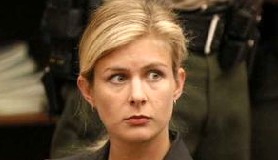
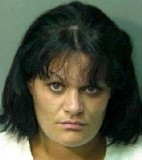
Kristin Rossum
Murderer Megan Huntsman
Murderer · USA · 1996
Megan Huntsman was 40 at sentencing. She was a mother of three children who wer…
6 victims
Megan Huntsman
Murderer · USA · 1996
Megan Huntsman was 40 at sentencing. She was a mother of three children who wer…
6 victims
 Angela Johnson
Murderer · USA · 1993
Angela Jane Johnson was convicted in federal court of aiding and abetting the m…
5 victims
Angela Johnson
Murderer · USA · 1993
Angela Jane Johnson was convicted in federal court of aiding and abetting the m…
5 victims
 Michele Kalina
Murderer · USA · 1996
Michele Kalina pleaded guilty to murder for one of five infants she initially w…
5 victims
Michele Kalina
Murderer · USA · 1996
Michele Kalina pleaded guilty to murder for one of five infants she initially w…
5 victims
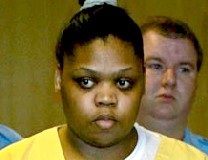 Tiffany Hall
Murderer · USA · 2006
Tiffany Hall was 24 when she was charged in September 2006. She later entered a…
5 victims
Tiffany Hall
Murderer · USA · 2006
Tiffany Hall was 24 when she was charged in September 2006. She later entered a…
5 victims
 Banita Jacks
Murderer · USA · 2007
Banita Jacks was a Washington, DC resident convicted of murdering her four daug…
4 victims
Banita Jacks
Murderer · USA · 2007
Banita Jacks was a Washington, DC resident convicted of murdering her four daug…
4 victims
 Susan Eubanks
Murderer · USA · 1996
Susan Dianne Eubanks, also referred to as Susan Eubanks, was convicted by a jur…
4 victims
Susan Eubanks
Murderer · USA · 1996
Susan Dianne Eubanks, also referred to as Susan Eubanks, was convicted by a jur…
4 victims
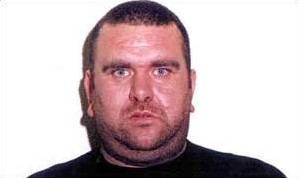 Philip John Smith
Spree killer · United Kingdom · 2000
Philip John Smith was a former fairground worker and taxi driver who was servin…
3 victims
Philip John Smith
Spree killer · United Kingdom · 2000
Philip John Smith was a former fairground worker and taxi driver who was servin…
3 victims
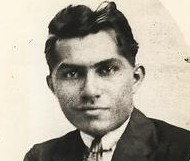 Buck Ruxton
Murderer · United Kingdom · 1935
Buck Ruxton (21 March 1899, Bombay – 12 May 1936, Manchester) was also known as…
2 victims
Buck Ruxton
Murderer · United Kingdom · 1935
Buck Ruxton (21 March 1899, Bombay – 12 May 1936, Manchester) was also known as…
2 victims
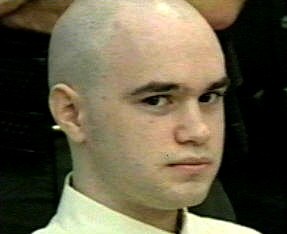 Brandon Wilson
Murderer · USA · 1998
Brandon Wilson was a drifter from Milltown, Wisconsin. He had no permanent plac…
1 victim
Brandon Wilson
Murderer · USA · 1998
Brandon Wilson was a drifter from Milltown, Wisconsin. He had no permanent plac…
1 victim
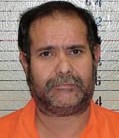 Horacio Reyes-Camarena
Murderer · USA · 1995
Sentenced to death on January 21, 1997 Horacio Alberto Reyes-Camarena was 47 wh…
1 victim
Horacio Reyes-Camarena
Murderer · USA · 1995
Sentenced to death on January 21, 1997 Horacio Alberto Reyes-Camarena was 47 wh…
1 victim
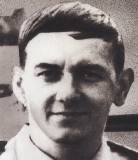 Alain Lamare
Homicide · France · 1978
Alain Lamare (born 1956) was a French gendarme known to the public under the ni…
1 victim
Alain Lamare
Homicide · France · 1978
Alain Lamare (born 1956) was a French gendarme known to the public under the ni…
1 victim
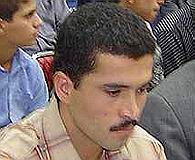 Mohammed Bijeh
Serial killer · Iran · 2004
Mohammed Bijeh (Persian: محمد بيجه ) was an Iranian serial killer. He confessed…
20 victims
Mohammed Bijeh
Serial killer · Iran · 2004
Mohammed Bijeh (Persian: محمد بيجه ) was an Iranian serial killer. He confessed…
20 victims
- Gender
- female
- Country
- USA
- Location
- San Diego, San Diego County, California, USA
- Date of birth
- October 25, 1976
- Age at first offence
- 24
- Characteristics
- parricide, poisoner
- Victim profile
- Greg de Villers, 26 (her husband)
- Method of murder
- Poisoning (lethal dose of fentanyl)
- Date(s) of murder
- November 6, 2000
- Years active
- 2000
- Date of arrest
- June 25, 2001
- Status
-
Life imprisonment
Sentenced to life in prison without parole on December 12, 2002
Case details
Defendant: Kristin Rossum Also identified as: Kristin Margrethe Rossum Date of birth: October 25, 1976 Role: Former toxicologist Victim: Gregory de Villers (also styled Greg deVillers; also styled de Villers)
Timeline
- June 1999 — Kristin Rossum and Gregory de Villers married.
- Mid 2000 (June 2000 described) — Rossum began having a sexual relationship with her supervisor, Michael Robertson.
- Thursday, November 2, 2000 — Gregory de Villers confronted Rossum about suspicions that she was using drugs again and having an affair; he demanded she resign from the Office of the Medical Examiner and threatened to reveal her drug use and affair to her employer.
- Monday, November 6, 2000 — Rossum called her husband’s workplace at 7:42 a.m., left a voicemail message that he was ill and probably would not come to work; she went to work at 8:00 a.m.; her vehicle and schedule were observed by an apartment complex manager and others; Rossum purchased items at a grocery store at 12:41 p.m.; she returned home and later called 911 at 9:22 p.m.; paramedics arrived and found de Villers on the floor with red rose petals and a stem nearby; de Villers was pronounced dead at the hospital at 10:19 p.m.
- Approximately six to twelve hours before his death — Medical examiner testimony described that de Villers had been “unconscious or not breathing very deeply” and was likely immobile and not breathing properly for about six to twelve hours prior to death.
- Thursday, November 9, 2000 — De Villers’s autopsy specimens were transported to the sheriff’s crime lab on the morning of November 9, 2000.
- November 8, 2000 — Russ Lowe called police to report Rossum and Robertson’s affair.
- December (after de Villers’s death) — An audit at the medical examiner’s office found methamphetamine missing from the office’s drug locker and that fentanyl patches and a vial of fentanyl standard were also missing; the missing samples were from cases Rossum had worked on.
- June 25, 2001 — Rossum was arrested and charged with murder.
- March 20, 2006 — A civil jury returned an award against Rossum in a wrongful-death civil case.
- June 13, 2005 — The California Court of Appeal affirmed Rossum’s conviction on direct review and denied a concurrently filed petition for a writ of habeas corpus.
- December 12, 2002 — Rossum was sentenced to life in prison without the possibility of parole.
- April 8, 2009 — The federal district court denied Rossum’s habeas petition.
- April 24, 2009 — The district court granted a certificate of appealability.
- September 23, 2010 — The Ninth Circuit issued its opinion reversing and remanding for an evidentiary hearing.
- September 13, 2011 — The U.S. Court of Appeals withdrew its opinion and replaced it with a one-paragraph statement that under a new U.S. Supreme Court precedent Rossum’s petition was denied.
- August 8, 2007 — The California Supreme Court summarily denied Rossum’s habeas petition in a one-sentence order.
- December 15, 2006 — Rossum filed a petition for a writ of habeas corpus in the California Supreme Court.
Background
Kristin Margrethe Rossum grew up in Claremont, California as the oldest child of Ralph and Constance Rossum, who were professors at Claremont McKenna College. She had two younger brothers, Brent and Pierce. In the 1990s, during high school, she used illegal drugs, including methamphetamine. In 1994, Rossum enrolled part time at the University of Redlands and moved into a dorm on campus. She relapsed and left campus, eventually relocating to Chula Vista, a suburb of San Diego.
Rossum worked as a toxicologist at the San Diego County medical examiner’s office after graduating with honors in 1998. She and Greg deVillers married in 1999. While married, she had an affair with her Australian boss, Michael Robertson, beginning in mid 2000. Robertson returned to Australia after being terminated by the medical examiner’s office.
The offence
Rossum was convicted of the November 6, 2000 murder of her husband Gregory de Villers (also styled Greg deVillers; also styled de Villers). The prosecution’s theory was that Rossum poisoned de Villers using fentanyl, a synthetic opiate. The prosecution alleged the murder was committed by means of poison, citing Cal.Penal Code §§ 187 and 190.2(a)(19).
Rossum told authorities that her husband committed suicide and that she did not take drugs as far as she knew; later, she told paramedics she may have taken oxycodone.
Investigation
After Rossum called 911, paramedics arrived and found Rossum on the phone in the living room. De Villers was found unresponsive on the couple’s bed on which red rose petals were sprinkled; he was pronounced dead on arrival at the hospital. Rossum told authorities that her husband had been depressed and that he had taken depressants.
The medical examiner outsourced the autopsy on de Villers to an outside lab in Los Angeles due to concerns about possible conflict of interest. Tests showed de Villers had seven times the lethal dose of fentanyl in his system. Fentanyl is rarely prescribed, and the Los Angeles lab was described as one of the few that test for it.
Concerns about evidence handling and sample custody arose. De Villers’s autopsy specimens were stored in a refrigerator at the medical examiner’s office for approximately thirty-six hours, and during that period anyone with a key to the building had access. The containers were not sealed; their tops could be pulled off and then replaced.
At trial and in later proceedings, the elevated fentanyl concentrations and medical evidence indicating that de Villers lingered in a state of unconsciousness for several hours created disputed questions about how fentanyl entered his body. Multiple laboratories produced fentanyl concentration levels that varied.
Arrest
Rossum was arrested and charged with murder on June 25, 2001. Her parents paid for her $1.25 million bail and picked her up from the San Diego jail.
Trial
Rossum’s jury trial began in October 2002. The prosecution argued that Rossum poisoned de Villers with fentanyl and possibly after she gave him clonazepam; the defense conceded that fentanyl caused de Villers’s death but argued that de Villers committed suicide because he was despondent over marital problems.
The prosecution contended that Rossum killed her husband to keep him from exposing her affair with Robertson and her methamphetamine use that she stole from the coroner’s lab. The defense argued de Villers was suicidal and poisoned himself.
Testimony included that Jerome de Villers testified it was difficult to believe his brother committed suicide because he hated drugs. An emergency 911 tape was played in court that appeared to indicate Rossum was administering CPR. A VONS card history was discussed in relation to Rossum purchasing a single rose.
In November 2002, Rossum was found guilty of murder. In the habeas corpus discussion, Rossum was described as convicted of murdering her husband with special circumstance that the murder was committed by means of poison.
Sentencing
On December 12, 2002, Rossum was sentenced to life in prison without the possibility of parole. She was taken back to the San Diego jail before she could be transferred to the Central California Women’s Facility in Chowchilla. At sentencing, the judge ordered Rossum to pay a $10,000 fine.
Appeals
Direct appeal and state habeas
On June 13, 2005, the California Court of Appeal affirmed Rossum’s conviction on direct review and denied a concurrently filed petition for a writ of habeas corpus. The California Supreme Court summarily denied her petition for review of her direct appeal.
On December 15, 2006, Rossum filed a petition for a writ of habeas corpus in the California Supreme Court. The petition asserted an ineffective assistance of counsel claim based on failure to have de Villers’s autopsy samples tested for fentanyl metabolites. The California Supreme Court summarily denied the habeas petition in a one-sentence order on August 8, 2007.
Federal habeas and remand
Two days later, Rossum filed a federal habeas petition under 28 U.S.C. § 2254. The district court denied the petition on April 8, 2009. The Ninth Circuit reversed and remanded for an evidentiary hearing on September 23, 2010, concluding that Rossum was entitled to an evidentiary hearing on her Sixth Amendment effective assistance claim. The Ninth Circuit concluded that counsel’s concession without testing for fentanyl metabolites appeared deficient under Strickland and that prejudice could not be determined from the record without testing, requiring an evidentiary hearing.
On September 13, 2011, the U.S.
Outcome
Rossum remained convicted of murdering her husband and was serving a life sentence in a California prison.
In a separate wrongful-death civil case, the family sued Rossum and San Diego County in 2006. On March 25, 2006, a San Diego jury ordered Rossum to pay more than $100 million in punitive damages, and San Diego County was ordered to pay $1.5 million. A judge later reduced the punitive damages award to $10 million while allowing a $4.5 million compensatory award to stand.
Other details
911 call and scene evidence
Rossum called 911 at 9:22 p.m. An operator told her to move de Villers’s body to the floor and attempt CPR. Paramedics arrived and found de Villers on the floor with red rose petals and a stem strewn around him. De Villers was pronounced dead at 10:19 p.m. Rossum initially told paramedics that he had not taken any drugs as far as she knew, but later told them he may have taken oxycodone.
A disputed point at trial concerned the rose petals and their source, including an argument that the rose petals came from the sole remaining rose of a bouquet de Villers had given Rossum for her birthday.
Motive theory and access to fentanyl
Evidence included that Rossum and her love interest worked at the San Diego County Office of the Medical Examiner, and both were connected to fentanyl testing and drug standards. The OME audited impounded drugs after de Villers’s death and determined that fifteen fentanyl patches and ten milligrams of fentanyl standard were missing. Rossum had logged in the fentanyl standard and had worked on each of the three cases in which the missing fentanyl patches had been impounded. The OME also determined that quantities of methamphetamine, clonazepam, and oxycontin were missing.
Drug and medical evidence
Medical examiner testimony described early bronchopneumonia in de Villers’s lungs and approximately 550 milliliters of urine in his bladder. Those findings supported a conclusion that de Villers had been immobile and not breathing properly for approximately six to twelve hours prior to death.
Dr. Theodore Stanley testified about fentanyl’s properties and that fentanyl begins to affect respiration at a concentration level in blood of 2 ng/mL, with 4 ng/mL described as causing about half of opioid-naive individuals to breathe very slowly or not at all. At 57.3 ng/mL, Dr. Stanley testified no opioid-naive individual would be conscious or breathing. The fentanyl concentration levels varied among labs.
Quotation
Rossum stated in a television interview months after de Villers’s death: “he was making a big deal of the last rose standing. I think he was just making a statement that he knew our relationship was over.”
Spotted an error, or have more information about this case?