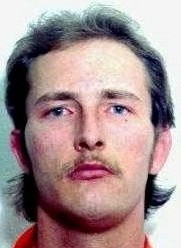
Robert James Anderson
Murderer Brian Kevin Rosenfeld
Murderer · USA · 1985
Brian Kevin Rosenfeld Brian Kevin Rosenfeld was sentenced to three concurrent l…
23 victims
Brian Kevin Rosenfeld
Murderer · USA · 1985
Brian Kevin Rosenfeld Brian Kevin Rosenfeld was sentenced to three concurrent l…
23 victims
 Russell Ellwood
Murderer · USA · 1991
Russell Ellwood was a former taxi driver. Authorities suspected him of killing…
20 victims
Russell Ellwood
Murderer · USA · 1991
Russell Ellwood was a former taxi driver. Authorities suspected him of killing…
20 victims
 Robert Martines Perez
Murderer · USA · 1994
Name: Robert Martines Perez · Other name used in proceedings: Robert Martinez P…
15 victims
Robert Martines Perez
Murderer · USA · 1994
Name: Robert Martines Perez · Other name used in proceedings: Robert Martinez P…
15 victims
 Billy Frank Vickers
Murderer · USA · 1993
Billy Frank Vickers Vickers was executed by lethal injection in Texas on Januar…
14 victims
Billy Frank Vickers
Murderer · USA · 1993
Billy Frank Vickers Vickers was executed by lethal injection in Texas on Januar…
14 victims
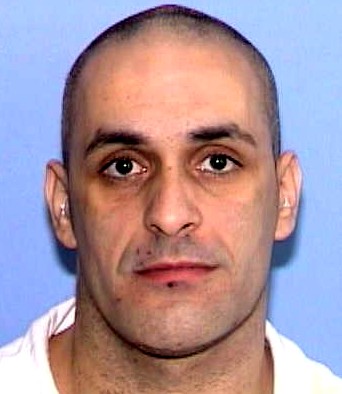 Steven Long
Murderer · USA · 2005
Steven Long was a male. He was White and had brown hair and brown eyes. He was…
1 victim
Steven Long
Murderer · USA · 2005
Steven Long was a male. He was White and had brown hair and brown eyes. He was…
1 victim
 Karl LaGrand
Murderer · USA · 1982
Karl LaGrand was convicted of murder, attempted murder in the first degree, att…
1 victim
Karl LaGrand
Murderer · USA · 1982
Karl LaGrand was convicted of murder, attempted murder in the first degree, att…
1 victim
 Thomas Lee Royal
Murderer · USA · 1991
Thomas Lee Royal was sentenced to death for the February 21, 1994 capital murde…
2 victims
Thomas Lee Royal
Murderer · USA · 1991
Thomas Lee Royal was sentenced to death for the February 21, 1994 capital murde…
2 victims
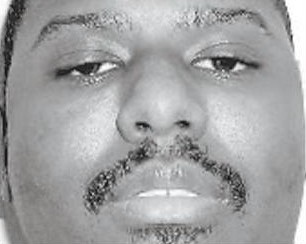 Christopher Goins
Mass murderer · USA · 1994
Christopher Goins · October 14, 1994 — Christopher Goins and his friend Barry S…
5 victims
Christopher Goins
Mass murderer · USA · 1994
Christopher Goins · October 14, 1994 — Christopher Goins and his friend Barry S…
5 victims
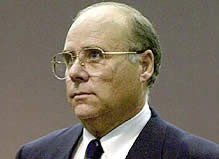 John Edward Robinson
Serial killer · USA · 1984
John Edward Robinson (born December 27, 1943) was an American serial killer. He…
8 victims
John Edward Robinson
Serial killer · USA · 1984
John Edward Robinson (born December 27, 1943) was an American serial killer. He…
8 victims
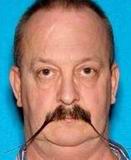 William Clyde Gibson
Serial killer · USA · 2002
October 26, 2013 — A jury in New Albany found William Clyde Gibson guilty of th…
3 victims
William Clyde Gibson
Serial killer · USA · 2002
October 26, 2013 — A jury in New Albany found William Clyde Gibson guilty of th…
3 victims
- Gender
- male
- Country
- USA
- Location
- Potter County, Texas, USA
- Date of birth
- May 29, 1966
- Age at first offence
- 26
- Characteristics
- kidnapping, rape, child killer
- Victim profile
- Audra Ann Reeves (female, 5)
- Method of murder
- D rowning in a bathtub
- Date(s) of murder
- June 9, 1992
- Years active
- 1992
- Date of arrest
- Same day
- Status
-
Executed
Executed by lethal injection on 20 July 2006 in Huntsville, Texas
Case record: Robert James Anderson
Background
Robert James Anderson was executed in Huntsville, Texas.
Audra Ann Reeves was the five-year-old victim whose life was taken in Amarillo.
Grace Lawson was Audra Ann Reeves’s grandmother. Clarence Reeves Jr. was Audra Ann Reeves’s father.
Lawson described her granddaughter, Audra Reeves, as “just happy always had a little smile, she was just a beautiful little girl.” Lawson said that when Audra brought flowers she would say, “Aren't they pretty? Aren't they pretty?” Lawson said that after Audra wanted to stay with her, Lawson told Audra to visit with her father, and that Audra “was up there exactly one week” when she “was brutally killed.”
Lawson said that she felt guilty because “they had come through here and she wanted to stay with me,” and that Lawson told Audra, “No, you go on and visit with daddy.”
Lawson said that after Audra’s death she had continued fears about Anderson as long as he remained alive, including the possibility that he “could escape or what have you,” and the fear that if he did the same thing to “another child it would have killed us.”
Lawson said she was “not a violent person at all” but looked forward to closure knowing Anderson would die for what he did.
Lawson said she “couldn't eat or sleep for a while” during the trial and after which years of state and federal court appeals “always jolted them back to the gruesome details of Audra's death.”
Lawson said she planned to do “a lot of praying” if closure did not come with Anderson’s execution.
Anderson’s father’s driving while intoxicated convictions and a prison sentence were described in connection with Lawson’s statement that “Audra's father thinks about the details of her death constantly and was determined to "get to" Anderson any way he could.” Lawson said his thoughts “led him down a spiral of alcoholism and driving while intoxicated convictions, and he is now serving time in prison.” Lawson said Audra’s mother had served time in prison for stabbing someone.
Tom Kelley was described as a spokesman with the Texas Attorney General's Office.
Chuck Slaughter was described as the Potter County assistant district attorney who prosecuted Anderson.
Clinton Averitte served as a U.S. Magistrate.
The offence
Audra Ann Reeves was abducted as she walked home from a park.
Anderson admitted abducting Reeves as she walked home from a San Jacinto park. Anderson sexually assaulted her, beat her, stabbed her, and drowned her.
Anderson admitted to ravaging Audra in his Amarillo home.
Anderson tried to rape Audra, choked her, beat her with a pipe, a stool and his hand, and stabbed her with a paring knife and a barbecue fork, “despite the little girl's pleas for mercy,” and then drowned her.
Anderson stuffed Reeves’s body in a Styrofoam cooler and dumped the cooler in a Dumpster in the 400 block of South Tennessee Street.
Anderson was apprehended when a neighbor identified him as the man seen pushing the cooler through the area in a grocery cart.
In court records, Anderson’s conduct was described as abducting Audra from in front of his home as she returned from playing with other children at a park, forcing her to accompany him into the house, trying to rape her, then beating and stabbing her, and then persuading her to take a bath to clean blood off her battered body before drowning her.
Anderson admitted that after the brutal assault he stuffed the girl into the cooler, that she tried to crawl out, and that he drowned her.
The execution materials also described the sequence as: after attempting to rape her, Anderson choked her, beat her with a stool, and stabbed her with a paring knife and a barbecue fork; he then drowned her in the bathtub; he placed her body in a foam ice chest; and, using a grocery cart to transport it, left it in a dumpster behind another residence.
Neighbors observed a man pushing a grocery cart with a styrofoam ice chest inside, and minutes later one of the neighbors found the ice chest in a dumpster and discovered that it contained the body of a five-year-old girl.
Investigation
June 9, 1992 events involving the body in a cooler
On 9 June 1992, neighbors observed a man pushing a grocery cart with a styrofoam ice chest inside.
Minutes later, Lewis Martin found the ice chest in a dumpster and discovered that the ice chest contained the body of a five-year-old girl.
Martin called the police, and officer Barry Carden was dispatched to look for the suspect.
The initial description of the suspect was a white male, about thirty years of age, wearing a black shirt, dark jeans, tennis shoes, and an orange baseball cap.
Within ten minutes after receiving the dispatch, Carden approached Anderson, who matched the description except for the shirt.
Carden asked Anderson for identification and a residential address, both of which Anderson provided.
Anderson asked why he had been stopped.
Carden replied that he was investigating an incident that occurred a few blocks away.
Carden then asked Anderson where he was going and where he had been.
Anderson answered that he had pushed a grocery cart back to the Homeland store on nearby Western street.
At this point, Carden asked Anderson not to say anything else and further asked Anderson if he would be willing to go back to the scene of that incident so that the witnesses could take a look at him.
Anderson agreed to go, and Carden testified that he would have detained him for that purpose had he refused.
Anderson sat in the back seat of the patrol car and was driven to the witnesses' location.
The witnesses identified Anderson as the individual seen pushing the grocery cart containing a styrofoam ice chest.
At that point, Anderson was handcuffed, advised of his constitutional rights, and transported to the Special Crimes Unit.
Upon arrival at the Special Crimes Unit, physical samples were taken from Anderson with his consent.
He was interrogated and gave both oral and written confessions.
Miranda warnings were given and consent forms were signed prior to obtaining these statements.
The police also obtained Anderson’s consent, a valid third party consent, and a warrant to search Anderson’s home.
Anderson wrote that “It's scary sometimes, you know. If I was to be found innocent, it would happen again.”
Anderson’s written confession included that he kidnapped Audra from in front of his home as she returned from playing with other children at a park, took her inside, tried to rape her, beat and stabbed her, stuffed her into the cooler while she tried to crawl out, persuaded her to take a bath to clean the blood off her battered body, and then drowned her.
Detectives searching Anderson’s home found a piece of the girl's hair barrette in a bathroom trash can, with the other piece in the ice chest.
Arrest
After being positively identified by witnesses, Anderson was handcuffed, advised of constitutional rights, and transported to the Special Crimes Unit.
He was arrested as he was walking back home after witnesses had provided descriptions to police and made a positive identification.
Interrogation and confessions
Anderson gave oral and written confessions after the physical samples were taken with his consent.
He gave both oral and written confessions detailing how he kidnapped, sexually assaulted, choked and gagged, stabbed, beat and drowned the girl.
In his admissions, he said he had forced the girl to accompany him into the house and tried to rape her; he then beat and stabbed her; and, when she was still alive, he drowned her in a bathtub.
He admitted that he stuffed her body into a large foam cooler, pushed the cooler down the street in a grocery cart, and dumped it in a trash bin.
He said that after the brutal assault, he stuffed the girl into the cooler, she tried to crawl out, and he persuaded her to take a bath to clean the blood off her battered body before drowning her.
Trial
Anderson was convicted and sentenced to death for the murder of Audra Ann Reeves.
A Potter County jury convicted Anderson and sentenced him to death in 1993.
The verdict and sentence were based on capital murder during the course of aggravated sexual assault and aggravated kidnapping.
The jury took less than 15 minutes to return a guilty verdict and less than 30 minutes to determine Anderson should die.
Sentencing
Anderson was sentenced to death.
The appeal record described a request for a jury instruction about parole eligibility for a life sentence.
In points of error one and two, Anderson complained about the trial court’s refusal to submit a jury instruction stating that, if given a life sentence, he would be ineligible for parole for a minimum of thirty-five calendar years.
Anderson claimed this failure violated the cruel and unusual punishments prohibition of the Eighth Amendment and the due process clause of the Fourteenth Amendment.
The Court of Criminal Appeals stated that it ruled adversely to Anderson’s position in Smith v. State, 898 S.W.2d 838 (Tex.Crim.App.1995) (plurality opinion), cert. denied, 516 U.S. 843, 116 S.Ct. 131, 133 L.Ed.2d 80 (1995), and Broxton v. State, 909 S.W.2d 912, 919 (Tex.Crim.App.1995).
During closing argument, the prosecutor and defense and the court addressed references to parole:
- PROSECUTOR: “Don't give him the opportunity to hurt anybody else in society. Don't give him a chance to do anything like this to anybody and whether it be a check writer or a burglar in prison or your children or my children if and when he gets out.”
- DEFENSE: “Your Honor, we object to that as a comment on the Board of Pardons and Paroles.”
- COURT: “The jury's been instructed. Mr. Hill, you have two minutes left.”
- PROSECUTOR: “Thank you, Your Honor. For whatever reason, for whatever reason that may be. Don't let that stay on-can you imagine what you would feel like later? We can talk about compassion for him but can you imagine how each of us would feel if we were ever in a position to find out that this scorpion did it again, whether it be in prison or somewhere else?”
The Court of Criminal Appeals stated that it agreed that emphasized portions were improper references to parole per McKay v. State.
The Court of Criminal Appeals held that points of error one and two were overruled.
In point of error three, Anderson contended that the trial court’s written instruction concerning parole violated Article IV § 11 of the Texas Constitution.
The trial court instructed the jury: “During your deliberations you will not consider any possible action of the Board of Pardons and Paroles or the Governor.”
The Court of Criminal Appeals held that point of error three was overruled.
Appeals
Anderson’s appeal was automatic.
Anderson presented twenty-six points of error in the appeal.
Direct appeal: Anderson v. State
In Anderson v. State, 932 S.W.2d 502 (Tex.Cr.App.1996) (Direct Appeal), the Court of Criminal Appeals affirmed the conviction and sentence.
The Court of Criminal Appeals held that:
- a defendant who agreed to accompany an officer to witnesses’ location was not under arrest;
- there existed probable cause to believe the defendant had committed murder and was about to escape, justifying warrantless arrest;
- prosecutors’ references to parole did not require submission of an instruction on parole eligibility;
- the death penalty had not been arbitrarily imposed due to the many different schemes that had existed since 1989; and
- assuming that the word “or” in the Texas Constitution requires disjunctive reading of the words “cruel” and “unusual,” the death penalty was neither.
The judgment was affirmed.
Clinton, J. concurred in the result.
Baird, J. filed a concurring opinion.
Overstreet, J. filed a dissenting opinion.
Overruling of specific points described in the opinion
The Court of Criminal Appeals overruled:
- point of error twenty regarding Fourth Amendment claims about pretrial identifications, concluding Anderson was not “seized” prior to witnesses’ identifications;
- points of error twenty-two and twenty-three regarding Sixth and Fifth Amendment claims and due process in obtaining witness identifications;
- points of error twenty-four and twenty-five regarding claims related to physical samples, confessions, and evidence obtained from Anderson’s residence, holding the arrest was legal and evidence was not the fruit of an illegal arrest;
- points of error one and two about refusal to submit a parole ineligibility instruction;
- point of error three regarding the trial court’s written instruction on not considering possible action of the Board of Pardons and Paroles or the Governor;
- point of error ten about Penry issues, holding Eighth Amendment did not require assigning a burden of proof to Penry issues;
- points of error nine about comparative proportionality review, rejecting the due process argument;
- points of error twelve through fifteen about the constitutionality and arbitrariness of the death penalty as administered.
Federal habeas and waiver of further appeals
In 2004, Anderson’s federal writ of habeas corpus was denied.
Anderson filed an appeal to the U.S. Fifth Circuit Court of Appeals.
Anderson decided to waive all further federal appeals.
After a psychological evaluation found Anderson competent to waive his appeals, the Fifth Circuit dismissed his appeal in February 2005.
In 2004, Anderson sought to waive all further federal appeals.
After a psychological evaluation found him mentally competent to waive his appeals, he dismissed his appeal with the U.S. 5th Circuit Court of Appeals in 2005.
Competency hearing and the federal judge
In a competency hearing before U.S. Magistrate Clinton Averitte, Anderson said he dedicated himself to a Christian way of life in prison and stated that God had forgiven him for the killing.
Anderson told Averitte: “God has granted me peace that I didn't have before,” “I don't want to hurt anybody any longer, and I want to be executed.”
In his recommendation to deny Anderson’s initial federal appeal, U.S. Magistrate Clinton Averitte cited the “particularly egregious” nature of the crime and wrote:
“His persistence in carrying out this assault and murder over a period of at least 45 minutes, leaving no major part of her body that did not sustain wounds, and undaunted by a plea for mercy, would support a finding of sufficient aggravation, in and of itself, to support imposition of the death penalty,”
The appeal was denied.
Final execution-related statements and actions
Anderson voluntarily headed to the Texas death chamber on the day of his execution and asked that no new appeals be filed to try to block the execution.
Anderson told in a recent death row interview: “The only way I want this stopped is if they give a moratorium to the death penalty.”
Anderson said: “There was nobody else, just me,” “She was totally an innocent victim.”
Anderson said: “My whole life is a regret,” “ I should have been in prison when I was 15.”
Anderson told what was described as his victim often appeared to him in nightmares, and that he had received repeated visits from his young victim on the anniversary of her death.
Anderson said in the context of those experiences: “She showed up this year and smiled at me and told me I was coming home,” “That was really weird.”
Anderson said in the interview from death row: “A messed-up day,” “A lot of things went wrong.”
Anderson attributed the day of the killing to an argument earlier that day with his wife of about eight months.
Anderson said: “The whole day revolved around the fight,” “She stormed out of the house and said when she returned she didn't want to find me.”
Anderson said: “The whole day had slipped me mind ... for about an hour or so, I didn't understand what the cops were asking me. Then suddenly, it just snapped ... everything came flooding back, all at once.”
Anderson said: “I am sorry for the pain I have caused you,” “I have regretted this for a long time. I am sorry. I only ask that you remember the Lord because He remembers us and He forgives us if we ask Him.”
Anderson also apologized to his own family for “the pain of all the years and for putting you through all the things we had to go through.”
Anderson prayed as the lethal injection began.
Anderson was pronounced dead at 6:19 p.m.
Other details
Anderson’s age, relationships, and victim-related timeline details
At the time of the execution, Anderson was described as 40.
On 9 June 1992, Anderson was described as 26 and Audra Reeves as five.
Audra Reeves was living with her mother in Florida and had just arrived in Amarillo days earlier to spend the summer with her father.
The offence was tied to an argument with Anderson’s wife of about eight months.
Audra Reeves was playing outside on June 9, 1992, when Anderson snatched her.
Prior acts and family testimony
The materials described Anderson as having a history of sexual offenses involving children that began as a teenager in Tulsa, Okla., and that he had been in and out of centers for deviant behavior to deal with his obsession for young girls.
Anderson’s stepsister, Rebekah Anderson, testified that when she was five years old Anderson had her sit on his lap and then unzipped his pants and removed her shorts.
Rebekah’s sister, Delores Davis, testified that when Rebekah was three, she saw Anderson with his hand beneath Rebekah’s skirt as she sat on his lap.
Anderson’s 11-year-old niece, Charity Anderson, testified that about six months before the murder, Anderson babysat for Charity and her brother and sister; that he frequently invited Charity’s 8-year-old sister, Raven, to sit on his lap; and that on one occasion Anderson held Charity’s 6-year-old brother, Jeremiah, by the throat for several minutes.
Anderson’s biological sister, Myra, testified that Anderson sexually assaulted her from age 7 to age 13; forced her to engage in oral sex; attempted to have intercourse with her; pushed her down a hill once; and once held her down and hit her repeatedly on her knees with a baseball bat.
Another stepsister, Helena Garza, testified that Anderson began fondling her when she was six years old; when she was ten, Anderson forced her to have intercourse and perform oral sex about once a week, for about a year, by striking or threatening her with a baseball bat; and that Anderson raped Helena when she was 15 or 16.
Myra’s friend, Carla Burch, testified that when she was 12 she spent the night at the Anderson home; that she was awakened during the night by someone touching her face; that Anderson was standing in front of her wearing only a towel; that he had pulled the covers off Carla and raised her nightgown; and that he asked her to come to his room but she refused.
Anderson’s ex-wife, Debbie Kay Anderson, testified that Anderson was physically abusive toward her and that he often padlocked her in their apartment when he left.
Debbie also testified that when she was babysitting a 2-year-old girl, she heard the girl crying, walked into the room, saw the girl with her diaper removed, and saw Anderson with his pants down; and that Debbie then began choking and hitting her, telling her not to tell anyone.
In-prison attack and motive claimed
In 1998, Anderson survived an attack by a fellow death row inmate.
The inmate stabbed him 67 times with a shank.
Anderson said the attack was the result of race-related prison gang extortion efforts and not related to his crime.
Anderson described that “My whole life is a regret” and discussed the day of the killing as “a messed-up day.”
Execution setting
The execution was described as scheduled for 6 p.m. in Huntsville.
Anderson had a written request to waive further appeals and to be executed.
Lawson planned to drive to Huntsville to watch the execution.
Additional procedural and narrative elements in court coverage
The Court of Criminal Appeals described that appellant’s appeal was automatic under Art. 37.071(h).
It described appellant presented twenty-six points of error and that the court would affirm.
The Court of Criminal Appeals included analysis about whether appellant was seized prior to identifications.
The Court of Criminal Appeals discussed the standard for Fourth Amendment custody and seizure, including the reasonable person test, and whether the request to remain silent communicated an arrest intent.
The Court of Criminal Appeals discussed that officers’ subjective intent was irrelevant unless communicated and cited authority for voluntariness of accompanying officers when there were no threats and the transport was voluntary.
The Court of Criminal Appeals also addressed claims about lineup identifications and counsel attachment timing, stating that Sixth Amendment right to counsel did not attach until after commencement of adversary proceedings.
The Court of Criminal Appeals addressed Fifth Amendment right to counsel as offshoot of the right against self-incrimination and referenced U.S. Supreme Court holdings that a lineup is not “testimonial.”
The Court of Criminal Appeals rejected the due process argument as inadequately briefed.
It addressed challenges to evidence obtained from samples and confessions and held claims were waived for inadequate briefing regarding other constitutional and statutory provisions.
The Court of Criminal Appeals discussed that evidence was not fruit of an illegal arrest, concluding that once witnesses identified appellant, probable cause existed and the subsequent arrest was proper.
Timeline
- 9 June 1992 — Neighbors observed a man pushing a grocery cart with a styrofoam ice chest; Lewis Martin found the ice chest in a dumpster and discovered the body of a five-year-old girl; Barry Carden was dispatched; Anderson was approached, identified by witnesses after transportation to the witnesses’ location, handcuffed, advised of constitutional rights, and transported to the Special Crimes Unit; physical samples were taken with Anderson’s consent; Anderson gave oral and written confessions.
- 1993 — A Potter County jury convicted Anderson and sentenced him to death.
- 1996 — The Texas Court of Criminal Appeals affirmed Anderson’s conviction and sentence.
- 1997 — The U.S. Supreme Court declined to review Anderson’s case.
- 1998 — Anderson survived an attack by a fellow death row inmate who stabbed him 67 times with a shank.
- 1999 — The state criminal appeals court denied Anderson’s request for a retrial.
- 2004 — Anderson sought to waive all further federal appeals; a U.S. district court denied his federal writ of habeas corpus; a competency hearing occurred before U.S. Magistrate Clinton Averitte; Averitte recommended denial of the initial federal appeal.
- 2005 — After a psychological evaluation found Anderson competent to waive appeals, the U.S. Fifth Circuit dismissed Anderson’s appeal.
- 20 July 2006 — Anderson was executed by lethal injection in Huntsville, Texas; he was pronounced dead at 6:19 p.m.

Spotted an error, or have more information about this case?