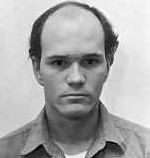
Karl LaGrand
Murderer Ervil LeBaron
Murderer · USA · 1972
Ervil Morrell LeBaron (1925 to August 16, 1981) was the leader of a polygamous…
35 victims
Ervil LeBaron
Murderer · USA · 1972
Ervil Morrell LeBaron (1925 to August 16, 1981) was the leader of a polygamous…
35 victims
 Brian Kevin Rosenfeld
Murderer · USA · 1985
Brian Kevin Rosenfeld Brian Kevin Rosenfeld was sentenced to three concurrent l…
23 victims
Brian Kevin Rosenfeld
Murderer · USA · 1985
Brian Kevin Rosenfeld Brian Kevin Rosenfeld was sentenced to three concurrent l…
23 victims
 Marvin Gray
Murderer · USA · 1975
Marvin Gray was convicted killer who claimed responsibility for 23 slayings and…
23 victims
Marvin Gray
Murderer · USA · 1975
Marvin Gray was convicted killer who claimed responsibility for 23 slayings and…
23 victims
 Yahweh ben Yahweh
Murderer · USA · 1980
Yahweh ben Yahweh was born and legally named Hulon Mitchell Jr. (October 27, 19…
23 victims
Yahweh ben Yahweh
Murderer · USA · 1980
Yahweh ben Yahweh was born and legally named Hulon Mitchell Jr. (October 27, 19…
23 victims
 Russell Ellwood
Murderer · USA · 1991
Russell Ellwood was a former taxi driver. Authorities suspected him of killing…
20 victims
Russell Ellwood
Murderer · USA · 1991
Russell Ellwood was a former taxi driver. Authorities suspected him of killing…
20 victims
 Beauford White
Mass murderer · USA · 1977
Beauford White was executed by electrocution in Florida on August 28, 1987. Whi…
6 victims
Beauford White
Mass murderer · USA · 1977
Beauford White was executed by electrocution in Florida on August 28, 1987. Whi…
6 victims
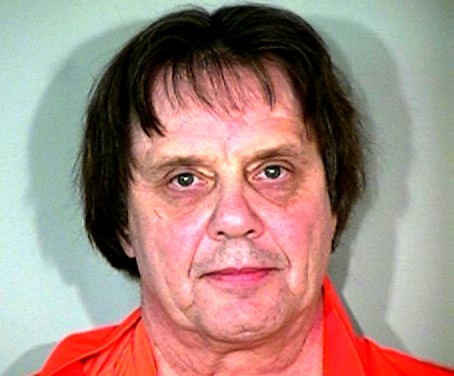 David Gulbrandson
Murderer · USA · 1991
David Gulbrandson and the 45-year-old female victim operated a photography busi…
1 victim
David Gulbrandson
Murderer · USA · 1991
David Gulbrandson and the 45-year-old female victim operated a photography busi…
1 victim
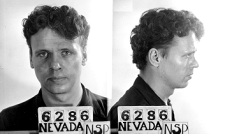 Ferdinand Bourdlais
Murderer · 1952
Name: Ferdinand Bourdlais · Also known as: Vernon Bourdlais · Age at death: 27…
1 victim
Ferdinand Bourdlais
Murderer · 1952
Name: Ferdinand Bourdlais · Also known as: Vernon Bourdlais · Age at death: 27…
1 victim
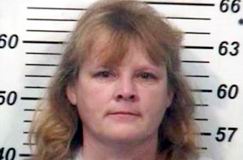 Judith Hawkey
Murderer · USA · 2003
Judith Hawkey was convicted for orchestrating the death of her former husband,…
1 victim
Judith Hawkey
Murderer · USA · 2003
Judith Hawkey was convicted for orchestrating the death of her former husband,…
1 victim
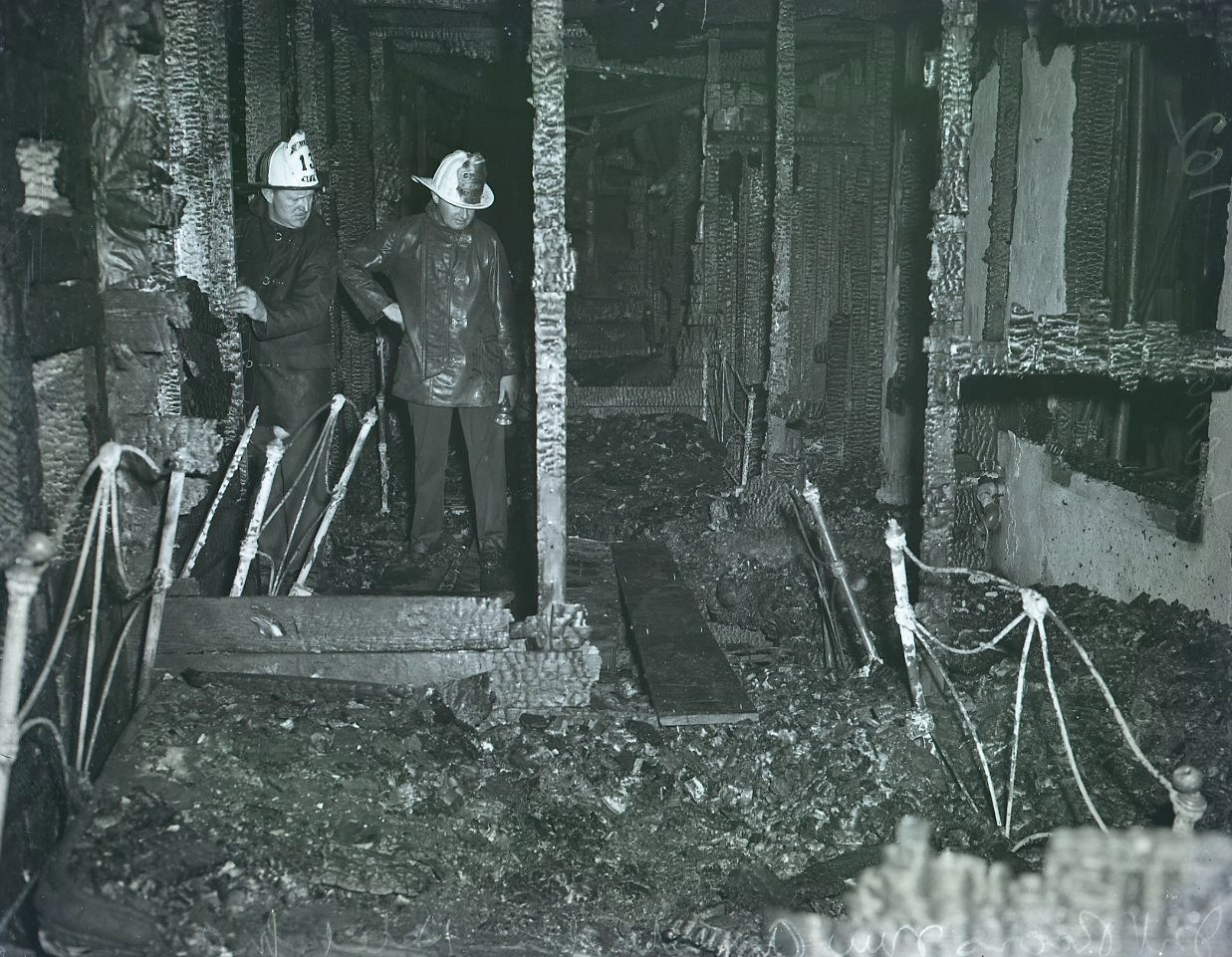 George Holman
Mass murderer · USA · 1944
George Holman was described as a pyromaniac and an arsonist blamed for a deadly…
22 victims
George Holman
Mass murderer · USA · 1944
George Holman was described as a pyromaniac and an arsonist blamed for a deadly…
22 victims
- Gender
- male
- Country
- USA
- Location
- Pima County, Arizona, USA
- Date of birth
- October 20, 1963
- Age at first offence
- 19
- Characteristics
- bank robbery
- Victim profile
- Kenneth Hartsock, 63 ( branch manager )
- Method of murder
- St abbing with a letter opener
- Date(s) of murder
- January 7, 1982
- Years active
- 1982
- Date of arrest
- Same day
- Status
-
Executed
Executed by lethal injection in Arizona on February 24, 1999
Case details
Karl LaGrand was convicted of murder, attempted murder in the first degree, attempted armed robbery, and two counts of kidnapping arising from a robbery at the Valley National Bank in Marana, Arizona, on January 7, 1982.
STATUS and procedural posture
Karl LaGrand was sentenced to death by December 14, 1984. His execution occurred by lethal injection in Arizona on February 24, 1999.
Timeline
- January 7, 1982 — Karl LaGrand and Walter LaGrand entered the Valley National Bank in Marana intending to rob it; they armed themselves with a toy pistol and forced bank employees into an office, bound them, and attacked them; Ken Hartsock died from 24 stab wounds and Dawn Lopez survived after being stabbed.
- January 31, 1984 — Trial started.
- February 17, 1984 — Verdict.
- December 14, 1984 — Sentencing.
- 1987 — The Arizona Supreme Court affirmed the convictions and sentences in State v. LaGrand (Karl) and related cases.
- 1989 — Post-conviction relief petitions in the Arizona Superior Court were denied.
- 1991 — The United States Supreme Court denied review.
- March 22, 1996 — United States Court of Appeals for the Ninth Circuit argued the appeals in LaGrand’s federal habeas matters.
- January 16, 1998 — United States Court of Appeals for the Ninth Circuit decided the consolidated appeals in 133 F.3d 1253.
- 1998 — A death warrant was issued scheduling execution for February 24, 1999.
- February 23, 1999 — United States Court of Appeals for the Ninth Circuit submitted 173 F.3d 1144.
- February 24, 1999 — United States Court of Appeals for the Ninth Circuit filed 173 F.3d 1144 and amended an order and opinion, addressing the death warrant method choice.
- February 24, 1999 — Karl LaGrand was executed by lethal injection in Arizona.
The offence
On the morning of January 7, 1982, Karl LaGrand and his brother Walter entered the Valley National Bank in Marana. They were armed with a toy pistol. Karl attempted to force Ken Hartsock, the 63-year-old branch manager, to open the vault. Hartsock could not open the vault because he had only half of the combination.
The brothers forced Hartsock and Dawn Lopez, a bank clerk, into Hartsock’s office and bound them. They threatened Hartsock with a letter opener and began beating him. Hartsock died from 24 stab wounds.
Karl and Walter tried to kill Lopez by stabbing her six times. The LaGrands then fled the bank. Dawn Lopez survived being stabbed multiple times and later was taken to University Hospital in Tucson.
In additional factual description during later proceedings, Lopez testified she heard someone twice say, “Just make sure he's dead.” The description also recorded that Hartsock’s throat was slashed and he suffered 23 other knife wounds, at least 6 of which could have been fatal, and that Lopez was stabbed seven times in the head, side and shoulder but survived.
In federal habeas fact discussion, the Arizona Supreme Court’s account also stated that after the LaGrands gagged and bound the victims with bandannas and black electrical tape, Walter accused Hartsock of lying and put a letter opener to his throat, threatening to kill him if he was not telling the truth. Lopez and Hartsock were gagged with bandannas.
Background
Karl LaGrand had first gotten in trouble with the law at age 9, when he stole $9.69 from a store in Sierra Vista and a pair of shoes from another store two months later.
Karl and Walter also set fire to a golf course, which did $20,000 damage, while the family lived at a military post in Texas.
Karl and Walter were convicted of the armed robbery of 3 Tucson supermarkets in a 6-day period in 1981, and both were imprisoned at that point. After their release, they intended to rob the bank quickly to address money woes.
In the federal habeas discussion about ineffective assistance and mitigation, Karl was 18 at the time of the crimes and Walter was 19, and mitigating factors included defendants’ ages, their prior home lives, and their remorse.
Investigation
Bank manager Ken Hartsock showed up at the bank and raised U.S. and Arizona flags outside to be raised for the day.
Dawn Lopez arrived for work at the bank at approximately 8:00 a.m. When she arrived she noticed three vehicles in the parking lot: a motor home; a truck belonging to Ken Hartsock; and a car she did not recognize described as white or off-white with a brown top. Because Lopez believed that Hartsock might be conducting business and desire some privacy, she left the parking lot and drove around Marana for several minutes. She returned and noticed Hartsock standing by the bank door with another man she did not recognize. Walter then asked Lopez what time the bank opened, and she replied, “Ten o'clock.”
Lopez entered the bank and saw Hartsock by the vault with Karl LaGrand. Karl told Lopez to sit down and opened his jacket to reveal a gun later found by police to be a toy pistol. Walter then stood by the vault. Lopez testified that Walter said, “If you can't open it this time, let's just waste them and leave.”
Wilma Rogers arrived at the bank at approximately 8:10 a.m. She noticed two strange vehicles in the parking lot and wrote down the license plate numbers of the two unknown vehicles. She telephoned the bank; Lopez answered after the gag was removed, with her hands still tied. Karl held the receiver to Lopez’ ear and listened to the conversation. Rogers asked for Hartsock, but Lopez denied that he was there, which Rogers found odd because she had seen his truck in the bank parking lot. Rogers told Lopez that her car headlights were still on, and Rogers told Lopez that if she did not go turn them off, then she would call the sheriff. Rogers then called the town marshal’s office after additional efforts found Hartsock not there.
After the first telephone call, the LaGrands decided to have Lopez turn off her headlights. Her hands were freed and she was told to go turn off the lights, but she was warned that “If you try to go--if you try to leave, we'll just shoot him and leave. We're just going to kill him and leave.” Lopez returned to the bank, and her hands were retied. Hartsock was still bound and gagged in the same chair.
Lopez testified that soon thereafter she heard sounds of a struggle. She broke the tape around her hands and turned to help him. She saw Hartsock struggling with two men. Karl was behind Hartsock holding him by the shoulders while Walter was in front. Lopez testified that Walter then came toward her and began stabbing her. Lopez fell to the floor where she could see only scuffling of feet and Hartsock lying face down on the floor. She heard someone twice say, “Just make sure he's dead.”
Law enforcement personnel quickly identified the LaGrands as suspects. By 3:15 p.m., police traced the license plate number to a white and brown vehicle owned by the father of Walter’s girl friend, Karen Libby. The apartment where the LaGrands were staying with Karen Libby was placed under surveillance. Walter, Karl and Karen Libby left the apartment and began driving. They were followed and soon pulled over. Walter and Karl were arrested and the car searched. Karen Libby’s apartment was also searched and a steak knife similar to one found at the bank was seized. Karl’s fingerprint was found at the bank. A briefcase containing a toy gun, black electrical tape, a red bandanna, and other objects was found beneath a desert bush and turned over to police.
Arrest and questioning
Walter made no statements after apprehension. Karl confessed to the crimes in two different statements. Karl stated he had stabbed Hartsock and Lopez but that Walter had not stabbed anyone and that Walter had been out of the room at the time.
Trial
Karl and Walter were tried by jury, and both were convicted on all charges after their jury trial.
The trial court considered mitigating and aggravating circumstances and sentenced both defendants to death.
The record of later appellate proceedings identified aggravating circumstances found beyond a reasonable doubt as including prior conviction involving violence, expectation of pecuniary gain, and commission of the crime in an especially heinous, cruel or depraved manner. Mitigating circumstances were described as none sufficient to call for leniency.
Sentencing
Karl LaGrand was sentenced to death on December 14, 1984.
Appeals
Arizona Supreme Court
The Arizona Supreme Court affirmed the convictions and sentences, including State v. LaGrand (Karl), 152 Ariz. 483, 733 P.2d 1066 (1987).
United States Supreme Court
The United States Supreme Court denied certiorari, 484 U.S. 872, 108 S.Ct. 206, 98 L.Ed.2d 157 (1987). The Supreme Court later denied review on another petition, 501 U.S. 1259, 111 S.Ct. 2910, 2911, 115 L.Ed.2d 1074 (1991).
Ninth Circuit (133 F.3d 1253)
Walter and Karl LaGrand appealed denial of their habeas corpus petitions. The Ninth Circuit affirmed, 133 F.3d 1253, with an opinion by Judge T.G. NELSON and a dissent by Judge PREGERSON. The Ninth Circuit addressed multiple issues including the Arizona Supreme Court’s finding of expectation of pecuniary gain, the handling of the Vienna Convention consular notification claim as procedurally defaulted, the refusal to provide lesser-included instructions, mitigation review claims, and challenges to lethal injection as a method of execution.
Ninth Circuit order and opinion (173 F.3d 1144)
In a later appeal, the Ninth Circuit issued an order and opinion in 173 F.3d 1144. It addressed lethal gas claims and other claims in the second petition. The decision stated that the district court’s decision was affirmed in part and reversed in part, and it was remanded with instructions to enter a permanent injunction consistent with the opinion. The motion for stay of execution was granted to the extent encompassed in the order.
The Ninth Circuit issued an injunction prohibiting execution by lethal gas pursuant to the existing death warrant, restrained and enjoined state respondents from executing Karl Hinze LaGrand pursuant to the existing death warrant, and also temporarily restrained and enjoined executing him or similarly situated individuals by means of lethal gas. The order stated that it would remain effective until the district court entered a permanent injunction.
The death warrant discussion included a “choice of the method of execution” under Arizona law for offenses committed before November 23, 1992, with a requirement to choose lethal injection or lethal gas at least twenty days before the execution date. The petitioner had chosen execution by lethal gas twenty days prior, and the State acknowledged at oral argument that the petitioner could not change his mind. The Ninth Circuit held that because it had held the chosen method unconstitutional, “the death warrant must be reissued in a form that does not require execution by lethal gas.”
Outcome
Karl LaGrand’s death sentence remained in effect through the end of the appeals and habeas proceedings, and he was executed by lethal injection in Arizona on February 24, 1999.
Aftermath
The case included an explicit “Last Meal” list for Karl LaGrand: Two Bacon, Lettuce & Tomato sandwiches on white bread, Mayonnaise, 4 fried eggs, over-easy, Medium portion of hash-brown potatoes, 2 breakfast rolls, small portion of strawberry jelly; one half pint of pineapple sherbet ice cream, one 22 ounce of hot coffee, black, one medium slice of German chocolate cake with coconut-caramel icing, one 12 ounce cup of cold milk.
A published account in The Arizona Republic described that in Florence, a German citizen who chose the gas chamber over lethal injection in a bid to avoid execution was put to death by injection, was given a last-minute choice that delayed execution for more than two hours, and was pronounced dead at 8 p.m., 3 minutes after the execution began. The account also described that Karl LaGrand apologized to the family of his victim and to a woman injured during the robbery, and that his brother Walter LaGrand was scheduled to be executed next week for the same crime. The account described the case as front page news in Germany, and that German officials including the ambassador to the United States and parliament member Claudia Roth testified on Karl LaGrand’s behalf at a clemency hearing. It also stated that the State Board of Executive Clemency rejected pleas for clemency from a German delegation including Jurgen Chrobog, Germany’s ambassador to the United States, and that Germany had appealed to U.S. officials including President Clinton to intervene. The account also stated that international law requires nations to notify consulates when foreign citizens have been arrested, and that Arizona officials said the LaGrands were afforded all the legal rights of any U.S. citizen.
Other details
Persons involved and roles
- Karl LaGrand — defendant; convicted and sentenced to death.
- Walter LaGrand — defendant; convicted and sentenced to death.
- Ken Hartsock — bank manager and victim; age 63; died from 24 stab wounds.
- Dawn Lopez — bank clerk; victim who survived; stabbed multiple times including seven times in the head, side and shoulder.
- Wilma Rogers — bank employee and witness who recorded license plate numbers.
- Ronald Schunk — manager of El Taco and witness.
- Karen Libby — Walter’s girl friend; present in apartment and in the subsequent vehicle stop.
- Francie Noyes — spokesperson for Gov. Jane Hull (mentioned in clemency and execution method discussion).
- Janet Napolitano — identified as Attorney General in discussion of method change.
- Gov. Jane Hull — governor involved in directives about execution method option.
- Justice John Paul Stevens — dissented in the U.S. Supreme Court discussion about the issues in the lethal gas method challenge.
Confessions and admissibility disputes
Karl LaGrand made two separate recorded statements in the late hours of January 7 and early hours of January 8. The statements included that it was Karl who stabbed Ken Hartsock and that Walter did not stab anyone and was out of the room when the stabbings occurred. The trial court ruled the confessions were voluntary but that they were taken in violation of Miranda v. Arizona, 384 U.S. 436. The stipulation precluded the State from introducing the confessions as evidence in the guilt phase against Karl, but did not preclude Walter from introducing them as part of his defense.
Walter sought to introduce the confessions under Arizona Rule of Evidence 804(b)(3) which required that corroborating circumstances clearly indicate trustworthiness. The trial court excluded the confessions in the guilt phase on four separate occasions. The Arizona Supreme Court held that the inquiry for corroboration under Rule 804(b)(3) should be limited to asking whether evidence in the record corroborating and contradicting the declarant’s statement would permit a reasonable person to believe the statement could be true, and if so then it must admit the statement. The Arizona Supreme Court concluded that a reasonable person could not conclude the statement could be true, given the corroborating and contradicting evidence.
The Ninth Circuit affirmed the federal denial of relief, concluding there was no constitutional error in the Arizona courts’ decision to exclude under Rule 804(b)(3) Karl LaGrand’s statement that Walter was not involved in the stabbing of Ken Hartsock.
Ineffective assistance of counsel claims (summarized as stated in the appellate decision)
The Ninth Circuit described Karl’s ineffective assistance claims under Strickland and rejected them. The decision addressed issues including:
- alleged impulsivity defense not pursued fully;
- not pursuing an insanity defense;
- suppression and later use of Karl’s confession at sentencing;
- interview and examination of witnesses;
- lack of “zealous representation” arguments including failure to give an opening statement and limited cross-examination; and
- mitigation preparation and presentation.
In discussing impulsivity, the Ninth Circuit quoted the district court’s statement:
Prior to Ken Hartsock being stabbed, Walter LaGrand had stated that he was going to kill the bank manager if the bank manager was lying about being unable to open the vault. Before Dawn Lopez was permitted to leave the bank to turn off her headlights, she was told that if she did not return, Ken Hartsock would be killed. The bank manager was stabbed twenty-four times and Dawn Lopez was stabbed at least seven times. After Ken Hartsock was repeatedly stabbed, either [Karl] or Walter LaGrand was overheard to say: "Just make sure he's dead." Ms. Lopez testified that she heard both [Karl] and Walter LaGrand make such a statement. This evidence belies a claim of impulsivity.
Quotes preserved
- Ronald Schunk replied, “Nine o'clock.”
- Lopez replied, “Ten o'clock.”
- Walter said, “If you can't open it this time, let's just waste them and leave.”
- The warning given to Lopez included: “If you try to go--if you try to leave, we'll just shoot him and leave. We're just going to kill him and leave.”
- Lopez testified she twice heard someone say, “Just make sure he's dead.”
- The court quoted the Chambers testimony in context as: “The testimony rejected by the trial court here bore persuasive assurances of trustworthiness and thus was well within the basic rationale of the exception for declarations against interest. That testimony also was critical to Chambers' defense. In these circumstances, where constitutional rights directly affecting the ascertainment of guilt are implicated, the hearsay rule may not be applied mechanistically to defeat the ends of justice.” (Chambers v. Mississippi, 410 U.S. at 302, 93 S.Ct. at 1049).
- The Ninth Circuit quoted the Chambers principle: “Few rights are more fundamental than that of an accused to present witnesses in his own defense. In the exercise of this right, the accused, as is required of the State, must comply with established rules of procedure and evidence designed to assure both fairness and reliability in the ascertainment of guilt and innocence.” (Chambers, 410 U.S. at 302, 93 S.Ct. at 1049).
Death warrant and injunction language
The Ninth Circuit order included the following directive in the death warrant discussion and injunction section:
A further word concerning the death warrant is in order. The warrant parallels the statute in giving LaGrand a choice of the method of execution. It also included: IT IS HEREBY ORDERED that the state respondents, their agents, servants and employees be, and hereby are, restrained and enjoined from executing Karl Hinze LaGrand pursuant to the existing death warrant, and are further temporarily restrained and enjoined from executing Karl Hinze LaGrand , or anyone similarly situated, by means of lethal gas. This order shall be effective immediately, and shall remain in effect until the district court has entered a permanent injunction.
Spotted an error, or have more information about this case?