Anthony Antone
Murderer Ervil LeBaron
Murderer · USA · 1972
Ervil Morrell LeBaron (1925 to August 16, 1981) was the leader of a polygamous…
35 victims
Ervil LeBaron
Murderer · USA · 1972
Ervil Morrell LeBaron (1925 to August 16, 1981) was the leader of a polygamous…
35 victims
 Brian Kevin Rosenfeld
Murderer · USA · 1985
Brian Kevin Rosenfeld Brian Kevin Rosenfeld was sentenced to three concurrent l…
23 victims
Brian Kevin Rosenfeld
Murderer · USA · 1985
Brian Kevin Rosenfeld Brian Kevin Rosenfeld was sentenced to three concurrent l…
23 victims
 Marvin Gray
Murderer · USA · 1975
Marvin Gray was convicted killer who claimed responsibility for 23 slayings and…
23 victims
Marvin Gray
Murderer · USA · 1975
Marvin Gray was convicted killer who claimed responsibility for 23 slayings and…
23 victims
 Yahweh ben Yahweh
Murderer · USA · 1980
Yahweh ben Yahweh was born and legally named Hulon Mitchell Jr. (October 27, 19…
23 victims
Yahweh ben Yahweh
Murderer · USA · 1980
Yahweh ben Yahweh was born and legally named Hulon Mitchell Jr. (October 27, 19…
23 victims
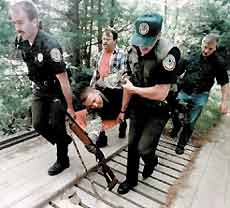 Carl Drega
Spree killer · USA · 1997
Carl Drega (January 19, 1935 – August 19, 1997) was from Columbia, New Hampshir…
4 victims
Carl Drega
Spree killer · USA · 1997
Carl Drega (January 19, 1935 – August 19, 1997) was from Columbia, New Hampshir…
4 victims
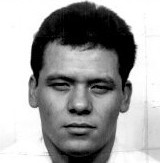 Irineo Tristan Montoya
Murderer · USA · 1985
Irineo Tristan Montoya, offender No. 847, was executed by lethal injection in T…
1 victim
Irineo Tristan Montoya
Murderer · USA · 1985
Irineo Tristan Montoya, offender No. 847, was executed by lethal injection in T…
1 victim
 Matthew Grant Webster
Murderer · Australia · 1989
Matthew Grant Webster was described as the man who raped and murdered Newcastle…
1 victim
Matthew Grant Webster
Murderer · Australia · 1989
Matthew Grant Webster was described as the man who raped and murdered Newcastle…
1 victim
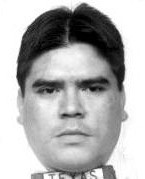 Jose Alfredo Rivera
Murderer · USA · 1993
Jose Alfredo Rivera was sentenced to death on June 2, 1994. His direct appeal r…
1 victim
Jose Alfredo Rivera
Murderer · USA · 1993
Jose Alfredo Rivera was sentenced to death on June 2, 1994. His direct appeal r…
1 victim
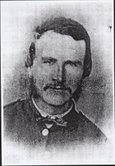 Sam Poo
Murderer · Australia · 1865
Sam Poo was a Chinese bushranger in Australia who was active in the Coonabarabr…
1 victim
Sam Poo
Murderer · Australia · 1865
Sam Poo was a Chinese bushranger in Australia who was active in the Coonabarabr…
1 victim
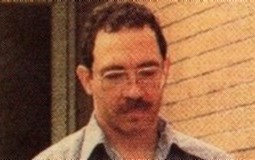 Andrew Chabrol
Murderer · USA · 1991
Andrew Chabrol was executed by electrocution in Virginia on June 17, 1993. Andr…
1 victim
Andrew Chabrol
Murderer · USA · 1991
Andrew Chabrol was executed by electrocution in Virginia on June 17, 1993. Andr…
1 victim
- Gender
- male
- Country
- USA
- Location
- Hillsborough County, Florida, USA
- Date of birth
- 1918
- Age at first offence
- 57
- Characteristics
- murder for hire, rape, torture
- Victim profile
- Richard Cloud (Tampa private detective)
- Method of murder
- Shooting
- Date(s) of murder
- October 23, 1975
- Years active
- 1975
- Date of arrest
- —
- Status
-
Executed
Executed by electrocution in Florida on January 26, 1984
Case details
Anthony Antone was convicted in federal court as charged on multiple counts related to a Racketeer Influenced and Corrupt Organizations Act (RICO) conspiracy and related substantive crimes. He was executed by electrocution in Florida on January 26, 1984.
The convictions affirmed on appeal included Antone’s convictions on the conspiracy and racketeering charges, four firearm counts, two automobile destruction counts, and one count each involving obstruction of justice, cocaine, and a counterfeit Federal Reserve note.
Antone testified in his own behalf and denied participation in the murder-for-hire scheme.
Timeline
- Oct. 23, 1975 — Haskew and Gilford drove to Cloud’s home; Gilford fatally shot Richard Cloud with the silenced .32 caliber pistol.
- Jan. 26, 1984 — Anthony Antone was executed by electrocution in Florida.
- Feb. 25, 1976 — Antone was arrested and residence searches occurred at the time of arrest; two address books were seized.
- Feb. 26, 1976 — Antone’s residence was searched pursuant to a Florida search warrant; counterfeit bills and other items were seized and used in evidence.
- Mar. 3, 1976 — Antone challenged a further search pursuant to a federal search warrant.
Background
The case involved a criminal enterprise whose membership grew as its criminal interests diversified.
The enterprise was founded, the Government proposed, by defendant Diecidue, who sought protection of his vending machine business through the murder of a new competitor, Manuel Garcia. The Government proposed that Diecidue recruited defendants Antone and Gispert in April or May of 1975 to carry out the crime. In June Antone brought Marlow Haskew into the enterprise to drive for Gispert while he attempted to shoot Garcia. Gispert obtained the shotgun for the attempt and told Haskew that Diecidue was to pay the three $20,000 for the killing. Twice Haskew and Gispert drove to Garcia’s hotel with a loaded shotgun but failed to locate him. The next attempt on Garcia’s life was made with explosives.
In May Gispert met with defendant Miller and Willie Noriega and had purchased a gun from Miller. At that meeting Miller asked Noriega to obtain explosives and suggested he deal with Gispert through Miller so Miller could hike up the price and make some money. Noriega was never able to supply the requested explosives.
During the last week of June, Gispert and Haskew drove to a service plaza on the highway from Tampa to Miami where they picked up dynamite from defendant Boni. The dynamite was transported back to Antone’s house where Antone constructed a triggering device and showed Gispert and Haskew how to attach the dynamite to it. On June 28, Antone, Gispert and Haskew attached the bomb to Garcia’s car. The device exploded, destroying the car and injuring Garcia.
Gispert led Garcia to believe that the attempt on his life had been ordered by Cesar Rodriguez, a Tampa bar owner, and Garcia, in turn, offered $20,000 for Rodriguez’ murder. Gispert also obtained murder contracts from codefendant Victor Acosta for the lives of Bernard Dempsey and Richard Cloud. Dempsey, Cloud and Rodriguez were identified as intended victims.
In July, Gispert and Haskew drove to Miami where they delivered six ounces of cocaine, obtained from Acosta, to Boni. Gispert, Haskew and Antone divided the profits.
Later in July the same trio decided to carry out the Rodriguez murder with explosives. Gispert procured the dynamite through defendant Davis, Antone constructed a triggering device and Gispert and Haskew placed the bomb. When the bomb detonated the car was destroyed and the driver, a family friend, was injured.
In August and September, Gispert and Haskew made several unsuccessful attempts to locate and kill Dempsey. Acosta had issued the contract on Dempsey’s life because, as a U.S. Attorney, Dempsey had prosecuted several organized crime figures and Acosta owed him over $40,000 in legal fees for work done as a defense attorney after leaving the prosecutor’s office.
In September, Haskew assisted Benjamin Gilford to escape from prison. Gilford agreed to serve as triggerman on five murder contracts issued by Acosta. Haskew and Gilford unsuccessfully attempted to murder Rodriguez with a sawed-off shotgun during a car chase through Tampa.
In September and October, Haskew and Gilford, joined on one occasion by Miller, committed several robberies. The proceeds were used to finance enterprise activities or support participants. The enterprise obtained equipment to carry out the contract murders in September and October.
Antone and Haskew purchased a van which was modified into an “assassination” vehicle by cutting shotgun slits in the sides. Antone also gave Haskew a .32 caliber automatic pistol and silencer which he had obtained from Acosta. Gispert had given the weapon to Acosta to procure a silencer. Miller bought the ammunition for the weapon and he and Haskew test-fired it.
Richard Cloud was targeted for murder because, as a Tampa policeman, he had harassed Acosta in his drug business and was expected to testify in October at the trial of a close friend of Acosta’s.
After the murder of Cloud, Haskew traveled to Miami where he discussed obtaining counterfeit money with Harvey Davenport and George DeFeis, who were also indicted as coconspirators in the enterprise. In November, Haskew made another trip to Miami and stole a kilogram of cocaine, “speed” capsules, a coin collection and jewelry from DeFeis. The cocaine and a diamond ring were turned over to Antone, who sold the cocaine to Acosta. Another ring, the coins and speed were given to Miller.
In December, Haskew purchased from Davenport $40,000 in counterfeit bills, some of which Haskew passed in Florida, New Jersey and Pennsylvania. Miller attempted to sell some of the bills and used a counterfeit hundred dollar bill to purchase cologne in a Clearwater department store.
In January 1976, Miller asked Haskew to get him a weapon with a silencer so that he and Scarface Rivera could make a hit on a man living in a trailer who intended to testify against them. Haskew was never able to supply the weapon. In February, Gilford attempted to recruit another participant to complete remaining murder contracts and was subsequently arrested. Haskew was arrested shortly thereafter. Both confessed, setting forth details of the conspiracy.
The offence
Murder-for-hire scheme involving Richard Cloud
Antone was convicted for his role in a contract murder. The detective Richard Cloud was killed in a hit ordered by crime boss Victor Acosta. Antone’s job was to hire two hit men.
On Oct. 23, 1975, Haskew and Gilford drove to Cloud’s home, and while Haskew circled the block, Gilford fatally shot Cloud with the silenced .32 caliber pistol.
RICO conspiracy and related substantive counts
Antone was charged in eleven of the twelve counts of the indictment and convicted as charged.
He was convicted of the conspiracy and racketeering charges, four firearm counts, two automobile destruction counts, and one count each involving obstruction of justice, cocaine, and a counterfeit Federal Reserve note.
He received a combination of concurrent and consecutive sentences totaling some 65 years and three years’ special parole.
Investigation and searches
Antone moved to suppress evidence seized in three searches conducted at his residence. The searches took place on February 25, 1976 at the time of the arrest of Antone pursuant to a Florida arrest warrant charging him with the murder of Richard Cloud, on February 26, 1976 pursuant to a Florida search warrant, and on March 3, 1976 pursuant to a federal search warrant. The district court denied the motion, and the appellate court affirmed.
Feb. 25, 1976 search (at time of arrest)
Antone’s arrest was executed by a team of seven officers and agents. Three officers placed Antone under arrest at the front door while the others were deployed at strategic spots around the premises.
Upon arrest, Antone was handcuffed and patted down for weapons. He was seated on a couch in the living room, which was first searched for weapons and/or evidence. Within two minutes of the arrest, Sergeant Fairbanks entered the room from the rear of the house where he had been stationed. Fairbanks guarded Antone while other officers swept through the house.
Fairbanks observed two address books on an end table to Antone’s right. Aware of the existence of other conspirators, Fairbanks recognized the significance of the address books and opened them. Seeing they were relevant, he took possession of them. This seizure took place during the ten minute period that Antone was held at his home before being transported to the police station.
During this period another officer engaged in the sweep of the house seized photographs and telephone toll records lying on a desk in the dining area adjacent to the living room. The government argued that the address books were admissible under the plain view theory and also as a search incident to a valid arrest.
The appellate court concluded the address books were admissible under the “plain view” doctrine, were not tainted by other illegal seizures, and that, in any event, their admission was harmless beyond a reasonable doubt.
Feb. 26, 1976 search (Florida warrant)
Antone’s residence was searched pursuant to a state search warrant on February 26, 1976. Items seized and used in evidence included counterfeit bills, miscellaneous papers taken from the dining room desk, a couch and projectile taken from it, pieces of air conditioning filters and photographs taken during the course of the search. Other items seized were not introduced into evidence.
Antone argued probable cause was lacking, the manner of the search was defective, and improper seizure of several items tainted the entire search. The district court found the affidavit sufficient and the search properly conducted as to the items introduced and moot as to all others, and the appellate court agreed.
The appellate court addressed the probable cause standard for informant information using Aguilar v. Texas and Spinelli v. United States. It found that a coconspirator, Haskew, informed police about three projectiles in the walls or floors as a result of test-firing the Cloud murder weapon into a couch and about counterfeit currency in a secret door panel. It found the reliability of this information demonstrated by sufficient detail and corroboration from an observed conversation between Haskew and Antone about the counterfeit money.
It also addressed alleged inaccuracies and misrepresentations in the affidavit, including testimony about whether a couch was in the den or living room, and the location description of the secret panel. The court found any such statements not necessary to establish probable cause or not invalidating if negligent.
Antone challenged air conditioning filters seizure because the warrant named doorbells and filters not listed. The appellate court concluded the principal purpose for searching the shed was for projectiles named in the warrant; it found the scope within the warrant as the wall had been recently removed and reconstructed and embedded projectiles might have been in the shed.
Mar. 3, 1976 search (federal warrant)
Antone challenged the March 3, 1976 search claiming the warrant was defective because the affidavit was based on the unconstitutional search of February 26, 1976 and because of a ministerial error in inventory and receipt.
The appellate court determined its conclusion about the validity of the February 26 search pretermitted the first argument. It then addressed Rule 41(d) defects concerning the return of the warrant and receipt for a commode brush handle into evidence.
The appellate court held defects in the return of a warrant were ministerial in nature and did not invalidate the search. It also found counsel was present during the search and advised of all items seized, and the item was viewed during pretrial discovery, with no showing of prejudice or intentional omission. It found evidence need not have been suppressed.
After examining the briefs and record for error as to Antone, the appellate court affirmed his convictions on all counts.
Trial and appeal
Shackling seen by jurors; motions for mistrial
Defendants argued the trial court erred in denying motions for mistrial when some of them were seen in shackles by jurors or prospective jurors. The appellate court found no prejudice shown and held the contention without merit.
It described:
- A motion during jury selection after it was called to the court’s attention that the jury venire observed defendants enter the courtroom flanked by United States Marshals. The court found potential prejudice avoided by defendants appearing in business suits and ties and by nonuniformed marshals without their badges, and the motion was denied.
- A motion when, during jury selection, at least one juror observed defendants being brought into the courthouse in handcuffs. The motion was denied.
- A third motion filed after a juror observed several defendants being led from the courthouse in waist chains and handcuffs. The juror replied impartiality would not be influenced and had not discussed the incident with other jurors. Mistrial was denied.
The appellate court held brief and inadvertent exposure to jurors of defendants in handcuffs was not inherently prejudicial to require a mistrial, noting routine security measures and the defendants’ failure to show actual prejudice.
Exclusion of evidence about government witness Haskew’s alleged sexual advances
Defendants Miller and Gispert sought to attack Haskew’s credibility by showing bias because defendants had repelled his homosexual advances. On cross-examination, defendants were permitted to ask whether Haskew was a homosexual and whether he made sexual advances to Gispert, Miller and Miller’s wife, and Haskew responded negatively.
Miller’s wife testified Haskew made advances to Miller in her presence which Miller repulsed. The trial court refused testimony of two witnesses who would have testified Haskew engaged in homosexual activities, and also sustained an objection when Mrs. Miller testified Haskew made overt sexual advances to her. The appellate court held evidentiary questions were within the trial judge’s discretion and found no abuse.
It also addressed drug-use evidence. When Gispert asked Haskew whether he used drugs during the conspiracy, Haskew replied, “I have used narcotics, yes.” Haskew admitted taking a gram of cocaine a week and smoking “some joints of pot.” The appellate court found testimony about drug use would be redundant and no abuse of discretion occurred.
Exclusion of psychiatric records of Willie Noriega
Defendants argued the trial court erred in refusing to admit psychiatric records of Willie Noriega. The trial judge refused because Noriega’s psychiatric records were not probatively related to the events in 1975 and 1976 about which Noriega testified. The appellate court agreed and found no abuse of discretion.
It also described Noriega’s testimony that he was committed in 1963 by order of the court declaring him mentally incompetent, was treated for four months, and since his release was never again treated for any type of mental illness.
Refusal to strike testimony after Fifth Amendment privilege asserted
Defendants asserted that Noriega’s refusal to answer certain questions during cross-examination violated their Sixth Amendment rights, arguing the court erred in refusing to strike Noriega’s direct testimony.
Noriega refused to answer questions on Fifth Amendment grounds including:
- whether his January 1976 conference with Government agents was “ primarily because of his own personal activities in criminal affairs”;
- whether since 1974 he had had a source of income other than employment or had filed a tax return;
- whether he had ever testified falsely under oath or so testified in a case in which he was charged with a felony; and
- whether he was nicknamed “ Smokey the Bear.”
The appellate court concluded defendants were not hampered in testing the truth of Noriega’s direct testimony because the goal of inquiries was undermining credibility and responses would have been cumulative given Noriega’s admissions and cross-examination on his cooperation and veracity.
Prosecutor’s closing argument; comments regarding defendants’ failure to testify
Defendants challenged alleged improprieties in closing arguments, including Government rebuttal remarks such as:
- “the attorney for Mr. Miller talked to you about”
- “Mr. Gispert through his attorney recited”
The appellate court rejected reversal, applying the test of whether the prosecutor’s intent was to comment upon the accused’s failure to testify or whether the jury would naturally and necessarily take it as such. It held these remarks likely addressed defense arguments.
It also rejected the claim that defendant Stone’s counsel’s comments created unfair emphasis on other defendants’ silence, distinguishing favorable observation that Stone told his story under oath, subject to cross-examination, from adverse reference to silence.
The appellate court also rejected the suggestion defendants were unfairly characterized as cowards in rebuttal and found characterization supported by evidence and not unduly prejudicial.
Specific disposition regarding Anthony Antone
All convictions of Antone, Gispert and Miller were affirmed on appeal.
The appellate court affirmed that Antone’s challenges to evidence obtained by illegal search and seizure were not grounds for reversal and held Antone’s convictions on all counts.
Other details
Indictment count allegations involving Antone and other defendants
The Grand Jury charged COUNT ONE and COUNT TWO as RICO conspiracy and substantive RICO conduct counts, including allegations that involved Antone, Manuel Gispert, Ellis Marlow Haskew, Benjamin Foy Gilford, Frank Diecidue, Victor Manuel Acosta and others.
The indictment included overt acts identifying Antone’s actions and roles in connection with destructive devices, firearms, bombings, and the Cloud murder, including:
- On or about June 27, 1975: Antone, Gispert and Haskew placed a destructive device on a vehicle operated by Jose Manuel Garcia.
- On or about June 28, 1975: the explosive device destroyed Garcia’s car and injured Jose Manuel Garcia.
- On or about June 29, 1975: Antone manufactured a destructive device in Tampa, Florida.
- On or about July 29, 1975: Antone manufactured and constructed a destructive device in Tampa, Florida.
- On or about October 1975: Victor Manuel Acosta furnished a silencer and a .32 caliber automatic pistol to Anthony Antone in Tampa, Florida.
- On or about October 23, 1975: Benjamin Foy Gilford murdered Richard Cloud in Tampa, Florida.
- On or about February 26, 1976: Antone possessed approximately eight thousand nine hundred fifty dollars ($8,950) in counterfeit United States currency in Tampa, Florida.
The Grand Jury also charged:
- COUNT NINE: obstruction of justice by attempting to murder Richard Cloud to prevent him from testifying before a U.S. District Court and a federal grand jury.
- COUNT TEN: possession with intent to distribute approximately one kilogram of cocaine.
- COUNT TWELVE: possession and concealment of falsely made, forged, and counterfeited obligations of the United States with intent to defraud, including the allegation that Antone knew the obligations were counterfeit.
Appeal document details
The appellate decision considered challenges to convictions for conspiracy and substantive crimes under RICO, 18 U.S.C.A. § 1961 et seq., and various federally proscribed acts of racketeering.
The matter was addressed by the United States Court of Appeals, Fifth Circuit, and the decision was dated Oct. 1, 1979. The appellate court concluded that convictions of defendants Diecidue, Boni and Davis must be reversed while convictions of Antone, Gispert and Miller must be affirmed.
Spotted an error, or have more information about this case?